

 Canadian Dollars

Technical Textiles: Smart Solutions for Modern Fabric Needs
Posted by BLG on 2026 Jan 31st
Posted by BLG on 2026 Jan 31st


Choosing the right fabric can transform your next quilt or craft project from ordinary to outstanding. With the growing popularity of performance-driven materials, more North American creators are exploring technical textiles for their durability, strength, and unique functionalities. Understanding these advanced fabrics opens new possibilities for creativity while helping you select options designed for protection, resilience, and specialized performance in everyday and extreme conditions.
| Point | Details |
|---|---|
| Focus on Functionality | Technical textiles prioritize performance and specialized applications over aesthetic qualities. |
| Variety of Applications | These materials are used across multiple industries, including automotive, medical, and construction, demonstrating immense versatility. |
| Innovative Features | Breakthroughs in material technology enable functionalities like self-healing, temperature responsiveness, and smart sensor integration. |
| Considerations for Selection | When choosing technical textiles, evaluate mechanical strength, thermal performance, and environmental impact to ensure suitability for specific projects. |
Technical textiles represent a sophisticated category of textile materials engineered for specialized performance beyond traditional fabric applications. Unlike conventional textiles focused on aesthetic appeal, these innovative materials are designed with precise functional objectives in mind. Specialized textile engineering enables manufacturers to create fabrics with extraordinary capabilities across multiple industries.
The core purpose of technical textiles centers on delivering exceptional functional performance. These advanced materials are strategically developed to address specific technical challenges by providing enhanced characteristics such as:
Unlike traditional textiles that prioritize visual aesthetics, technical textiles are fundamentally performance-driven materials. Performance-focused textile design allows manufacturers to develop fabrics that meet precise industrial requirements, transforming how we approach material engineering.
Technical textiles find applications across diverse sectors including automotive manufacturing, medical technology, construction, aerospace, and defense. Their versatility stems from the ability to customize material properties to solve complex engineering challenges. Whether creating flame-resistant protective gear, lightweight aerospace components, or high-performance medical implants, these engineered textiles represent a critical intersection between materials science and practical problem-solving.
Pro Tip: When selecting technical textiles for your project, always prioritize the specific performance requirements over aesthetic considerations.
Technical textiles encompass a wide range of specialized materials, each designed to meet specific industrial and functional requirements. Comprehensive textile classification reveals twelve primary sectors that demonstrate the incredible versatility of these engineered materials.
The main categories of technical textiles include:
Technical textile applications extend far beyond traditional fabric uses, addressing complex challenges across multiple industries. Each category represents a unique approach to solving specific functional requirements through advanced material engineering.
These diverse textile categories demonstrate how modern material science can transform seemingly simple fabric into sophisticated solutions. From agricultural protective covers to high-performance medical implants, technical textiles provide targeted solutions that traditional textiles cannot match.
Here’s a summary of the main technical textile categories, their uses, and noteworthy attributes:
| Category | Core Application | Notable Attribute |
|---|---|---|
| Agrotech | Agricultural uses | UV and weather resistance |
| Buildtech | Construction | High structural stability |
| Medtech | Medical devices | Biocompatibility |
| Mobiltech | Transportation | Lightweight strength |
| Protech | Protective gear | Advanced impact absorption |
This comparison helps illustrate how different categories address unique industry needs.
Pro Tip: When exploring technical textile options, consider the specific performance requirements of your project rather than relying on conventional fabric selection methods.
Groundbreaking textile innovations are revolutionizing how we think about fabric functionality. Modern technical textiles are pushing the boundaries of material science, transforming simple fibers into sophisticated, multifunctional systems that can respond to environmental conditions, integrate technology, and solve complex engineering challenges.
Key innovations in technical textiles include:
Smart textile breakthroughs demonstrate remarkable potential across multiple sectors. Researchers have developed remarkable innovations like cotton-like conductive fibers, textiles with integrated sensors and LEDs, and temperature-reactive fabrics that can transform entire industries from healthcare to automotive design.
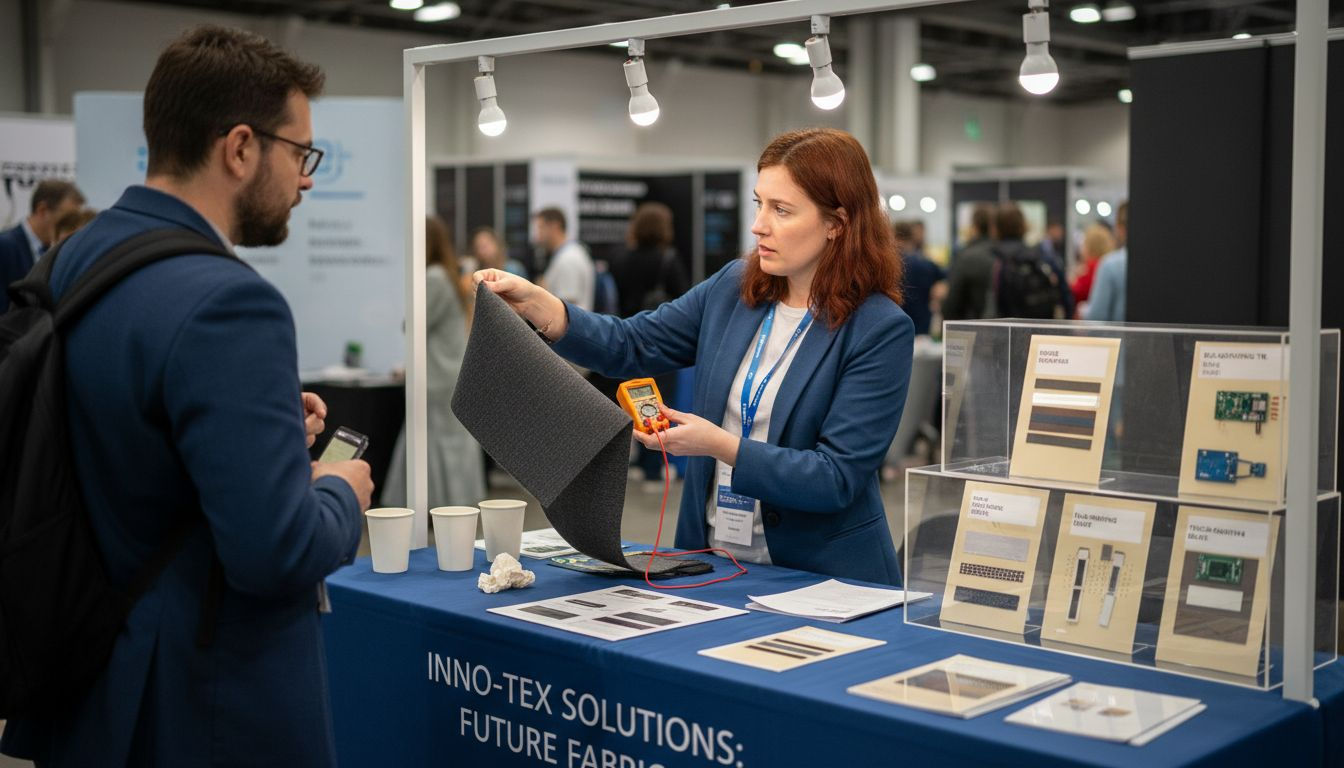
These technological advances represent more than mere material improvements. They signify a fundamental reimagining of textile potential, where fabrics are no longer passive materials but active, intelligent systems capable of sensing, responding, and interacting with their environment in unprecedented ways.
Pro Tip: Always consider the specific performance requirements and potential technological integrations when selecting advanced technical textiles for your project.
Technical textiles in crafting represent a fascinating intersection of traditional artistry and modern material science. Quilters and craft enthusiasts now have access to advanced fabrics that dramatically enhance the functionality, durability, and creative potential of their projects.
Key applications of technical textiles in quilting and crafting include:
Textile crafting innovations demonstrate how technical fabrics transform traditional crafting approaches. Modern quilters can now select materials that offer unprecedented functionality, from home decor textiles with enhanced upholstery properties to intricate craft projects requiring specialized fabric characteristics.
These advanced textiles bridge the gap between artistic expression and practical performance. By incorporating technical textile technologies, crafters can create pieces that are not just visually stunning but also engineered to withstand extensive use, environmental challenges, and the test of time.
Pro Tip: When selecting technical textiles for your quilting or crafting project, prioritize performance characteristics that align with your specific design and functional requirements.
Technical textile material selection requires a nuanced understanding of performance characteristics, environmental considerations, and specific project requirements. Crafters and designers must carefully balance multiple factors to choose the most appropriate technical textile for their unique applications.
Key considerations when selecting technical textiles include:
Material selection strategies emphasize the importance of aligning textile properties with specific functional requirements. Professional crafters must look beyond surface-level characteristics and deeply evaluate how each material’s unique properties will contribute to the overall project performance and longevity.
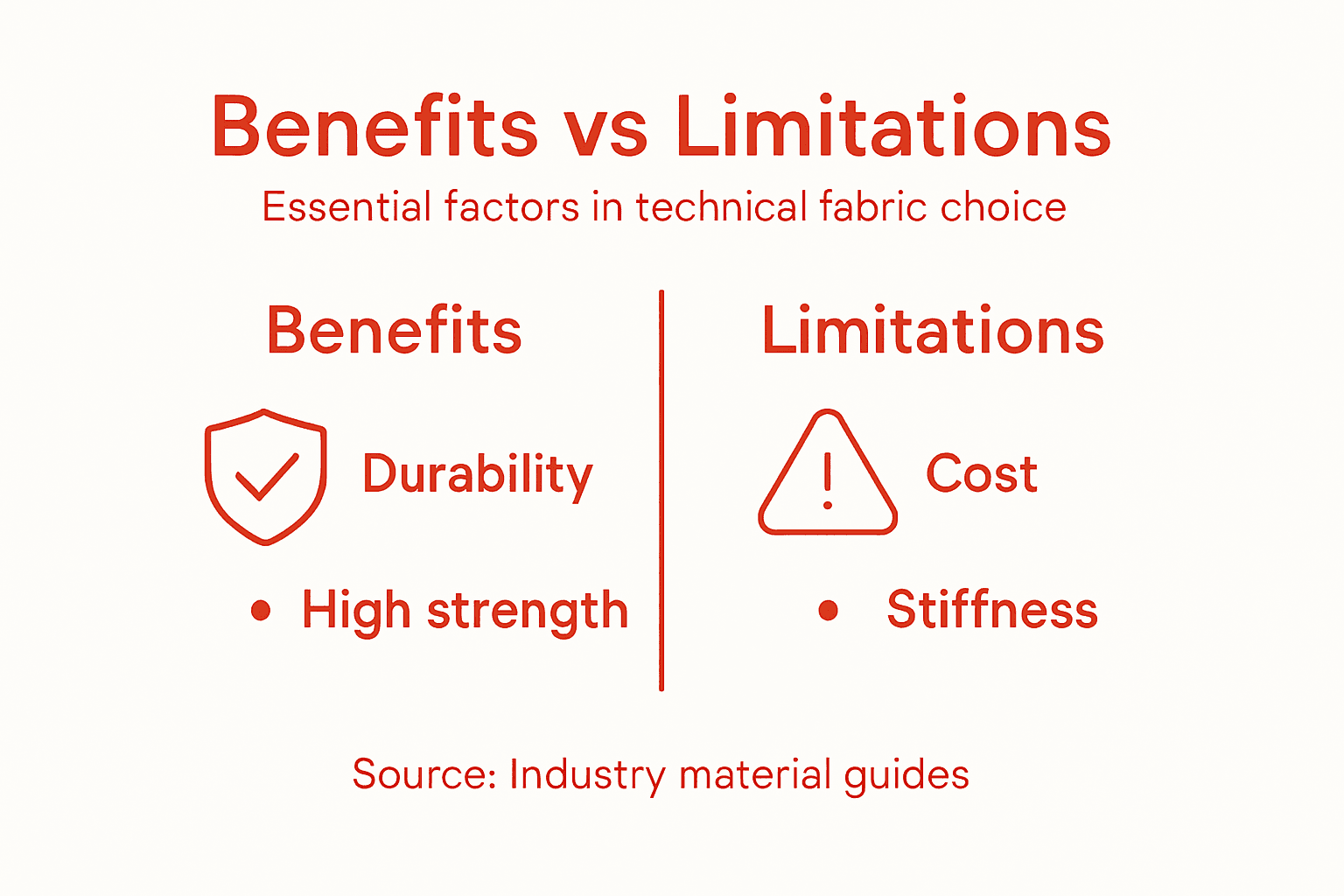
While technical textiles offer remarkable advantages, they also present certain limitations. Synthetic materials may have higher environmental footprints, and some advanced fabrics can be more expensive than traditional options. Successful material selection involves carefully weighing these trade-offs to find the optimal balance between performance, sustainability, and budget.
The following table highlights benefits and common limitations when selecting technical textiles:
| Benefit | Typical Limitation |
|---|---|
| Superior performance | Higher material costs |
| Enhanced durability | Limited recyclability |
| Customizable properties | Specialized handling required |
| Functionality in extremes | May impact comfort or softness |
Pro Tip: Always conduct a small-scale test with your selected technical textile to verify its performance characteristics before committing to a large project.
Technical textiles offer extraordinary performance and innovative features designed to meet demanding challenges like enhanced durability, protection, and smart functionality. If you are looking to elevate your crafting, quilting, or apparel projects with fabrics engineered for specific purposes such as moisture-wicking, temperature regulation, or stain resistance, the right material selection is critical to success.

Explore our versatile fabric collection at Fabric-Fabric where quality meets innovation. Whether you need advanced textiles for quilting durability or home decor that withstands daily wear, our easy-to-navigate site makes finding specialized fabrics effortless. Take advantage of our seasonal promotions and find exactly what your project requires while supplies last. Start now to transform your creative vision into reality with textiles that perform as smartly as they look. Browse our selection today at Fabric-Fabric’s Homepage and step into a world of smart fabric solutions.
Technical textiles are specialized textile materials engineered for specific performance purposes, focusing on functionality rather than aesthetic appeal. These materials provide enhanced characteristics such as mechanical strength, durability, and resistance to environmental threats.
The primary categories of technical textiles include Agrotech, Buildtech, Clothtech, Geotech, Hometech, Indutech, Medtech, Mobiltech, Oekotech, Packtech, Protech, and Sporttech. Each category addresses unique industrial and functional needs.
Modern technical textiles feature innovations like programmable fibers, bio-inspired designs, conductive textiles, smart sensor integration, temperature-reactive materials, and self-healing fibers. These advancements allow fabrics to respond to environmental conditions and perform complex functions.
When selecting a technical textile, consider factors such as mechanical strength, thermal performance, chemical resistance, weight, flexibility, sustainability, and cost-effectiveness. Assess how each material’s unique properties align with your project requirements.