

 Canadian Dollars

What is flame retardant fabric? Guide to safe textile projects
Posted by BLG on 2026 Apr 8th
Posted by BLG on 2026 Apr 8th

TL;DR:
- Flame retardant fabrics are categorized as inherently flame resistant or chemically treated, with different safety profiles.
- Durability of flame retardant properties varies, with IFR fabrics offering permanent protection and chemically treated fabrics degrading over washes.
- Safe project choices depend on understanding fabric type, certification, environment, and proper care.
Not all fabrics burn the same way, and not every “fire-resistant” label means what you think it does. Many crafters assume that any fabric marketed as flame retardant offers the same level of protection, but the reality is more nuanced. Flame retardant fabrics fall into distinct categories with very different performance levels, care requirements, and safety profiles. Whether you’re sewing curtains, building event backdrops, or crafting kids’ room decor, understanding these differences helps you make smarter, safer choices. This guide walks you through everything you need to know, from basic definitions to real-world project applications.
| Point | Details |
|---|---|
| Different types of FR fabrics | Some fabrics use specialty fibers for permanent flame protection, while others rely on washable treatments. |
| How fire is resisted | Flame retardant fabrics work by blocking fire through chemical or physical changes at the fiber or finish level. |
| Lasting effectiveness | Durability depends on whether the fabric is inherently FR or chemically treated, and on care practices. |
| Project selection matters | Choosing the right FR fabric and caring for it properly is key for lasting home safety. |
| Eco-friendly options | Modern flame retardant solutions are moving toward safer, more sustainable ingredients. |
Flame retardant fabric is any textile engineered to resist catching fire or to slow the spread of flames once ignited. That sounds simple, but the category splits into two very different types, and confusing them can lead to real safety gaps in your projects.
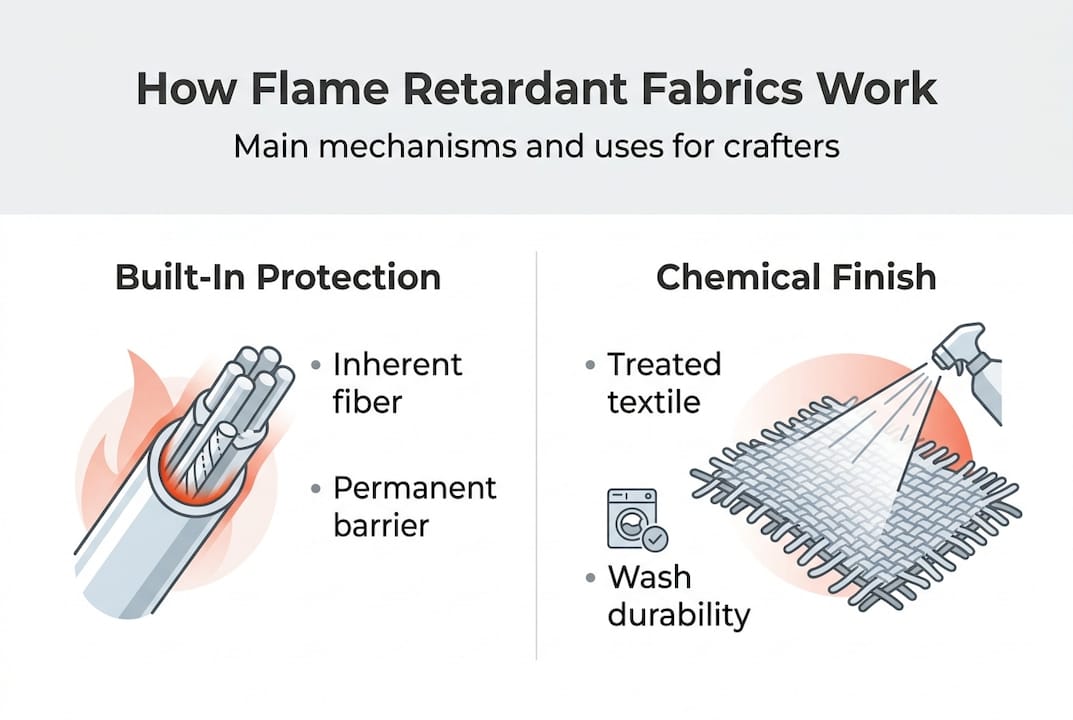
Flame retardant fabrics are textiles designed to resist ignition and slow fire spread, categorized as inherently flame retardant (IFR) made from naturally resistant fibers like aramids (Nomex, Kevlar), modacrylic, and PBI, or treated fabrics (FR) chemically finished post-manufacturing. That distinction matters enormously for crafters.
Inherently flame retardant (IFR) fabrics are made from fibers that resist fire at the molecular level. The protection is built into the fiber itself, so it never washes out or wears off. Common IFR materials include:
Treated (FR) fabrics are standard textiles like cotton or polyester blends that receive a chemical flame retardant finish after manufacturing. They can look and feel identical to untreated versions, which is why checking for real certification matters.
| Feature | IFR fabrics | Treated FR fabrics |
|---|---|---|
| Protection type | Built into fiber | Applied chemical finish |
| Durability | Permanent | Washes out over time |
| Common materials | Aramid, modacrylic, PBI | Cotton, polyester blends |
| Cost | Generally higher | More affordable |
| Best for | High-risk, long-term use | Decorative, short-term projects |
For event backdrops and theatrical uses, look at backdrop fabrics that carry verified flame retardant certifications. If you’re working with window treatments, cotton drapery options with FR finishes are widely available for home use.
One key certification to look for is NFPA 701, which is the standard test method for flame propagation of textiles used in public spaces. It’s a meaningful benchmark, but not the only one worth knowing.
Pro Tip: Always ask for a certification document, not just a label. A tag that says “flame resistant” without a test standard cited behind it tells you very little about actual fire performance.
Understanding how these fabrics actually stop or slow fire helps you choose the right one for your project and use it correctly.
Flame retardant fabrics work through two main pathways: gas phase and condensed phase mechanisms.
Flame retardant mechanisms include gas phase free radical scavenging using halogens and phosphorus radicals, as well as condensed phase char formation, endothermic decomposition, and inert gas dilution. Each approach suits different fiber types.
For cotton and natural fibers, phosphorus-based finishes are the go-to choice because they work through condensed phase char formation. For synthetics like polyester, halogen-based approaches are more common. Understanding this helps you match the finish to the fiber when shopping.
Think of it like fabric protection basics: the chemistry has to match the material for the treatment to actually work.
Small-scale tests don’t always predict real-life fire performance. Use caution when assuming a certified fabric will behave the same way in a real home fire scenario.
| Mechanism | Example finish | Common use |
|---|---|---|
| Gas phase (radical scavenging) | Halogen compounds | Synthetic curtains, upholstery |
| Condensed phase (char formation) | Phosphorus on cotton | Drapery, quilting fabric |
| Endothermic decomposition | Aluminum hydroxide | Blended home textiles |
| Intumescence | Phosphorus/nitrogen systems | Theatrical backdrops |
For a broader look at fire risk assessment basics, understanding how materials behave in real environments adds important context to any FR fabric decision.
This is where many DIYers get caught off guard. Buying a treated FR fabric and assuming it stays protective forever is one of the most common mistakes in home textile projects.
IFR fabrics offer permanent protection. Because the flame resistance is part of the fiber structure, no amount of washing, ironing, or normal wear will remove it. You can care for these fabrics just like any other textile without worrying about losing the safety benefit.
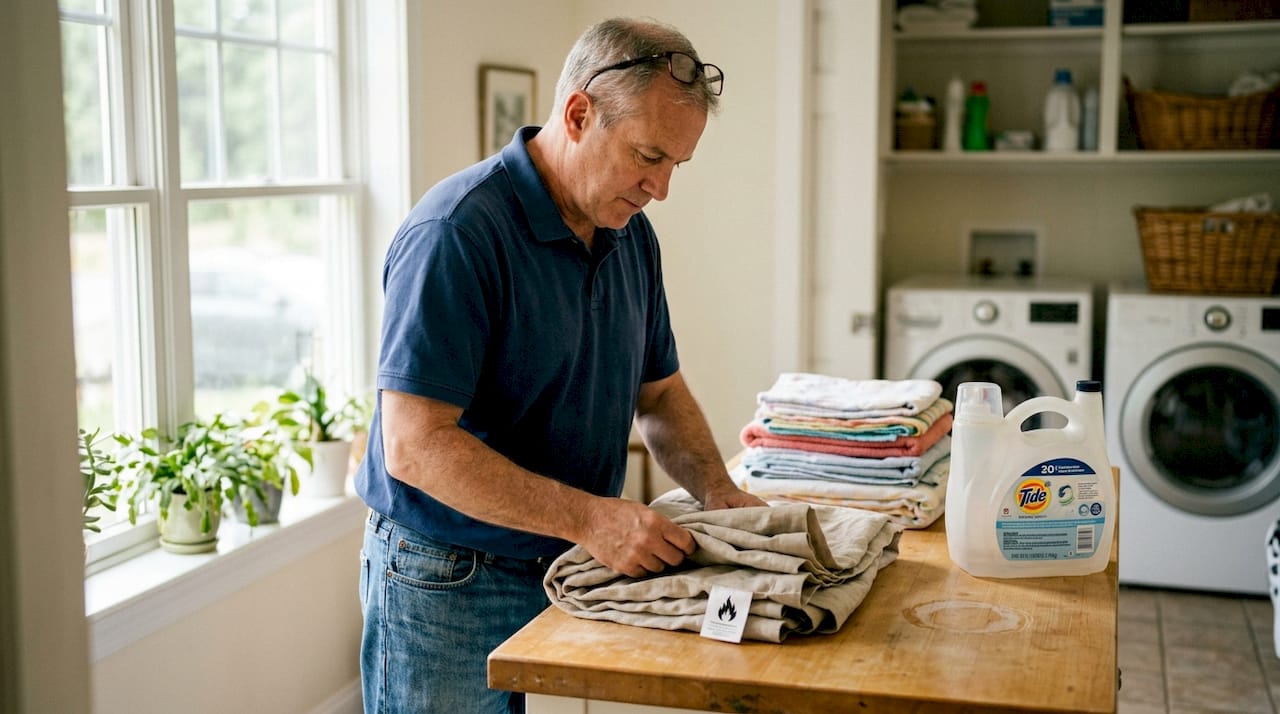
Treated FR fabrics are a different story. Durable FR treatments like THPC on cotton can survive 50 to 150 washes with minimal loss of flame retardancy (less than 1.4% drop in limiting oxygen index), but non-durable treatments may lose effectiveness after just a few washes. The difference depends on whether the chemical is covalently bonded to the fiber or just sitting on the surface.
Here’s what affects how long your FR treatment lasts:
For long-term projects where safety is a priority, review fabric durability tips and follow a step-by-step fabric care routine. A solid fabric care checklist can help you stay on track.
Pro Tip: For treated FR items used in higher-risk spots like near a fireplace or kitchen window, write the purchase date and wash count on a small label sewn into the seam. When you approach 50 washes, it’s time to reassess whether the fabric still meets your safety needs.
For projects that require ongoing fire safety compliance, tracking wash cycles is not optional. It’s a simple habit that makes a real difference.
With durability in mind, the next question is which type of FR fabric actually fits your specific project. Not every application needs the same level of protection, and choosing wisely saves money without cutting corners on safety.
Here’s a practical checklist for common home and craft applications:
When comparing options, look for certifications printed on the bolt end or product listing, not just marketing language. “Flame resistant” and “flame retardant” are sometimes used interchangeably in retail, but they can reflect different test standards.
Sustainability is also becoming a bigger factor for eco-conscious crafters. Formaldehyde-free, bio-based FR treatments with nano-additives are improving durability and washability without relying on halogens or formaldehyde, which are the two most criticized ingredients in traditional FR finishes.
For upholstery projects, fade-resistant upholstery fabrics with FR properties are increasingly available. And if you’re thinking about the bigger picture, sustainable fabric finishes are reshaping what’s possible in eco-friendly textile safety.
Stat callout: Most IFR fabrics maintain their flame retardant properties permanently, while some durable treated solutions can endure over 100 washes before any meaningful loss in protection.
Here’s something the label on your fabric will never tell you: the context in which you use it matters just as much as the fiber type.
We see crafters focus heavily on finding the right FR certification, which is a good instinct. But then they hang those certified curtains directly over a baseboard heater or use a treated backdrop outdoors in humid conditions without any thought for how those environments affect performance. The fabric passes a test in a controlled lab. Your living room is not a controlled lab.
Small-scale tests like NFPA 701 don’t predict full-scale fire behavior, and treated fabrics need specific care to maintain their effectiveness. Phosphorus-based finishes work best on cotton through char formation, but only if the fabric hasn’t been washed with bleach or heavy detergents.
The real protection in any home textile project comes from combining smart fabric selection with thoughtful placement and consistent care. A certified IFR curtain hung away from direct heat, washed gently, and replaced when worn is far safer than a “fire-resistant” label on a fabric that’s been through 200 hot-water wash cycles.
Look at garment durability lessons for a broader perspective on how fabric performance degrades over time. The same principles apply to flame retardant properties.
Trust the certification as a starting point, not a finish line.
Ready to start your next safe, creative project? At fabric-fabric.com, we carry a range of fabrics suited for safety-conscious crafters and DIY enthusiasts who don’t want to compromise on style.
Browse our flame retardant backdrop fabrics for theatrical, event, and photography projects that require certified fire safety. If you’re working on quilts or fabric art, our quilting fabric selection includes options that balance beauty with practical performance. For curtains, upholstery, and decorative accents, explore the full range of home decor options to find the right certified fabric for your space. Every project deserves materials you can trust.
Inherently flame retardant fabrics use special fibers that provide permanent fire protection, while treated fabrics receive a chemical finish after manufacturing that can wear off with repeated washing or harsh care.
Durable FR treatments like THPC on cotton can survive 50 to 150 washes with minimal performance loss, while non-durable treatments may degrade after just a few wash cycles.
Yes, newer options increasingly use formaldehyde-free, bio-based finishes with nano-additives that improve both safety and environmental impact compared to older halogen-based treatments.
No. Different products meet different standards, and small-scale tests like NFPA 701 may not accurately reflect how a fabric will perform in a real full-scale fire situation.