

 Canadian Dollars

Stop Guessing Cotton Jersey: 5 Minute Swatch Tests for Sewists
Posted by BLG on 2026 Sep 3rd
Posted by BLG on 2026 Sep 3rd

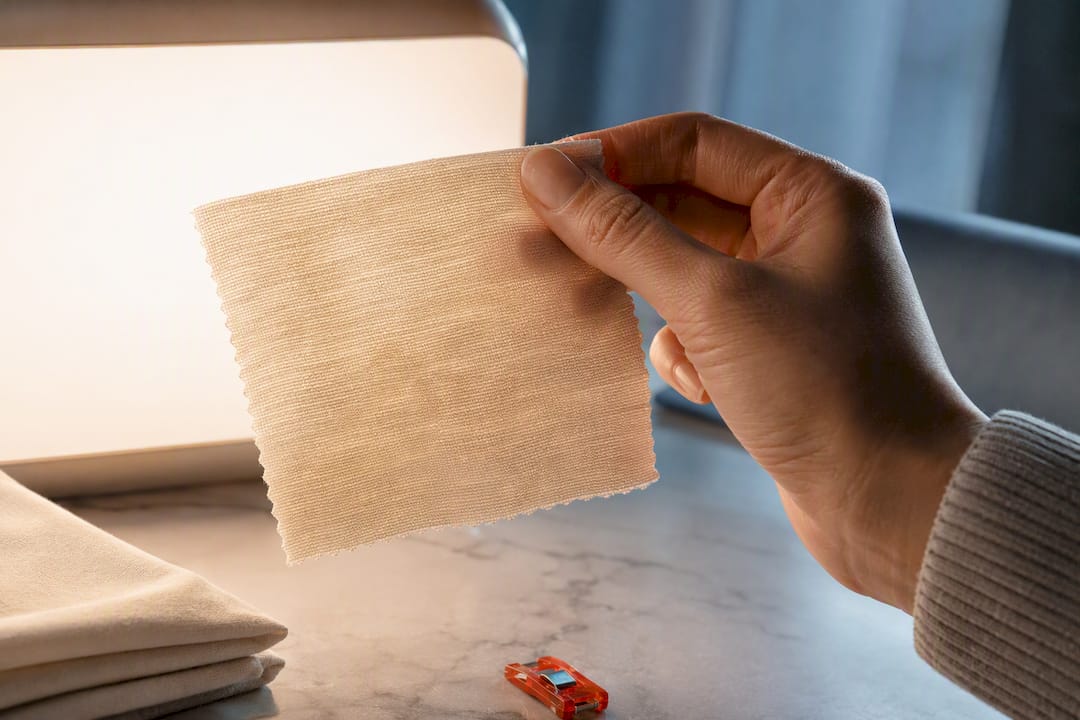
Cotton jersey is a cotton fabric made with a jersey knit. It combines cotton’s breathability with the stretch and drape you only get from a knit construction, not a woven one. You’ll find it as 100% cotton or blended with elastane for extra recovery, most often in t-shirts, underwear, and casual dresses.
TL;DR:
- Cotton jersey is a knit fabric that stretches and drapes due to its looped construction, making it ideal for casual and activewear garments.
- Single jersey provides maximum stretch and is best for loose, flowing designs, while interlock offers added stability for structured pieces.
- Quality cotton jersey depends on fiber processing, GSM weight, and finishing treatments like combing or mercerization, which influence softness and durability.
- Proper washing in cool water, air drying, and avoiding fabric softeners help maintain the fabric’s shape, color, and resistance to pilling.
- Buyers should verify knit type and weight through detailed photos and request samples, as fiber content alone does not predict fabric performance.
Two separate things make up cotton jersey, and mixing them up is the single most common confusion people run into. “Cotton” describes the fiber. “Jersey” describes how that fiber is knitted into fabric. A jersey knit) is a single-knit structure: one continuous strand of yarn loops through itself row after row, creating a smooth, flat face on one side and a texture of small horizontal ridges on the back. Woven cotton works completely differently. Two sets of yarn interlace at right angles, over and under, which is why a woven shirt holds its shape while a jersey t-shirt stretches around your shoulders.
Cotton as a fiber brings its own traits to the table regardless of construction: it breathes well, absorbs moisture, and has a naturally soft hand compared to synthetic fibers. But the knit is what gives jersey its stretch, its drape, and that slightly rolled edge you notice when you cut into a piece. A cotton knit fabric and a cotton woven can share identical fiber content and still feel like entirely different materials on your body.
Telling the two apart doesn’t require a lab. Try this:
If you’re still unsure, the difference between knit and woven fabric comes down almost entirely to this loop-versus-interlace structure, and it’s worth learning to spot on sight before you buy yardage for a project.
Not all cotton jersey behaves the same way, and picking the wrong subtype is where a lot of first sewing projects go sideways. The differences come down to how the loops are knitted and what, if anything, gets blended in.
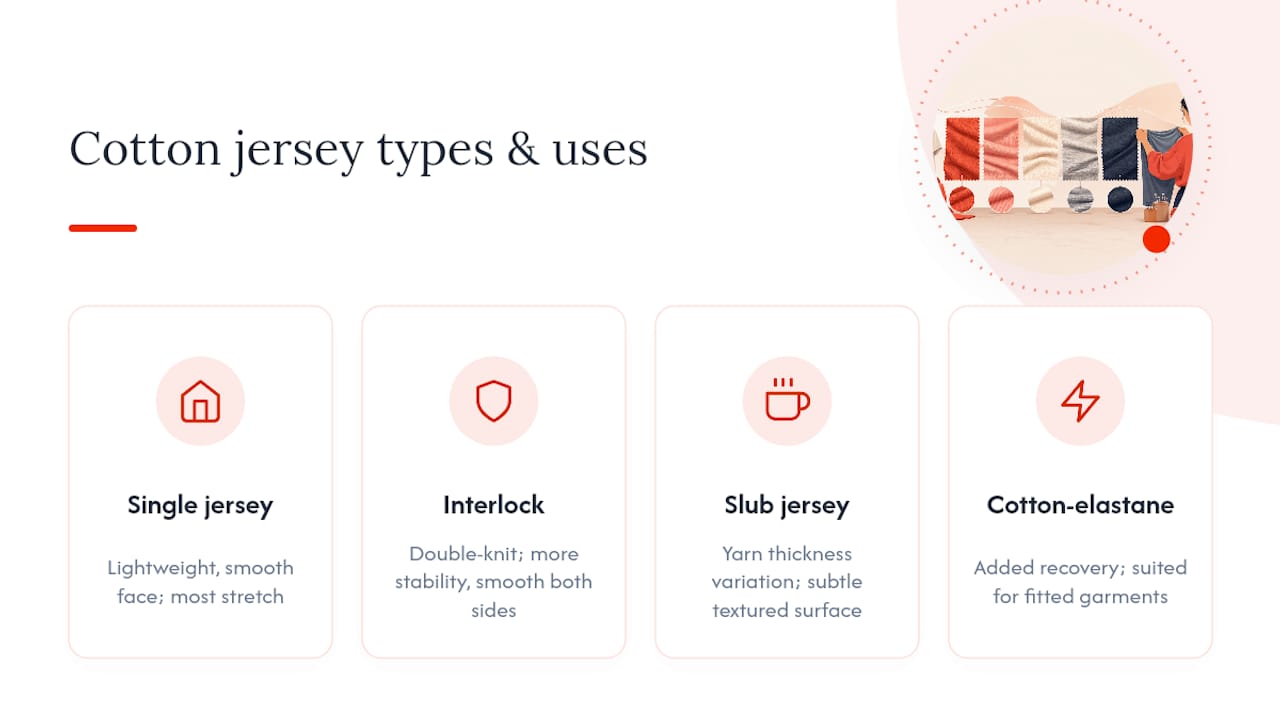
Single jersey is the standard: one knit structure, smooth face, lightweight, and the most stretch of the bunch. It’s ideal for t-shirts, loose dresses, and anything that needs to move with the body. Interlock, sometimes called double knit, combines two layers of single jersey knitted together, which gives it more stability and a smooth face on both sides. That extra body makes it better for structured tees, dresses that need to hold a silhouette, and beginner projects where a curling, slippery fabric would be frustrating to sew. Slub jersey uses yarn spun with intentional thickness variations, giving the surface a subtle textured, almost handmade look. It suits casual tops and loungewear where texture matters more than a clean, flat finish.
These work well for fitted dresses, activewear, and anything that needs to bounce back after wear.
Pro Tip: If you’re new to sewing knits, start with interlock or a cotton/elastane blend rather than single jersey. The added stability makes it far more forgiving under the needle, and you’ll waste less fabric relearning tension settings.
Match the type to your pattern: a draped, flowy design wants single jersey’s drape; a fitted silhouette wants a blend’s recovery; a structured beginner project wants interlock’s stability.
Not every cotton jersey performs the same, even within the same weight class, and the differences show up fast after a few washes. Here’s what actually separates a fabric that lasts from one that pills and sags within a month.
Quality check: the swatch tests above (stretch, drape, colorfastness) take under five minutes and catch most of the quality problems that only become obvious after you’ve already cut and sewn a garment.
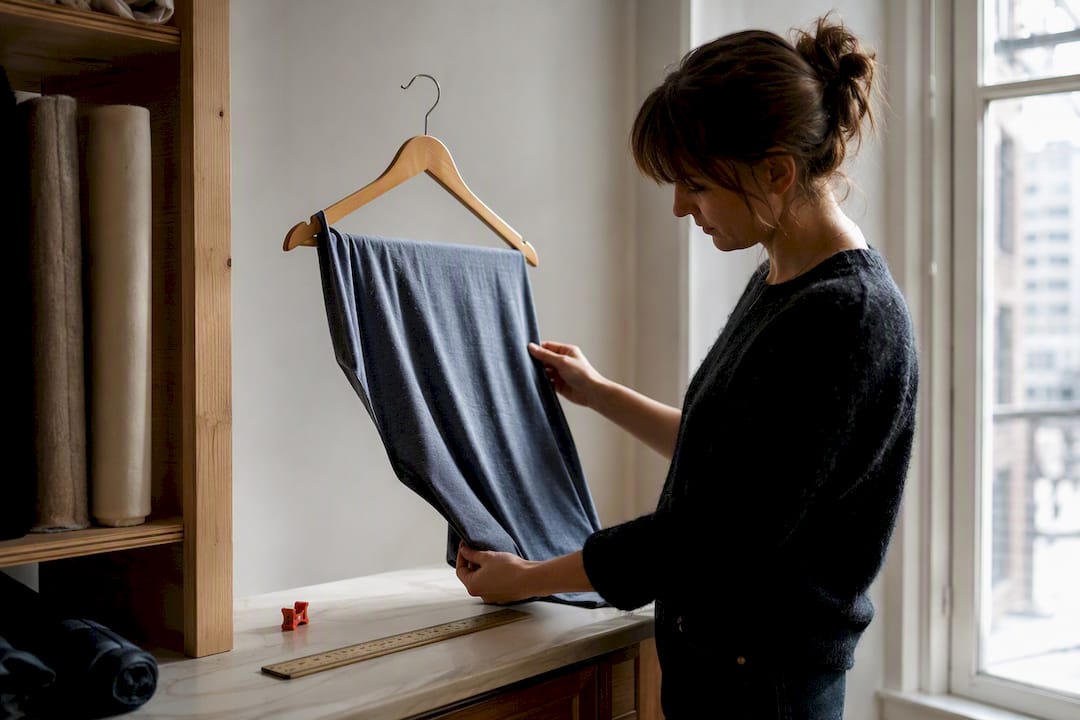
Run a drape check too: drape the fabric over your hand or a hanger and see how it falls. Jersey that hangs stiff and boardy, despite a soft hand feel, usually has too much finish applied and will loosen up unpredictably after the first wash.
Matching the right jersey weight to the right project saves you from the two most common jersey mistakes: fabric too flimsy to hold a garment’s shape, or too heavy to drape the way the pattern intended.
Cotton jersey isn’t the only knit worth considering. French terry shares jersey’s stretch but adds a looped, often uncut back for warmth and structure, making it the better pick for sweatshirts and joggers rather than draped tops. And when you need a garment to hold a defined shape rather than move with the body, cotton woven fabric is the better starting point entirely.
A few sewing tips that prevent most jersey headaches: use a ballpoint or stretch needle, never a sharp, since a sharp needle punctures and damages the loops instead of sliding between them. Stabilize necklines and shoulder seams with clear elastic or fusible knit interfacing before sewing, or they’ll stretch out permanently the first time someone pulls a shirt over their head. Finish seams with a zigzag stitch, a serger, or a twin needle hem rather than a straight stitch, which will pop the moment the fabric stretches.
Cotton jersey starts as raw cotton fiber, spun into yarn. The spinning method matters more than most buyers realize: combed cotton runs the fiber through an extra step that removes short strands before spinning, producing smoother, stronger yarn than standard carded cotton.
That yarn feeds into a circular knitting machine, where needles arranged around a cylinder loop it continuously to form the tube-shaped fabric jersey is known for. This is a fundamentally different process from weaving, which interlaces two separate yarn sets on a flat loom.
After knitting, the fabric goes through finishing: washing to relax the knit and remove processing residue, softening treatments, and sometimes mercerization, a chemical process that tightens the fiber structure and adds a slight sheen while improving strength and dye uptake. That’s why a fabric label listing “combed,” “ringspun,” or “mercerized” cotton tells you something concrete: better softness, fewer stray fibers, and generally more resistance to pilling than an untreated equivalent.
Cotton jersey holds up well over years of wear if you treat it right from the first wash, but a few careless habits will shrink, stretch, or fade it fast.
Pro Tip: If a jersey garment starts pilling, a fabric shaver removes the pills in seconds without damaging the knit underneath. Regular sweater combs work too, but they’re slower on larger areas like a shirt front.
Cotton jersey isn’t the right fabric for every job, and a few limitations show up consistently: it lacks the structure needed for tailored garments, it’s more prone to pilling than tightly woven cotton, and cut edges curl, which makes precise sewing trickier for beginners. Distortion during cutting and sewing is common if you don’t stabilize the fabric first.
One misconception worth killing outright: cotton and jersey are not competing fabric types. Jersey describes a knit construction, and cotton is one of several fibers that construction can use. Asking “cotton or jersey” is like asking “car or four wheels.” Skip jersey entirely for structured tailoring, stiff upholstery, or anything that needs to hold a crisp shape without built-in stretch.
Shopping for jersey online without touching the fabric first means leaning on the details a good product page actually gives you. Confirm the knit type, since “jersey” alone doesn’t tell you if it’s single knit or interlock. Look for a GSM figure, since weight determines whether a fabric suits a flowy dress or a structured tee.
Zoomed-in knit photos matter more than a hero shot from three feet away. They let you see loop density and texture before you commit to yardage. If a product page lacks that detail, request a swatch before ordering enough fabric for a full garment; it’s cheap insurance against a costly mismatch. When a pattern calls for extra ease or you’re unsure about shrinkage, order slightly more yardage than the pattern requires and reach out to support with questions about weight or content before buying in bulk.
Fiber content tells you almost nothing about how a fabric will actually behave on the body. Two 100% cotton jerseys, one combed and ringspun, one carded and loosely knit, can differ enormously in softness, pilling resistance, and how long they hold their shape.
The GSM number gets overlooked constantly, and that’s a mistake. A 140 GSM jersey and a 220 GSM jersey behave like different fabrics entirely, even with identical fiber content and knit type. Buyers fixate on fiber percentage because it’s the number most prominently listed, when knit type and weight usually predict real-world performance better.
The other pattern worth naming: sewists blame “cheap fabric” for pilling and distortion problems that actually trace back to washing habits, not the material itself. Hot water and high-heat drying will degrade even a well-made combed cotton jersey faster than a mediocre fabric treated gently. Before writing off a fabric as low quality, check your own care routine first.
— kev
Cotton knit fabrics are commonly sold by the yard, helping reduce the guesswork of ordering from photos alone. Good fabric category pages often include fiber content, weight, and care details up front, and some retailers let you request a swatch before committing to yardage.
If you’re weighing jersey against a heavier decor-weight knit for a home project, browse the home decor fabric selection alongside standard apparel jersey. For backdrop or larger-format projects that need wider bolts, the backdrop fabrics category covers those wider widths without sacrificing the knit qualities you’re shopping for. Before you check out, run the GSM number against your pattern’s requirements and order a swatch if the listing photos don’t show the loop structure clearly enough to judge stretch and hand. Start by browsing the cotton knit category and requesting a swatch for your next project.
For more on jersey’s structure and history, see Jersey (fabric) on Wikipedia, plus the practical guides at Clothing Digest and Loom & Fiber.