

 US Dollar

What is corduroy? Guide to uses, qualities, and care
Posted by BLG on 2026 May 6th
Posted by BLG on 2026 May 6th

TL;DR:
- Corduroy, traditionally made from cotton, features a soft pile and raised ridges called wales. Its durability and versatility make it ideal for fashion, home decor, and craft projects, with wale count affecting texture and appearance. Proper nap direction, maintenance, and fabric choice are essential for long-lasting, polished finished works.
Corduroy has a reputation problem. Most people picture beige pants from the 1970s, but this textured fabric has been quietly starring in jackets, throw pillows, headboards, tote bags, and children’s clothing for generations. It’s durable, warm, visually rich, and surprisingly versatile across both fashion and home decor. This guide will walk you through exactly what corduroy is, how it’s constructed, what makes it special, how to pick the right type for your project, and how to care for it so your finished work stays beautiful for years.
| Point | Details |
|---|---|
| Corduroy’s unique texture | Its ribbed surface, called wale, is both stylish and functional for many projects. |
| Versatile uses | Corduroy suits everything from apparel to home décor when you match wale and weight to your project. |
| Choose the right blend | Cotton corduroy is classic, but blends can offer increased durability or softness depending on your DIY needs. |
| Proper care matters | Regular vacuuming and nap-aware cleaning keep corduroy looking great for years. |
Corduroy belongs to the velvet family of fabrics, which might surprise you. Like velvet, it has a raised pile, meaning the fibers stand up from the base weave to create that signature soft, textured surface. The key difference is that corduroy’s pile is cut into distinct parallel ridges called cords or wales, running the full length of the fabric. Run your fingers along a piece of corduroy and you’ll feel those ridges immediately. That’s the whole point.
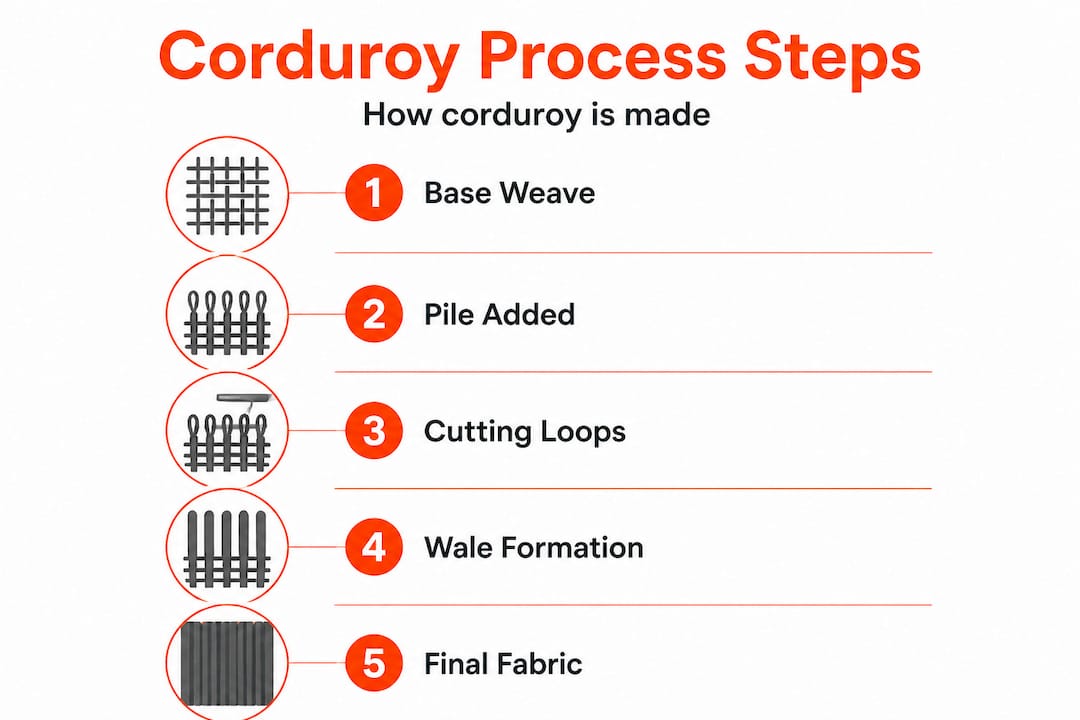
The fabric starts as a base weave, usually a plain weave or twill construction. Extra yarn is woven in as floating loops across the surface, which are then cut and brushed to create the raised ridges. The result is a fabric with visible grooves running between those ridges, a feature that becomes very important for both aesthetics and care.
Historically, cotton is a common traditional choice for corduroy, though modern versions also come in polyester blends, rayon blends, and even stretch versions with added spandex. The fiber content directly affects how your finished piece looks and performs. Cotton corduroy breathes well and takes dye evenly, making it ideal for rich, deep colors. Polyester blends resist wrinkles better. Stretch versions work beautifully for fitted garments like skirts or slim-cut pants.
Here’s a quick comparison of the most common corduroy fiber types:
| Fiber type | Best for | Feel | Durability |
|---|---|---|---|
| 100% cotton | Apparel, quilts, decor | Soft, breathable | Very good |
| Cotton/polyester blend | Everyday garments, upholstery | Smooth, wrinkle-resistant | Excellent |
| Cotton/spandex blend | Fitted clothing, children’s wear | Stretchy, comfortable | Good |
| Rayon blend | Lightweight fashion projects | Fluid, soft drape | Moderate |
When you’re shopping for corduroy, pay attention to the fiber content label. It tells you everything about how the fabric will behave on the cutting table, under the iron, and in the wash. Explore fashion uses for corduroy to understand which fiber types work best for wearables versus home projects, or check out a fabric blends comparison if you’re weighing options.
“Corduroy is made from many fiber types in general, but cotton is a common traditional choice; it can also be in blends.” — Fabric Atlas
With a basic understanding of how corduroy is made, let’s look at the characteristics that truly set it apart from other fabrics you might reach for.
Wale: the defining measurement
Wale is the number of cords or ridges per inch of fabric. A high wale number means more, narrower cords packed tightly together. A low wale number means fewer, broader ridges. This single measurement changes everything about how a piece of corduroy looks and feels.
Fine wale corduroy (16 to 21 wales per inch) is silky, almost subtle in texture, and works beautifully for tailored garments like blazers, dress pants, or children’s clothing. Standard wale (8 to 14 per inch) is the most recognizable and versatile. Wide wale (under 8 per inch) has bold, chunky ridges that make a strong visual statement, and it’s a popular choice for corduroy texture overview in upholstery and statement home decor pieces.
| Wale count | Appearance | Best uses |
|---|---|---|
| 16 to 21 (fine) | Subtle, smooth | Shirts, dress pants, children’s wear |
| 8 to 14 (standard) | Classic corduroy look | Jackets, skirts, cushions, bags |
| Under 8 (wide) | Bold, chunky ridges | Upholstery, throw pillows, feature items |
The nap direction matters more than you think
All corduroy has a nap, meaning the pile leans in one direction. When light hits the fabric differently depending on which direction you’re looking, you’ll see the color shift. Cutting pattern pieces in different directions creates visible color inconsistency in your finished project. Always lay all pieces with the nap running the same way.
Pro Tip: Before you cut anything, brush your hand up and down the fabric. The direction that feels smoother is the direction the nap runs. Mark the top of every pattern piece and cut them all the same way.
Durability and comfort
Corduroy is genuinely tough. The construction that creates those ridges also builds in density and strength. High-quality cotton corduroy stands up to repeated washing and heavy use better than many other casual fabrics. It insulates well, making it a natural choice for fall and winter garments. The pile also adds a pleasant softness that improves with washing, not unlike denim. Use a solid fabric selection guide to compare corduroy against other upholstery and fashion fabrics before committing to a project.
Key things to look for when buying corduroy by the yard:
Once you’re familiar with corduroy’s qualities, it’s time to explore where it truly shines in your sewing and decor projects.
Fashion and apparel
Corduroy’s warmth and durability make it a go-to for cooler-weather garments. Jackets are probably its most celebrated use: the structured weight holds shape beautifully at seams and lapels. Pants are a classic for a reason, and current fashion has brought them back in a big way. Even high-end designers like Gucci have released luxury corduroy pant versions, proof that this fabric sits comfortably between casual and elevated.
Children’s clothing benefits enormously from corduroy’s durability. Little knees and elbows get a fabric that holds up to playground use while staying soft against sensitive skin. Skirts in fine wale corduroy drape unexpectedly well, especially when cut on the bias. Shirts and lightweight tops made from 16 to 21 wale versions feel more like brushed cotton than traditional corduroy.
Home decor projects
This is where corduroy surprises people most. The ribbed texture of upholstery with corduroy adds visual depth and tactile appeal that flat weaves simply can’t match. Throw pillows with wide wale corduroy immediately give a room a cozy, layered look. Slipcovers for armchairs work wonderfully because corduroy’s body helps the fabric hold its shape. Headboards upholstered in corduroy add a statement texture without overwhelming other decor elements.
Cushion covers are a great entry project for beginners because they require minimal pattern work and show off the fabric’s character with very little sewing. Refer to essential home decor fabrics to see how corduroy stacks up against linen, velvet, and other popular choices for decor sewing.
Craft and accessory projects
Don’t overlook corduroy for smaller creative projects. Tote bags, bucket hats, and patchwork projects benefit from its distinct texture. Corduroy scraps make excellent accent panels in quilts, mixing beautifully with cotton prints. Small bags stitched from leftover corduroy get a tactile richness that plain cotton or canvas can’t replicate.
Here are some of the best starting corduroy projects for DIYers:
Pro Tip: When sewing corduroy for the first time, use a needle specifically designed for medium-weight woven fabrics, around a size 80 to 90 universal or microtex needle. And slow your machine down a little. The pile can bunch if you rush.
Knowing what corduroy is good for means nothing if your finished project deteriorates after a few months. Responsible crafting includes knowing how to keep corduroy looking its best.
Routine maintenance
For home decor items, vacuuming along the nap and ridges and gently brushing after each cleaning session are the most effective strategies to prevent dust buildup inside the grooves. Corduroy’s ribbed surface is a natural dust trap, and a soft brush or low-suction vacuum attachment goes a long way toward keeping colors vibrant and grooves defined.
For apparel, shaking garments out before storing and hanging rather than folding helps maintain the nap’s direction and prevents crushed areas.
Washing and drying
“For home decor projects, corduroy’s ribbed surface tends to collect dust in the grooves, so maintenance routines typically emphasize vacuuming along the nap/ridges and careful brushing after cleaning.” — Knowing Fabric
Spot cleaning and stain removal
Blot stains immediately with a clean, dry cloth. Never rub, since rubbing pushes the stain deeper into the pile. Use a mild detergent diluted in cool water and work from the outside of the stain inward. Rinse gently and let the area air dry. For home decor upholstery projects, a fabric-safe upholstery cleaner designed for pile fabrics is your safest option. Check the upholstery fabric guide for product recommendations that work across corduroy and similar textured fabrics.
Pro Tip: Restore crushed corduroy nap by holding the fabric over steam (from a kettle or a clothing steamer) and then gently brushing in the correct nap direction with a soft-bristle brush. This works remarkably well on both garments and home decor pieces.
DIY repair basics
Small worn areas can be patched with matching or contrasting corduroy. Raw edges on corduroy don’t fray severely because the construction is dense, but finishing them with a zigzag stitch or binding is still recommended for longevity. Frayed edges on corduroy cuffs can be carefully trimmed and rebound without losing much length.
Here’s something most beginner guides skip over entirely: the nap direction problem doesn’t just affect color consistency. It affects your whole experience of the finished project. A cushion cover where some panels run against the nap looks obviously off, even to people who can’t name why. A jacket with sleeves cut the wrong way looks strangely flat on one side. These errors aren’t subtle. They’re visible from across a room.
After years of working with and recommending fabrics for DIY enthusiasts, we’ve seen the nap direction mistake happen repeatedly, even to experienced sewists who are used to working with other pile fabrics. Corduroy’s nap is a little less obvious than velvet, so it’s easy to get casual about it. Don’t.
What we genuinely love about corduroy is the payoff for a little upfront effort. If you pre-wash it to account for shrinkage, press your seams correctly (with a needle board or a terry cloth towel under the pile), and align your pattern pieces carefully, corduroy rewards you with a finished product that looks expensive and lasts for years. A corduroy jacket sewn at home can look every bit as polished as a retail piece. Sometimes more so.
One of the most overlooked corduroy opportunities? Scraps. Even small offcuts from a larger project are incredibly useful. A corduroy patch on a worn denim elbow is functional and stylish. Corduroy trim on the collar or cuffs of a plain coat adds dimension without adding bulk. Scraps can be turned into keyrings, small coin pouches, or fabric-covered buttons that elevate a simple garment.
Using smart fabric selection wisdom from the start helps you choose the right wale for your project before you cut a single inch. That one decision changes everything downstream.
The broader lesson? Corduroy isn’t intimidating once you understand its specific needs. It is not a beginner nightmare, it’s just a fabric with clear preferences. Meet those preferences and it becomes one of the most satisfying materials you’ll ever sew.
Inspired to get hands-on? The first step is finding quality corduroy that actually suits your specific project, whether you’re reupholstering a small bench, sewing a fall jacket, or adding textured panels to a quilt.
At fabric-fabric.com, you’ll find an impressive range of corduroy fabrics sorted by wale size, color, fiber blend, and intended use. Whether you need a bold wide wale for a statement home decor piece or a soft fine wale for children’s garments, the selection covers every creative direction. Browse the home decor fabric selection to find corduroy and coordinating textiles for upholstery and cushion projects, or visit quilting fabric options to find corduroy that plays beautifully with patchwork patterns. Prices are listed clearly by the yard, with seasonal discounts and free shipping thresholds making it easy to stock up for bigger projects.
No, while cotton is traditional, corduroy also comes in blends with polyester, rayon, or spandex for different performance qualities.
Vacuuming along the ridges and gentle brushing after each cleaning session are the most effective habits to prevent dust from settling deep into the grooves.
Wale refers to the number of raised cords per inch of fabric. Fewer wales per inch means wider, chunkier ridges; more wales per inch means finer, more subtle lines.
Yes, corduroy’s dense construction and textured surface make it a strong performer for cushions, slipcovers, and headboards, though regular care for corduroy upholstery is essential to keep the grooves clean and colors vibrant.
Absolutely. Corduroy adds warmth, softness, and visual texture to quilts, though its weight and bulk mean seams should be pressed firmly and pattern designs kept relatively simple to avoid excessive bulk at intersections.