

 US Dollar

Velvet Fabric Explained: What It Is and How to Use It
Posted by BLG on 2026 Jul 11th
Posted by BLG on 2026 Jul 11th

TL;DR:
- Velvet is a woven fabric with dense, upright fibers that create a soft, reflective surface. Its construction involves a warp pile weave that produces a unique nap, which shifts color when viewed from different angles. The fiber type and pile direction significantly influence velvet’s appearance, durability, and best uses.
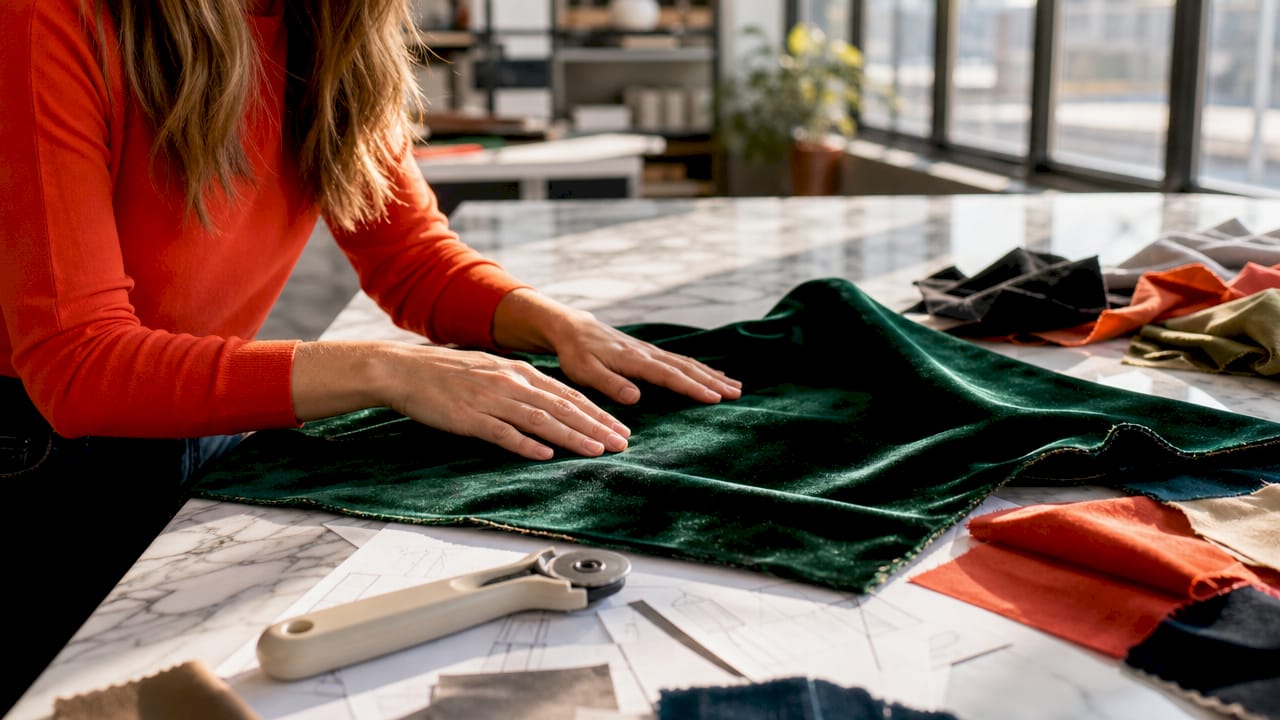
Velvet is defined as a woven pile fabric with dense, upright fibers that reflect light in a way no other textile can replicate. The technical term for this structure is “warp pile weave,” where loops of yarn are woven over the base cloth and then cut to create a short, even surface of standing fibers. That surface, called the nap, is what gives velvet its signature soft touch and its color-shift optical effect. Velvet has been a luxury textile for centuries, appearing in royal courts and high fashion alike. Today it covers everything from evening gowns to upholstered sofas, and understanding what velvet fabric is helps you choose and use it with confidence.
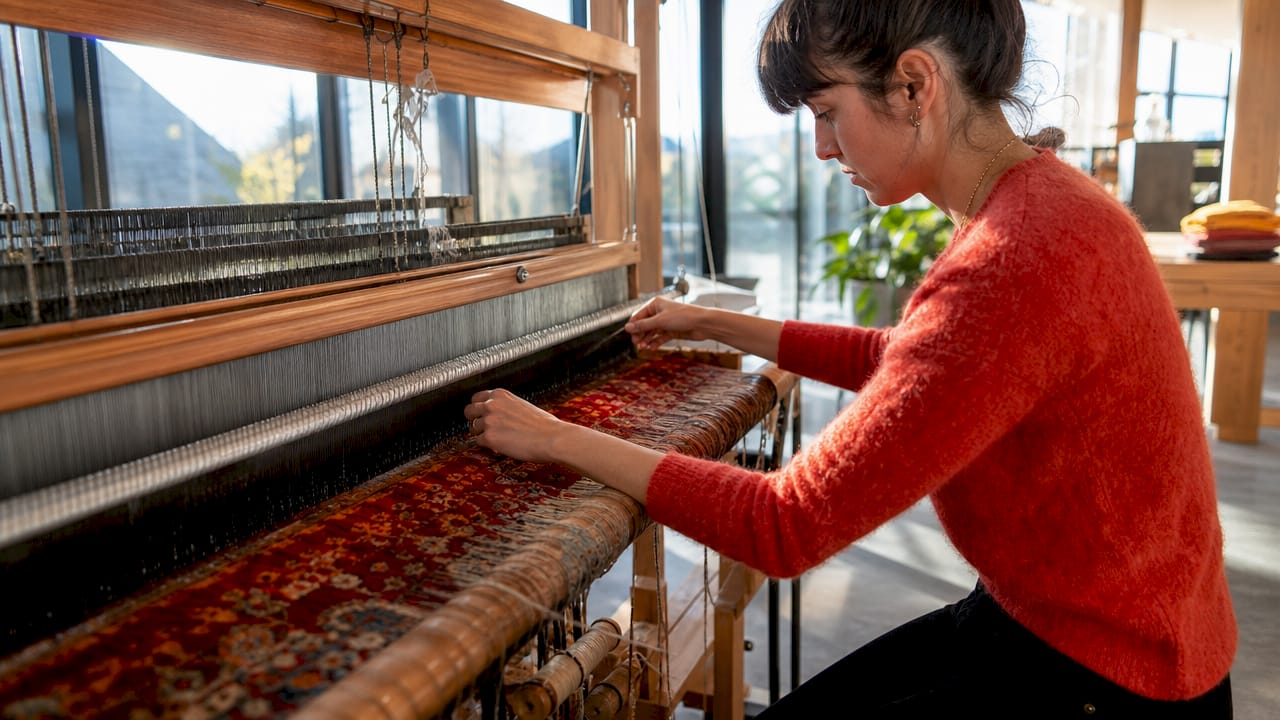
Velvet is produced on a specialized double-cloth loom. Two layers of fabric are woven simultaneously, connected by shared pile warp threads running between them. A blade then cuts those connecting threads, separating the two layers and leaving each with a short, upright pile on its surface. That cut pile is what you feel when you run your hand across velvet.
The pile can be left cut, which produces the classic smooth velvet surface, or left as loops, which creates a textured variant sometimes called uncut velvet or ciselé velvet. Cut pile catches and reflects light evenly. Looped pile scatters light and creates a more matte, patterned look. Most velvet sold for fashion and home decor uses cut pile.
The nap’s directional orientation is the defining feature of velvet’s appearance. Tilt a piece of velvet one way and it looks deep and dark. Tilt it the other way and it brightens. This optical behavior is what makes velvet so visually alive compared to flat-woven fabrics like cotton twill or linen.
These three fabrics confuse shoppers constantly, but their constructions are completely different.
| Fabric | Construction | Pile type | Typical feel | Common uses |
|---|---|---|---|---|
| Velvet | Warp pile, woven | Cut or looped | Soft, shiny, fluid drape | Eveningwear, upholstery, curtains |
| Velveteen | Weft pile, woven | Cut | Dense, matte, stiffer | Casual clothing, children’s wear |
| Velour | Knit base | Cut | Stretchy, soft, casual | Sportswear, loungewear, costumes |
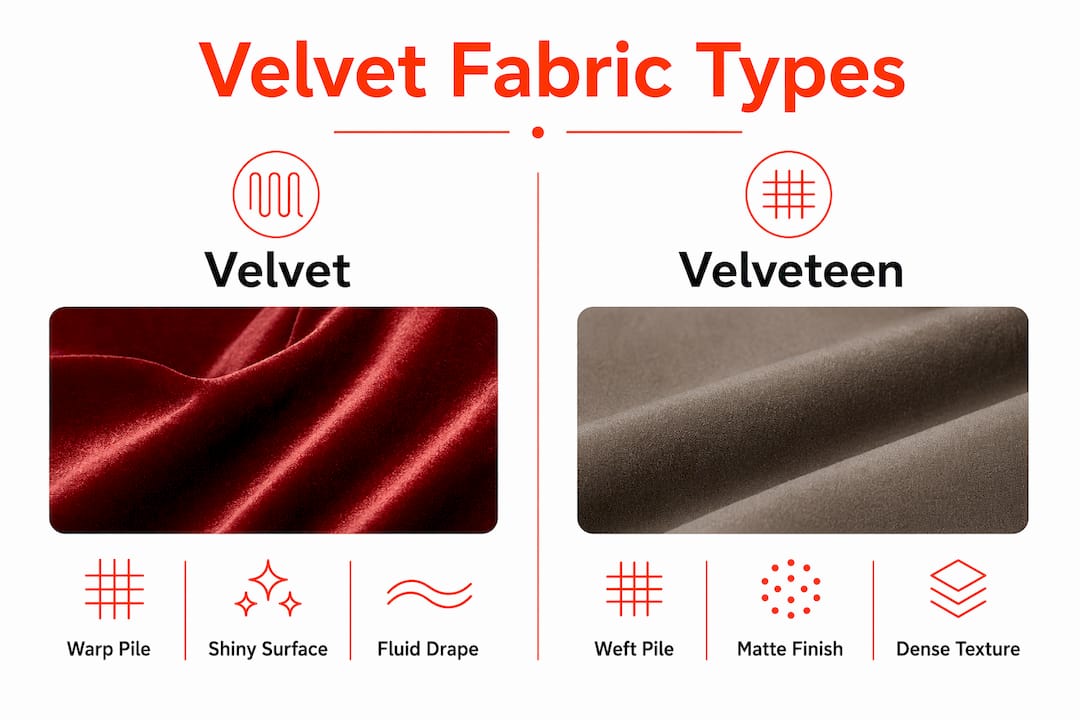
True velvet uses a warp pile, which produces maximum luster and a fluid drape. Velveteen uses a weft pile, making it denser and more matte. Velour is a knit fabric, not a woven one, so it stretches and behaves more like jersey than velvet.
The fiber inside the pile determines how velvet performs, not just how it looks. Choosing velvet based on color alone is a common mistake. Fiber composition drives performance aspects like fire rating, wear resistance, and cleaning requirements.
Here is how the main fiber types compare:
Pro Tip: When buying velvet for upholstery, always check the Martindale rub count on the product listing. For residential use, aim for 25,000 or above. For commercial or high-traffic settings, look for 80,000 or higher.
The naming confusion between these three fabrics leads to real purchasing errors. A crafter who buys velour expecting velvet’s drape will be disappointed. A sewist who orders velveteen for a formal gown will find it too stiff. Knowing the practical differences saves time and money.
| Feature | Velvet | Velveteen | Velour |
|---|---|---|---|
| Base construction | Woven | Woven | Knit |
| Pile direction | Warp (lengthwise) | Weft (crosswise) | Cut knit loops |
| Drape | Fluid, elegant | Stiffer, structured | Stretchy, relaxed |
| Typical fiber | Silk, cotton, polyester | Cotton | Polyester, cotton blend |
| Best for | Formalwear, upholstery, curtains | Casual clothing, children’s wear | Sportswear, loungewear |
| Sewing difficulty | High (slippery, nap-sensitive) | Moderate | Low (stretches, forgiving) |
Velvet’s warp pile gives it a shinier, softer surface with a strong drape. Velveteen’s weft pile creates a denser, more matte fabric that holds its shape better. Velour’s knit base makes it the most forgiving to sew and the most casual in appearance.
For a detailed breakdown of how these fabrics differ in pile depth and crafter applications, the velvet vs velour guide at Fabric-fabric covers the key distinctions clearly.
Velvet rewards patience. Its dense pile creates friction between layers, causes tension problems on standard sewing machines, and shows every pin hole permanently. The good news is that a few specific techniques solve most of these problems.
Follow these steps for clean, professional results:
For cleaning, most cotton and synthetic velvets tolerate gentle hand washing in cool water. Silk velvet requires dry cleaning. Always check the care label and test a small hidden area first.
Pro Tip: Steam velvet from the wrong side only, holding the iron just above the surface. Direct contact crushes the pile flat and can be impossible to reverse.
For more detailed sewing guidance, Fabric-fabric’s article on sewing with velvet covers common mistakes and how to avoid them.
Velvet’s applications are broader than most people expect. Its visual depth and tactile quality make it a strong choice across three distinct categories.
Fashion and costume:
Home decor and upholstery:
Crafts and DIY projects:
The pile’s direction affects how finished pieces look in every application. Cutting all panels with the pile running downward produces a lighter, brighter color. Running the pile upward creates a deeper, richer tone. Choosing one direction and sticking to it is the difference between a polished result and a patchy one. For inspiration on velvet in interior settings, Fabric-fabric’s guide on velvet in interiors offers practical ideas across room types.
Velvet is a warp-pile woven fabric whose fiber type, pile direction, and construction method determine its performance, durability, and best use.
| Point | Details |
|---|---|
| Velvet construction | Warp pile weave creates the soft, light-shifting surface that defines true velvet. |
| Fiber choice matters | Mohair suits contract upholstery; cotton works for home decor; silk is best for formal fashion. |
| Velvet vs velveteen vs velour | Velvet drapes, velveteen holds shape, and velour stretches. Each suits different projects. |
| Sewing requirements | Use a walking foot, cut single layers, align nap, and allow 15–20% extra yardage. |
| Durability potential | Cotton velvet upholstery lasts 15–20 years; mohair velvet exceeds 80,000 Martindale rubs. |
People avoid velvet because they assume it is high-maintenance and delicate. That assumption is accurate for silk velvet and completely wrong for cotton, mohair, and synthetic versions.
I have seen cotton velvet sofas outlast linen and even some performance fabrics in real homes with kids and pets. The pile does change with use. It flattens in high-contact areas, shifts with pressure, and develops what designers call a patina. That is not damage. Velvet’s pile is a living surface that records use and light. The marks left by a hand or a cushion are part of its character, not a sign of failure.
The real mistake people make is choosing velvet based on color and ignoring the fiber spec entirely. A beautiful silk velvet sofa in a busy living room is a bad decision. A mohair or cotton velvet sofa in the same room is a genuinely durable choice. Fiber composition drives performance in ways that color and pile depth never reveal.
My honest advice: do not let velvet’s reputation stop you from using it. Do let fiber type guide every purchasing decision you make. Pick the right fiber for the job, follow the sewing basics, and velvet will reward you with a result that no flat-woven fabric can match.
— kev
Fabric-fabric carries a curated range of velvet and home decor fabrics suited for fashion, upholstery, curtains, and craft projects. Whether you are working on a formal gown, reupholstering a chair, or adding texture to a DIY project, the selection covers cotton, synthetic, and specialty velvets in a wide range of colors.
The home decor fabric collection includes velvet options sold by the yard, with clear descriptions of fiber content and recommended uses. For backdrop and specialty velvet fabrics suited to photography sets, stage design, and event decor, the backdrop fabrics page offers a focused selection. Fabric-fabric also provides free shipping thresholds and seasonal promotions, making it a practical starting point for any velvet project.
Velvet is a woven pile fabric made using a warp pile weave technique, producing a dense, soft surface with a distinctive light-shifting nap. It is not a knit fabric, which distinguishes it from velour.
Velvet uses a warp pile and has a shiny, fluid drape, while velveteen uses a weft pile and is denser, more matte, and stiffer. Velveteen is typically cotton and better suited to casual clothing.
Cotton and synthetic velvets tolerate gentle hand washing in cool water, while silk velvet requires dry cleaning. Always steam from the wrong side and avoid direct iron contact to protect the pile.
Cotton and synthetic blend velvets are highly durable for furniture, with quality cotton velvet upholstery lasting 15–20 years. Mohair velvet reaches Martindale rub counts of 80,000–100,000, making it suitable for commercial upholstery.
Velvet’s pile fibers stand upright and reflect light directionally, creating a color-shift effect as the viewing angle changes. This nap effect is the defining visual characteristic of velvet and the reason all panels must be cut in the same direction.