

 US Dollar

Types of Fabrics Every Fashion Designer Needs to Know
Posted by BLG on 2026 Apr 16th
Posted by BLG on 2026 Apr 16th

TL;DR:
- Fabric selection is a critical creative and technical decision affecting design, fit, and durability.
- Natural fibers offer breathability and comfort, while synthetics provide performance benefits and durability.
- Understanding construction methods and fabric properties empowers designers to make informed choices and innovate.
Choosing the wrong fabric can turn a brilliant design into a wearable disaster. Every seam, silhouette, and surface finish depends on what material you pick before the first cut. For fashion designers and students, fabric selection is not just a technical step — it is a creative strategy. Understanding the mechanical properties, aesthetic potential, and construction logic behind each fabric type gives you a real edge in the studio. This guide walks you through the core criteria for evaluating fabrics, profiles the most important natural and synthetic options, breaks down construction methods, and introduces the sustainable textiles reshaping what is possible in modern apparel design.
| Point | Details |
|---|---|
| Fabric choice matters | The right fabric can elevate a design’s aesthetics, function, and comfort. |
| Know your fibers | Natural, synthetic, and blend fabrics each offer unique advantages for garment creation. |
| Construction impacts fit | Woven fabrics give structure while knits offer stretch and comfort. |
| Sustainability is rising | Eco-friendly fabrics like Tencel and organic cotton are shaping future design. |
Before you fall in love with a swatch, you need a framework. Every fabric can be assessed through a consistent set of properties that tell you how it will perform on the body, under a machine, and over time.
Start with fiber origin, which breaks into three categories: natural (cotton, wool, silk, linen), synthetic (polyester, nylon, spandex), and blends. Fiber origin directly shapes how a fabric feels against skin, how it responds to moisture, and how it ages. A 100% silk charmeuse behaves very differently from a polyester charmeuse, even when both look similar on a hanger.
Construction method is just as important. Woven fabrics are made by interlacing yarns at right angles, creating stability and structure. Knit fabrics are formed by interlooped yarns, producing stretch and flexibility. This distinction alone determines whether a design drapes fluidly or holds a sharp silhouette.
GSM (grams per square meter) is the standard measure of fabric weight. Understanding GSM in textiles helps you decide whether a fabric is suited for a breezy summer blouse or a structured winter coat. Lighter fabrics fall below 150 GSM, while structured tailoring materials typically sit above 300 GSM.
Beyond these, watch for drape (how a fabric falls and moves), tensile strength (resistance to tearing under tension), and elasticity (ability to stretch and recover). As a rule, fabric performance factors like drape, GSM, construction method, and fiber origin all affect how a fabric ultimately performs in a garment.
“Every wrong fabric choice is a design decision you will regret at the fitting.” — Pearl Academy Fashion Faculty
Pro Tip: Always drape or scrunch a fabric sample in your hand before committing to yardage. You will learn more in ten seconds of handling than from any spec sheet.
Natural fibers have anchored fashion for centuries, and for good reason. They offer breathability, comfort, and an organic aesthetic that synthetics still struggle to replicate. Natural fibers like cotton, wool, silk, and linen offer distinct advantages in breathability, drape, and comfort that make them irreplaceable in the designer’s toolkit.
Cotton is the workhorse of apparel. It is soft, hypoallergenic, and highly absorbent, making it ideal for everyday wear, summer collections, and childrenswear. Cotton absorbs up to 8.5% moisture of its own weight, which is why it feels comfortable in warm climates. Its downside is that it wrinkles easily and can shrink without pre-washing. Explore the benefits of organic cotton if sustainability is part of your brand story.
Wool is exceptional for cold-weather and structured garments. It regulates temperature naturally, wicks moisture away from the skin, and has a built-in elasticity that helps garments return to shape. It is your go-to for tailored coats, suits, and knitwear, though it requires careful washing and can irritate sensitive skin.
Silk delivers unmatched drape and a luminous sheen that elevates any evening or bridal design. It is lightweight and temperature-regulating but wrinkles easily and requires delicate handling. Budget constraints are real here — silk is one of the most expensive natural fibers per yard.
Linen is strong, breathable, and biodegradable, making it an eco-forward choice. It is ideal for relaxed summer silhouettes and resort wear. The trade-off is pronounced wrinkling, which can work as a design aesthetic or frustrate clients who want a crisp finish.
Pro Tip: Blending natural fibers, like a cotton-linen mix, gives you breathability and added durability without sacrificing comfort. Many mid-range collections use blends to control cost and performance simultaneously.
The evolution of fashion has been shaped significantly by synthetic textiles. These materials are engineered to solve problems that nature alone cannot, from moisture management to extreme stretch recovery.
Polyester dominates global fabric production. It is wrinkle-resistant and durable, colorfast, and inexpensive to produce. Its low absorbency makes it poor for hot-weather wear but excellent for outerwear linings and structured pieces. Sustainability is a growing concern here — polyester sheds microplastics during washing.
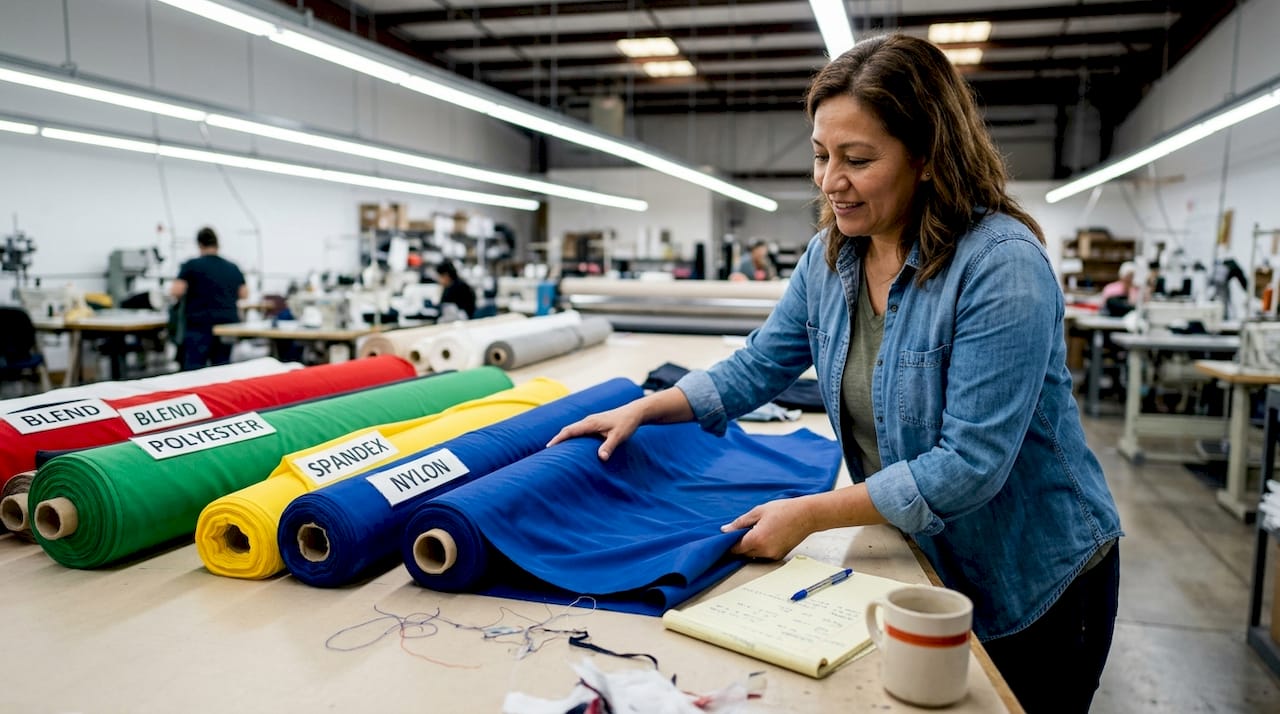
Nylon is the performance workhorse for activewear and outerwear. Its abrasion resistance is roughly 10 times that of cotton, which is why it appears in everything from windbreakers to luggage. It is lightweight, quick-drying, and strong under tension. Check synthetic vs natural trade-offs before committing to a nylon-heavy line.
Spandex (elastane) delivers elasticity up to 500 to 700% elongation, making it essential for bodywear, swimwear, and athleisure. It is rarely used alone but blended in small percentages, often 2 to 5%, to give garments recovery without losing the feel of the base fiber. Synthetics are increasingly used for waterproof and breathable technical outerwear, where membrane technologies like Gore-Tex combine multiple fabric systems.
Keep an eye on GSM in fabric when selecting synthetics — a lightweight technical nylon at 80 GSM behaves very differently from a heavy bonded polyester at 400 GSM.
| Fabric | Strength | Elasticity | Breathability |
|---|---|---|---|
| Polyester | High | Low | Low |
| Nylon | Very High | Moderate | Moderate |
| Spandex | Moderate | Extreme | Low |
Pro Tip: Choose synthetics for performance-driven collections, but research the environmental footprint early. Recycled nylon and polyester options are widely available and reduce reliance on virgin petrochemicals.
Two garments can be made from the same fiber and feel completely different in wear. The reason is construction. Understanding this difference changes how you sketch, cut, and sew.
Woven fabrics are created by interlacing two sets of yarns at 90-degree angles: the warp (lengthwise) and the weft (crosswise). The result is a stable, firm structure with high tensile strength and minimal stretch unless cut on the bias. Wovens are ideal for tailored pieces, structured jackets, trousers, and button-down shirts where shape retention matters.
Knit fabrics are formed by interlooping a single yarn into rows of connected loops. This gives knits their characteristic stretch and recovery, making them comfortable and body-conforming. Knits drape fluidly and work beautifully for T-shirts, jersey dresses, and activewear.
“Use wovens when the design does the talking; use knits when comfort and movement lead the brief.” — Textile Engineering Network
Choosing between them comes down to a few key questions:
Learn more about the difference between knit and woven before finalizing your construction choice.
| Property | Woven | Knit |
|---|---|---|
| Tensile strength | High | Moderate |
| Stretch | Low (unless bias cut) | High |
| Drape | Structured | Fluid |
| Typical use | Tailoring, suiting | T-shirts, jersey, activewear |
Recent innovations also blur this line. Woven-knit hybrid constructions are gaining traction in technical fashion, combining the structure of wovens with the stretch of knits for high-function pieces that move with the body.
Ethical production and innovative materials are no longer niche interests. They are core considerations for any designer building a brand that lasts.
Organic cotton, Tencel, and recycled polyester are all gaining serious ground in both commercial and independent collections, with newer fibers like Brewed Protein emerging as viable couture materials for 2026 and beyond. These are not just PR-friendly swaps — many offer real performance benefits.
Leading sustainable fabric options to explore:
Synthetics, for all their benefits, are a documented microplastic source, releasing thousands of plastic particles per wash cycle into waterways. That stat matters when you are selecting base fabrics for a volume line.
Certification is equally important. Labels like GOTS (Global Organic Textile Standard) and OEKO-TEX Signal verified sourcing and production standards, giving you and your clients confidence about what is actually in the garment.
Pro Tip: Try incorporating fabrics with at least 30% recycled content in your next collection. You get comparable function, a better sustainability story, and access to a growing consumer segment that checks labels before they buy.
Most design programs spend 80% of their time on silhouette, proportion, and trend forecasting. Fabric education often gets compressed into a single semester module. That is a problem, because material literacy is where amateur designers and professional ones actually diverge.
Here is what we have observed: designers who deeply understand their fabrics make fewer expensive sampling mistakes. They communicate more precisely with manufacturers. They make bolder creative choices because they understand what a material can and cannot do under stress. Choosing a wrong interfacing or a weak weft yarn does not just affect construction — it affects how the garment wears over years.
The fabric-first mindset also opens up design possibilities that trend-following alone never will. When you know that a bias-cut woven silk behaves like a liquid, or that a bonded nylon scuba can hold a sculptural three-dimensional form without internal boning, you start designing from the material rather than forcing the material into a predetermined idea. That shift in thinking is where genuinely original work comes from.
Invest in building a physical fabric library. Touch, drape, wash, and stress-test swatches. The knowledge you build from handling real materials is irreplaceable, and it will inform your design decisions in ways no digital reference ever can.
Every design starts with a swatch. Whether you are working with silk charmeuse, recycled nylon, or organic cotton jersey, the fabric you choose shapes everything that follows.
At fabric-fabric.com, we stock an extensive range of apparel fabrics organized by type, weight, and intended use, so you can find exactly what your project needs without wading through irrelevant options. From performance textiles for activewear to luxurious specialty fabrics for couture work, our catalog is built with working designers in mind. Check current promotions for free shipping thresholds and seasonal discounts on new fabric arrivals, and use the search function to filter by GSM, fiber content, or fabric type to narrow down your perfect match fast.
Woven fabrics offer structure and dimensional stability, making them ideal for tailored garments, while knits are stretchier and more comfortable for body-conforming or active designs.
GSM tells you how heavy or light a fabric is — GSM below 150 is lightweight and flowy, while above 300 is heavy and structured, directly affecting drape and garment category.
Sustainable fabrics like organic cotton and Tencel offer durability comparable to conventional counterparts, and some recycled synthetics match or exceed the performance of virgin materials.
Natural fibers like cotton and linen are ideal for summer collections because of their breathability and moisture absorption, keeping wearers cooler in warm conditions.