

 US Dollar

Role of Motifs in Fabric Design – Inspiring Creative Projects
Posted by BLG on 2026 Feb 10th
Posted by BLG on 2026 Feb 10th


Choosing the right motif transforms fabric from simple material into a vibrant story packed with meaning. Motifs are more than just decorative elements. They are cultural symbols that speak through color, pattern, and repetition. For North American quilters and home decorators, understanding the basics of motif design opens up new possibilities for personalized projects. This article unpacks the key concepts, types, and placement strategies behind these storytelling devices to help you craft designs that are both beautiful and meaningful.
| Point | Details |
|---|---|
| Motifs are Storytelling Elements | Fabric motifs serve as visual symbols that communicate cultural narratives and artistic expressions. |
| Cultural Significance of Motifs | Different motifs often represent deeper meanings tied to nature, mythology, and cultural heritage. |
| Strategic Motif Placement is Essential | The arrangement of motifs can enhance visual storytelling and must consider factors like scale and repetition. |
| Avoid Common Design Mistakes | Designers should be mindful of originality and cultural context to create authentic and compelling textile designs. |
Fabric motifs are distinctive visual elements that transform plain textiles into storytelling canvases. These decorative design components serve as the fundamental building blocks of textile artistry, communicating cultural narratives and artistic expressions through carefully crafted visual language.
In textile design, motifs represent recurring visual symbols or patterns that convey deeper meanings beyond simple decoration. Textile art traditions demonstrate that motifs are more than aesthetic elements - they are powerful storytelling devices embedded with historical and cultural significance.
Key characteristics of fabric motifs include:
Textile arts often utilize motifs) as smaller components within larger works, strategically combining and varying them to create complex patterns. Quilters, in particular, understand how individual motifs can transform entire textile compositions by unifying design elements through texture, color, and strategic repetition.
Pro tip: Select motifs that resonate with your personal artistic vision and cultural background to create truly meaningful textile designs.
Fabric motifs represent a rich tapestry of cultural symbolism, drawing inspiration from diverse sources like nature, mythology, and artistic traditions. Textile design traditions reveal that these visual elements are far more than decorative patterns - they are complex languages of cultural expression.
Some of the most prominent motif categories include:
Textile traditions in Delhi showcase specific motifs with profound meanings. For instance, the Paisley motif - characterized by its distinctive teardrop shape - symbolizes fertility and abundance. Similarly, motifs like the Lotus represent purity and spiritual awakening, while Elephant and Peacock motifs communicate themes of strength and elegance.
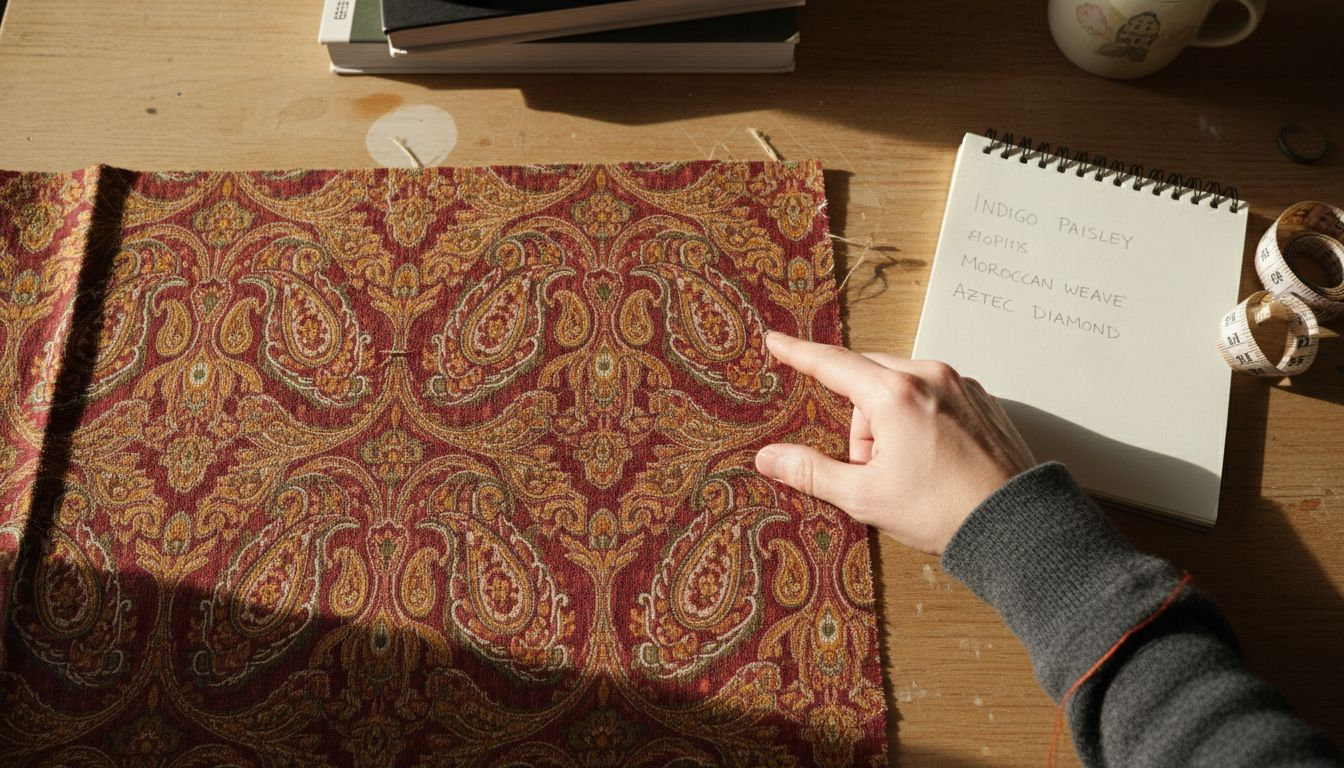
Each motif carries a unique narrative, transforming fabric from a mere textile into a storytelling medium that connects generations and cultures through visual symbolism. The intricate designs communicate complex emotional and cultural landscapes, making fabric design an art form that transcends simple decoration.
Pro tip: Research the cultural origins of specific motifs to add deeper meaning and authenticity to your fabric design projects.
Here is a quick reference summarizing the symbolic meanings of popular fabric motifs:
| Motif Type | Example Motif | Symbolic Meaning | Cultural Origin |
|---|---|---|---|
| Floral | Lotus | Purity, enlightenment | South Asia |
| Fauna | Elephant | Strength, wisdom | Southeast Asia |
| Geometric | Chevron | Movement, continuity | Middle East |
| Mythological | Paisley | Fertility, abundance | Persian/Indian |
| Bird | Peacock | Beauty, pride | Indian Subcontinent |
Pattern creation techniques reveal fascinating approaches to organizing visual elements in fabric design. The strategic placement of motifs transforms simple textiles into complex visual narratives, with designers carefully considering rhythm, repetition, and spatial relationships.
Key motif placement strategies include:
Hand printing traditions demonstrate that motif arrangement is both an artistic and cultural expression. Contemporary designers balance traditional influences with innovative approaches, using motif placement to communicate complex emotional and cultural stories through fabric design.
Successful pattern creation requires understanding how motifs interact within the design space. Designers must consider factors like scale, color, density, and visual weight to create harmonious and compelling fabric compositions that engage and inspire viewers.
Pro tip: Experiment with different motif placement techniques by creating digital mockups or paper templates to visualize your design before committing to final fabric production.
The table below contrasts common motif placement strategies in textile design:
| Placement Method | Visual Effect | Best For | Design Challenge |
|---|---|---|---|
| Simple Repeat | Uniform, orderly | Traditional prints | Risk of monotony |
| Mirror Placement | Symmetrical balance | Classical decor | Complex for large prints |
| Half-Drop | Dynamic, staggered | Modern, energetic designs | Precise alignment needed |
| All-Over Pattern | Dense, interconnected | Vibrant, maximalist aesthetics | Can overwhelm small items |
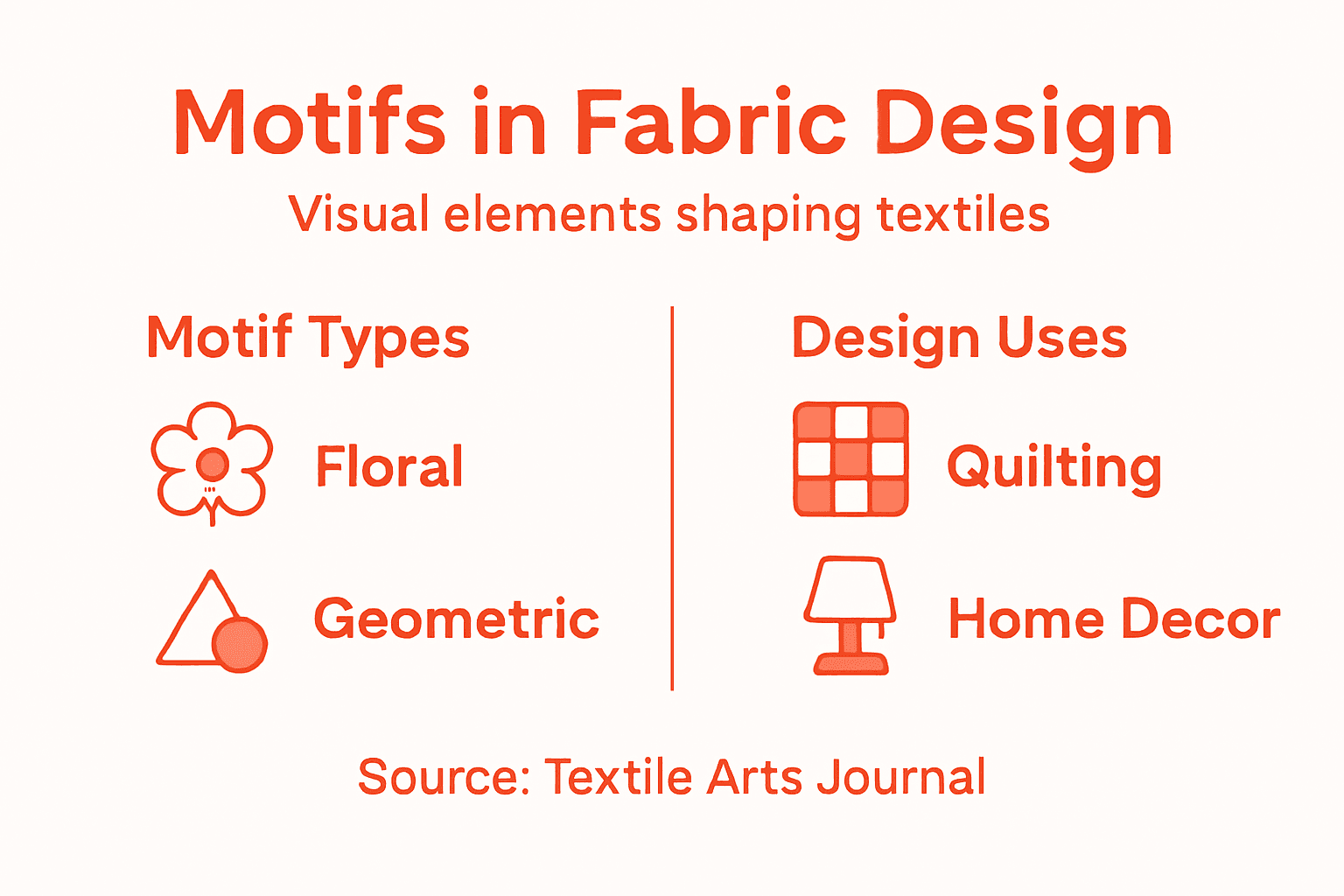
Quilts have transformed from practical bedding items into powerful artistic expressions, with motifs serving as the fundamental language of this creative medium. These intricate design elements do far more than decorate - they communicate personal narratives, cultural histories, and emotional landscapes.
Key uses of motifs in quilting and home decor include:
African American quilting traditions reveal how motifs transcend mere decoration, functioning as vital cultural artifacts. Each carefully selected pattern becomes a conversation, telling stories of resilience, community, and shared heritage through carefully arranged textile designs.
Home decor enthusiasts and quilters understand that motifs are more than visual elements - they are powerful communication tools that transform fabric into living historical documents. By strategically selecting and arranging motifs, creators can infuse spaces with meaning, emotion, and cultural significance.
Pro tip: Select motifs that personally resonate with your family history or cultural background to create truly meaningful quilting and home decor projects.
Designers frequently encounter challenges when incorporating motifs into fabric design, often undermining the potential of their artistic vision. Understanding these common pitfalls is crucial for creating visually compelling and culturally sensitive textile designs.
Most prevalent mistakes in motif usage include:
Improper motif integration can lead to design failures that compromise the aesthetic and emotional impact of the textile. Designers must carefully consider the symbolic significance, cultural context, and visual harmony of each motif they select.
Successful motif design requires a delicate balance between creativity and respect for traditional design principles. Creators must develop a nuanced understanding of how visual elements interact, communicate, and create meaning within the complex landscape of textile art.
Pro tip: Always research the cultural and historical context of motifs before incorporating them into your design to ensure authenticity and respect.
Bring your creative vision to life by choosing fabrics that celebrate the power of motifs in storytelling and pattern creation. Whether you are crafting bold fashion pieces or designing captivating home decor, selecting textiles that feature iconic motifs like floral jacquard or arabesque patterns can transform your projects. Explore our diverse collection in the Floral Jacquard Fabric and Arabesque Jacquard Fabric categories for inspiration rooted in cultural symbolism and artistic expression.
Discover quality fabrics that embrace the narrative power of motifs and avoid common pitfalls such as poor placement or cultural insensitivity. At fabric-fabric.com, you can find carefully curated textiles perfect for quilting, fashion, and home decor projects that demand authenticity and visual harmony. Start exploring now and turn your motif-inspired ideas into stunning reality.
Fabric motifs are distinctive visual elements in textile design that serve as fundamental building blocks, conveying cultural narratives and artistic expressions.
Motifs enhance fabric design by adding depth and meaning, allowing artists to communicate complex narratives through color, symmetry, and symbolism.
Common types of motifs include floral (symbolizing growth), fauna (symbolizing grace), geometric (expressing order), and mythological motifs (conveying spiritual narratives).
Avoid relying on generic patterns, repeating motifs without variation, misappropriating cultural symbols, mismanaging scale, and disrupting visual flow with poor placement.