

 Canadian Dollars

Polyester Fabric Type: What It Is and How It Works
Posted by BLG on 2026 Jul 8th
Posted by BLG on 2026 Jul 8th

TL;DR:
- Polyester is a synthetic fiber derived from petroleum and is the most produced textile fiber worldwide. It offers high durability, wrinkle resistance, and fast drying, but faces environmental concerns due to its production and microplastic shedding. Proper care and increased use of recycled polyester can mitigate some environmental impacts while maintaining versatile performance.
Polyester is defined as a synthetic, petroleum-derived thermoplastic polymer fabric, and it is the world’s most produced textile fiber. The U.S. Federal Trade Commission classifies polyester as a manufactured fiber composed of at least 85% by weight of an ester of a substituted aromatic carboxylic acid. That classification matters because it separates polyester from natural fibers like cotton or wool at a fundamental chemical level. Polyester currently accounts for over 52% of global fiber production in a market valued at $77 billion, projected to reach $130 billion by 2032. That scale reflects how deeply this synthetic fabric has embedded itself in apparel, home textiles, and industrial applications worldwide.
Polyester is a synthetic fabric. That is the short answer. The industry term is “synthetic thermoplastic polymer fiber,” which means it starts as a liquid plastic and gets spun into solid threads. Unlike cotton, which grows from a plant, or wool, which comes from an animal, polyester is entirely manufactured in a factory from fossil fuel derivatives.
The most common form is polyethylene terephthalate, known as PET. PET polyester is made by combining ethylene glycol and terephthalic acid through a chemical process called polymerization. The resulting polymer melt gets forced through tiny holes called spinnerets, which form continuous filament fibers. Those fibers are then woven or knitted into the fabric you find in clothing stores, upholstery shops, and craft retailers like Fabric-fabric.
One distinction worth knowing: polyester and nylon are both synthetic fibers, but they behave differently. PET polyester’s modulus exceeds 100 g/d, compared to nylon’s 20–40 g/d range. That means polyester holds its shape under stress far better than nylon, which is why it dominates structured garments and home furnishings.
Pro Tip: When reading fabric labels, “100% polyester” and “PET” refer to the same base material. If a label says “polyester blend,” the fabric combines PET with another fiber, most often cotton or spandex.
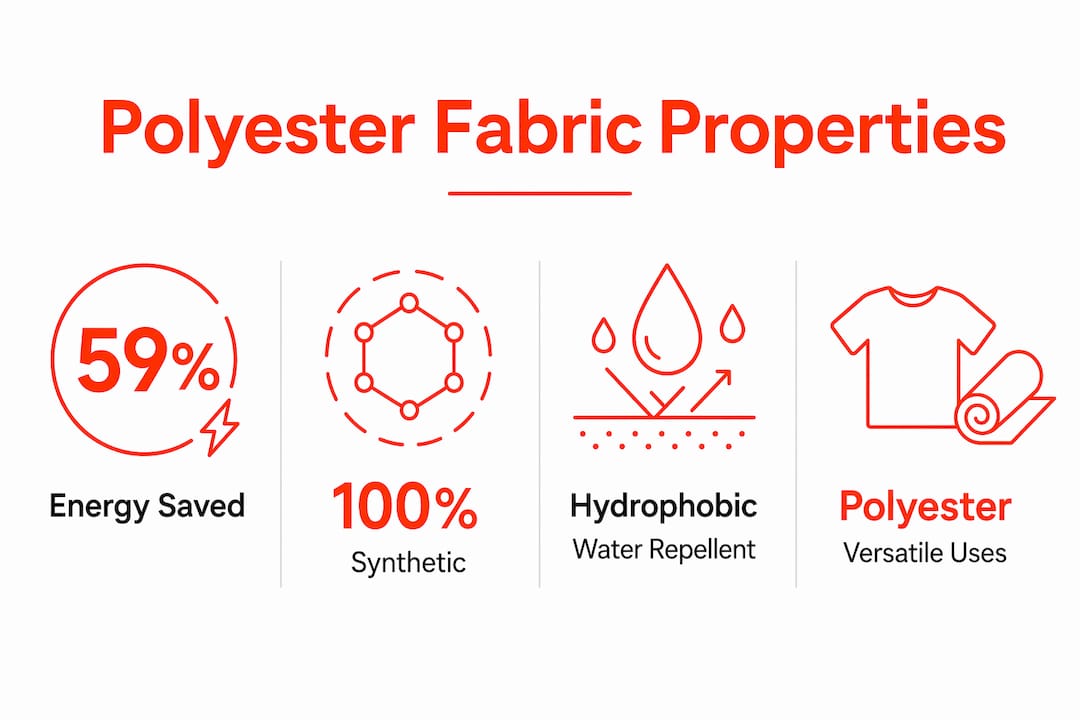
Polyester’s performance characteristics set it apart from every major natural fiber. Its hydrophobic nature means it absorbs only 0.4% moisture, compared to cotton’s 8%. That difference is why polyester dries 3–5 times faster than cotton. For activewear and outdoor gear, that speed matters enormously.
The fabric’s core physical strengths include:
Polyester does have real limitations. The same hydrophobic property that repels water also traps bacteria and body oils more stubbornly than natural fibers. That means odors can build up over time if you use standard detergents without targeting oil-based residue. Breathability is the other common complaint. Polyester does not allow air to circulate as freely as cotton or linen, which can feel uncomfortable in hot, humid conditions.
Static buildup is a minor but real issue, particularly in dry climates or heated indoor spaces. Wearing a cotton underlayer or using an anti-static spray solves this in most cases.
Polyester is not a single fabric. It comes in several distinct forms, each suited to different applications.

PET polyester is the standard form used in most clothing, bedding, and upholstery. It is durable, affordable, and widely available. Recycled polyester, called rPET, is made from post-consumer plastic bottles and textile waste. It currently accounts for approximately 15% of total polyester production. rPET requires about 59% less energy to produce than virgin polyester, making it the more sustainable choice when you can find it.
Microfiber polyester uses extremely fine filaments, typically less than one denier per fiber. The result is an ultra-soft, lightweight fabric with excellent moisture-wicking performance. You find it in cleaning cloths, athletic wear, and high-thread-count bedding. Polyester poplin is a plain-weave construction that produces a smooth, crisp surface. What is polyester poplin fabric used for? Primarily shirts, uniforms, and lightweight dresses where a structured, wrinkle-free finish is the priority.
Blends deserve special attention. Polyester-cotton, or polycotton, is the world’s most common fabric blend. It combines polyester’s durability and wrinkle resistance with cotton’s breathability and softness. The result is a fabric that performs better than either fiber alone for everyday clothing and home textiles. You also find polyester blended with spandex for stretch fabrics, and with wool for suiting that holds its press through long workdays.
| Polyester type | Key characteristic | Common use |
|---|---|---|
| PET polyester | Standard durability and affordability | Apparel, bedding, upholstery |
| rPET (recycled) | Lower energy production, eco-conscious | Sustainable activewear, bags |
| Microfiber | Ultra-fine, soft, moisture-wicking | Sportswear, cleaning cloths |
| Polyester poplin | Crisp plain weave, wrinkle-free | Shirts, uniforms, dresses |
| Polycotton blend | Balanced comfort and durability | Everyday clothing, home textiles |
The environmental picture for polyester is complicated, and anyone who gives you a simple yes or no is skipping important context. Polyester production exceeds safe environmental carrying capacities in climate change impact by 4.36–8.70 times. It also exceeds limits in particulate matter emissions and fossil resource use. Those are serious numbers that the industry cannot ignore.
“Sustainability studies show polyester production’s significant environmental burden, but also highlight that longevity and durability can reduce overall waste by prolonging garment life. A polyester jacket worn for ten years generates far less environmental impact per use than a cotton alternative replaced every two years.”
The recycled polyester segment offers a partial solution. rPET production cuts energy use by roughly 59% compared to virgin polyester. Industry experts recognize recycled polyester as the fastest-growing segment, but the majority of polyester remains fossil-fuel-based. That gap between current production and sustainable alternatives is where the real work needs to happen.
Non-biodegradability and microplastic shedding during washing are the two most cited criticisms. Both are legitimate. Washing bags designed to capture microfibers, such as the Guppyfriend bag, reduce shedding significantly. Choosing tightly woven polyester fabrics over loosely knit ones also reduces fiber release per wash cycle.
Pro Tip: Wash polyester garments in cold water on a gentle cycle to reduce microfiber shedding. A full washing bag also reduces fiber-to-fiber friction, which is the main cause of shedding.
For outdoor fabric applications, polyester’s durability argument is especially strong. A polyester outdoor fabric used for balcony screens or patio covers can last many years without fading or degrading, which reduces replacement frequency and total material consumption.
Polyester dominates fashion, activewear, home textiles, and industrial fabrics for one core reason: it performs reliably at a low cost. A polyester dress shirt holds its press through a full workday. A polyester sofa cover resists spills and pet hair. A polyester athletic top wicks sweat and dries before your next set. That breadth of performance across price points is why polyester remains the world’s top fiber.
Choosing the right polyester product comes down to three questions. First, what is the end use? Activewear needs moisture-wicking microfiber. Upholstery needs heavy-weight woven PET. Dresses and shirts often work best in poplin or a polycotton blend. Second, does sustainability matter for this purchase? If yes, look for rPET labeling. Third, what texture do you want? Microfiber feels soft and smooth. Standard woven polyester feels crisper and more structured.
Caring for polyester correctly extends its life and keeps it performing well. Follow these steps:
Odor control is the one area where polyester requires extra attention. Polyester’s hydrophobic fibers accumulate body oils that standard detergents do not fully remove. Adding a half cup of white vinegar to the rinse cycle breaks down oil-based residue without damaging the fiber. For detailed guidance on caring for different fabric types, the fabric care guide from Fabric-fabric covers polyester and blended fabrics in practical detail.
Pro Tip: Turn polyester garments inside out before washing. This protects the outer surface from abrasion and reduces pilling on the visible side of the fabric.
Polyester is a synthetic thermoplastic polymer fiber that dominates global textile production because it combines durability, low cost, and versatile performance across apparel, home decor, and industrial applications.
| Point | Details |
|---|---|
| Polyester classification | Polyester is a synthetic, petroleum-derived fiber regulated by the U.S. Federal Trade Commission as a manufactured ester fiber. |
| Performance advantage | Polyester absorbs only 0.4% moisture versus cotton’s 8%, making it the fastest-drying and most wrinkle-resistant common fabric. |
| Types to know | PET, rPET, microfiber, and polycotton blends each serve different needs from activewear to upholstery. |
| Environmental trade-off | Production exceeds environmental limits, but rPET cuts energy use by 59% and durability reduces total garment waste. |
| Care priority | Wash in cold water with synthetic-friendly detergent and avoid fabric softener to maintain polyester’s performance properties. |
The social media narrative around polyester has gotten out of hand. Viral posts claim it causes infertility and cancer. Medical toxicologists confirm there is no scientific evidence linking polyester fabric to either condition. That does not mean polyester is perfect. It means the conversation needs to be grounded in actual data rather than fear.
The real issue with polyester is environmental, not personal health. Production genuinely exceeds safe ecological limits in multiple impact categories. That is a serious problem worth addressing. But the solution is not to abandon polyester entirely. It is to push for higher rPET adoption, better washing practices, and longer garment lifespans.
What I find most underappreciated is how much polyester’s durability contributes to sustainability when you account for the full product lifecycle. A cheap cotton t-shirt that falls apart in a year generates more total waste than a polyester shirt worn for five. The role of fabric durability in reducing environmental impact is a calculation most critics skip entirely.
My advice: choose polyester intentionally. Use it where its performance properties genuinely serve you, look for rPET options when they are available, and care for it properly so it lasts. That approach gets you the benefits without ignoring the real concerns.
— kev
Fabric-fabric carries a wide selection of polyester fabrics suited to apparel, home decor, crafts, and event styling. Whether you need lightweight poplin for a summer shirt, heavy-duty upholstery fabric for a sofa project, or a polycotton blend for everyday sewing, the range covers it.

The backdrop fabric collection is particularly well-suited for event decorators and photographers who need durable, wrinkle-resistant polyester in large widths. For home projects, the home decor fabric range includes affordable polyester and blended options by the yard, with clear descriptions of weight, texture, and recommended use. Browse by project type to find the right fabric without guesswork on material performance.
Polyester is a synthetic fabric made from petroleum-derived polymers, specifically classified as a thermoplastic polymer fiber. The U.S. Federal Trade Commission defines it as a manufactured fiber containing at least 85% ester of a substituted aromatic carboxylic acid.
Polyester fabric is made from polyethylene terephthalate (PET), produced by polymerizing ethylene glycol and terephthalic acid. The resulting polymer is melted and spun through spinnerets to form continuous filament fibers.
Yes, polyester is fully synthetic. It is manufactured entirely from fossil fuel derivatives and contains no natural plant or animal fibers unless blended with them.
Polyester poplin is a plain-weave polyester fabric with a smooth, crisp surface, used primarily for dress shirts, uniforms, and lightweight structured garments where wrinkle resistance and a clean finish are priorities.
Polyester absorbs only 0.4% moisture versus cotton’s 8%, dries significantly faster, and resists wrinkles better. Cotton breathes more freely and feels softer against skin, making polycotton blends the practical middle ground for everyday wear.