

 Canadian Dollars

Role of Pattern Repeats in Fabric Design and Use
Posted by BLG on 2025 Dec 7th
Posted by BLG on 2025 Dec 7th


Most American textile designers know that the secret to captivating fabric starts with pattern repeats. These repeating motifs do more than please the eye. They hold the power to impact manufacturing costs and achieve seamless effects across yards of fabric. In fact, a single miscalculation can disrupt entire production runs and lead to wasted material. By understanding how pattern repeats work, anyone working with textiles can create visually stunning and perfectly matched designs.
| Point | Details |
|---|---|
| Importance of Pattern Repeats | Pattern repeats are crucial for creating seamless, visually appealing fabric designs that enhance aesthetic appeal and manufacturing efficiency. |
| Types of Repeats | Different pattern repeat types, such as block and half-drop, offer unique visual characteristics and applications, allowing for creative flexibility. |
| Impact on Cost and Production | The choice of pattern repeat influences material usage and costs; larger, intricate designs may lead to increased waste, while smaller repeats can optimize resource use. |
| Precision in Measurement | Accurate measurement and matching of pattern repeats are essential; using tools like grids and registration marks helps prevent alignment errors. |
In textile design, pattern repeats are fundamental visual techniques that allow designers to create seamless, continuous fabric surfaces. A pattern repeat refers to the systematic arrangement of motifs or design elements that can be replicated across fabric surfaces without creating visible breaks or awkward spacing. When done correctly, pattern repeats create continuous visual experiences that transform flat textiles into dynamic canvases.
The technical definition of a pattern repeat involves precise mathematical calculations where design elements are strategically positioned to align perfectly when tiled horizontally, vertically, or both. Designers use specific measurements to ensure that when the pattern is duplicated, each segment matches seamlessly with its neighboring sections. These measurements typically include width, height, and directional orientation of the design elements. Some pattern repeats can be simple geometric shapes, while others might involve complex organic forms that require intricate alignment strategies.
Pattern repeats serve multiple critical functions in fabric design. They allow manufacturers to produce large fabric lengths with consistent visual appearance, enable efficient manufacturing processes, and provide creative flexibility for designers. Different types of pattern repeats include straight repeats, half-drop repeats, and offset repeats, each offering unique visual characteristics and design possibilities. Understanding these techniques helps crafters, fashion designers, and textile professionals create visually compelling and technically precise fabric designs that can be reproduced at scale without compromising aesthetic integrity.
Pattern repeats in fabric design represent sophisticated visual strategies that transform basic textile surfaces into intricate artistic compositions. Fabric designers utilize multiple pattern repeat types to create unique visual experiences, each with distinct characteristics and design applications. The most common pattern repeat types include block, diamond, dot, half-brick, and half-drop configurations, which offer designers remarkable creative flexibility.
Block repeats represent the most straightforward pattern technique, where motifs are arranged in a uniform grid-like structure that repeats identically across the fabric surface. In contrast, half-drop repeats introduce visual complexity by offsetting design elements vertically or horizontally, creating a more dynamic and organic visual flow. Diamond repeats utilize angular positioning to generate intricate geometric patterns, while dot repeats use circular elements strategically placed to create rhythmic visual textures.
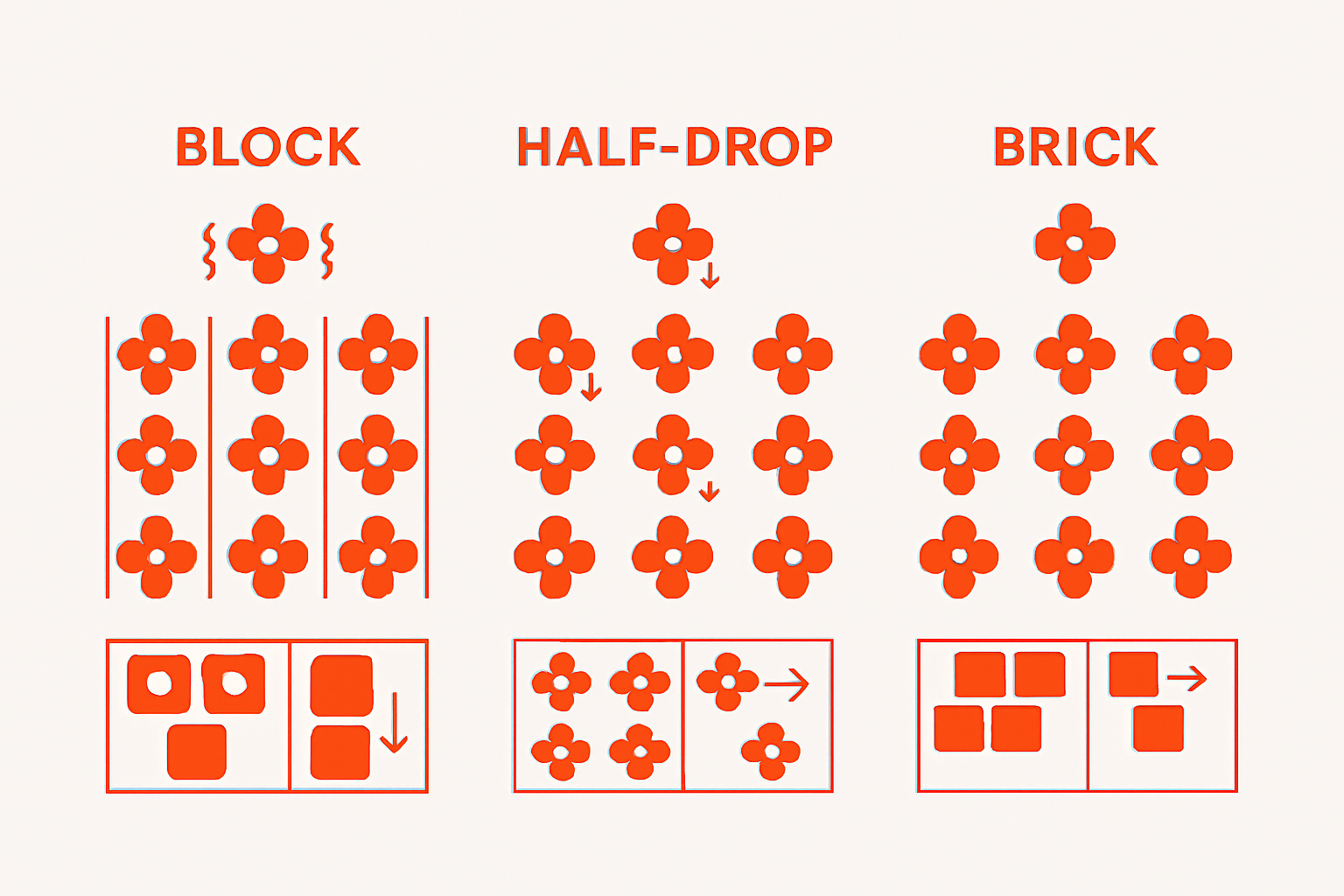
Understanding these pattern repeat variations is crucial for textile professionals. Each repeat type serves specific aesthetic and functional purposes, influencing everything from fabric appearance to manufacturing efficiency. Designers carefully select pattern repeats based on factors like fabric type, intended use, and desired visual impact. Half-brick repeats, for instance, might be preferred in upholstery fabrics for their ability to create subtle, engaging surface textures, while block repeats could be ideal for creating bold, geometric designs in fashion and apparel applications.
Pattern repeats play a critical role in determining both the aesthetic appeal and economic efficiency of fabric design. Fabric pattern selection directly impacts production costs and material usage, making it a strategic decision for designers and manufacturers alike. The size and complexity of a pattern repeat can significantly influence fabric consumption, waste management, and overall production expenses.
Larger pattern repeats create bold visual statements but often result in increased material waste during manufacturing and installation. Designers must carefully calculate the repeat size to minimize fabric loss while maintaining the desired aesthetic impact. Smaller, more compact repeats offer greater material efficiency, allowing manufacturers to optimize fabric usage and reduce production costs. This economic consideration becomes particularly crucial in large-scale textile production, where even minimal fabric savings can translate into substantial financial benefits.
The relationship between pattern repeat and cost extends beyond material consumption. Complex repeat designs require more sophisticated printing or weaving techniques, which can increase production time and labor expenses. Intricate patterns with large repeat sizes may demand specialized equipment and skilled craftsmanship, further driving up manufacturing costs. Conversely, simpler repeat designs with smaller, more uniform motifs can be produced more quickly and economically. Textile professionals must balance artistic vision with practical considerations, selecting pattern repeats that achieve the desired visual effect while maintaining cost-effectiveness and production efficiency.
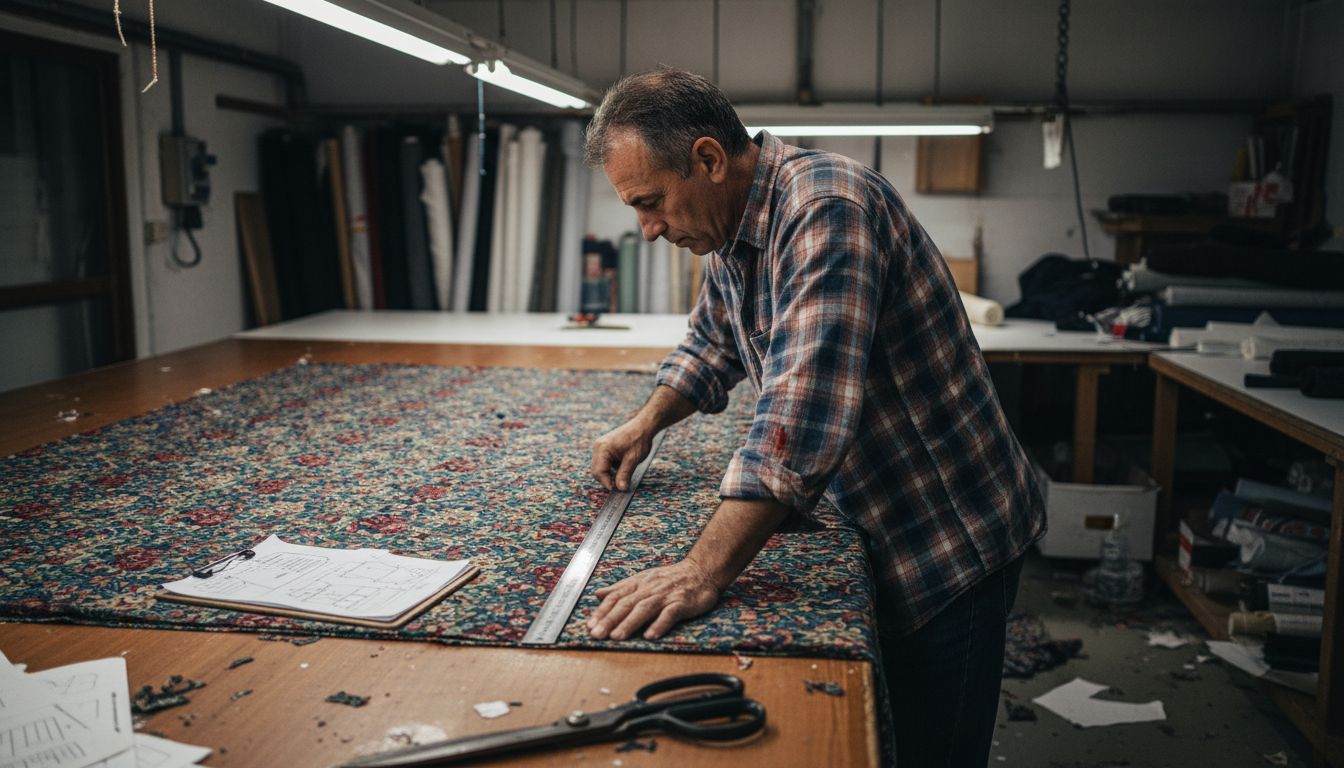
Measuring and matching pattern repeats is a precise technical skill that requires careful attention to detail and mathematical precision. Textile professionals use specialized techniques to ensure seamless pattern alignment across fabric surfaces, which involves understanding both horizontal and vertical repeat measurements. The process begins by identifying the complete cycle of a design element, measuring its precise width and height to determine the full repeat dimensions.
Designers employ several critical methods for accurately measuring pattern repeats. One fundamental approach involves using a transparent grid or overlay to track the exact point where a design motif begins and ends. This method allows for precise calculation of repeat sizes, helping professionals understand how design elements will align when repeated across a fabric surface. Horizontal and vertical measurements must be taken meticulously, accounting for even the smallest variations that could disrupt the visual continuity of the pattern.
Successful pattern matching requires more than mathematical precision. Experienced textile designers develop an intuitive understanding of how different pattern types interact, considering factors like fabric weight, stretch, and intended application. Matching patterns becomes particularly challenging with complex designs like plaids, florals, or geometric prints, where alignment must be perfect to maintain the design’s visual integrity. Professionals often use techniques like creating registration marks, using alignment tools, and performing multiple test prints to ensure that pattern repeats align flawlessly across different fabric sections.
Pattern placement requires precision and strategic planning to avoid costly design errors. Digital printing techniques demand meticulous attention to pattern registration to prevent misalignment and visual disruptions. Designers must develop a systematic approach to identifying and mitigating potential pattern placement challenges before final production.
Common mistakes in pattern placement often stem from insufficient preparation and inadequate measurement techniques. Fabric stretch, grain line variations, and cutting inconsistencies can dramatically impact pattern alignment, leading to visual discontinuities. Professionals recommend creating detailed pattern mapping strategies that account for fabric behavior, including testing fabric movement and understanding how different materials respond to cutting and sewing processes. Careful muslin prototyping and mock-up development can reveal potential alignment issues before expensive final fabric production.
Technical strategies for avoiding pattern placement errors include using registration marks, implementing precise cutting techniques, and developing comprehensive layout plans. Experienced designers create detailed placement guides that specify exact motif positioning, accounting for seam allowances, fabric grain, and potential visual distortions. Advanced techniques like digital pattern mapping and computer-assisted design tools can help predict and prevent alignment challenges, allowing textile professionals to achieve seamless, visually compelling pattern placements across complex garment and textile designs.
Understanding how pattern repeats influence fabric design and production costs is vital to bringing your creative vision to life without surprises. If you are facing challenges aligning intricate designs or managing fabric waste, selecting the right fabric with clear pattern repeat details is the first step toward success. Our wide fabric selection at Fabric-Fabric offers the precision and variety needed to match your design perfectly and streamline your projects.
Explore fabrics designed for seamless pattern repeats and cost-effective production by visiting Fabric-Fabric. Learn more about the role of fabric structure and how pattern repeats impact garment making in our detailed guides. Start transforming your textile projects today with quality materials and expert insights at your fingertips.
A pattern repeat is the systematic arrangement of motifs or design elements that can be duplicated across fabric surfaces without any visible breaks, creating a seamless visual experience.
Common types of pattern repeats include block repeats, half-drop repeats, diamond repeats, dot repeats, and half-brick repeats, each offering unique visual characteristics and design applications.
Larger pattern repeats can lead to increased material waste and higher production costs, while smaller, compact repeats enhance efficiency and reduce expenses. The complexity of the pattern also influences the manufacturing process and costs.
Textile professionals use methods like transparent grids to calculate repeat sizes and ensure accurate horizontal and vertical measurements. Techniques such as registration marks and alignment tools also assist in achieving seamless pattern matching.