

 Canadian Dollars

How to Upholster Dining Chairs for a Fresh Custom Look
Posted by BLG on 2025 Dec 29th
Posted by BLG on 2025 Dec 29th

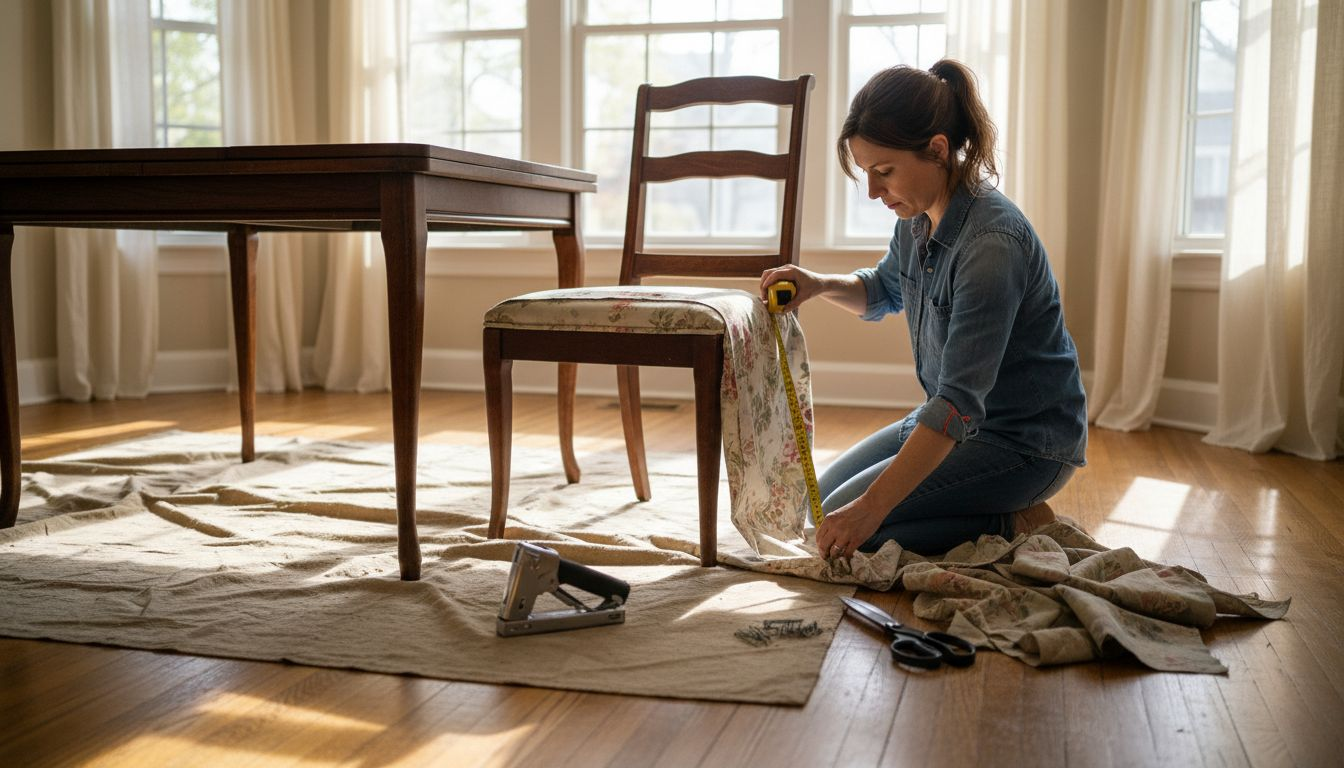
Over half of American homeowners say a fresh look for their dining chairs can completely change the feel of their space without breaking the bank. That is why so many DIY enthusiasts are searching for affordable ways to revive seating with quality fabric and personal flair. If you are ready to turn thrift store finds or worn-out favorites into standout pieces, you will learn practical steps to tackle chair reupholstery with confidence and a manageable budget.
| Key Point | Explanation |
|---|---|
| 1. Gather essential tools before starting | Collect tools like a staple gun, scissors, and upholstery fabric to ensure a smooth reupholstery process that minimizes frustrations. |
| 2. Document original upholstery placement | Take notes or photos of how old fabric is arranged to guide the accurate installation of the new upholstery. |
| 3. Measure and cut fabric accurately | Use old fabric as a template when cutting new material to avoid mistakes and ensure a perfect fit for your chairs. |
| 4. Attach foam and fabric carefully | Secure foam properly, then staple fabric starting from the center outwards to achieve a professional look without wrinkles. |
| 5. Inspect and finalize upholstery work | Conduct a thorough inspection for wrinkles and uneven edges, trimming any excess fabric to ensure a polished finish. |
Transforming your dining chairs starts with smart preparation and careful dismantling. You’ll want to assemble all necessary tools before diving into the reupholstery project. This comprehensive upholstery guide recommends gathering critical equipment like an awl, pliers, staple gun, screwdriver, scissors, high-density foam, upholstery fabric, and batting.
Begin by removing the chair seat carefully. Unscrew the seat base using your screwdriver and gently turn it over to access the existing upholstery. With patience, use pliers to extract old staples without damaging the underlying wood frame. Save these staples if they are in good condition or have a uniform size for potential future use. While removing the fabric, take careful notes or photographs documenting the original fabric placement to help guide your new upholstery installation.
Carefully inspect the seat base for any structural damage or wear before proceeding with your new fabric. If the base remains sturdy, you can reuse it after thorough cleaning. Otherwise, consider creating a replacement base to ensure a solid foundation for your new upholstery.
Pro tip: Keep a small container nearby to collect removed staples and prevent losing them during the deconstruction process.
Here’s a summary of essential tools and their roles for dining chair reupholstery:
| Tool | Purpose | Impact on Project |
|---|---|---|
| Awl | Loosens fabric and staples | Prevents wood/frame damage |
| Pliers | Removes old staples | Maintains clean seat base |
| Staple Gun | Secures new fabric | Ensures tight, durable finish |
| Screwdriver | Detaches seat base from chair | Facilitates safe removal |
| Scissors | Cuts fabric and batting | Allows precise material shaping |
| Foam (High-density) | Provides seat comfort and shape | Enhances chair usability |
| Upholstery Fabric | Covers new seat surface | Improves appearance and lifespan |
| Batting | Adds cushion and smoothness | Creates plush, professional look |
Preparing your dining chair frames and cutting new fabric requires precision and careful planning. Accurate measurements and thoughtful fabric selection will determine the success of your upholstery project. Start by thoroughly examining each chair frame for any structural issues that might need repair before proceeding.
Measure your chair seat or back panel meticulously using a measuring tape. Remember to add extra fabric allowance around the edges to accommodate stretching and stapling. Pro upholsterers recommend using the old fabric piece as a template for cutting your new material precisely. This technique ensures a perfect fit and helps you avoid wasting expensive upholstery fabric. When selecting your new fabric, consider both durability and aesthetic appeal to match your dining room decor.
Clean the chair frame completely before starting the reupholstery process. Remove any loose debris or old staples and sand down rough spots if necessary. Ensure the surface is smooth and ready to receive new fabric for a professional finish.
Pro tip: Create paper templates of your chair pieces before cutting expensive fabric to double check measurements and minimize potential mistakes.
This table highlights key factors to consider when choosing new upholstery fabric:
| Factor | Why It Matters | Expert Tip |
|---|---|---|
| Durability | Extends chair’s usable life | Seek stain-resistant fabrics |
| Color/Pattern | Matches room décor | Sample swatch in natural light |
| Fabric Weight | Impacts ease of installation | Avoid very thin materials |
| Cleaning Ease | Reduces maintenance headaches | Choose machine-washable options |
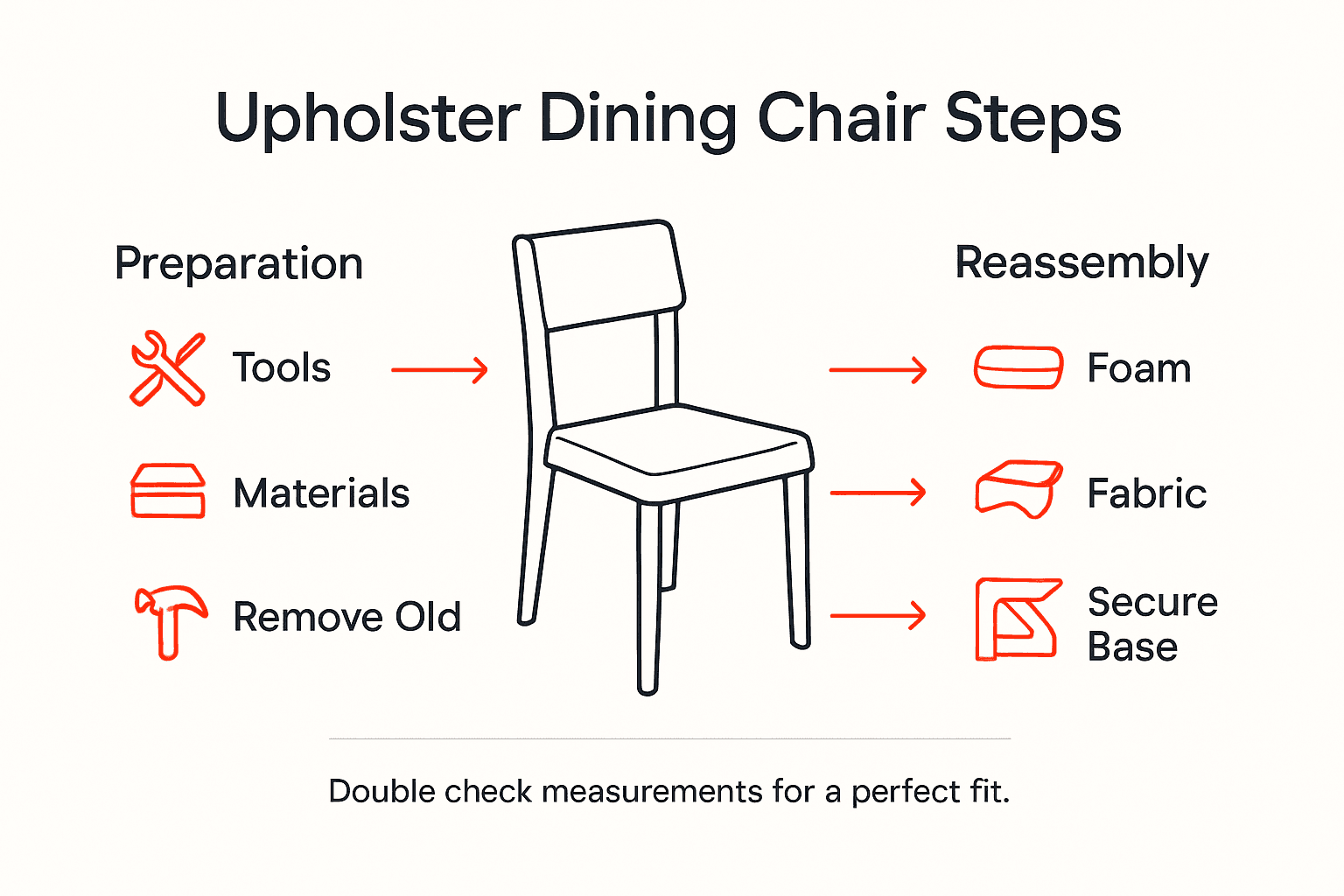
Transforming your dining chairs requires careful foam placement and fabric attachment to achieve a professional upholstered look. Attaching foam and batting correctly will create a smooth comfortable surface that enhances both the appearance and comfort of your chairs.
Start by applying spray adhesive to the chair seat base to secure high-density foam. Position the foam carefully to ensure complete coverage without any gaps or uneven areas. Next, layer cotton batting over the foam to create a soft smooth surface that will help your fabric drape beautifully. When laying your chosen upholstery fabric, cut it slightly larger than the seat base to allow enough material for wrapping and securing.

Begin stapling the fabric at the center of each side, pulling it taut to prevent wrinkles. Work your way outward from the center towards the corners using consistent tension. For a professional finish, create neat folded corners by tucking and folding the fabric carefully before securing with staples. Take your time with this step to ensure a clean polished look that will make your dining chairs look like they were done by a professional upholsterer.
Pro tip: Keep your staple gun at a consistent angle and apply steady pressure to achieve uniform staple placement and avoid fabric puckering.
You are now in the final stage of transforming your dining chairs into custom upholstered masterpieces. Carefully reinstalling seat bases and conducting a thorough final inspection will ensure your hard work pays off with professional looking results.
Begin by aligning the newly upholstered seat base precisely with the chair frame. Use the original screws you set aside earlier to reattach the seat, making sure to tighten them evenly without over-torquing. Check that the seat sits flush and level with the chair frame, creating a smooth seamless appearance. Take time to visually inspect every inch of your upholstery work examining the fabric for any potential wrinkles, loose staples, or uneven areas.
Run your hands gently over the surface to feel for any imperfections that might not be immediately visible. Trim any excess fabric threads or loose edges to create a clean polished finish. Pay special attention to the corners and edges where fabric folding can sometimes create unintended bumps or irregularities. Your goal is to create a smooth professional looking surface that looks like it was done by an experienced upholstery professional.
Pro tip: Keep a small pair of sharp fabric scissors nearby to quickly trim any stray threads or uneven fabric edges for a truly refined finished look.
Reupholstering dining chairs calls for precision, quality materials, and attention to detail. Whether you are removing old upholstery, selecting durable fabric, or attaching new foam, your project deserves textiles that combine beauty and lasting performance. The challenge lies in finding upholstery fabric that matches your decor, offers durability, and is easy to work with — key elements that ensure a professional and comfortable finish as described in the step-by-step guide.

Explore an extensive collection tailored for upholstery projects at Fabric-Fabric.com. Choose from a wide range of fabrics with detailed descriptions to help you pick stain-resistant, durable, and stylish options that will bring your dining chairs back to life. Start your transformation today with trusted materials and enjoy special offers that make upgrading your furniture simple and affordable. Visit Fabric-Fabric.com now and take the first step to reimagine your living space with fabric that inspires and endures.
To prepare your dining chairs for reupholstery, gather all necessary tools and carefully remove the old upholstery. Take detailed notes or photographs of the original fabric placement to guide your new installation.
Consider the durability, color, and ease of cleaning when selecting new upholstery fabric. Aim for stain-resistant materials to ensure a longer-lasting, appealing finish.
To ensure a smooth finish, start stapling the fabric from the center of each side, pulling it taut as you move outward. Take your time with the corners, creating neat folds before securing them with staples for a polished look.
After reattaching the seat bases, inspect the upholstery for wrinkles, loose staples, or uneven areas. Run your hands over the surface to identify any imperfections and trim any excess fabric threads for a refined finish.
To enhance comfort, use high-density foam under the upholstery fabric. Aim for a thickness that suits your style; typically, 1 to 2 inches of foam provides a comfortable seating experience.