

 US Dollar

Good Fabric for Curtains: A Room-by-Room Guide
Posted by BLG on 2026 Jun 26th
Posted by BLG on 2026 Jun 26th


TL;DR:
- High-quality curtain fabrics balance light control, privacy, durability, and style in a room. Velvet provides insulation and sound absorption, making it highly functional beyond aesthetics. Proper fabric choice depends on room function, maintenance, insulation needs, and design style.
Good fabric for curtains is defined by its ability to balance light control, privacy, durability, and visual style in a single window treatment. The right drapery fabric transforms a room’s mood, manages energy loss through windows, and holds up to years of daily use. Linen, cotton, velvet, polyester, silk, and sheer fabrics each serve a distinct purpose. Choosing between them comes down to your room’s function, your maintenance tolerance, and the aesthetic you want to achieve.
The best curtain fabric earns its place by doing more than looking attractive. It filters or blocks light at the level you need, holds its shape after washing, and complements your room’s existing style. Four criteria drive every smart fabric decision: light control, privacy, insulation, and ease of care.
Weight is the most overlooked factor. A lightweight sheer voile diffuses sunlight beautifully but offers almost no privacy after dark. A heavy velvet panel blocks both light and sound but demands sturdy hardware rated for its weight. Getting the weight wrong means either a sagging rod or curtains that barely move when you open them.
Fiber content determines how a fabric ages. Natural fibers like linen and cotton breathe well and look richer over time, but they can fade or shrink without careful laundering. Synthetic fibers like polyester resist fading and wrinkles, making them the practical choice for sunny rooms or households with kids and pets.
Understanding each fabric type prevents costly mistakes. Here is a clear breakdown of the six most common options.
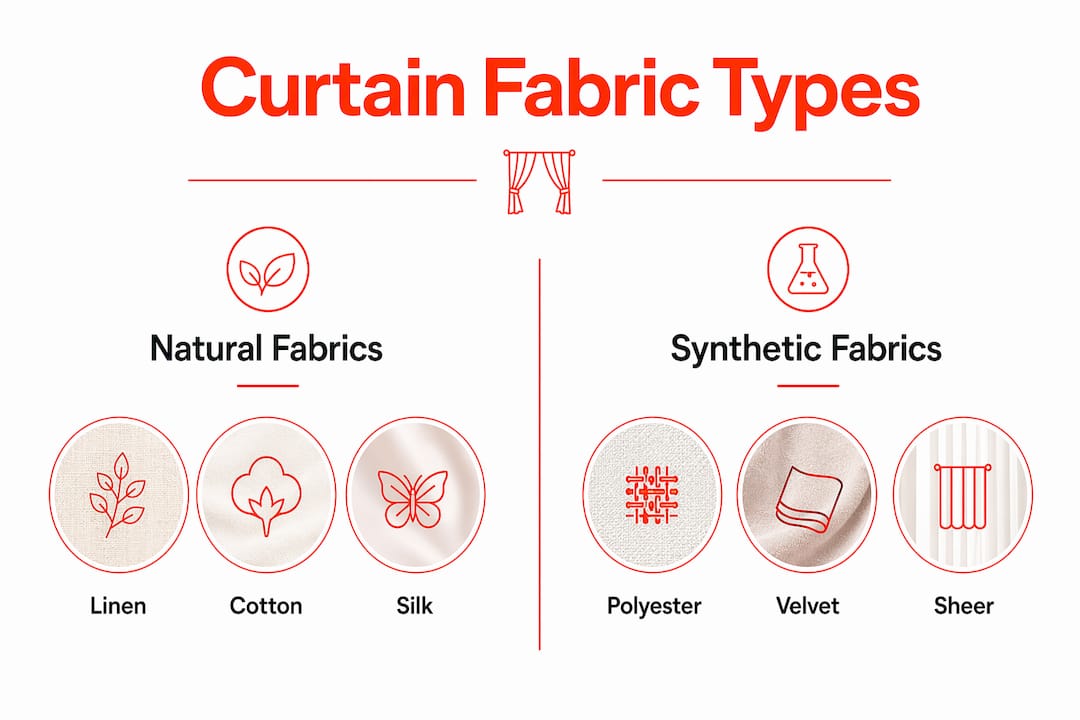
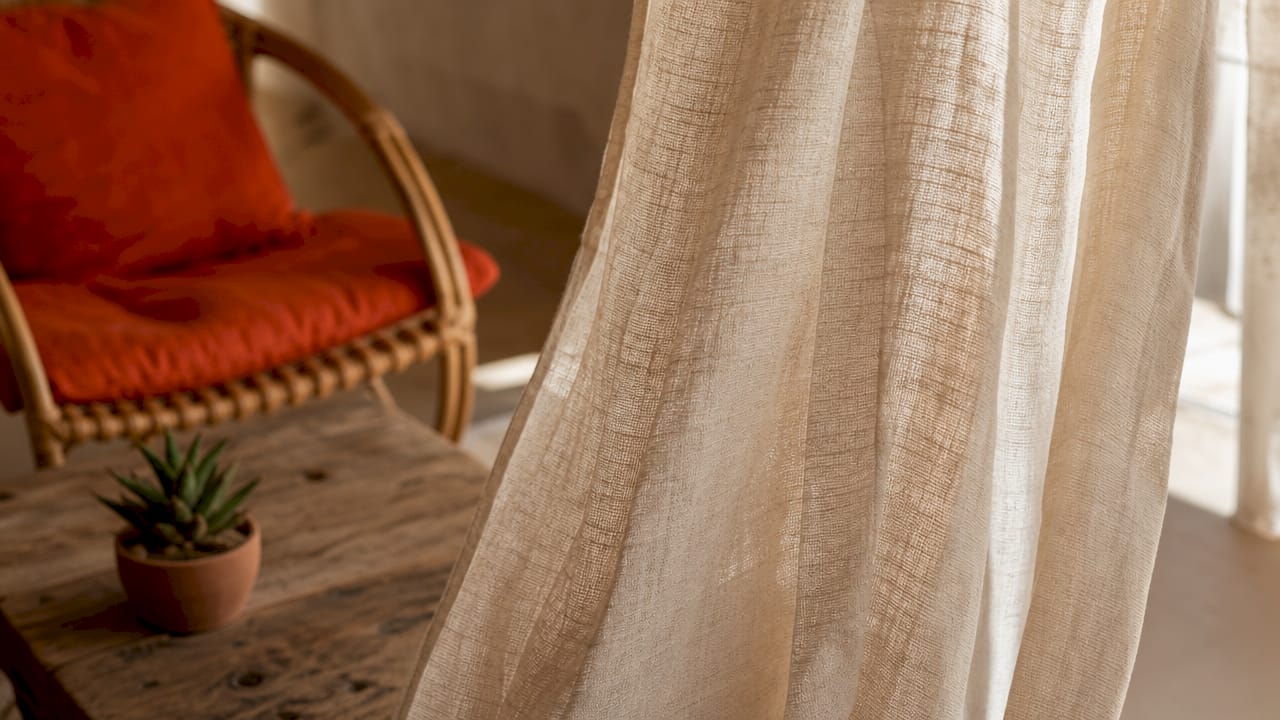
Linen’s natural texture comes from flax fibers, giving it an organic, slightly coarse weave that suits coastal, Scandinavian, and relaxed modern interiors. It breathes well in warm rooms and diffuses sunlight softly without blocking it entirely. Linen wrinkles easily, which most decorators treat as part of its character rather than a flaw. It is not the best choice for rooms that need blackout performance.
Cotton curtains come in weights ranging from sheer muslin to heavy canvas, making cotton the most versatile drapery material available. It holds dye exceptionally well, so colors stay vibrant longer than in most synthetics. Cotton washes easily at home, which makes it a practical pick for kitchens and children’s rooms. The main drawback is shrinkage: always pre-wash cotton fabric before sewing or hanging.
Polyester blends resist fading, wrinkles, and moisture, making them the most durable option for high-traffic rooms and sun-facing windows. Modern polyester weaves mimic linen and silk convincingly, so you get the look of a natural fiber with far less maintenance. Polyester is also the most affordable curtain fabric type, which matters when you are covering large windows or multiple rooms. The trade-off is breathability: polyester traps heat more than linen or cotton.
Velvet’s dense pile makes it the top performer for light blocking, insulation, and sound absorption. A single velvet panel can noticeably reduce road noise in a bedroom or home theater. It reads as luxurious in formal dining rooms, master bedrooms, and media spaces. Velvet requires dry cleaning or very gentle hand washing, so factor that into your long-term budget.
Silk delivers an unmatched sheen and drape, making it the go-to choice for formal living rooms and traditional interiors. It is the most delicate curtain fabric: direct sunlight degrades silk fibers quickly, so it works best in north-facing rooms or behind sheer liners. Silk is also the most expensive option per yard, which limits its use to accent panels rather than full window coverage in most homes.
Sheer fabrics like voile and organza allow natural light to pass through while creating soft privacy during daylight hours. They diffuse harsh sunlight into a gentle glow and work beautifully when layered under heavier panels. Sheers alone offer no nighttime privacy, so they are almost always paired with a second, heavier curtain layer.
Pro Tip: When comparing fabric samples, hold them up to a window at the same time of day you plan to use the room. The light transmission you see in the store is exactly what you will live with at home.
| Fabric | Light control | Maintenance | Best room |
|---|---|---|---|
| Linen | Soft filter | Medium | Living room, bedroom |
| Cotton | Light to medium filter | Easy | Kitchen, children’s room |
| Polyester | Light to blackout (lined) | Very easy | Any room, sunny windows |
| Velvet | Near blackout | Delicate | Bedroom, media room |
| Silk | Soft filter | Delicate | Formal living room |
| Sheer voile | Minimal | Easy | Layering, sunrooms |
Function should drive your fabric choice before aesthetics do. A beautiful silk panel in a west-facing bedroom will fade within a year. A sheer voile in a ground-floor living room leaves you exposed every evening. Match the fabric to the job first, then refine the look.
Light control needs:
Privacy levels:
Insulation:
Velvet is the strongest insulator among curtain fabrics. Its dense pile traps air against the window, reducing heat loss in winter and heat gain in summer. Lined polyester panels perform similarly when a thermal interlining is added. Unlined linen and sheer fabrics offer almost no insulation benefit.
Maintenance reality:
Polyester and cotton blends are the easiest curtain fabrics to care for, handling machine washing without drama. Silk and velvet require professional cleaning, which adds ongoing cost. Linen sits in the middle: hand wash or gentle machine cycle, but expect some wrinkling.
Pro Tip: A double-track curtain system with sheers on the inner track and blackout panels on the outer track is the industry standard for bedrooms and living rooms. It gives you full control over light and privacy at any hour without committing to one extreme.
The fabric you choose signals the room’s personality as clearly as the furniture does. Getting this match right pulls a space together. Getting it wrong makes even expensive curtains look out of place.
Casual and coastal rooms call for linen or linen-cotton blends. The relaxed drape and natural texture reinforce an easy, lived-in atmosphere. Stick to undyed or lightly washed tones: sand, white, soft gray, and sage green all work well.
Contemporary and transitional rooms suit cotton or polyester blends in solid colors or subtle patterns. These fabrics hang cleanly, take tailored pleats well, and do not compete with modern furniture lines. A crisp white cotton panel in a pinch-pleat heading reads as polished without being fussy.
Formal and traditional rooms call for silk, velvet, or heavyweight cotton damask. These fabrics support elaborate heading styles like goblet pleats and box pleats, which require a fabric with enough body to hold the shape. Velvet in deep jewel tones reads as dramatic and intentional.
Romantic and airy rooms benefit from layered sheers. A double layer of white or ivory voile creates depth and movement without visual weight. This approach works especially well in bedrooms and reading nooks where softness matters more than darkness.
Fabric weight also determines your hardware needs. Velvet and lined silk panels can weigh several pounds per panel. They require heavy-duty rods rated for that load, typically with a center support bracket for spans over 60 inches. Lightweight sheers and cotton panels work fine on standard tension rods or lightweight decorative poles.
Blended fabrics solve the biggest weaknesses of pure natural fibers. A linen-cotton blend keeps the organic texture and breathability of linen while adding cotton’s softness and reduced wrinkling. The result is a fabric that looks natural but behaves more predictably in the wash.
Modern polyester has closed the gap with natural fibers significantly. High-quality polyester weaves now replicate the drape of silk and the texture of linen closely enough that most visitors cannot tell the difference from across a room. The practical advantages remain: UV stability, stain resistance, and machine washability.
Performance finishes add another layer of function. Blackout coatings applied to the back of a woven fabric block light without changing the face appearance. Thermal linings bonded to curtain panels improve insulation ratings measurably. Stain-resistant treatments applied to cotton and linen blends reduce the maintenance burden in dining rooms and kitchens.
Sustainability is a growing consideration in fabric selection. Linen is one of the most sustainable curtain fabrics available: flax requires minimal water and pesticides compared to cotton. Organic cotton certifications like GOTS (Global Organic Textile Standard) verify that the fiber was grown and processed without harmful chemicals. Recycled polyester, made from post-consumer plastic bottles, offers the durability of virgin polyester with a lower environmental footprint.
| Blend or finish | Key benefit | Best application |
|---|---|---|
| Linen-cotton blend | Wrinkle resistance, natural look | Living rooms, bedrooms |
| Polyester-linen blend | Durability, easy care | High-traffic rooms |
| Blackout coating | Full light block | Bedrooms, media rooms |
| Thermal lining | Insulation | Cold climates, large windows |
| Stain-resistant finish | Easy cleaning | Kitchens, dining rooms |
The best drapery fabric matches your room’s light needs, maintenance tolerance, and design style before anything else.
| Point | Details |
|---|---|
| Match fabric to function first | Choose light control and privacy level before selecting color or texture. |
| Velvet outperforms on multiple fronts | Velvet blocks light, insulates, and absorbs sound, making it worth the extra care. |
| Blends reduce maintenance | Linen-cotton and polyester blends retain natural aesthetics with easier upkeep. |
| Layer for flexibility | A double-track system with sheers and blackout panels covers every lighting scenario. |
| Weight determines hardware | Heavy fabrics like velvet require heavy-duty rods with center support brackets. |
Most homeowners pick curtain fabric the wrong way. They fall for a color or texture in the store, buy it, hang it, and then realize it does not do the job the room actually needs. I have seen this happen with sheers in ground-floor bedrooms and with delicate silk in sun-drenched west-facing windows. The fabric looked perfect in the sample. It failed in practice.
The insight that changed how I think about curtain fabric is this: velvet is not just a luxury choice. It is a functional one. Velvet in a media room absorbs sound, blocks light, and insulates the space. You get three performance benefits from one fabric. That is a better return than any sheer or cotton panel can offer in that specific context.
The other mistake I see constantly is underestimating fabric weight. A pair of velvet panels for a standard 84-inch window can weigh 8 to 10 pounds. Standard decorative rods bend or pull out of drywall anchors under that load. Always check the rod’s weight rating before you buy the fabric, not after.
My honest advice: start with function, then let style follow. Read the best drapery fabrics guide before you commit to anything. And if you are layering, commit to the double-track system from the start. Retrofitting it later costs more than doing it right the first time.
— kev
Finding quality curtain fabric in the right weight, fiber, and finish should not require visiting a dozen stores.

Fabric-fabric carries a wide selection of home decor fabrics suited for curtains, from lightweight sheers and linen blends to heavyweight velvet and performance polyester. The backdrop fabric collection includes premium options ideal for full-length drapery panels where drape and weight matter most. Each product listing includes fiber content, weight, and care instructions so you can match fabric to function before you buy. Browse by fabric type or intended use to find exactly what your windows need.
Velvet and blackout-lined polyester are the best materials for bedroom curtains. Both block light effectively and provide full privacy, with velvet adding sound absorption as a bonus.
Voile and organza are the top choices for sheer curtains. Both allow natural light to pass through while softening glare and creating a sense of privacy during daylight hours.
Linen curtains require medium care. Hand washing or a gentle machine cycle works for most linen fabrics, but expect wrinkling and some shrinkage if the fabric has not been pre-washed.
Modern polyester weaves closely replicate the texture and drape of linen and silk. High-quality polyester blends are difficult to distinguish from natural fibers at a glance and offer far easier maintenance.
Lined curtains insulate better, hang more evenly, and last longer because the lining protects the face fabric from UV damage. Unlined curtains work well for sheers and lightweight decorative panels where drape and light diffusion matter more than insulation.