

 US Dollar

Gabardine fabric explained: qualities, uses, and sewing tips
Posted by BLG on 2026 Apr 6th
Posted by BLG on 2026 Apr 6th

TL;DR:
- Gabardine is a tightly woven twill fabric known for durability, wrinkle resistance, and light rain repellency.
- It comes in various fiber types like wool, cotton, and blends, suited for different seasons and uses.
- Ideal for tailored suits, coats, and structured garments due to its shape retention and weather resistance.
Gabardine is one of those fabrics that consistently surprises designers. It looks polished and refined, yet holds up to serious wear. It feels smooth to the touch, yet resists wrinkles and light rain. Invented by Thomas Burberry in 1879, this tightly woven twill fabric has a steep diagonal rib on the face and a smooth reverse, giving it a distinctive look and exceptional durability. Many designers confuse it with other twill weaves, but gabardine’s construction sets it apart in ways that matter enormously when you’re building structured, professional garments. This guide walks you through everything you need to know.
| Point | Details |
|---|---|
| Tightly woven durability | Gabardine combines extreme durability with a smooth, stylish look thanks to its tightly woven twill structure. |
| Versatile fiber options | Choose from wool, cotton, or blends—each offers distinct advantages for tailored and summer garments. |
| Ideal for sharp tailoring | Gabardine’s ability to hold shape and resist wrinkles makes it perfect for suits, coats, and uniforms. |
| Sewing and care essentials | Proper handling, edge finishing, and cleaning are crucial for preserving gabardine’s professional appearance. |
Gabardine didn’t emerge from a lab or a fashion trend. It was engineered for a purpose. Thomas Burberry developed it in 1879 to create outerwear that could handle harsh British weather without sacrificing elegance. The result was a fabric that stood apart from anything available at the time, and it’s still considered a benchmark for structured, weather-resistant textiles.
The key to gabardine is its twill weave structure. In a standard twill, the weft threads pass over and under warp threads in a staggered pattern, creating a diagonal line. Gabardine takes this further by packing the threads extremely tightly, which steepens the diagonal rib to between 45 and 65 degrees. This density is what gives gabardine its signature texture and performance.
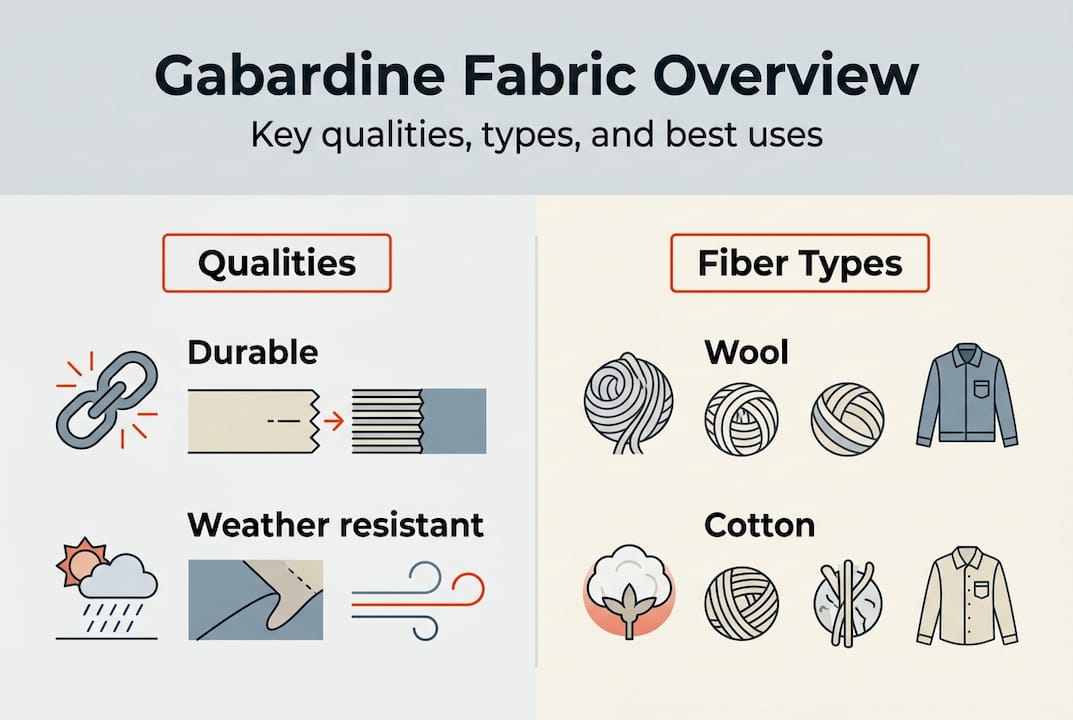
Here’s a quick breakdown of gabardine’s defining characteristics:
| Property | Description |
|---|---|
| Weave type | Tightly woven twill |
| Diagonal rib angle | 45 to 65 degrees |
| Face texture | Ribbed, with visible diagonal lines |
| Reverse texture | Smooth and flat |
| Wrinkle resistance | High |
| Water repellency | Moderate to high |
The ribbed face and smooth reverse aren’t just aesthetic choices. The tight structure limits how much air and moisture can penetrate the fabric, which is why gabardine naturally repels light rain without a chemical treatment. As the what is gabardine resource notes, this construction also means the fabric resists abrasion and holds its shape through repeated wear.
“Gabardine’s tightly packed twill construction is what separates it from looser twills. The steep rib isn’t decorative, it’s structural.”
For designers working with fabric blends, understanding gabardine’s base construction helps you predict how blended versions will perform. A polyester-wool gabardine, for example, retains the rib structure but changes the drape and care requirements significantly. If you’re planning lightweight fabrics for summer collections, gabardine’s tropical variants are worth exploring because they carry the same structural benefits in a much thinner profile.
Understanding the structure is only part of the equation. Next, let’s break down gabardine’s main fiber types and when to use each.
Gabardine isn’t a single fabric. It’s a construction method applied to different fibers, and each combination produces a noticeably different result. Worsted wool gabardine is the traditional choice. It drapes beautifully, breathes well, and has a natural warmth that makes it ideal for fall and winter suiting. Cotton gabardine is lighter and more breathable, making it a smart pick for warmer climates or transitional seasons. Synthetic and blended versions, typically polyester or elastane mixed in, offer wrinkle resistance and easier care at the cost of some drape quality.
Tropical gabardine is a category worth knowing specifically. It’s a thinner version, weighing around 166 g/m², designed for warm-weather suiting. It keeps the structured look of classic gabardine without the weight that makes heavy wool impractical in summer.
Here’s a comparison to help you choose:
| Fiber type | Weight | Drape | Best use | Care |
|---|---|---|---|---|
| Worsted wool | Medium to heavy | Excellent | Suits, trousers, coats | Dry clean |
| Cotton | Light to medium | Good | Summer suits, skirts | Machine wash cold |
| Polyester blend | Light to medium | Moderate | Uniforms, workwear | Machine wash |
| Tropical wool | Lightweight | Very good | Summer suiting, travel | Dry clean |
| Elastane blend | Light | Good with stretch | Fitted trousers, skirts | Gentle wash |
For designers browsing a fabric blends guide, gabardine blends are a practical entry point into structured wovens that still offer some flexibility. Elastane blends, in particular, have grown popular for fitted trousers where ease of movement matters.
When choosing between fiber types, consider the garment’s end use first. A sharp boardroom suit calls for worsted wool. A travel blazer that needs to survive a carry-on bag benefits from a polyester blend. A summer wedding skirt works beautifully in cotton or tropical wool gabardine.
For a sense of how gabardine compares to softer wovens in terms of drape and structure, the cotton drapery comparison offers useful context on how cotton behaves across different weave densities.
Pro Tip: If you’re making summer pieces that need to look polished all day, light cotton or tropical wool gabardine gives you structure without bulk. It holds a crease, resists wrinkles, and doesn’t cling.
With fiber types covered, let’s see how gabardine’s unique features translate into real-world fashion benefits.
Gabardine has a reputation as a suiting fabric, and that reputation is well earned. But it does far more than suits. Its combination of structure, durability, and weather resistance makes it one of the most versatile professional fabrics available. Gabardine excels in tailored suits, trousers, skirts, trench coats, uniforms, and structured outerwear.
Here’s where gabardine consistently performs best:
Where gabardine is less ideal: flowing, draped designs. If you’re building a bias-cut evening gown or a relaxed wrap dress, gabardine’s structure works against you. Its firmness limits how much it moves and falls, so softer fabrics like crepe or charmeuse are better choices for fluid silhouettes. Synthetic gabardine, while durable, can also pill over time and lacks the refined drape of wool, which matters in higher-end garments.
For designers building gabardine for fashion projects, the fabric’s ability to hold shape and resist abrasion makes it a reliable workhorse. And if you’re comparing it to other warm-weather options, the guide on fabrics for summer comfort puts gabardine’s breathability in useful context against linen, cotton, and other warm-weather choices.
According to gabardine fabric uses research, the fabric’s breathability combined with weather resistance is rare in structured wovens, which is a key reason it remains a professional standard more than 140 years after its invention.
To get the best from gabardine, you need to know how to handle and care for it. Here’s how.
Gabardine is a rewarding fabric to sew, but it has specific needs. Ignoring them leads to shine marks, fraying edges, or seams that pucker. Follow these steps and you’ll get clean, professional results every time.
“The biggest mistake sewers make with gabardine is pressing without a cloth. One slip and you’ve got a shiny patch that no amount of steaming will fix.”
For care, the rules are straightforward. Dry clean wool gabardine to preserve its structure and drape. Cotton and synthetic blends can handle a gentle cold machine wash followed by air drying. Never wring gabardine, as it distorts the weave. Store finished garments hung or folded neatly to retain their shape between wears.
Pro Tip: When pressing gabardine seams, use a wooden clapper right after the iron. The clapper traps steam and flattens the seam without adding extra heat, which is the safest way to get a sharp, professional finish.
For a complete workflow, the apparel sewing guide covers the full process from cutting to finishing, and the fabric care steps resource is worth bookmarking for ongoing maintenance. Additional gabardine sewing tips can help you troubleshoot specific challenges as they come up.
Most guides focus on gabardine’s specs. Here’s what the specs don’t tell you.
The real value of gabardine isn’t in any single property. It’s in how those properties work together. Wool gabardine drapes, breathes, and presses beautifully, but it demands care and attention. Synthetic blends are forgiving and resilient, but they never quite move the same way. Choosing between them isn’t about which is better. It’s about which is right for the specific garment and the specific client.
Tropical gabardine solves a real problem that most designers wrestle with: how to make a summer suit look polished without making the wearer miserable. Its lightweight gabardine for summer profile keeps the structured silhouette intact while allowing enough airflow to be practical in warm weather.
One thing most guides skip entirely: edge handling can make or break a gabardine project. The fabric’s tight weave means seams look sharp when finished correctly, but fraying edges left untreated quickly undermine the whole garment. Mastering your serger or Hong Kong seam finish before working with gabardine is time well spent.
Combining gabardine with modern stretch fabrics, like an elastane panel in a trouser seat or knee, is also worth experimenting with. The result is a garment that looks traditional but fits and moves like something contemporary.
Ready to try gabardine for your next project? Whether you’re sourcing wool for a structured suit or looking for a lightweight cotton blend for summer separates, fabric-fabric.com makes it easy to find exactly what you need.
Browse a wide selection of apparel fabrics, including options well-suited to structured garments, at the shop gabardine page. You’ll also find an extensive range of home decor fabric for projects beyond apparel. With detailed product descriptions, clear pricing, and regular promotions including free shipping thresholds, fabric-fabric.com is a reliable source for both hobbyists and working professionals who want quality textiles without the guesswork.
Gabardine is more tightly woven than standard twill, with a steeper diagonal rib angle of 45 to 65 degrees, which gives it greater shape retention, wrinkle resistance, and water repellency.
Cotton and synthetic blends can be machine washed cold and air dried, but pure wool gabardine should always be dry cleaned to preserve its structure and drape.
Yes, especially lightweight cotton or tropical wool gabardine, which weighs around 166 g/m² and offers the structured look of classic gabardine with enough breathability for warm-weather suits and skirts.
Use a sharp needle, 90/14 to 100/16, set your stitch length to 2.5 to 3mm, always press with a cloth to prevent shine, and finish edges immediately after cutting to stop fraying.