

 US Dollar

Role of Fabric Stretch: Optimizing Modern Garment Fit
Posted by BLG on 2026 Feb 7th
Posted by BLG on 2026 Feb 7th

Choosing the right fabric stretch can feel like solving a puzzle when designing modern garments. For North American designers, understanding the nuanced differences between two-way and four-way stretch fabrics is essential for creating clothing that moves, fits, and lasts. By exploring fabric composition and elasticity, this guide highlights the unique stretch capabilities of contemporary materials and offers practical tips to enhance both style and comfort in your next collection.
| Point | Details |
|---|---|
| Understanding Fabric Stretch | Modern fabrics like spandex and elastane enhance comfort and flexibility in garment design, enabling better body movement adaptation. |
| Selection Criteria | When choosing stretch fabrics, consider factors like performance application, comfort parameters, and fabric recovery rates for optimal garment functionality. |
| Testing Importance | Conduct thorough stretch and recovery tests on fabric samples to ensure they meet specific performance requirements before finalizing a design. |
| Best Practices | Avoid common pitfalls by adhering to standardized testing protocols and using specialized techniques to improve stretch fabric durability. |
Fabric stretch represents a transformative innovation in textile engineering, enabling garments to adapt dynamically to body movement and shape. Contemporary materials offer unique stretch capabilities that revolutionize how designers approach clothing construction and comfort.
Modern fabric stretch is fundamentally about creating textiles with inherent elasticity, typically achieved through synthetic fibers like spandex or elastane. These materials can stretch in two primary configurations:
The emergence of stretch fabrics traces back to mid-20th century research, particularly computational design frameworks for metamaterials that explored innovative textile behaviors. Designers now leverage these advanced materials across multiple domains, from athletic wear to high-fashion garments.
Key characteristics of contemporary stretch fabrics include:
Fiber composition plays a critical role in determining stretch properties. Synthetic fibers like polyester, nylon, and spandex are engineered to provide specific elasticity ranges, allowing designers unprecedented control over garment performance.
Stretch fabrics represent more than a technical innovation - they’re a design philosophy that prioritizes human movement and comfort.
Pro tip: When selecting stretch fabrics, always consider the specific performance requirements of your garment design, including expected range of motion and intended wearing environment.
Stretch fabrics represent a sophisticated textile category with complex engineering that enables dynamic movement and comfort. Specific fabric classifications reveal intricate performance characteristics across different garment applications, ranging from athletic wear to high-fashion designs.
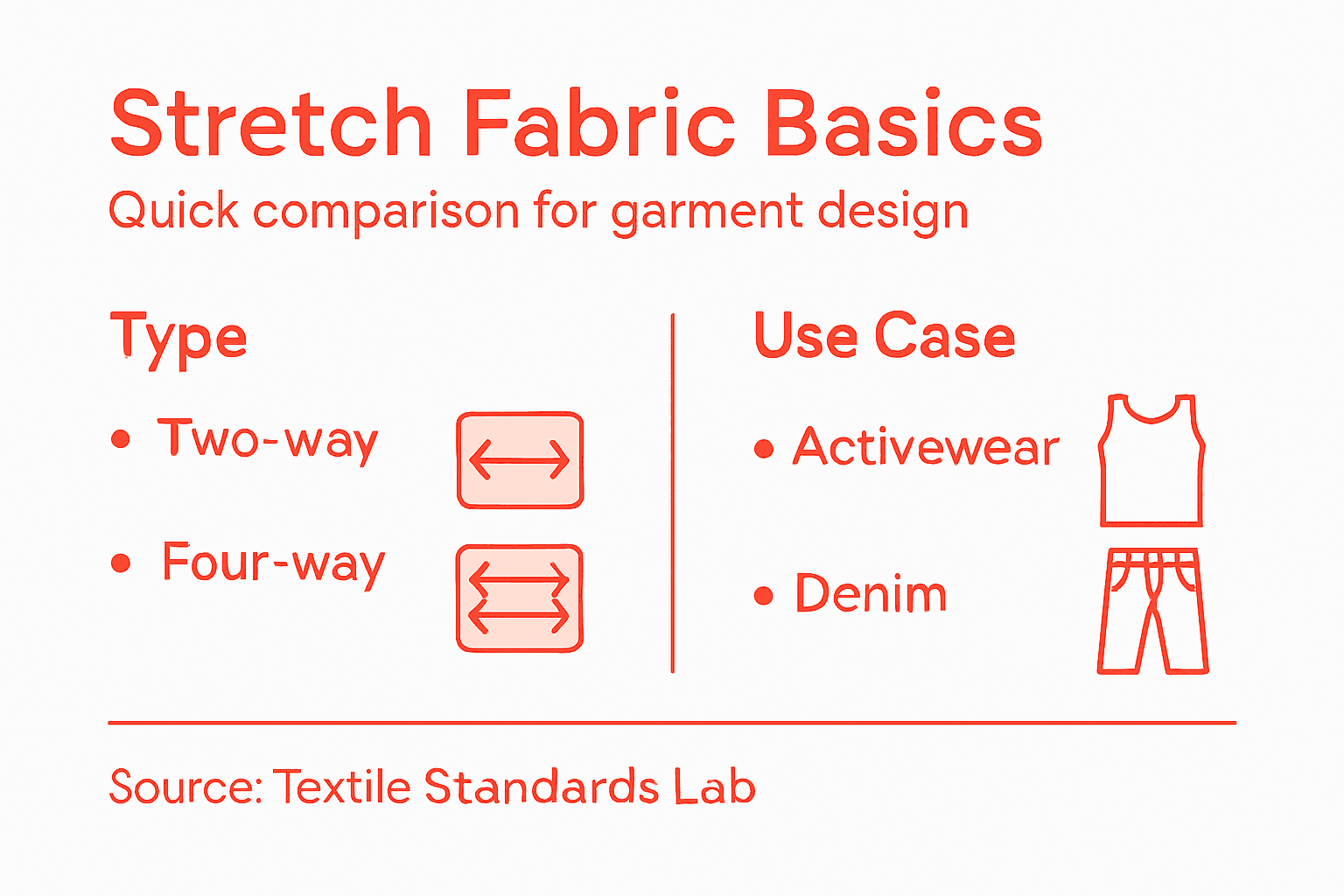
Modern stretch fabrics are primarily categorized into two fundamental types:
Each stretch fabric type incorporates specialized synthetic fibers that determine its unique properties. Standard testing methods evaluate fabric stretch performance through rigorous assessments of elasticity, growth, and recovery under specific tension conditions.
Here’s a summary comparing two-way and four-way stretch fabrics for rapid evaluation:
| Stretch Type | Flexibility | Common Uses | Typical Fiber Blend |
|---|---|---|---|
| Two-way stretch | Moderate | Dress shirts, pants | Polyester or nylon blends |
| Four-way stretch | Maximum | Sportswear, leggings | Spandex/elastane blends |
Key synthetic fibers used in stretch fabric production include:
The following table offers a quick reference for key synthetic fibers in stretch fabrics:
| Fiber Name | Main Benefit | Common Application |
|---|---|---|
| Spandex | Exceptional elasticity | Activewear, shapewear |
| Polyester | Shape retention | Everyday apparel, uniforms |
| Nylon | Added strength | Swimwear, hosiery |
| Elastane | Excellent recovery | Performance athletic gear |
The performance of stretch fabrics depends on multiple factors such as fiber composition, weave structure, and manufacturing techniques. Designers must carefully select materials that balance stretch capacity with structural integrity and intended garment functionality.
Stretch fabric technology transforms textile design by prioritizing human movement and comfort dynamics.
Pro tip: Always conduct thorough fabric stretch testing to ensure your selected material meets the specific performance requirements of your design.
Garment fit is fundamentally transformed by the intricate mechanical properties of stretch fabrics. Specific testing methods reveal complex interactions between fabric stretch and body movement, creating nuanced performance characteristics that designers must carefully consider.
Stretch fabrics influence garment performance through several critical mechanisms:
Mechanical properties of textiles directly impact wearer satisfaction by determining how effectively a garment responds to dynamic body movements. The interaction between fabric stretch and garment construction creates a complex relationship that affects overall performance.
Key performance factors in stretch fabrics include:
Designers must strategically balance these elements to create garments that provide optimal comfort, durability, and aesthetic appeal. Understanding the subtle nuances of fabric stretch allows for more intelligent design choices that directly impact wearer experience.
Fabric stretch is not just a technical specification - it’s a bridge between textile engineering and human ergonomics.
Pro tip: Conduct comprehensive stretch and recovery tests on fabric samples before finalizing your garment design to ensure optimal performance and fit.
Selecting the appropriate fabric stretch requires a nuanced understanding of your specific design requirements and intended garment functionality. Stretching techniques vary based on individual movement needs, creating a complex landscape of textile performance considerations.
Designers must evaluate stretch characteristics through multiple critical lenses:
Expert recommendations suggest strategic stretch selection based on frequency of use and anticipated physical demands. The ideal stretch fabric balances technical performance with aesthetic considerations, ensuring both functionality and visual appeal.
Key stretch selection criteria include:
Understanding these nuanced factors allows designers to make informed decisions that directly translate into superior garment performance. Precision in stretch selection can mean the difference between a good design and an exceptional one.
Fabric stretch is a strategic design element, not just a technical specification.
Pro tip: Create multiple fabric prototypes with varying stretch characteristics to empirically test and validate your design assumptions before final production.
Navigating the complex world of stretch fabric design requires a strategic approach to avoid common technical errors. Standardized testing protocols are crucial for identifying potential fabric performance issues, helping designers preemptively address potential failures before final production.
Designers frequently encounter several critical pitfalls when working with stretch fabrics:
Specialized sewing techniques can dramatically improve stretch fabric durability, transforming potential weaknesses into design strengths. Professional-grade approaches involve selecting appropriate needles, understanding fabric grain, and implementing precise construction methods.
Key best practices for stretch fabric design include:
Successful stretch fabric design demands a holistic understanding of material science, textile engineering, and garment construction principles. Designers who master these nuanced techniques can create superior products that combine performance, comfort, and aesthetic appeal.
Mastering stretch fabric design is about understanding the intricate dance between material properties and human movement.
Pro tip: Invest in a comprehensive stretch fabric testing kit and develop a systematic evaluation protocol for each new fabric design.
Struggling to find the perfect balance between comfort, flexibility, and durability in your fabric selection? The article “Role of Fabric Stretch: Optimizing Modern Garment Fit” highlights how essential fabric stretch is to achieving superior body conformity and movement accommodation. Understanding the differences between two-way and four-way stretch fabrics can transform your garment design and enhance wearer satisfaction.
Discover a vast collection tailored for modern apparel needs at Stretch - fabric fabric.

Unlock the full potential of your designs today by exploring high-quality stretch materials like spandex blends on Stretch - Spandex fabric - Page 1 - fabric fabric. Benefit from our user-friendly interface and expert product descriptions that simplify your choice process. Visit https://fabric-fabric.com now to access unbeatable offers and free shipping opportunities. Take the first step toward creating garments that breathe comfort and style into every move.
Fabric stretch refers to the elasticity of textile materials, allowing garments to adapt to body movement and enhance comfort. It is crucial for optimizing fit and ensuring ease of movement in contemporary clothing.
Stretch fabrics are mainly categorized into two types: two-way stretch, which stretches in one direction, and four-way stretch, which stretches both horizontally and vertically. Each type has specific applications based on desired flexibility and movement.
Fabric stretch impacts garment performance by enhancing dimensional stability, body conformity, and movement accommodation. This ensures that clothing maintains its shape and allows for unrestricted physical activity.
When selecting a stretch fabric, consider performance application, desired compression level, fabric composition, and expected range of motion. An informed choice will help achieve optimal garment function and fit.