

 US Dollar

How Much of Your Interior Budget Should Go to Fabric?
Posted by BLG on 2026 Aug 24th
Posted by BLG on 2026 Aug 24th

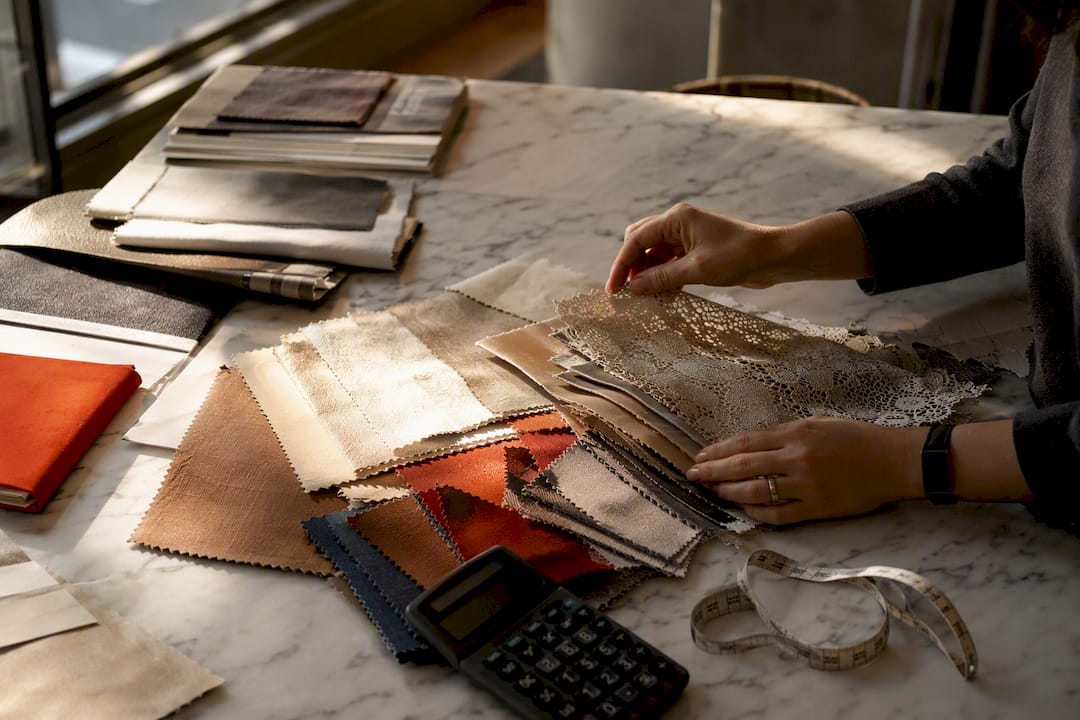
Textiles typically eat up 10 to 20 percent of a total interior project budget, according to TradeHub’s budget tracking framework, and that share swings hard depending on how many windows you’re dressing and how many pieces you’re upholstering. Before you price a single yard, define your scope room by room. That single step, done before you fall in love with a fabric swatch, prevents more budget blowouts than any spreadsheet trick.
Three numbers to anchor your planning: textiles run 10 to 20 percent of overall spend, window treatments alone average around $1,020 nationally per project, and you should reserve 5 to 15 percent of your total budget as contingency, held separately from your fabric line items.
Here’s your immediate checklist:
A realistic fabric budget accounts for yardage waste, lining, labor, and landed cost together, not fabric price alone, and reserves 5 to 15 percent as contingency.
| Point | Details |
|---|---|
| Textile share of budget | Plan for textiles to represent 10 to 20 percent of your total project budget. |
| Account for pattern repeat | Round yardage up to the nearest full repeat to avoid mid-project reorders and dye-lot mismatches. |
| Budget the full landed cost | Add shipping, duties, storage, and installation, which commonly add 15 to 20 percent to sticker price. |
| Separate contingency funds | Hold 5 to 15 percent in reserve and raise it for custom work or long lead times. |
| Start with samples from Fabric-fabric | Order swatches and use category filters before buying yardage to confirm color and reduce return risk. |
A working interior budget breaks into seven buckets, and fabric money hides inside more than one of them. Furniture and case goods (sofas, tables, casegoods) usually claim the largest single share. Textiles and soft goods, meaning upholstery yardage, drapery, pillows, and rugs, form their own category. Then you’ve got lighting, materials and finishes (tile, paint, flooring), labor and installation, design fees if you’re hiring a professional, and contingency.
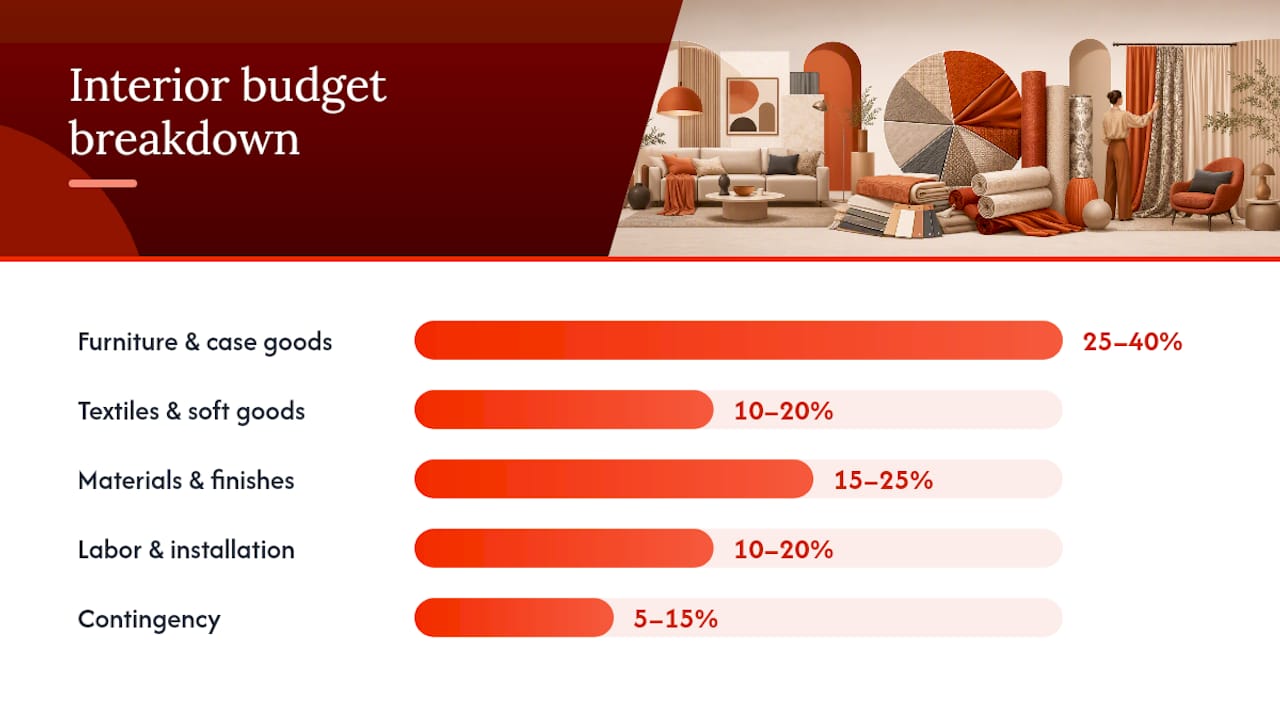
TradeHub’s budgeting framework recommends keeping furniture and FF&E (furniture, fixtures, and equipment) budgets separate from renovation costs like flooring or drywall. That separation matters more than it sounds. When renovation overruns happen, and they usually do, a blended budget lets contractors eat into money you meant for drapery and upholstery. Keep them apart and your fabric allocation stays protected even when a plumbing surprise blows past estimate.
Typical ranges look something like this once you’re past demolition and into the finishing phase:
Scope changes everything here. A full renovation pushes materials and finishes toward the top of that range and can compress your textile share unless you protect it early. A furnish-only project, where the walls and floors already work, frees up more room for fabric and lets textiles legitimately climb toward that 20 percent ceiling. Decorilla’s budget calculator is built around exactly this kind of scope-driven output, returning category-level ranges by space, style, and budget tier so you can see where the money actually lands before you commit to anything.
Pro Tip: Run your numbers through a calculator before you fall in love with a specific fabric. It’s much easier to adjust a percentage on paper than to downgrade a sofa you’ve already ordered.
Yardage math is where most fabric budgets quietly fall apart. The formula sounds simple: measure your width, measure your drop, add hem and heading allowance, multiply by the number of panels. But two variables wreck that simple math constantly: pattern repeat and fabric nap.
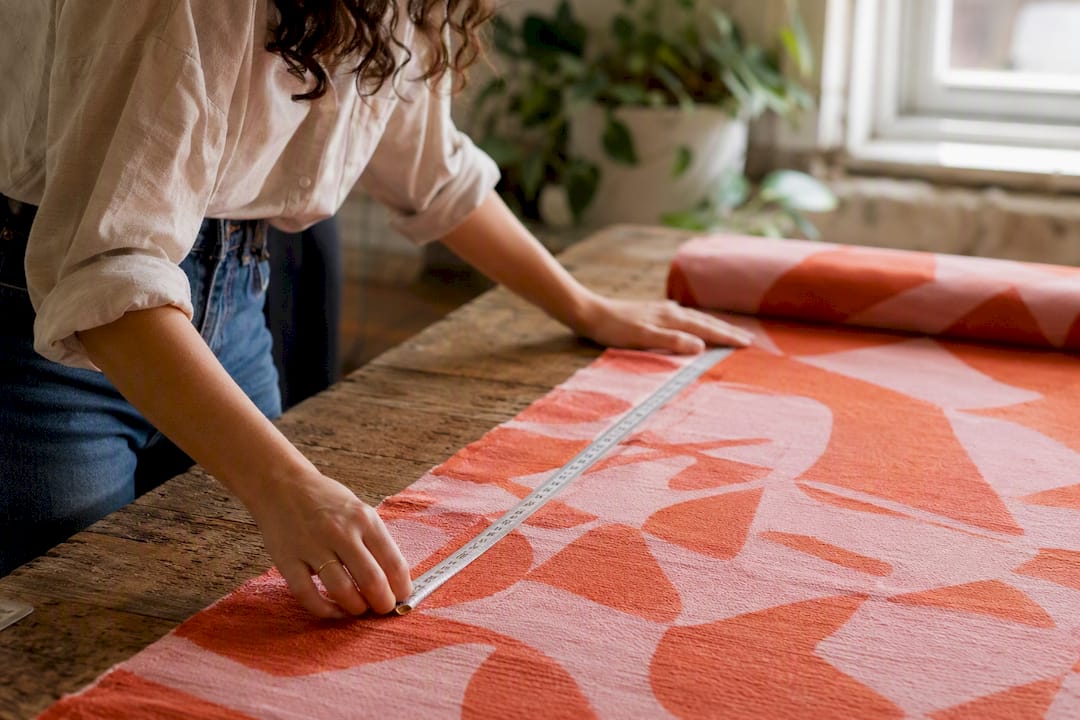
Pattern repeat is the vertical distance before a printed or woven design repeats itself. If you’re working with a fabric that has a 27 inch repeat, every cut panel needs to align with that repeat, which means you round up to the nearest full repeat length rather than cutting to your exact drop measurement. Nap, the directional pile on velvet or corduroy, forces all panels to run the same direction, which can add waste when you’re cutting from a bolt.
Here’s a worked example. Say you need a drapery panel that finishes at 96 inches long, plus 8 inches for hems and heading, giving you a cut length of 104 inches. Your fabric has a 27 inch repeat. Divide 104 by 27, round up to 4 full repeats, and your actual cut length becomes 108 inches, about 3 percent more fabric than the raw measurement suggested. Multiply that across six panels and you’ve added roughly 2 extra yards to your order, something Fabric-fabric’s yardage measuring guide walks through in more detail for different window configurations.
Lining changes your cost picture too:
Workroom fees, meaning the sewing, hemming, and finishing labor, run separately from material cost and scale with complexity. A simple rod-pocket panel costs far less in labor than a pleated drapery with interlining and custom hardware. Budget for professional workroom labor whenever you’re using pattern-matched or lined fabric. Custom drapery pricing data puts mid-range finished panels, materials and basic labor combined, at roughly $200 to $1,200 each, with fabric by the yard running $15 to $120 depending on fiber and quality.
Pro Tip: Always ask your workroom whether their quote includes pattern matching across panels. Some quote a flat sewing fee and charge extra once they see a directional print.
Window treatment pricing varies more than almost any other line item in an interior budget, because material, motorization, and sizing each move the number independently. National data from HomeAdvisor shows an average project cost of about $1,020, but the range beneath that average tells the real story.
Some vendors bill per window, others per square foot, and that distinction changes how a large picture window or a bay window configuration prices out compared to a standard double-hung. Custom sizing pushes every category toward its upper band, and it’s nearly unavoidable once you’re outside a handful of standard window dimensions. Motorization adds a separate premium on top of material cost, often justified in hard-to-reach windows or high-ceiling rooms where a wand or cord isn’t practical.
Material choice drives the widest swings within drapery specifically. Silk and heavier natural fibers sit well above cotton or polyester blends, and labor rates for installation vary by region, sometimes substantially. Homes in dense urban markets routinely see installation labor run higher than the same job in a smaller market. For made-to-measure treatments on nonstandard window dimensions, Drapery Company’s window sizing guide breaks down how odd dimensions affect both fabric yield and installation pricing.
DIY installation for basic blinds or rod-mounted curtains can shave a meaningful chunk off the ticket, but professional installation earns its cost on anything motorized, on plantation shutters, or on drapery requiring precise bracket placement. Installation typically adds a fixed labor charge on top of the material and treatment cost, and skipping it on a complex job usually costs more in redo work than it saves upfront.
Turning percentages into dollars is where budgeting gets real. Here’s how a mid-range living room textile budget typically breaks down:
A mid-range bedroom skews differently. Blackout drapery usually takes priority here over decorative panels, both for sleep quality and energy efficiency, so it’s worth allocating a larger share of the textile budget to lining quality rather than face fabric alone. Bedding textiles (duvet, shams, coverlet) then round out the room’s soft goods spend, and these are often where you can flex quality up or down without touching the window treatments at all.
Scaling estimates up or down comes down to three levers:
Fabric-fabric’s room-by-room curtain guide walks through which fabric weights and finishes suit different rooms if you want to match your budget tier to a specific material before you order.
Sticker price is never the real price. Landed cost, the true delivered cost of your fabric or finished treatment, stacks several components on top of the yard price you see online:
TradeHub’s guidance notes that freight, storage, and installation together frequently add 15 to 20 percent on top of a fabric’s sticker price, a gap that catches a lot of first-time budgeters off guard when the invoice arrives.
Waste allowance is the buffer you add to your raw yardage calculation to cover cutting error, pattern matching, and future repairs. A basic straight-cut project, like unlined curtain panels, might only need a small buffer above the calculated yardage. Upholstery with pattern matching across cushions and arms needs a considerably larger allowance, since matched seams consume more fabric than a single flat cut. Increase your allowance further on anything with a long repeat or a directional nap.
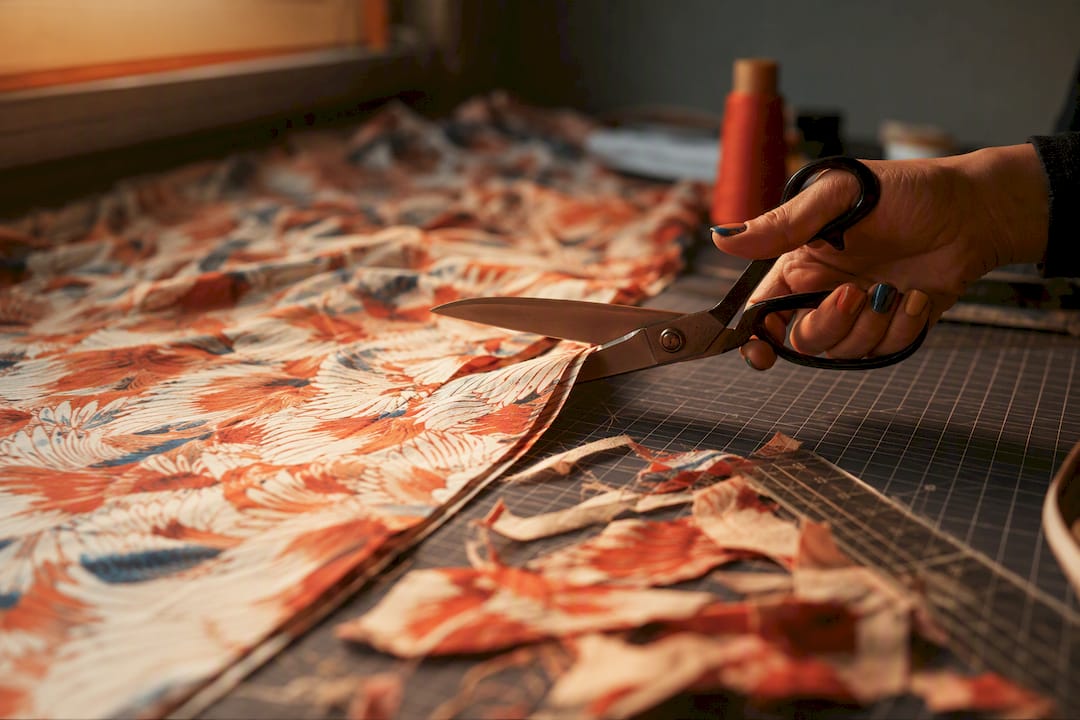
Here’s a short example: say your drapery order comes to $600 in fabric plus $150 in lining. Add 12 percent freight and handling ($90), then $200 for professional installation. Your true landed cost lands near $1,040, not the $600 you started with. Budgeting the sticker price alone would have left you scrambling for an extra $440 mid-project.
A 10 percent contingency works as a reasonable baseline for most furnishing projects, sitting inside the 5 to 15 percent range professionals typically recommend. Push toward the higher end when you’re commissioning custom upholstery, working with long lead-time imported fabrics, or running a renovation alongside your furnishing plan, since any one of those variables can trigger a change order that eats straight into your fabric budget.
Labor and workroom fees deserve their own line items in every quote you request, not a single bundled number. Ask specifically for:
Bundle measurement and installation with the same vendor whenever possible. It’s one less handoff where dimensions can get lost in translation, and vendors often shave a bit off the combined price. Always ask upfront how a workroom handles dye-lot matching if you need to reorder fabric mid-project. A shift of even one dye lot on a patterned fabric shows up as a visible seam line, and that’s a fix nobody wants to discover after installation day.
A basic spreadsheet handles most residential fabric budgets fine. Track five columns: item, estimated cost, actual invoiced cost, vendor, and status (ordered, received, installed). Update it weekly during active sourcing, and reconcile every invoice against your estimate the same day it lands, before the paper trail gets buried.
Once a project spans multiple rooms with dozens of line items, a dedicated tool like an FF&E budget allocator earns its keep over a plain spreadsheet, since it rolls per-room allocations into a live cross-project total and flags remaining budget automatically. For the actual entries going into either system, Fabric-fabric’s cost estimation guide walks through calculating fabric costs step by step so your line items reflect real numbers, not guesses.
Turning a budget into a finished room means moving from spreadsheet numbers to actual material in hand. Fabric-fabric’s cost estimation guide breaks the yardage math into the same steps covered here, so you can double check your own calculation before placing an order. Its curtain fabric buying guide compares weights and finishes if you’re still deciding between a budget-friendly cotton blend and a heavier drapery-grade fabric.
On the shopping side:
The most expensive mistake in fabric budgeting is pricing the material and stopping there. Sticker price without labor, lining, and landed cost is a fantasy number, and it’s the single biggest reason projects run over.
Second most common: underestimating repeat waste. Choosing a large-scale patterned fabric without recalculating yardage for repeat alignment routinely leaves buyers short by a yard or more per panel, and that shortfall often surfaces mid-installation when the workroom calls asking for more fabric.
Third: treating textiles as a leftover line item instead of budgeting them explicitly and early. A single custom drapery installation can cost as much as a statement furniture piece, yet homeowners frequently earmark generous funds for a sofa while leaving window treatments to “whatever’s left.” Budget textiles as their own category from day one, not as a remainder.
Fourth: skipping the contingency line entirely, or worse, spending it before a real change order hits. Keep contingency untouched until you actually need it for a genuine scope change, not a nicer fabric you spotted midway through sourcing.
Fifth: ordering without a swatch. Screen colors lie constantly, and a fabric that reads warm white on your monitor can look distinctly yellow under your living room’s actual lighting.
Trend cycles move faster in accent pieces than in structural upholstery, and your budget should reflect that difference. A sofa reupholstered in a classic linen or performance weave holds its relevance for years. Throw pillows, table runners, and even drapery in a trend-forward print have a shorter shelf life before they start feeling dated.
Build your budget in two tiers: a durable-fabric tier for anything expensive to replace, like sofa upholstery or lined drapery, and a lower-cost, swappable tier for pillows, table linens, and smaller accent textiles that can rotate seasonally without breaking the plan. This approach lets you chase a color trend or a seasonal palette shift through the cheap, swappable layer while your investment pieces stay neutral and long-lasting.
If you do want drapery to reflect a current material trend, boucle textures and warmer earth-tone palettes have been showing up frequently in recent home decor cycles. Budget for that as a mid-tier fabric choice rather than the most expensive option in the category, since trend-driven drapery has a shorter expected lifespan than a classic neutral. Planning this way also protects your contingency fund from absorbing a trend purchase that wasn’t in the original scope.
The pattern I see most often isn’t overspending. It’s under-scoping. Someone orders exactly the yardage a formula suggests, skips the repeat allowance, and ends up reordering mid-project at a worse price and a mismatched dye lot.
Order a little extra. Keep every swatch. That habit alone prevents most of the fire drills that blow up an otherwise solid fabric budget.
— kev
Fabric-fabric exists for exactly the moment you’ve reached after reading this guide: you know your budget, you know your yardage, and now you need real material in hand. The catalog is organized by intended use, so upholstery, drapery, and quilting fabrics each sit in their own category instead of one long undifferentiated scroll.
Order sample swatches before committing to full yardage. It’s the cheapest insurance in this entire budgeting process, and it catches color and texture mismatches before they turn into a return shipment. Once you’ve confirmed your fabric, bulk order discounts kick in on larger upholstery or multi-panel drapery runs, which helps offset the landed costs covered earlier in this guide. Browse the home decor fabric collection for drapery and upholstery-ready yardage, or check backdrop fabrics if your project calls for large-format panels. Start with a swatch order today and move into full yardage once the color and hand feel right in your own room.