

 US Dollar

5 Heat Scenarios: Pick the Right Cool Fabric for Hot Weather
Posted by BLG on 2026 Sep 17th
Posted by BLG on 2026 Sep 17th

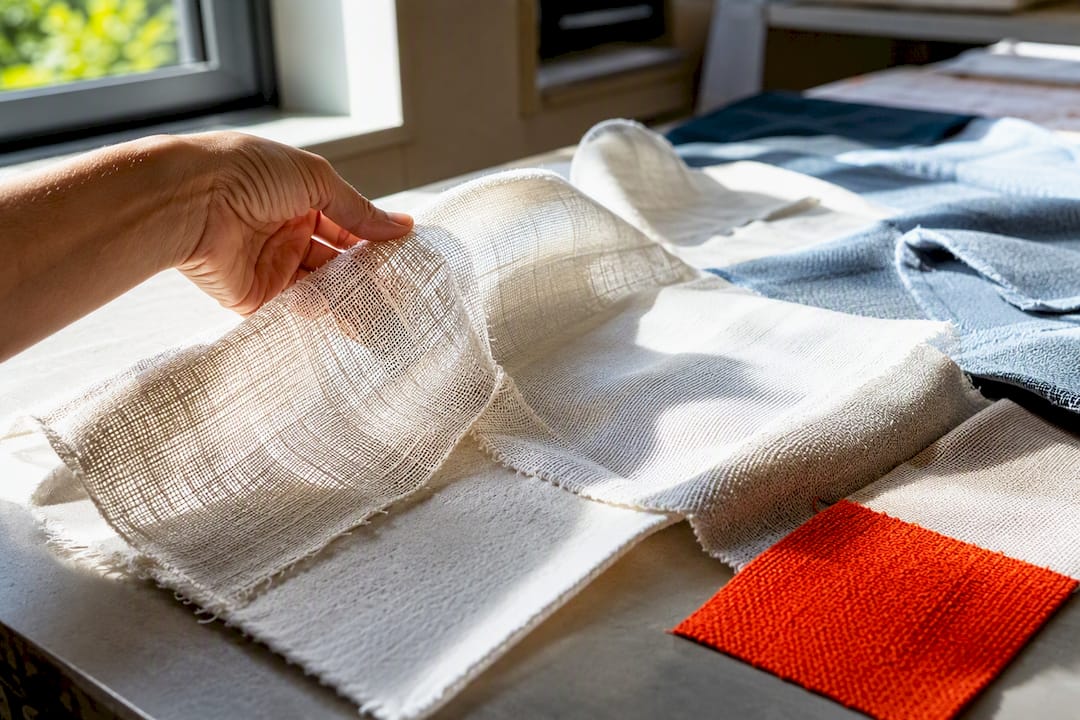
For casual heat, linen wins on pure breathability, lightweight cotton and lyocell come close at a lower price, and silk or fine merino handle variable temperatures well. For heavy sweating or hard exercise, engineered porous synthetics beat every natural fiber. The real rule: hydrophilic open weaves for passive or humid heat, moisture-wicking synthetics for high-output activity, and a loose, well-ventilated fit for either one.
TL;DR:
- Linen and lightweight open-weave cotton are best for passive cooling, but fiber performance varies greatly depending on weaving and finishes.
- Engineered synthetics with wicking channels outperform natural fibers during high-output activities, drying in under 20 minutes.
- Loosely woven fabrics with high air permeability and low thermal resistance are key to staying cool, especially in humid conditions.
- Avoid dense, tightly woven fabrics in hot weather, as they trap more heat and reduce airflow despite fiber type.
- Testing swatches with light and damp-touch methods before purchase helps ensure fabric breathability and suitability for your climate.
Fiber choice matters, but it’s only half the story. The other half is what the fiber is spun and woven into, which is why two “100% linen” shirts can feel completely different on a 95-degree afternoon. Here’s how the main contenders actually perform once you get past the marketing copy.
Cooling isn’t really about the fabric being cold. It’s about how efficiently the fabric moves air and moisture between your skin and the outside world.
Three properties do most of the work: air permeability (how easily air passes through the material), thermal resistance (how much heat the fabric traps against your body), and vapor transfer (how fast moisture escapes as it evaporates). Low thermal resistance plus high air permeability is the combination you want in hot weather, and it explains why a loosely woven linen shirt outperforms a tightly knit cotton one even though both are “natural fibers.”
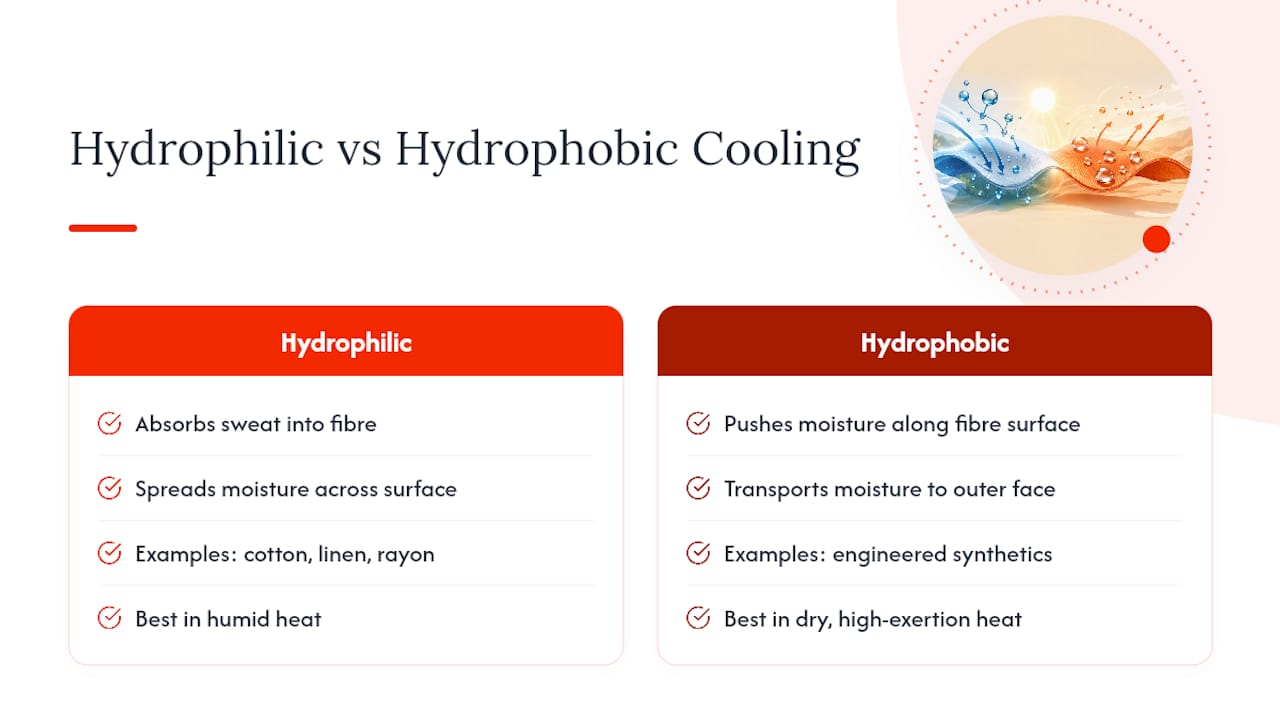
Fiber chemistry adds another layer. Hydrophilic fibers like cotton, linen, and rayon absorb sweat directly into the fiber and spread it across a wider surface, speeding up evaporation and cooling the skin as moisture turns to vapor. Hydrophobic synthetics work differently: they push moisture along the fiber surface to the fabric’s outer face, where it can evaporate faster in dry air. That’s why hydrophilic naturals tend to feel better in humid heat, while engineered wicking synthetics often win in dry, high-exertion conditions where sweat evaporates almost the moment it hits fabric.
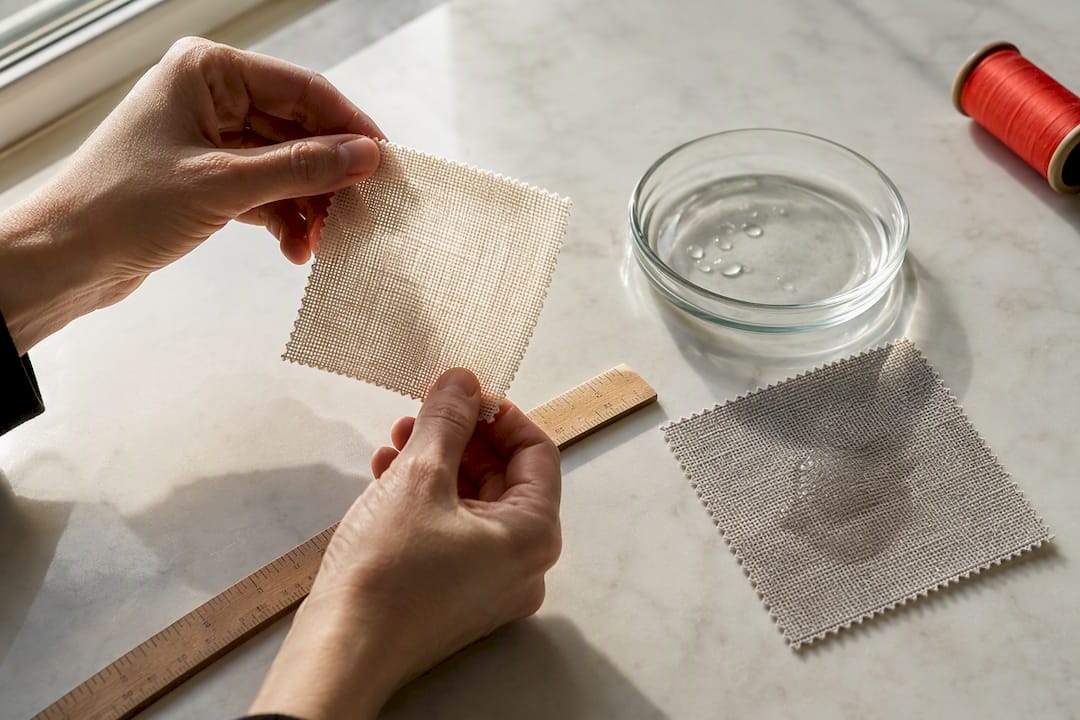
Testing this yourself is easier than it sounds. Hold a fabric swatch up to a light source. If light passes through easily, air is moving through it too, and it’s a decent bet for hot-weather wear.
Pro Tip: After light exercise, press a swatch against your inner wrist for 30 seconds. If it feels clammy and doesn’t dry within a minute or two, it’s likely too dense or too heavily finished for serious summer heat.
One 2026 modeling study found that an advanced dual-cooling textile combining conductive fibers with directional moisture transport lowered skin temperature by several degrees compared with standard cotton, showing just how much engineered construction can outperform fiber choice alone.
The best fabric for a humid beach walk is not the best fabric for a trail run in dry desert heat, and treating “summer fabric” as one category is where most shopping guides go wrong. Match the fabric to what you’re actually doing.
Humidity changes the math more than most people expect. In dry heat, sweat evaporates almost instantly, so even moderately breathable fabrics feel fine. In humid heat, evaporation slows dramatically, which is exactly when weave openness and hygroscopic fiber choice start to matter most.
Shopping for hot-weather fabric gets a lot easier once you know which labels and specs actually predict performance and which are just marketing language.
Care routines can undo good fabric choices fast. Skip fabric softener on linen and cotton since it coats fibers and reduces absorbency, use gentle detergent, and air-dry when possible to preserve loft and airflow in the weave.
Pro Tip: Before buying fabric by the yard, request a swatch and run the light test and the damp-touch test on it at home. A few dollars on a sample beats yards of fabric that turns out to trap heat.
Blends split the difference, and that’s both their strength and their limit. A cotton-polyester blend, for instance, picks up some of cotton’s absorbency and some of polyester’s quick-dry speed, but it usually doesn’t match either fiber at its best job. Pure linen outperforms a linen-cotton blend for passive evaporative cooling, while a pure engineered synthetic still out-wicks a synthetic-cotton blend during hard exercise.
Where blends earn their place is durability and behavior consistency. A small percentage of spandex or elastane added to cotton or linen improves stretch and wrinkle resistance without meaningfully hurting breathability, since the base fiber still dominates the fabric’s surface. Cotton-linen blends are common for exactly this reason: you get some of linen’s crispness and cooling with less of the wrinkling.
The failure mode to watch for is a blend built around a dominant synthetic with a small natural-fiber percentage added mostly for marketing. A fabric labeled “cotton-touch” that’s actually 90% polyester will behave like polyester, not cotton, for moisture handling. Read the fiber content percentage, not just the fiber names listed, and remember that thermo-physiological comfort research consistently ties performance to the dominant fiber ratio and construction, not the presence of a natural fiber somewhere in the mix.
Sun exposure and heat exposure are two separate problems, and a fabric that breathes well isn’t automatically a fabric that blocks UV. Tightly woven, densely constructed fabrics generally block more ultraviolet radiation, which puts them at odds with the open weaves that maximize airflow.
This creates a real tradeoff for outdoor wear. A loose, open-weave linen shirt cools you efficiently but lets significant UV through, while a tightly woven UPF-rated synthetic shirt blocks sun but runs warmer unless it’s specifically engineered with wicking channels to compensate. Darker colors and denser weaves both raise UV protection, so a garment optimized purely for coolness often isn’t the best choice for a full day of direct sun exposure.
The practical fix is layering strategy rather than expecting one fabric to do both jobs. A lightweight, tightly woven UPF shirt for direct midday sun, swapped for an open-weave linen or cotton piece once you’re in shade or indoors, covers both needs without compromising either. For garments meant to serve both purposes at once, look specifically for fabrics tested and labeled with a UPF rating rather than assuming any tight weave provides adequate sun protection.
Price tracks fiber processing complexity more than it tracks cooling performance, which surprises a lot of first-time fabric shoppers. Linen and silk sit at the higher end because flax and silk fiber processing takes more labor and yield less usable fiber per plant or cocoon. Lightweight cotton and rayon land in the middle. Engineered synthetics vary widely, with basic polyester cheap and high-performance wicking constructions priced closer to premium naturals.
Durability doesn’t follow the same curve as price. Linen actually improves with washing and years of wear, softening over time while holding its structural integrity, which makes it one of the better long-term values for the price despite the higher upfront cost. Lightweight cottons wear out faster under repeated hot-weather use and washing, especially in looser weaves like voile. Engineered synthetics resist wear and pilling well but can degrade in feel and wicking performance after repeated washing if finishes break down.
The practical takeaway: if you’re buying for a garment you’ll wear all summer for years, linen or a well-made lyocell justifies the higher price through longevity. If you need seasonal or occasional-use pieces, lightweight cotton offers the best cost-to-comfort ratio, and bulk-buying fabric by the yard for multiple garments often brings the per-yard cost down further.
Hot-weather fabric choices carry different environmental footprints depending on how the fiber is grown, processed, and finished. Flax, the plant linen comes from, generally requires less water and fewer pesticides than conventional cotton, which is part of why linen has held onto a reputation as a lower-impact natural fiber. Hemp and ramie share similar low-input growing profiles.
Regenerated cellulose fibers like rayon, viscose, and lyocell start from wood pulp, a renewable input, but the chemical processing step varies enormously in environmental impact depending on the manufacturer and whether the process is closed-loop. Lyocell processing tends to recover and reuse more solvent than older viscose methods, which is worth checking on a garment’s care label or brand documentation if this matters to you.
Engineered synthetics are petroleum-based and don’t biodegrade on any practical timeline, though their durability and quick-drying nature can reduce overall water and energy use in laundering over a garment’s lifespan. There’s no single “greenest” answer here. The most sustainable choice, in practice, is usually the fabric you’ll actually wear for years rather than replace after one summer, which is another point in favor of well-made linen and durable natural-fiber blends over disposable fast-fashion synthetics.
Most hot-weather fabric advice treats fiber choice like it’s the whole answer, and that’s the biggest gap between conventional wisdom and what the research actually shows. Weave openness and garment fit routinely matter as much as, or more than, whether a shirt is linen or cotton or a blend. A tightly woven, heavily finished “breathable” fabric can underperform a loosely woven basic cotton, and that’s not a minor footnote, it’s the detail most buying guides skip entirely.
The other overlooked point is that engineered synthetics get an unfair reputation problem. They’re dismissed as “hot” fabrics because of decades of poor-quality polyester, but modern wicking constructions genuinely outperform natural fibers once sweat output gets high enough. The mistake is applying that same logic to casual, low-sweat situations where a hydrophilic natural fiber still wins.
If you take one thing from this, prioritize checking weave and weight before fiber name, and match the fabric to what you’ll actually be doing in it. That single habit prevents more bad hot-weather purchases than any fiber preference ever will.
— kev
The catalog is organized by intended use, so it’s easier to find lightweight apparel-weight linens, cottons, and regenerated cellulosics without sorting through unrelated upholstery-weight listings. That matters when you’re specifically hunting for breathable, low-thermal-resistance fabric rather than general yardage.
Listings typically show fiber content and usage suggestions to help check weave and weight before ordering. Sample swatches may be available for testing breathability and hand-feel on a small piece before buying larger quantities for projects, and bulk pricing may apply for bigger orders. Start in the Fashion category to browse lightweight linen, cotton, and rayon options by the yard, order a few swatches, and confirm the breathability before you buy in bulk.
Linen and lightweight, open-weave cotton lead for passive cooling in most conditions, while engineered wicking synthetics perform best during high-sweat activity.
Both are hydrophilic and work well in humidity, but linen’s looser, stiffer weave generally holds fabric further from skin and moves air more effectively than most cotton weaves.
Yes. Engineered wicking synthetics move sweat off skin and dry faster than natural fibers, sometimes in under 20 minutes for lightweight variants, which makes them a strong choice for intense exercise.
Generally yes. Air permeability drops as weave density and fabric weight increase, so a tightly constructed fabric traps more heat even when the fiber itself is naturally breathable.
Fabric-fabric offers sample swatches so you can test breathability and hand-feel on a small piece before ordering larger quantities of any lightweight apparel fabric.