

 US Dollar

Choosing the Best Sofa Fabrics: A Practical Guide
Posted by BLG on 2026 May 11th
Posted by BLG on 2026 May 11th


TL;DR:
- Choosing sofa fabric requires considering practical stain resistance and durability alongside appearance to match real-world use. Microfiber and performance synthetics excel in stain resistance and cleaning, making them ideal for households with pets or children, while natural fibers offer aesthetic appeal but need careful handling. Testing swatches in your home is essential for accurate color, texture, and maintenance insights before making a final decision.
Picking sofa fabric feels simple until you’re standing in a store holding three swatches that all look great but promise very different things once your dog jumps on the cushions or a glass of juice gets knocked over. The truth is that practical methodology matches cleaning tolerance to real-world stain risks rather than just appearance, and that shift in thinking changes everything. This guide walks you through the evaluation criteria, top fabric categories, a clear comparison, and scenario-based recommendations so you can pick with confidence instead of crossing your fingers.
| Point | Details |
|---|---|
| Match fabric to lifestyle | Choose sofa fabrics based on your home’s cleaning needs and usage, not just appearance. |
| Understand durability ratings | Look for fabrics with a high rub count for better wear, especially in busy households. |
| Test before you buy | Use swatches at home to assess color, feel, and cleanability before making your final selection. |
| Consider room conditions | Select fade-resistant fabrics for bright or sun-exposed spaces and easy-care options for families and pets. |
| Maintenance matters | Always review cleaning instructions and upkeep requirements to avoid surprises after purchase. |
Now that we recognize the selection challenge, let’s break down what truly matters when evaluating upholstery fabrics.
Before falling for a color or texture, you need a short checklist of performance metrics. These terms are industry-standard, and understanding them puts you in control of the conversation whether you’re shopping online or visiting a showroom.
Rub count is the single most important durability rating for upholstery. It measures how many times a fabric can be rubbed back and forth before it begins to break down, and it’s tested using two methods: Wyzenbeek (standard in the U.S.) and Martindale (common in Europe). The rub count standard for daily use sits at 15,000 or more double rubs for residential sofas, while commercial settings usually require 30,000 or more. Anything under 9,000 is considered light duty.
Here’s a quick breakdown of the rub count ranges you’ll see on fabric spec sheets:
Beyond rub counts, several secondary metrics determine how a fabric holds up over time in a lived-in home:
Understanding these metrics is easier once you explore the full range of sofa fabric types available, since each category has a typical performance profile. You can also review a thorough best upholstery fabrics comparison to see how different materials stack up against each other side by side.
Pro Tip: Order actual swatches before you commit to any fabric. Blot them with a damp cloth, hold them up to your home’s natural light, and even rub them briskly with a dry cloth to check for pilling. Real testing in your own space reveals far more than any spec sheet can.
The process of choosing upholstery fabric becomes much easier once you treat these metrics as your filter, narrowing options down before you ever consider color or pattern.
With a grasp on fabric criteria, let’s look at which types best fit various household realities.
Different fabric categories perform very differently under real-life conditions. Here’s an honest breakdown of the main players.
Microfiber and performance synthetics
Microfiber is the go-to choice for homes with kids or pets precisely because it resists stains, cleans easily, and tends to hold up well against scratching and everyday abuse. Performance synthetics like Crypton and other engineered fabrics take this even further by weaving stain and moisture resistance into the fiber itself rather than applying it as a surface coating.
Pros:
Cons:
Natural fibers: cotton, linen, and blends
Cotton and linen bring a relaxed, organic look that synthetic fabrics rarely replicate convincingly. But untreated naturals stain easily, and linen in particular wrinkles and fades faster than most homeowners expect. Blends solve much of this by mixing natural fibers with polyester or other synthetics to add durability without sacrificing the aesthetic.
Pros:
Cons:
Leather and faux leather
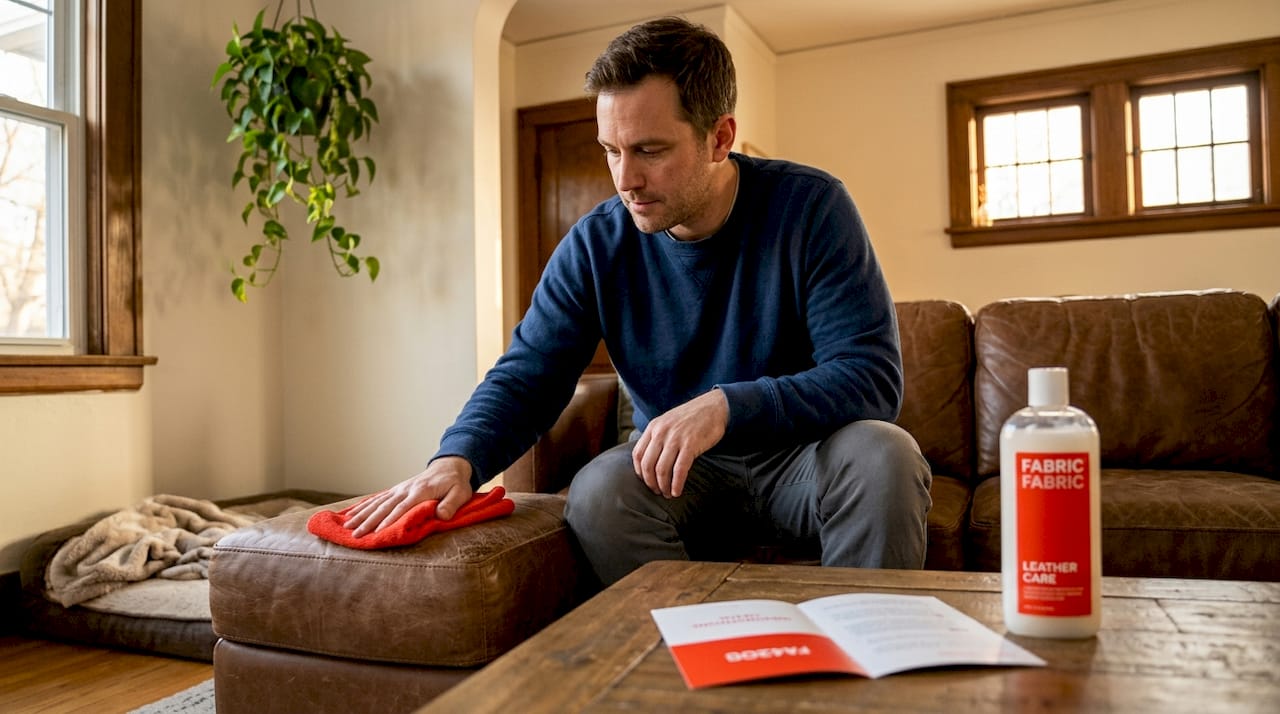
Leather offers durability and easy spot cleaning but it requires periodic conditioning to prevent cracking, and it will develop a patina over time. Some people love that lived-in look; others find it frustrating. Faux leather (often called PU leather or vegan leather) costs less and doesn’t require conditioning, but it can peel and crack after several years of use, especially in dry climates.
Velvet: stunning but specific
Velvet has made a huge comeback in home decor, and when it works, it really works. The problem is that not all velvet is created equal. Look for performance-rated, high-rub-count velvet rather than traditional untreated velvet, which crushes easily, marks with every touch, and can be a nightmare to clean. Pile height matters too: shorter pile velvet holds up better than long-pile versions and is easier to maintain.
You can browse stretch velvet fabrics that offer both the look and a bit more flexibility for upholstery applications that need to curve around cushion corners cleanly.
Pro Tip: Always check the care label or spec sheet before you fall in love with a fabric. A stunning velvet that’s rated X (vacuum only) will make your life miserable on a daily-use sofa. Know your cleaning habits honestly, and pick accordingly.
For a deeper look at what each category is called and how they differ aesthetically, the guide to essential sofa fabric names is a useful starting point.
With individual fabric details laid out, here’s a side-by-side look to simplify your choice.
Numbers don’t tell the whole story, but they do give you a baseline for quick comparisons. Use this table as your starting filter, then layer in the lifestyle considerations from the next section.
| Fabric type | Durability (rub count range) | Cleanability | Fade resistance | Maintenance level |
|---|---|---|---|---|
| Microfiber | 15,000 to 30,000+ | High (W or WS rated) | Moderate to good | Low |
| Cotton/Linen blends | 9,000 to 15,000 | Medium (varies by treatment) | Low to medium | Medium |
| Leather (genuine) | Very high (not rub-count rated) | High (spot clean) | Good | Medium (conditioning needed) |
| Velvet (performance) | 15,000 to 25,000 | Medium to high | Medium | Medium |
| Solution-dyed acrylic | 15,000 to 30,000+ | Very high | Excellent | Low |
Rub count at a glance:
Here’s the real trade-off list that no spec sheet spells out clearly:
If your sofa lives near a window or a glass door, prioritize fade-resistant fabrics over aesthetics. The visual payoff of a gorgeous natural linen fades fast, literally, when it’s getting four hours of direct sun every afternoon. Understanding how fabric texture interacts with sunlight can also help you make smarter choices for specific room conditions.
Finally, let’s match all this knowledge to everyday decorating scenarios so you can make a confident, custom fit.
General guidance is helpful, but your sofa has a specific job to do in a specific room. Here are the four most common decorator scenarios and the best fabric match for each.
Pets and young children at home. Your top pick is microfiber or a performance synthetic like Crypton. These fabrics can handle repeated cleaning without degrading, and they resist pet hair embedding better than velvet or loose weaves. The dark horse alternative here is performance velvet with a tight, short pile: it cleans up surprisingly well and looks more polished than standard microfiber.
Sunny rooms or outdoor-adjacent areas. Solution-dyed acrylics are your clear winner here. The dye runs through the entire fiber rather than sitting on the surface, so UV exposure doesn’t cause the visible fading you’d see with printed or surface-dyed alternatives. A solid runner-up is performance polyester with UV-resistant treatment, which costs less but may need reapplication over time.
Easy-care, busy households. Leather or high-quality faux leather is the simplest daily maintenance option. Wipe it down with a damp cloth and you’re done. For those who find leather too cold or formal, a tightly woven microfiber in a mid-tone color hides day-to-day grime between cleanings better than lighter or heavily textured alternatives.
Occasional or formal use. This is where natural fibers shine. A linen-cotton blend in a formal sitting room that sees light use looks incredible and, without constant stress testing, holds up just fine. Velvet is another natural fit here: dramatic, tactile, and perfect for a space that’s admired more than sat in daily.
“Household cleaning tolerance and exposure risks should guide fabric selection far more than style alone. Start with your lifestyle, then work backward to the fabric.”
Once you’ve narrowed to two or three options, consult a more detailed expert sofa fabric guide for category-specific nuance, and always review the relevant fabric care guide so you know exactly what ongoing maintenance looks like before you commit.
Most fabric guides stop at the spec sheet. We’ve found that’s where the advice fails you.
Rub counts and cleanability ratings create an important baseline, but they’re measured in controlled lab environments with standardized equipment. Your home is not a lab. Your sofa will face a specific combination of sunlight angles, family habits, cleaning products you already own, pets with specific shedding patterns, and lighting conditions that no manufacturer’s test can fully replicate.
Here’s what showroom experiences consistently get wrong: color perception. A fabric that looks like a warm taupe under a store’s fluorescent lighting can shift to a cold gray under your home’s LED fixtures, or take on a yellow cast in afternoon sunlight. This isn’t a flaw in the fabric. It’s just physics. But it’s something you only discover when you bring a swatch home and live with it.
Swatch testing in your own home reveals what specs and showrooms miss, especially around true color perception and cleaning habits that are specific to your routines and products. The same fabric might clean beautifully with one type of cleaner and leave a permanent water ring with another.
Pro Tip: Live with a swatch for a full week before ordering. Place it on the actual sofa cushion. Let your pet sit on it. Spill something on it deliberately and clean it with the product you’d normally use. This is not overkill; it’s how you avoid a $500 regret.
The deeper truth is that most decorating regrets come from skipping this step. Specs build confidence, but real-world testing builds certainty. Our expert sofa fabric guide includes swatch testing advice alongside technical specs precisely because one without the other leaves you with an incomplete picture.
Ready to put your knowledge to work? Here’s where to find curated fabric choices that fit your criteria.
At fabric-fabric.com, you’ll find an extensive range of home decor fabrics organized by type and use, so you’re not sorting through apparel materials when you need upholstery-grade options. Each listing includes fabric descriptions, usage suggestions, and the practical details you now know to look for.
Whether you’re reupholstering a tired family sofa or building a custom piece from scratch, the selection covers performance synthetics, natural fiber blends, velvet options, and specialty fabrics. You can also explore backdrop and accent fabrics if you’re planning a broader room refresh alongside your sofa project. Order swatches directly from the site, test them at home using the methods in this guide, and shop with confidence knowing exactly what performance profile you need.
Microfiber is the top choice for pet- and kid-friendly homes because it resists stains, cleans easily with water-based cleaners, and holds up well against repeated scrubbing. Performance synthetics like Crypton are an excellent step up if you need maximum stain protection.
Check the rub count on the spec sheet. A rating of over 15,000 double rubs is the industry standard for everyday residential use, so look for that number as your minimum threshold before anything else.
They can be beautiful in low-traffic or formal rooms, but blends and treatments improve practicality significantly. Pure, untreated linen or cotton stains easily and may not hold up to routine cleaning without fading or pilling.
Prioritize solution-dyed acrylics for any sofa near a window. Solution-dyed acrylics lead in fade resistance because the color is part of the fiber itself rather than a surface treatment that UV light can break down over months of exposure.
Order swatches and test them with realistic use in your actual room: check the color under your lighting, blot with your usual cleaner, and let daily life interact with the sample for at least a week before you place your order.