

 Canadian Dollars

What Is Upholstery? Materials, Techniques, and Tips
Posted by BLG on 2026 Jul 17th
Posted by BLG on 2026 Jul 17th

TL;DR:
- Upholstery involves layering a furniture frame with support, padding, and fabric to create durable, comfortable surfaces. Proper tensioning of support layers and careful teardown inspections are essential for long-lasting furniture, beyond just choosing the right fabric. Selecting fabrics based on wear, cleaning needs, and room style is important, but foundation quality determines durability.
Upholstery is defined as the craft of layering a structural frame, support system, padding, and cover fabric to create furniture surfaces that are comfortable, durable, and visually finished. The term covers far more than swapping out fabric. Four distinct functional parts make up every upholstered piece: the frame, the support system, the padding or fill, and the outer cover. Understanding what is upholstery at this level helps you make smarter decisions, whether you are restoring a vintage armchair, redecorating a living room, or sourcing materials for a craft project.
Every upholstered piece of furniture shares the same basic architecture. The frame is the skeleton, typically hardwood or engineered wood, and it determines the shape and load capacity of the piece. A weak frame cannot be saved by premium fabric, no matter how well the rest of the job is done.
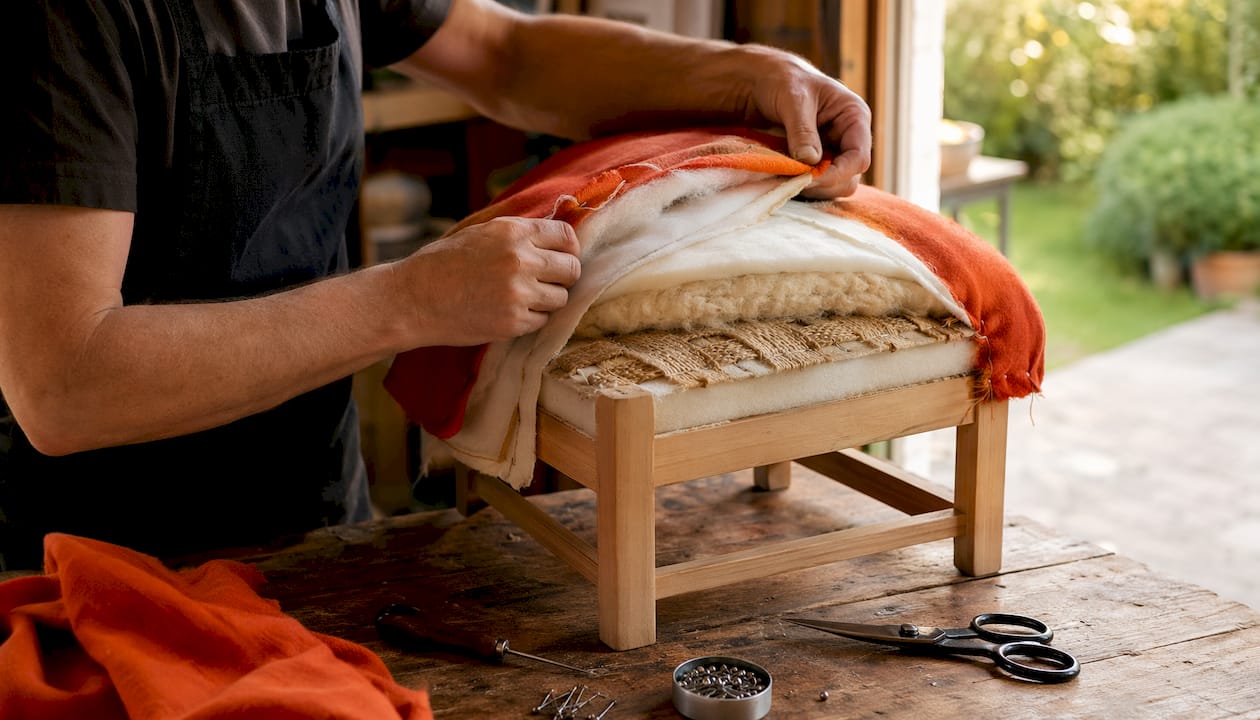
The support system sits directly on the frame. This layer uses webbing, coil springs, or sinuous (zigzag) springs to distribute weight evenly across the seat and back. Webbing and springs bear the structural load and determine long-term success. The cover fabric provides no structural support at all.
Padding and fill come next. Traditional upholstery builds shape through layers: foundation webbing, active springs, hessian containment, body fill of horsehair or coir, surface batting, and finally the finish fabric and trim. Modern builds often replace animal hair and coir with high-density foam and polyester batting, which are easier to source and more consistent in density.
The outer cover is what most people see and touch. Common cover materials include cotton, linen, polyester blends, microfiber, velvet, leather, faux leather, and wool blends. Each material brings a different balance of durability, texture, and cleanability to the finished piece.
| Layer | Function | Common materials |
|---|---|---|
| Frame | Structural skeleton | Hardwood, plywood, engineered wood |
| Support system | Weight distribution | Jute webbing, coil springs, sinuous springs |
| Padding and fill | Comfort and shape | Foam, horsehair, coir, polyester batting |
| Outer cover | Finish and aesthetics | Cotton, velvet, leather, microfiber, faux leather |
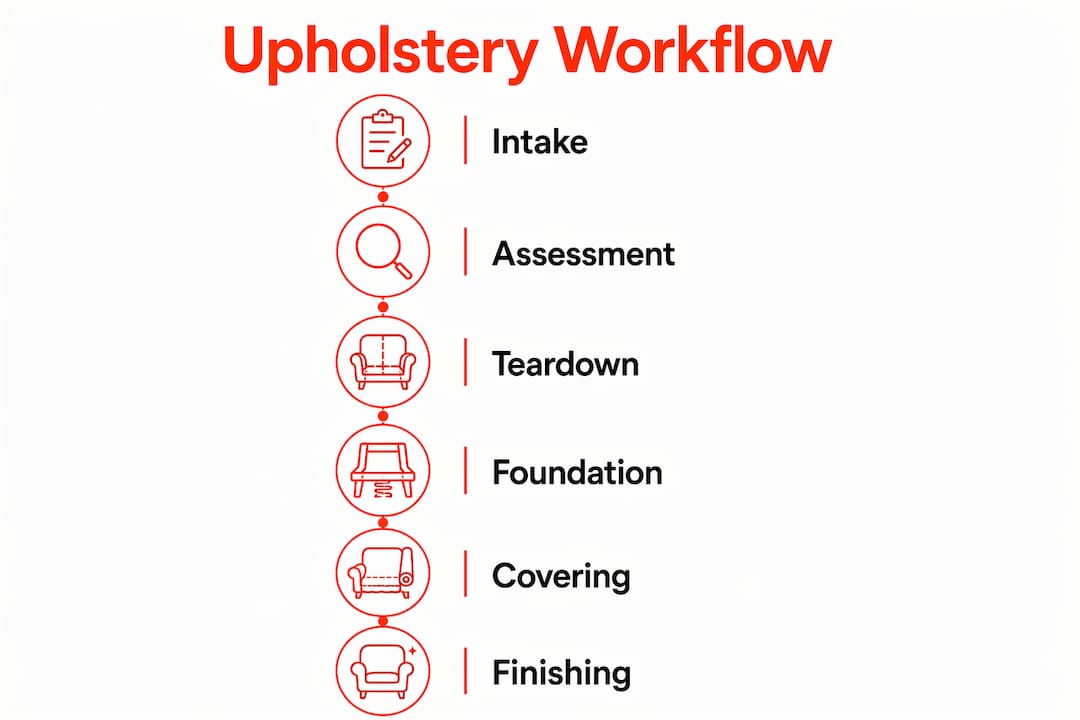
Professional upholstery follows a six-stage workflow: intake and assessment, quoting, teardown, foundation build-up, cover fitting, and final inspection. Each stage controls a specific risk. Skipping any one of them increases the chance of a failed result.
The teardown stage surprises most first-timers. Teardown is not demolition. It is a careful inspection phase where old covers are removed and preserved as cutting templates, and hidden structural damage, insect evidence, or broken springs are documented before any new material goes on. This step protects both the customer and the upholsterer.
Documentation runs through every stage. Traceability through photos and notes protects customers and shops by ensuring decisions rely on verified evidence, not assumptions. A shop that photographs every stage of a job can prove exactly what was found and what was done.
Pro Tip: Photograph the original piece from multiple angles before teardown begins. Those images become your reference for pattern placement, seam location, and tufting depth when you rebuild.
The techniques an upholsterer uses inside the piece determine how it feels and how long it lasts. Webbing is the first critical skill. Jute webbing is woven in an interlocking grid pattern across the seat frame, and tension must be even across every strip. Incorrect webbing tension creates pressure points and leads to early furniture failure, a problem often wrongly blamed on fabric quality.
Spring systems add another layer of complexity. Coil springs are tied in an eight-way hand-tied pattern, which distributes weight in all directions and gives a classic, deep-seated feel. Sinuous springs are faster to install and suit modern, lower-profile furniture. The choice between them affects the final sit height, firmness, and the amount of padding needed above them.
Padding technique shapes the silhouette of the piece. Key methods include:
Covering and finishing require tension management above everything else. The cover must be pulled with equal force from opposite sides before any staple or tack is set. Uneven tension causes puckering at seams and wrinkles across flat panels. Pattern alignment is a separate discipline: stripes must run straight, and motifs must center on seat backs and cushion fronts. Decorative trims, including piping, gimp, and nail head, are applied last and cover staple lines while adding a finished edge.
Pro Tip: Always cut cover fabric 2–3 inches larger than the panel on every side. That extra material gives you enough grip to pull even tension before you commit to stapling.
Fabric choice is the decision most readers focus on, and it deserves careful thought. The right fabric depends on three factors: how much wear the piece will take, how easy it needs to be to clean, and how it should look in the room. A fabric that scores well on all three for a dining chair will not necessarily work on a formal sofa.
For high-traffic pieces like family room sofas and dining chairs, microfiber and tightly woven polyester blends offer the best wear resistance. Velvet and linen read as more formal and look beautiful, but they show wear faster and require more careful cleaning. Leather and faux leather are the easiest to wipe clean, making them practical for households with children or pets. Fabric texture also affects upholstery performance, not just appearance. A loosely woven fabric will snag and distort under tension during fitting.
Matching fabric to project type matters as much as matching it to the piece:
For a detailed breakdown of how specific fabrics perform on sofas, the sofa fabric guide at Fabric-fabric covers wear ratings, texture, and maintenance side by side. If you are choosing between fabric categories for the first time, the practical fabric selection guide at Fabric-fabric walks through the decision criteria step by step. Home decor retailers and fabric specialists, including DuetteShop, also categorize upholstery fabrics by application, which helps narrow options before you buy.
Upholstery is a layered construction craft where the support system and padding determine long-term durability, and the cover fabric determines appearance.
| Point | Details |
|---|---|
| Four layers define upholstery | Frame, support system, padding, and cover each serve a distinct structural or aesthetic role. |
| Support layers carry the load | Webbing and springs bear all structural weight; fabric failure is usually a foundation problem. |
| Teardown is an inspection step | Removing old layers carefully reveals hidden damage and preserves templates for accurate rebuilding. |
| Fabric choice follows use | Match wear resistance and cleanability to the piece’s traffic level before choosing color or texture. |
| Documentation protects everyone | Photos and notes at every project stage create a record that prevents disputes and guides decisions. |
Most people shopping for reupholstery services or DIY materials think the fabric is the product. I understand why. The fabric is what you see, touch, and pay attention to in a showroom. But after working with upholstery materials for years, I can tell you that the fabric is the last thing that determines whether a piece will last.
The pieces I have seen fail earliest were not the ones with cheap fabric. They were the ones where the webbing was installed without proper tension, or where a broken spring was covered over instead of replaced. The new fabric looked fine for six months, then the seat collapsed from the inside. The customer blamed the fabric. The real problem was buried three layers down.
The insight that changed how I evaluate upholstery work is this: run your hand across the seat of any upholstered piece and press down firmly in the center and at the edges. A well-built piece feels consistent. A poorly built one feels soft in one spot and firm in another, which tells you the padding is uneven or the springs are misaligned. No amount of beautiful fabric fixes that.
When you source materials for a project, spend as much time thinking about your support layer and padding as you do about your cover fabric. The foundation is what you are actually buying.
— kev
Fabric-fabric carries a wide selection of upholstery-grade fabrics suited for home decor projects, furniture restoration, and crafting. Whether you are covering a statement armchair or refreshing a set of dining chairs, the right material is the starting point for a result that holds up.
The backdrop fabric collection at Fabric-fabric includes heavier-weight options well suited to structured upholstery work. For broader home decor applications, the home decor fabric range covers everything from cotton canvas to velvet, organized by weight and use. Both collections ship with clear descriptions and pricing, so you can match material to project before you order.
Upholstery is the craft of covering furniture with layers of support, padding, and fabric to create a comfortable and finished surface. It includes the internal structure, not just the outer cover.
The main types include cotton, linen, microfiber, velvet, leather, faux leather, polyester blends, and wool blends for cover fabrics, plus foam, horsehair, coir, and batting for padding layers.
Choose based on wear resistance, cleanability, and texture. High-traffic sofas perform best with microfiber or tightly woven polyester blends, while formal pieces suit velvet or linen.
Incorrect webbing tension creates uneven pressure points that cause the seat to sag or fail early. Proper tension is one of the most critical skills in professional upholstery work.
Teardown is a systematic removal of old layers to inspect for hidden structural damage, broken springs, and insect evidence, while preserving the original covers as cutting templates for the rebuild.