

 Canadian Dollars

What Is Slub Texture? A Crafter's Guide to Unique Fabrics
Posted by BLG on 2026 Sep 22nd
Posted by BLG on 2026 Sep 22nd

TL;DR:
- Slub texture results from deliberate variations in yarn thickness, creating uneven, organic surfaces in fabrics. It enhances visual depth, tactile interest, and relaxed aesthetics, making it popular in casual clothing and home decor. High-quality slub fabric is characterized by consistent distribution, tight weave, and intentional irregularities, differentiating it from defects.
That bumpy, slightly uneven weave you’ve noticed on your favorite linen shirt or a cozy cotton tee isn’t a mistake from the factory floor. It’s called slub texture, and for many designers, crafters, and home sewers, it’s exactly what makes a fabric worth reaching for. Slub is one of the most misunderstood fabric characteristics in textile arts, often dismissed as poor quality when it’s actually a deliberate design choice with real practical benefits. This guide walks you through everything you need to know, from how slub forms to how to choose and use it confidently in your next project.
| Point | Details |
|---|---|
| Slub is intentional | Slub texture is usually a deliberate design choice, not a defect. |
| Texture adds character | Slub provides visual and tactile interest that crafters love for unique projects. |
| Evaluate slub quality | Look for consistency in slub scale and distribution to distinguish quality. |
| Consider project fit | Different slub types suit apparel, decor, or craft purposes in distinct ways. |
Slub texture comes from variations in yarn thickness. During the spinning process, certain sections of the yarn are made thicker or thinner than the surrounding thread, creating small, irregular bumps or elongated raised areas along the fiber. These variations, when woven or knitted into fabric, produce a surface that catches light differently, feels slightly uneven to the touch, and gives cloth a distinctly organic, handcrafted look.
Here’s what makes slub stand out from a standard smooth fabric:
Slub texture shows up in a wide range of fabric types, including linen, cotton jersey, silk blends, and even some polyester fabrics marketed for their texture. Understanding the slub fabric basics is the first step toward using this material with intention rather than guessing.
“When fabric is made with slub yarn, the texture affects appearance and hand and behavior: it can change drape, alter light interaction (depth/shadow), and can make garments look more casual and less uniform than fabrics made from even yarns.”
This is why slub linen makes such a popular choice for loose blouses and curtains while slub jersey shows up in casual tees and loungewear. Choosing slub is often a matter of aesthetic intent. When you want a fabric that looks a bit more relaxed and a bit less “corporate,” slub texture delivers that mood beautifully. If you’re exploring options for everyday wear, learning about choosing comfortable fabrics can also help you understand why texture plays such a big role in how clothing feels and functions.
Knowing what slub texture is leads naturally to the question: how do manufacturers actually create such a distinctive look and feel?
Slub yarn begins at the spinning stage. Spinners control fiber thickness by adjusting the tension and speed of the spinning machinery. When they slow down the draw speed or allow extra fiber to bundle before twisting, they create a thicker segment in the yarn. These thicker spots are the slubs. Modern textile mills can program machines to place slubs at specific intervals and sizes, making the resulting fabric both intentional and consistent.
Here’s a breakdown of the main ways slub forms in commercial and artisan contexts:
| Type of slub | How it forms | Quality indicator |
|---|---|---|
| Machine-programmed | Controlled tension adjustment | High, when consistent |
| Handspun artisan | Manual fiber introduction | High, uniquely irregular |
| Fiber prep error | Poor carding or combing | Low, often a defect |
| Machine malfunction | Unintended tension loss | Low, avoid this type |
The linens natural texture discussion is an important one for any crafter: what looks like slub texture might be due to poor spinning or uneven fiber rather than an intentionally engineered yarn. Historically, slubs were sometimes treated as defects, and excessive or bulky slubs can indicate poorer quality.
This is where your skills as a crafter matter. Learning to identify fabric quality comes down to asking whether the slubs look intentional. Do they appear consistently across the cloth? Are they soft and integrated into the weave? Or do they look like random lumps that pull the surrounding threads out of alignment? You can also compare textile quality across different samples to train your eye quickly.
Pro Tip: Hold the fabric up to a window or strong light. Intentional slub creates a pattern of light and shadow that looks rhythmic, even when the intervals vary. Accidental slub creates random weak spots where light passes through unevenly and the threads surrounding the lump look strained or distorted.
Once you understand how slub is formed, it’s easier to appreciate the special qualities it brings to hands-on textile work.
Slub doesn’t just look different. It behaves differently. The thick and thin variations in the yarn mean that light never hits the surface at a uniform angle. This creates what textile professionals call “depth and shadow,” a visual liveliness that flat, even fabric simply can’t reproduce. Hold a piece of slub linen next to a standard cotton broadcloth, and the slub almost seems to glow by comparison.
| Feature | Slub fabric | Smooth fabric |
|---|---|---|
| Light interaction | Reflects at varied angles, adds depth | Uniform reflection, flatter appearance |
| Tactile feel | Slightly bumpy, organic | Smooth, consistent |
| Drape | Softer, more relaxed | Crisp or structured |
| Wrinkle visibility | Minor wrinkles blend in | Wrinkles show clearly |
| Visual interest | High, adds dimension | Lower, cleaner look |
This comparison tells a clear story. Slub fabric tends to absorb minor imperfections, both in the cloth itself and in the finished project. A small puckered seam on a smooth cotton blouse stands out immediately. That same seam on a slub cotton top practically disappears into the overall texture.
Here are several specific reasons crafters keep coming back to slub in their projects:
The fabric comfort roles are worth considering too. Slub cotton and linen blends often feel softer and more breathable against the skin than their smooth-yarn counterparts because the slightly looser fiber packing in the thick sections allows for better air circulation.
When you’re building a project and want to experiment with different surface qualities, it helps to explore options beyond slub as well. Checking out felt fabric textures or comparing with muslin fabric options gives you a fuller sense of how different textures serve different creative purposes.
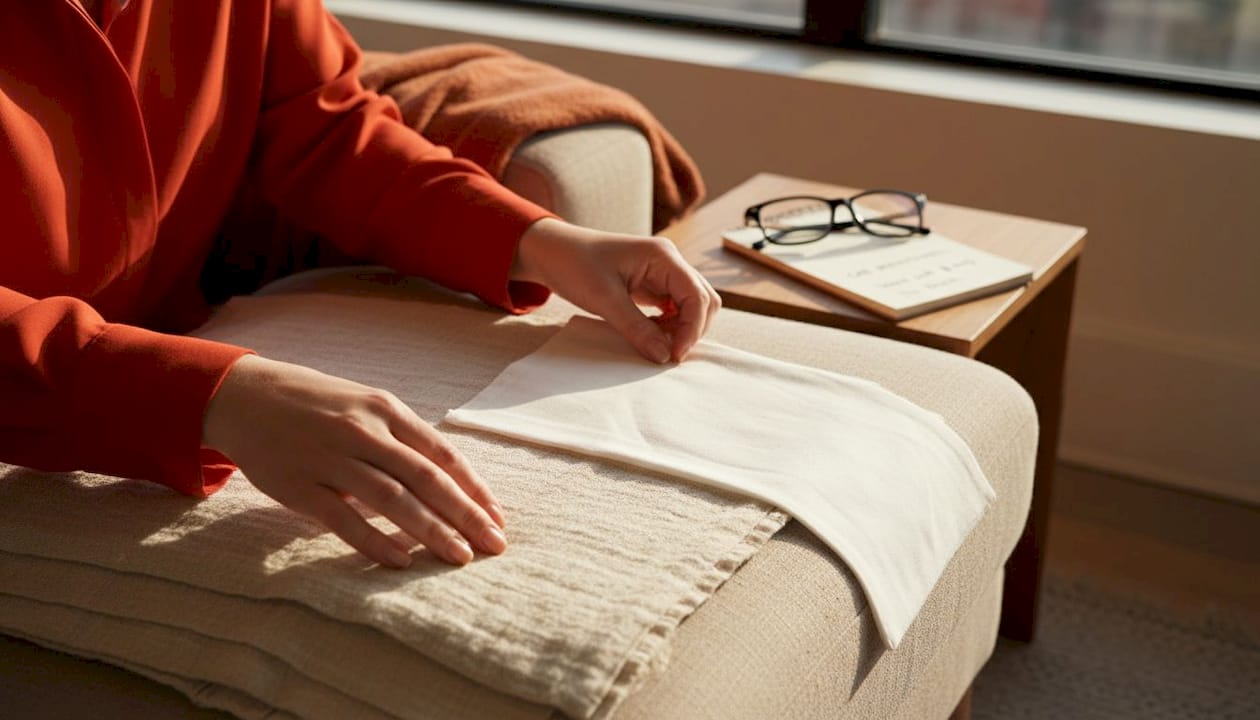
If you love the look and feel of slub, knowing how to spot well-crafted examples will make your craft projects stand out for the right reasons.
Not all slub fabric is created equal, and the difference between a beautiful artisan slub and a low-quality accident is very real. Here’s a step-by-step approach to evaluating slub fabric before you commit to a purchase or cut:
According to fabric selection guidance, look for consistency of the slubs’ scale and distribution: subtle, evenly dispersed slubs typically read as intentional natural character, while very large, irregular lumps can become disruptive to drape, seam shaping, and overall finish.
Different project types call for different slub characteristics. For upholstery and home decor, a medium-weight slub with consistent distribution holds up well and maintains its decorative quality over time. For lightweight apparel, fine slubbing in linen-cotton blends adds personality without compromising the way the garment moves. For craft projects like tote bags and storage baskets, a bold slub can be a true statement feature.
Pro Tip: If you’re buying online and can’t feel the fabric, look for seller photos taken in natural daylight. These show slub distribution most honestly. Product photos shot under studio lighting can flatten the texture and hide inconsistencies or make modest slub look more dramatic than it actually is.
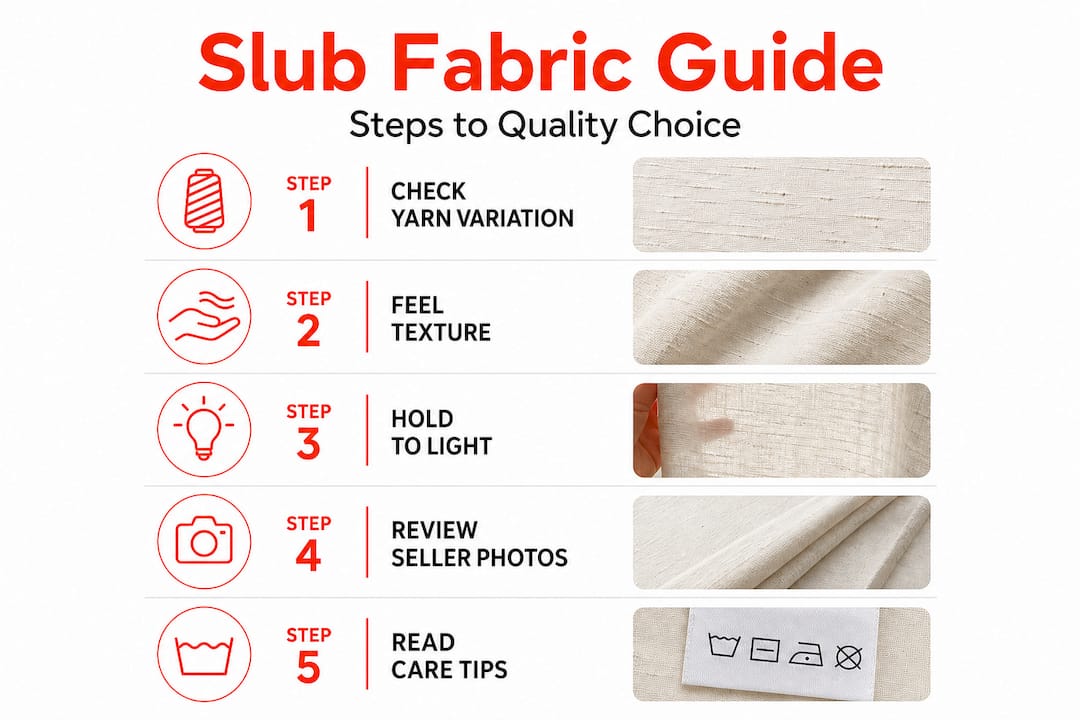
Understanding how to care for slub fabric is just as important as choosing it well. Reviewing solid fabric care steps will help you keep the slub character looking fresh through multiple washes. You can also bookmark these fabric care tips for a practical reference. Slub fabric made from natural fibers like linen or cotton also tends to overlap with the world of sustainable textiles, and reviewing examples of sustainable fabrics can help you make choices that are both beautiful and environmentally thoughtful.
Armed with technical and practical know-how, it’s worth stepping back and considering a deeper perspective on what slub texture actually represents in textile arts.
For most of textile history, slub was a problem to be solved. Mill owners paid spinners for uniformity. Fabric buyers returned bolts with visible slubbing, treating irregular texture as evidence of careless work. The ideal was evenness, consistency, and the mechanical perfection that power looms promised. Slub was a sign that something had gone wrong.
Then something shifted. As industrial production made perfectly uniform fabric widely available, crafters and designers started reaching for the exact thing factories were trained to eliminate. Visible texture became desirable. Slub linen, once considered a lesser product, became a premium offering. Slub jersey tees began selling for more than their smooth counterparts precisely because they looked less mass-produced.
This reversal makes complete sense when you think about it from a crafter’s perspective. The reason we make things by hand, or choose handcrafted-looking materials, is because we want something with character. A garment that looks like it came off an assembly line doesn’t tell a story. A slub linen blouse with its subtle variations in light and shadow looks like it was made with care, even attention. It rewards close inspection. Historically, as noted in linen texture research, slubs were treated as defects, but today that same visible texture is the feature driving purchasing decisions.
This doesn’t mean all imperfections are worth celebrating. The ability to tell the difference between a well-crafted slub and a poorly spun one is exactly what separates confident crafters from frustrated ones. Embracing texture doesn’t mean accepting low quality. It means recognizing that quality in textile arts includes character, variation, and the kind of visual interest that only an irregularly spun yarn can provide.
Our perspective at fabric-fabric.com is this: when you develop a real eye for slub, you stop looking for fabric that looks “perfect” and start looking for fabric that looks right for the project in front of you. That shift in thinking opens up a much more interesting creative palette. Whether you’re sewing a simple tote or designing a full room’s worth of window treatments, understanding slub fabric insights and learning to read texture with confidence gives your work a level of intentionality that truly shows.
Ready to experiment with slub texture in your next design? Start by exploring fabric options tailored to your creative goals.
At fabric-fabric.com, we carry a curated selection of textured fabrics suited to a wide range of projects, from home decor backdrops that benefit from slub’s dimensional quality to apparel-weight cottons and linens with subtle, artisan-style slubbing. Whether you’re shopping for your first slub project or looking for a specific weight and drape to match an existing design, our product listings include detailed descriptions and usage suggestions to help you make the right call.
Browse by project type, fabric category, or fiber content to narrow down your options quickly. If you’re new to slub and want to see how it compares to other textures in person, ordering a few samples before committing to a full yardage purchase is always a smart move. Our team is ready to help you find a slub fabric that brings your creative vision to life, at a price that fits your project budget.
Yes, when well-made, slub fabric can be very durable. Look for consistent slub distribution and a tightly woven backing structure to ensure the fabric holds up under regular use.
Irregular, oversized slubs or visible weak spots in surrounding threads are common signs of a defect. In contrast, intentional slub texture appears evenly distributed and rhythmic, even when the slub sizes themselves vary.
Linen and cotton are the most common fibers spun with deliberate slub effects, prized for their natural, breathable character. Silk, modal, and some synthetic blends also appear with slubbing when designers want added surface texture.
Slub fabric generally doesn’t need special care beyond what the base fiber requires, but gentle machine washing or hand washing helps preserve the raised texture over many washes. Always check the care label, especially for slub linen and silk blends.