

 US Dollar

What is sateen weave? Guide to use, care, and expert tips
Posted by BLG on 2026 Apr 9th
Posted by BLG on 2026 Apr 9th

TL;DR:
- Sateen weave creates a soft, shiny fabric with a smooth, draping surface due to long thread floats.
- Made primarily from cotton blends, sateen offers a balance of sheen, comfort, and breathability unlike silk satin.
- Proper care includes gentle washing and low-heat ironing to maintain its luster and durability.
The same cotton fiber can feel scratchy in one fabric and silky-smooth in another. The difference is almost always in the weave. Sateen weave is one of the most misunderstood structures in the textile world, often confused with satin or dismissed as too delicate for practical projects. But for quilters, home decorators, and apparel sewists, sateen offers a combination of softness, sheen, and drape that few other fabrics can match. This guide breaks down exactly what sateen weave is, how it differs from similar fabrics, where it performs best, and how to keep it looking great for years.
| Point | Details |
|---|---|
| Sateen’s structure | Sateen weave uses weft thread floats to create a smooth, lustrous finish. |
| Best for select projects | Sateen excels in quilting, decor, and apparel where softness and shine are valued. |
| Care guidelines matter | Gentle washing and low heat help preserve sateen’s signature look and feel. |
| Difference from satin | Sateen is usually cotton-based, while satin uses silk or synthetics. |
| Wear and durability | Sateen is more delicate than plain weaves, so blending or proper use is key for longevity. |
Sateen weave belongs to the satin weave family, but it has its own distinct identity. Where most woven fabrics interlace threads in a simple over-under pattern, sateen uses a float system. Specifically, a weft-faced satin weave where weft threads float over multiple warp threads before passing under just one. The most common pattern is 4-over-1-under, meaning four horizontal threads sit on top of the fabric surface for every one that dips underneath.
This structure is what gives sateen its signature look and feel. More thread surface is exposed on top, which reflects light evenly and creates that soft, low-luster sheen. The fabric feels smooth because your hand glides over long stretches of thread rather than bumping across tight interlacings.
Here are some key terms worth knowing before going further:
To see how sateen compares structurally to other common weaves, this table makes it easy:
| Weave type | Thread pattern | Surface result | Common use |
|---|---|---|---|
| Plain weave | 1-over-1-under | Crisp, matte, durable | Quilting cotton, muslin |
| Satin weave | 4-over-1-under (warp-faced) | High gloss, slippery | Eveningwear, linings |
| Sateen weave | 4-over-1-under (weft-faced) | Soft sheen, smooth hand | Bedding, drapery, quilting |
For a deeper look at sateen properties and uses, the construction details above are just the starting point. Understanding the weave helps you predict how the fabric will behave before you cut a single piece.
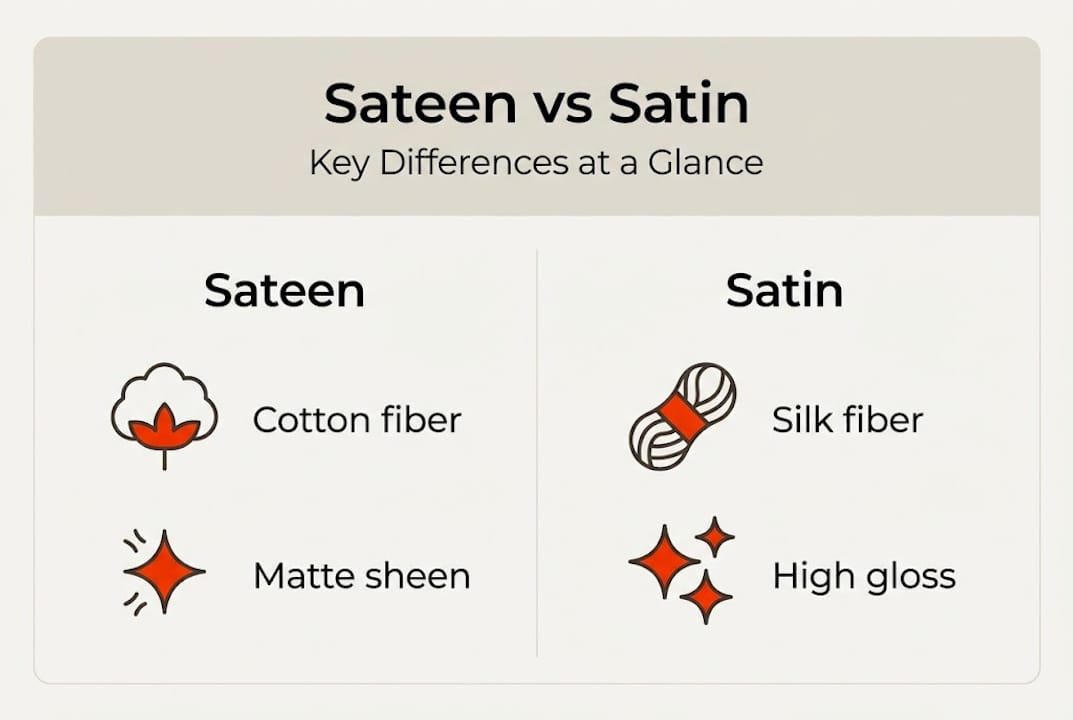
Now that the construction is clear, it’s easy to mix up the word “sateen” with “satin,” but their fiber origins tell a very different story. Sateen is typically made from cotton or cotton blends using spun staple fibers. Satin, on the other hand, is traditionally made from silk or polyester using continuous filament yarns.
Why does this matter? Staple fibers like cotton create a fabric that breathes, absorbs moisture, and softens with washing. Filament fibers like silk or polyester produce a higher, more mirror-like gloss, but the fabric can feel cool and slippery. Sateen sits in a sweet spot: it has enough sheen to look elegant, but enough cotton character to feel comfortable against skin.
Here’s a side-by-side comparison:
| Feature | Sateen | Satin |
|---|---|---|
| Fiber type | Cotton or cotton blends | Silk or polyester |
| Sheen level | Subtle, soft glow | High gloss, reflective |
| Drape | Fluid, moderate weight | Slippery, lightweight |
| Care | Machine washable | Often dry-clean only |
| Breathability | Good | Low |
Blends are where sateen gets even more interesting. Adding a small percentage of elastane gives the fabric stretch, which is ideal for fitted garments. Adding polyester to a cotton sateen improves durability and color retention. If you’re working on a project that needs both shine and flexibility, explore blended stretch fabrics as a practical option.
Pro Tip: If your project involves frequent washing or heavy use, choose a cotton-polyester sateen blend over 100% cotton sateen. The polyester content adds resistance to wear without sacrificing much of the soft feel.
Beyond construction and fiber, it’s the way sateen acts in use that defines its appeal and its limits. The characteristics of sateen include subtle sheen, soft buttery texture, good drape, and moderate breathability, but it is prone to snagging, pilling, and heat retention compared to percale.
“Soft buttery texture, good drape” is exactly what makes sateen so appealing for bedding and drapery, but those same long floats that create the smoothness are also what make the fabric vulnerable to surface damage.
Here is a quick pros and cons breakdown:
Pros:
Cons:
For home decorators considering sateen for upholstery, this is where caution matters. High-traffic seating areas create constant abrasion, which will wear down sateen’s surface floats over time. If you love the look but need durability, choose a treated sateen blend or reserve it for decorative pillows and low-use accent pieces. For drapery, though, sateen is nearly perfect. Explore cotton drapery options to see how sateen-style fabrics translate into finished window treatments.
Pro Tip: Always test a swatch before committing sateen to an upholstery project. Rub the swatch firmly with a rough surface for 30 seconds and check for pilling. If it pills quickly, opt for a blend with a tighter weave.
With a clear sense of sateen’s strengths, it’s time to get hands-on: where does this weave really shine? Common uses include bedding, apparel such as dresses and linings, curtains, and quilting, where its softness and sheen add visual depth.
Here’s a practical breakdown by project type:
| Project | Why sateen works | Care note |
|---|---|---|
| Quilt piecing | Sheen adds visual contrast between blocks | Prewash to prevent shrinkage |
| Quilt backing | Soft against skin, drapes well | Gentle cycle, cold water |
| Drapery | Fluid hang, catches light beautifully | Dry clean or cold wash |
| Pillow covers | Elegant surface, easy to sew | Machine wash gentle |
| Fitted dresses | Drapes over curves smoothly | Low-heat iron on reverse |
| Shirt linings | Smooth against skin, reduces bulk | Cold wash, lay flat to dry |
For quilters specifically, sateen is a strong choice for both piecing and backing. The sheen creates subtle contrast between quilt blocks, making geometric patterns pop without adding busy prints. Browse cotton quilting fabrics and patterned quilting prints to see how sateen coordinates with other quilting materials. If you’re newer to fabric selection, the guide on essential quilting fabrics gives helpful context for building a balanced stash.
A few practical tips before you start cutting:
Once you’ve made or purchased a sateen piece, keeping that signature look takes just a few smart habits. The good news is that sateen care is straightforward: wash gently in cold water with a mild detergent, iron on the reverse side with low heat, and avoid bleach to preserve the sheen.
Follow these steps every time:
Sateen handles wrinkles better than satin, which is a genuine advantage for everyday use. It won’t emerge from the dryer looking perfectly pressed, but it won’t be a crumpled mess either. A quick low-heat iron on the back is usually all it takes to restore a smooth finish.
For more guidance on keeping all your textile projects in top shape, the resources on how to care for fabrics and a handy fabric care checklist cover the full range of materials you might work with.
Pro Tip: Hang finished sateen garments or lay flat sateen quilts and bedding rather than folding them for storage. Fold lines can stress the surface floats over time and lead to premature wear along crease lines.
Most guides on sateen focus on the technical pitfalls: it pills, it snags, handle with care. That framing misses the bigger picture. Yes, sateen has quirks. But so does every fabric worth using. The crafters who get the best results from sateen are the ones who plan around its nature rather than fighting it.
Sateen is unbeatable for visual richness on a practical budget. A cotton sateen quilt backing transforms an ordinary quilt into something that feels handcrafted and intentional. A sateen drapery panel catches afternoon light in a way that linen or canvas simply cannot. These are not small differences.
The key insight most guides skip is this: fiber blend and finishing matter as much as the weave itself. A well-chosen cotton-polyester sateen with a brushed finish handles like a dream, resists pilling, and washes easily. Choosing the right blend for your specific project eliminates most of the complaints people have about sateen in general.
For quilters especially, understanding how sateen interacts with other fabric types is worth the time. The guide on best fabrics for quilt making gives a solid framework for pairing sateen with complementary materials. Once you start thinking of sateen as a strategic tool rather than a luxury indulgence, it earns a permanent spot in your stash.
Now that you know how sateen weave works and where it performs best, the next step is finding the right materials for your specific project. Whether you’re planning a quilt, updating your window treatments, or sewing a statement garment, having quality fabric on hand makes all the difference.

At fabric-fabric.com, you’ll find a wide selection of modern home decor fabrics suited for drapery, bedding, and accent projects where sateen’s drape and sheen shine. For larger creative setups or event styling, the backdrop fabric selection offers options that bring that same polished look to bigger spaces. Browse by project type, filter by fiber content, and find exactly what your next project needs.
Sateen weave has weft threads floating over multiple warp threads, giving it a smoother, shinier surface than the crisp texture of plain weave. Plain weave interlaces every thread one-over-one, creating a tighter, more matte finish.
Yes, cotton sateen is popular in quilting for both piecing and backing due to its softness and shiny finish. It adds visual depth to quilt blocks and feels luxurious against skin on quilt backs.
Wash sateen gently in cold water with a mild detergent, avoid bleach, and iron on the reverse with low heat. These steps protect the surface floats that create sateen’s signature sheen.
Yes, because sateen’s long floats and fewer interlacings make it more vulnerable to pilling and snagging, especially compared to plain weave fabrics like percale. Choosing a blend with polyester content reduces this risk significantly.