

 US Dollar

What Is Cotton Twill? Fabric Properties and Uses
Posted by BLG on 2026 Jun 5th
Posted by BLG on 2026 Jun 5th

TL;DR:
- Cotton twill is a durable, diagonal-ribbed woven fabric used in denim, chinos, and upholstery. Its structure provides increased strength, resistance to wrinkling, and better drape compared to plain weave cotton. Understanding variations in weight, finish, and twill direction enhances fabric selection for diverse projects and applications.
Cotton twill is a woven cotton fabric defined by its diagonal ribbed surface, produced by a specific interlacing method called the twill weave. That diagonal pattern is not decorative. It is structural, and it changes how the fabric performs in ways that plain weave cotton simply cannot match. Denim, chino, drill, and gabardine are all cotton twill fabrics, each sharing that diagonal foundation while differing in weight, finish, and application. If you work with fabric regularly, understanding what separates cotton twill from other cotton constructions will sharpen every sourcing and design decision you make.
Cotton twill fabric is constructed by passing weft threads over multiple warp threads and under one in a regular, offset sequence. That offset is the key. Each row shifts the interlacing point one thread to the left or right, and the accumulated shift creates a continuous diagonal line across the fabric face. This is the defining characteristic of the twill weave, and it separates twill from plain weave, where each weft thread alternates over and under every single warp thread in a simple checkerboard pattern.
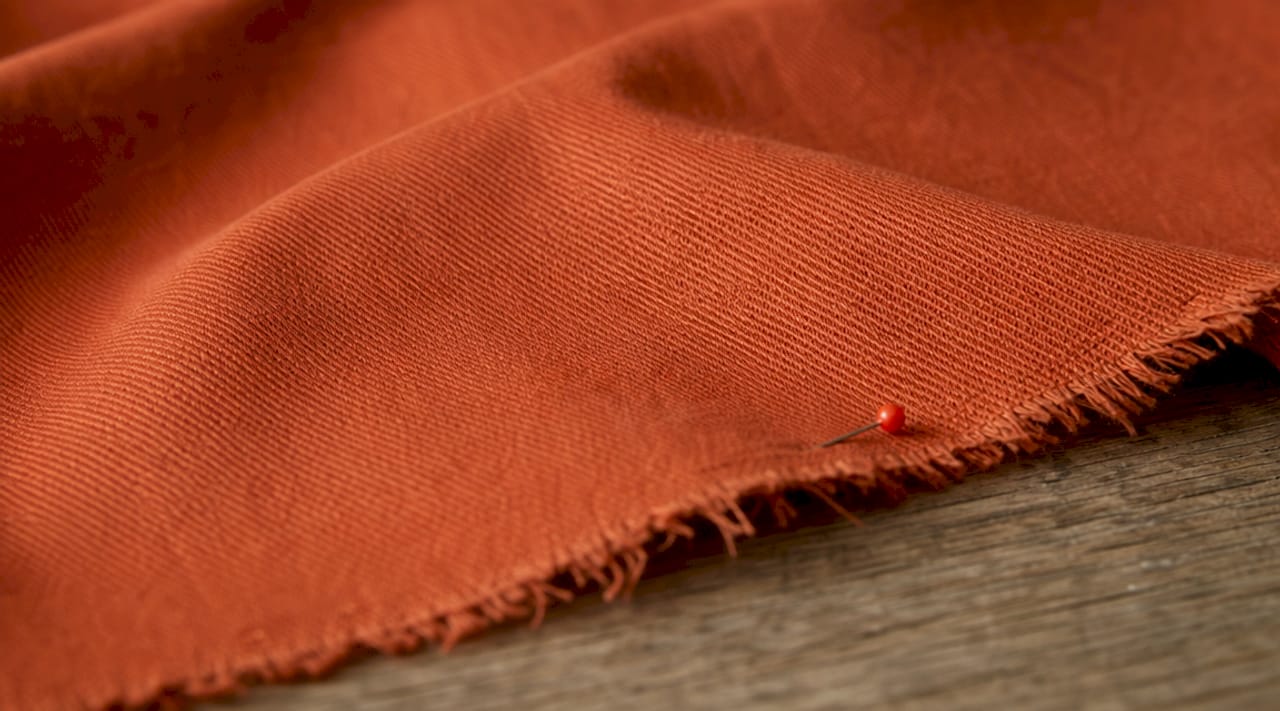
The diagonal structure produces a fabric that is denser and heavier than plain weaves at the same thread count. That density translates directly into better durability, improved drape, and greater resistance to water penetration. A plain weave shirting cotton and a cotton twill chino can use the same fiber and a similar thread count, yet the twill will outlast the plain weave in abrasion resistance by a significant margin.
Twill weaves come in several configurations that affect the final fabric:
Pro Tip: When you hold cotton twill up to light, the diagonal ribs should run consistently in one direction. If the line shifts or breaks, the fabric has a weave defect that will affect both appearance and structural integrity.
Twill is a weave structure, not a fiber, and that single fact explains why cotton twill varies so dramatically across product categories. The diagonal weave stays constant. Everything else, including fiber quality, yarn count, finishing treatment, and fabric weight, shifts depending on the intended use.
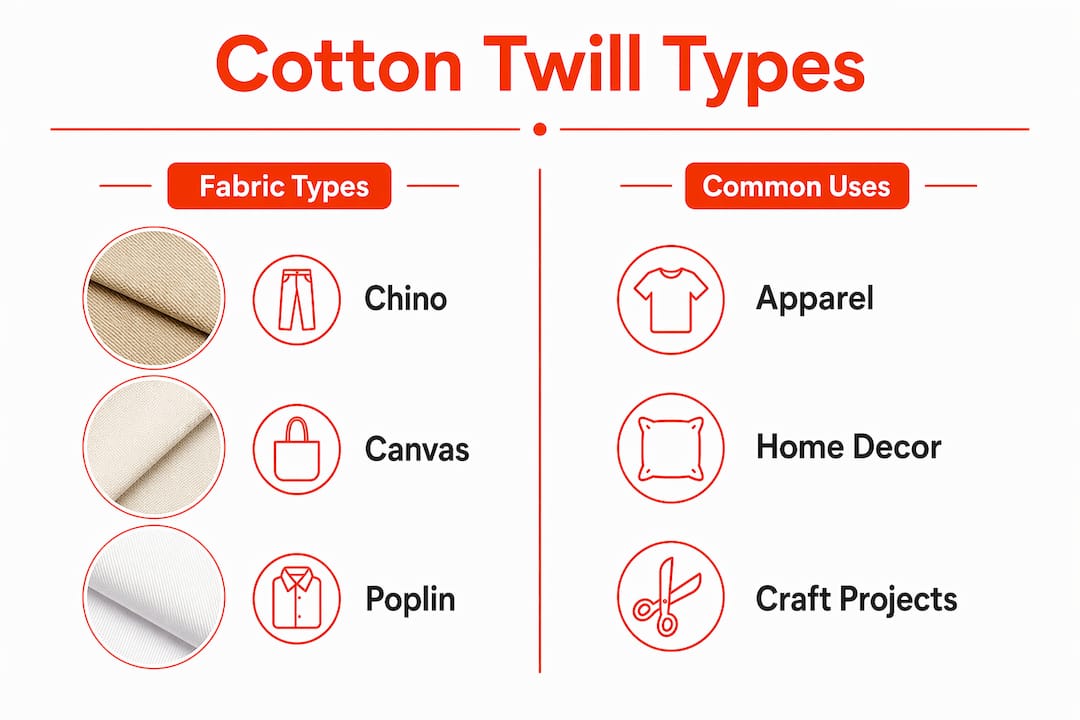
Common cotton twill fabrics include denim, chino, drill, and gabardine, each used widely across workwear, uniforms, and fashion. Here is how they compare:
| Fabric type | Typical GSM | Key properties | Common applications |
|---|---|---|---|
| Chino | 180–220 | Smooth face, medium weight, slight sheen | Trousers, casual shirts, uniforms |
| Denim | 280–400 | Warp-faced, indigo-dyed, structured | Jeans, jackets, workwear |
| Drill | 200–280 | Firm, tightly woven, matte finish | Workwear, military uniforms, upholstery |
| Gabardine | 150–200 | Fine diagonal rib, tightly woven, water-resistant | Suits, outerwear, tailored trousers |
Cotton twill fabric weight ranges from 120–150 GSM for lightweight shirting up to 280–400 GSM for heavyweight canvas and denim. That range matters enormously for project planning. A 140 GSM cotton twill drapes softly and suits blouses or light linings. A 350 GSM cotton twill holds structure, resists abrasion, and works for bags, upholstery, and outerwear. Understanding fabric weight in GSM before you purchase prevents the most common sourcing mistake: buying a fabric that looks right but behaves wrong.
Finishing treatments add another layer of variation. Mercerization increases luster and dye uptake. Calendering compresses the weave for a smoother surface. Enzyme washing softens the hand feel without reducing weight. Two cotton twill fabrics with identical GSM and weave type can feel completely different after different finishing processes.
Pro Tip: Always request a fabric swatch before ordering cotton twill by the yard for structured projects. The GSM number tells you weight, but it does not tell you how the finishing treatment has altered the hand feel or drape.
The comparison between cotton twill and denim is one of the most common points of confusion, and the answer is straightforward. Denim is a cotton 3/1 warp-faced twill with indigo-dyed warp threads that produce its characteristic color and fading pattern. Denim is cotton twill. It is a specific, heavily finished version of it. The distinction lies in construction specifics and finishing, not in the fundamental weave category.
The more meaningful comparison for most designers and crafters is cotton twill versus plain weave cotton. Cotton twill’s durability and wrinkle resistance outperform plain weave cotton fabrics used in shirting and quilting. The tight diagonal weave increases opacity and resistance to soiling. A plain weave cotton poplin used for a shirt will wrinkle more readily and show wear faster than a comparable cotton twill chino used for trousers.
Here is a direct property comparison to guide your selection:
| Property | Cotton twill | Plain weave cotton |
|---|---|---|
| Durability | High, due to tight diagonal weave | Moderate |
| Wrinkle resistance | Better than plain weave | Lower |
| Drape | Fluid, structured | Crisp, flat |
| Opacity | Higher | Lower at same GSM |
| Typical uses | Trousers, workwear, bags, upholstery | Shirts, quilting, linings |
Choose cotton twill when your project demands structure, durability, or a fabric that holds its shape through repeated wear and washing. Choose plain weave cotton when you need a lighter, crisper hand feel or maximum breathability in warm-weather garments.
Cotton twill blends sometimes include elastane for stretch or polyester for easier care, though 100% cotton remains the standard for most professional and craft applications. Blended versions behave differently under heat and require adjusted care protocols, so always check fiber content before cutting.
Recognizing quality cotton twill before you buy it saves time, money, and frustration. Start with the face and back. Cotton twill fabrics have a distinct face and back due to the uneven weave distribution. On a warp-faced twill, the front surface shows more warp threads and appears smoother and more structured. The back looks looser and slightly rougher. Knowing which side is the face matters for every cutting and sewing decision you make.
Next, check the twill direction. Diagonal ribs run consistently in a dominant direction, and this directionality is easier to read in twill than in most other weaves. A right-hand twill runs diagonally from lower left to upper right. A left-hand twill runs the opposite way. This affects how panels align when you sew multiple pieces together, and mismatched twill direction across seams is visible and unprofessional.
When evaluating cotton twill for a specific project, check these factors systematically:
Twill’s diagonal ribs create a fabric bias direction that affects how the fabric cuts and drapes. Cutting on the true bias of a cotton twill produces a stretchy, fluid edge. Cutting on grain produces a stable, structured edge. Designers working with twill weave fabrics must plan their pattern layouts with this in mind, particularly for tailored garments and structured bags.
Pro Tip: Do not assume all cotton twill behaves identically. Two fabrics labeled “cotton twill” can differ in twill type, GSM, fiber quality, and finishing. Specify all four variables when ordering for production runs or large projects.
Cotton twill is the most versatile cotton construction available, combining structural strength with design flexibility across a wider weight range than any other cotton weave.
| Point | Details |
|---|---|
| Twill is a weave, not a fiber | Cotton twill’s properties depend on both the diagonal weave structure and the cotton fiber characteristics. |
| Weight range is wide | Cotton twill runs from 120 GSM lightweight shirting to 400 GSM heavyweight denim and canvas. |
| Denim is a cotton twill | Denim is a 3/1 warp-faced cotton twill, not a separate fabric category. |
| Face and back differ | Always identify the correct face before cutting, as warp-faced and weft-faced twills look and behave differently. |
| Twill direction affects layout | Diagonal ribs create a bias direction that influences drape, cut, and seam alignment in finished projects. |
Most fabric conversations treat cotton twill as background material. It is the fabric that jeans and chinos are made from, so familiar that people stop noticing it. That familiarity is actually the strongest argument for understanding it more deeply.
What I have found working with cotton twill across apparel, home decor, and craft projects is that the fabric rewards specificity. The difference between a 200 GSM chino twill and a 280 GSM drill twill is not just weight. It is how the fabric behaves at the seam, how it responds to pressing, and how it ages. Designers who treat those two fabrics as interchangeable end up with garments that do not hold their shape or bags that collapse under load.
The other thing worth saying plainly: cotton twill is one of the few fabrics that genuinely works across categories. I have used it for structured tote bags, upholstered seat cushions, tailored trousers, and even wall hangings. No other cotton construction gives you that range without compromise. Plain weave cotton is too light for structure. Canvas is too stiff for drape. Cotton twill sits in the middle and handles both.
My honest recommendation is to source at least two weights of cotton twill for your studio or workspace. A 180 to 200 GSM option for garments and a 280 to 320 GSM option for structured projects. Having both on hand changes what you can make without waiting on new fabric orders.
— kev
Fabric-fabric carries a range of cotton and home decor fabrics suited for apparel, crafting, and interior projects across multiple weight categories.
Whether you are sourcing fabric for structured bags, tailored garments, or upholstery work, the home decor fabric collection at Fabric-fabric includes options that match the weight and finish specifications covered in this article. For projects requiring heavier, structured material, the backdrop fabrics category offers durable options worth reviewing. Fabric-fabric also provides detailed product descriptions and usage suggestions so you can match fabric weight and construction to your specific project before you buy.
Cotton twill is made from 100% cotton fibers woven using a twill weave structure that creates diagonal ribs on the fabric surface. Some versions include elastane or polyester blends for stretch or easier care, but pure cotton remains the standard construction.
Twill weave passes weft threads over multiple warp threads in an offset sequence, creating diagonal ribs. Plain weave alternates each weft thread over and under every single warp thread, producing a flat, checkerboard structure with less drape and lower abrasion resistance.
Yes. Denim is a 3/1 warp-faced cotton twill woven with indigo-dyed warp threads. It belongs to the cotton twill family and shares the same diagonal weave foundation as chino, drill, and gabardine.
Machine wash cotton twill in cold or warm water on a gentle cycle and tumble dry on low heat to prevent shrinkage. Pre-wash fabric before cutting for garment projects, since cotton twill can shrink up to 5% on first wash depending on finishing treatment.
Cotton twill is used for trousers, jeans, workwear uniforms, bags, upholstery, drapery, and tailored outerwear. Its combination of durability, drape, and wrinkle resistance makes it one of the most widely applied cotton constructions across both apparel and home decor categories.