

 Canadian Dollars

What Is Bias Cut? a Fabric Guide for Fashion Students
Posted by BLG on 2026 May 26th
Posted by BLG on 2026 May 26th

TL;DR:
- Bias cut involves diagonally slicing fabric at 45 degrees to the grain, resulting in garments with superior drape and elasticity. Invented by Madeleine Vionnet in the 1920s, it revolutionized fashion by allowing fabric to sculpt and cling naturally to the body. Despite being more challenging and costly to produce, bias-cut garments offer unmatched movement, fit, and fluidity, especially with lightweight, flowing fabrics.
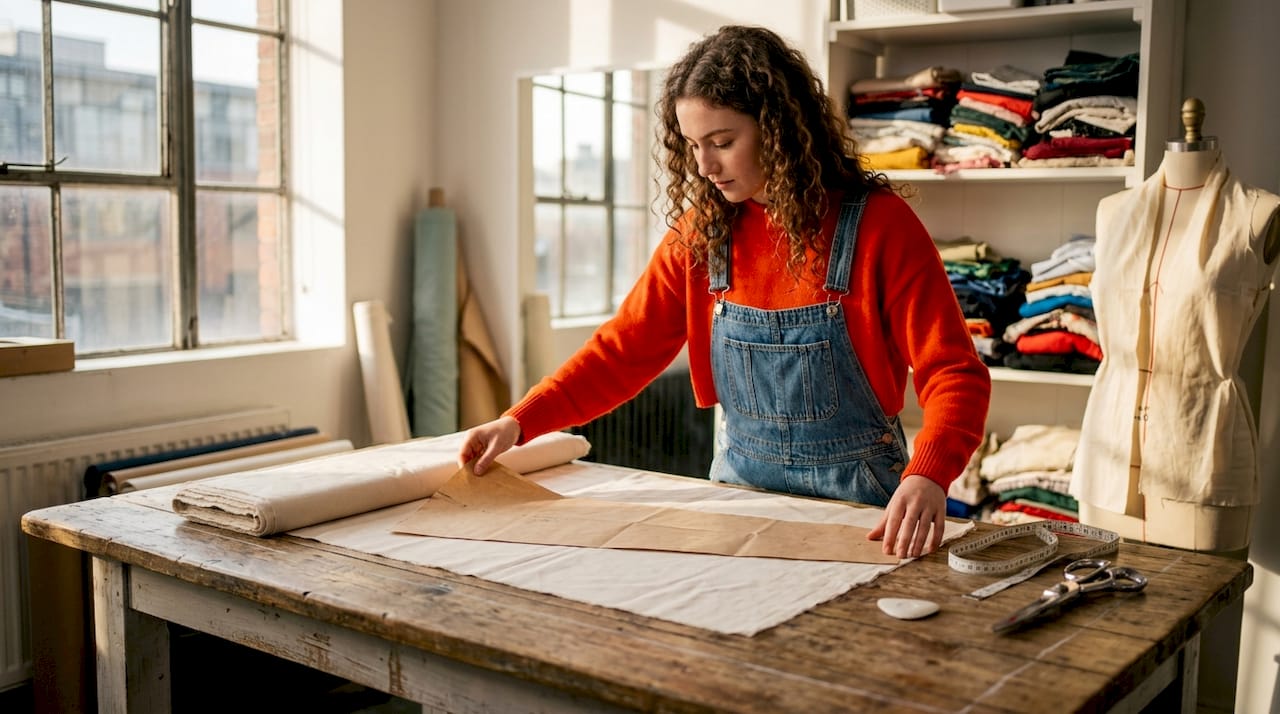
Bias cut is one of those techniques that sounds simple until you actually try to work with it. The term refers to cutting fabric at a 45-degree angle to the selvage, rather than parallel or perpendicular to the grain. The result? A piece of cloth that drapes, stretches, and moves in ways that straight-grain cutting simply cannot produce. If you have ever wondered why certain silk dresses seem to melt onto the body or why a slip skirt swings so effortlessly when you walk, bias cut is usually the answer. This guide breaks down the mechanics, history, and real-world application of this foundational garment construction technique.
| Point | Details |
|---|---|
| Bias cut means 45-degree cutting | Pattern pieces are laid diagonally across fabric, creating stretch and drape straight grain cannot achieve. |
| Fabric gains elasticity without stretch fibers | Bias cut delivers up to 25% more give than straight-grain cutting, with no spandex or elastane required. |
| Madeleine Vionnet invented the technique | The French designer pioneered bias cutting in the 1920s, shaping modern luxury fashion forever. |
| Production costs are higher | CMT charges for bias cut garments range from $8 to $50+ per piece due to skill demands and extra fabric use. |
| Fabric choice changes everything | Lightweight, fluid fabrics like silk charmeuse, satin, and crepe perform best under bias cutting conditions. |
Before you can fully understand bias cut, you need to understand what fabric grain actually means. Every woven fabric is built from two sets of threads that run at right angles to each other. The warp threads run lengthwise, parallel to the selvage. The weft threads run crosswise, from one side of the fabric to the other. Both of these directions have relatively little stretch because the threads are locked tightly against each other in a perpendicular structure.
The bias is the diagonal direction, and true bias runs at 45° to both the warp and weft simultaneously. This is where woven fabric’s behavior changes completely. When you pull fabric on the bias, the threads do not resist the same way. Instead, they slide relative to each other, allowing the fabric to stretch, elongate, and recover. That mechanical action is what gives bias-cut garments their signature movement.
Here is a quick breakdown of how the three grain directions compare:
| Grain Direction | Stretch Level | Best Use |
|---|---|---|
| Warp (lengthwise) | Minimal | Structured garments, tailoring |
| Weft (crosswise) | Slight | Casual garments, some draping |
| Bias (45-degree diagonal) | Maximum | Draped dresses, fitted skirts, trims |
The stretch difference is not subtle. Bias cutting delivers 15 to 25% more elasticity than straight-grain cutting, with zero added stretch fibers. That means comfort, movement, and fit that wraps around the body rather than fighting it.
What makes this useful for textile students to understand is that the gain in elasticity comes purely from geometry, not materials. You are using physics to your advantage by changing the angle at which thread tension is applied.
The story of bias cut in fashion starts with one name: Madeleine Vionnet. The French couturier pioneered bias cutting in the 1920s, working on small wooden dolls before scaling her designs to the human body. She angled her pattern pieces at exactly 45 degrees to the grain, which allowed fabric to spiral and cling in ways never seen before in Western fashion.
Her designs were not just technically fascinating. They were culturally transformative. Before Vionnet, fashion relied heavily on boning, structure, and underpinnings to create a silhouette. She let the fabric do the shaping instead. The results looked almost sculptural while remaining incredibly fluid.
Bias cut quickly became a signature of luxury and sensuality:
The reason bias cut keeps coming back is that it solves a real design problem. It creates intimacy between a garment and the body without imposing a rigid shape. That is a rare quality in any technique.
Here is where things get real for anyone learning to sew or cut garments. Bias cut is genuinely difficult to work with, and that difficulty drives up cost at every stage of production.
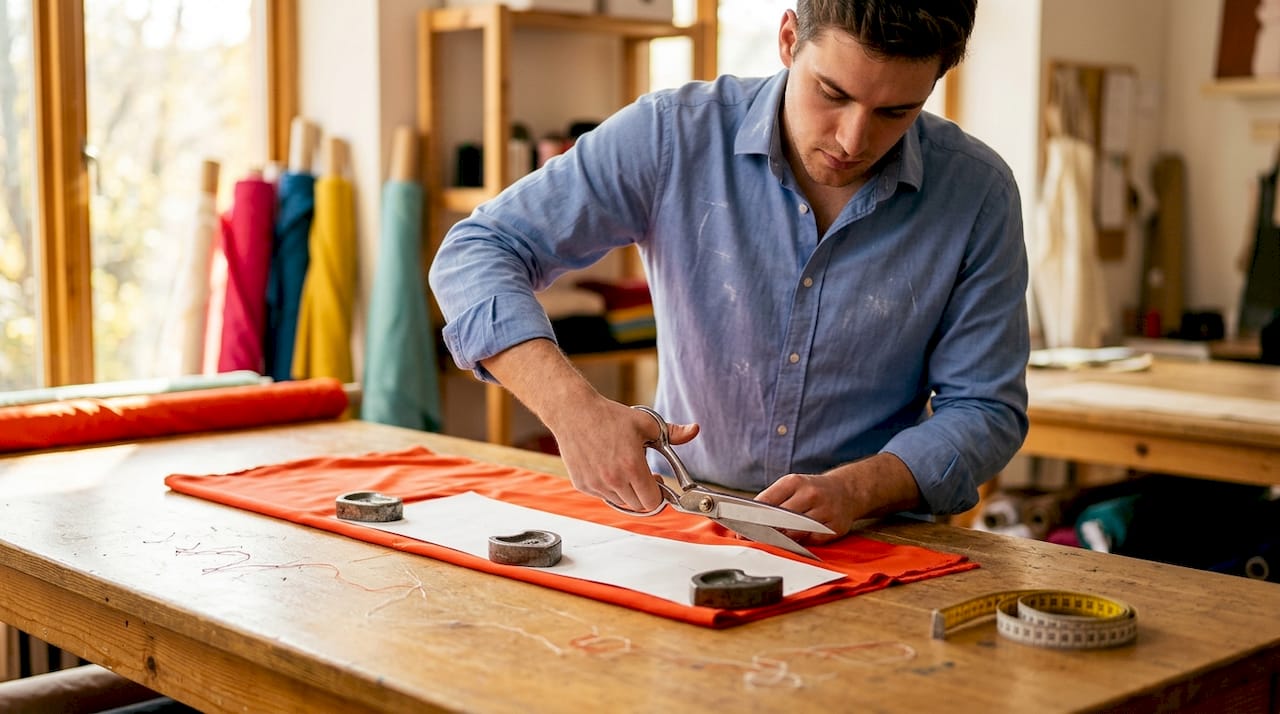
The first challenge is on the cutting table. Bias fabric shifts and warps during cutting, making precise pattern placement difficult. Because the threads are already at their most mobile angle, any inconsistency in handling distorts the final shape. Most skilled cutters work with the fabric flat and unrolled for at least 24 hours before cutting to allow the grain to relax and stabilize.
The second challenge is fabric consumption. Bias cutting uses 15 to 25% more material than straight-grain cutting because diagonal pattern placement leaves more irregular gaps between pieces. You cannot tile diagonal shapes together as efficiently as you can tile rectangles. For students planning a project, this means budgeting for significantly more yardage than the pattern envelope suggests.
Here is a practical step-by-step approach for handling bias cut fabric during construction:
Pro Tip: Use weights instead of pins to hold your pattern pieces in place during cutting. Pins can distort bias fabric, while weights keep everything flat and stable.
The production cost implications are equally significant. CMT charges for bias cut garments range from $8 to $50 or more per piece globally, depending on complexity and market. That premium exists because skilled handling is non-negotiable.
Despite all those challenges, designers keep coming back to bias cut for good reason. The finished results are simply unlike anything straight-grain cutting can produce.
The most immediate benefit is drape. Bias cut fabric moves with liquid fluidity, following the body’s contours rather than holding a fixed shape away from the skin. Think of a silk slip dress catching light as it moves. That behavior comes directly from the diagonal grain.
There is also a fit benefit that is easy to overlook. Because bias fabric has built-in give in all directions, it adapts to the body rather than constraining it. This means:
“Unlike structured garments, bias-cut clothes skim and move with the body’s curves, favored for their natural fit rather than forced silhouette.” Bradic
Garments that benefit most from bias cutting include slip dresses, evening gowns, wrap skirts, cowl-neck tops, bias binding tape, and decorative trims. The technique is particularly powerful in fabrics with natural weight and flow, such as silk charmeuse, satin, crepe de chine, and lightweight rayon. For a deeper look at how to choose the right material for your project, the fabric selection process guide at Fabric-fabric is worth bookmarking.
The decision to use bias cut or straight grain is a deliberate design and construction choice, not a default. Each approach produces fundamentally different garments.
| Characteristic | Bias Cut | Straight Cut |
|---|---|---|
| Drape quality | Fluid, body-skimming | Structured, holds shape |
| Stretch | 15 to 25% natural give | Minimal to none |
| Fabric use | 15 to 25% more material | Standard yardage |
| Production skill | High (specialist handling) | Moderate |
| Best for | Dresses, gowns, draped skirts | Tailoring, structured jackets, pants |
| Cost | Higher | Lower |
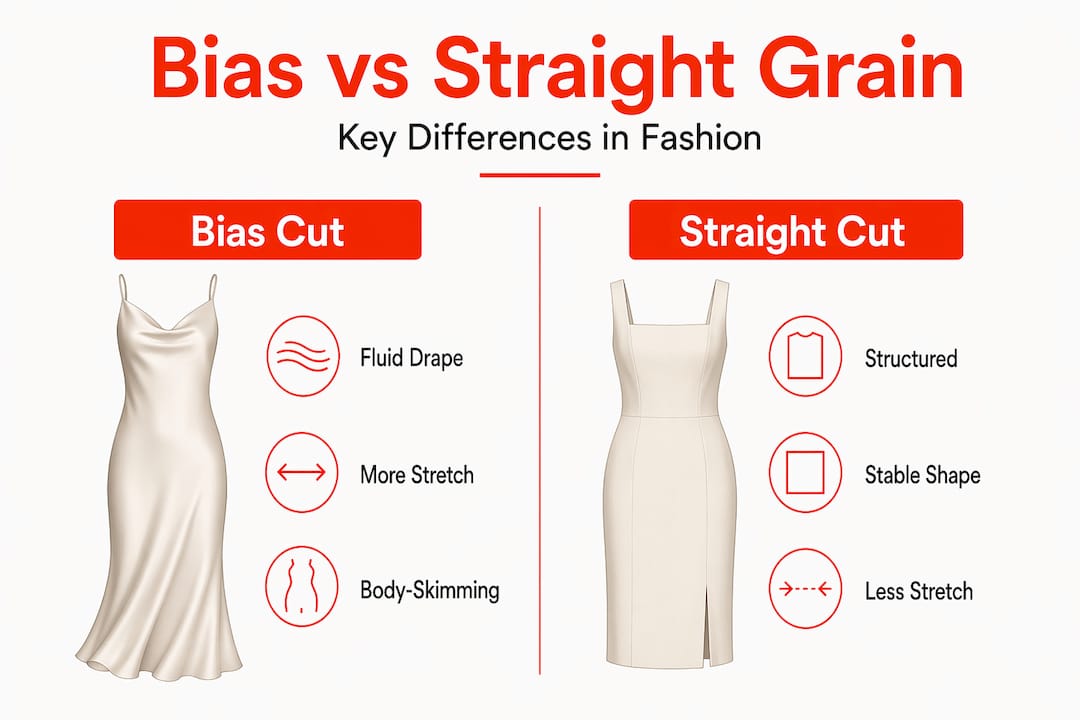
Straight grain cutting is the better choice when structure is the point. Blazers, tailored trousers, and stiffened bodices all rely on warp-grain stability to hold their intended shape. Interfacing, boning, and underlining work with straight grain to create architecture in a garment.
Bias cut is the right choice when you want the fabric itself to do the work. If the design calls for movement, cling, or a flowing silhouette, cutting on the diagonal is the technique that gets you there. If you want to understand more about precise cutting approaches, the fabric cutting guide from Fabric-fabric covers both methods with practical detail.
I have worked with enough students and enthusiasts to know that bias cut is the technique most people underestimate before they try it, and deeply respect afterward. The physics of it are genuinely elegant. You are not adding anything to the fabric. You are just rotating your cutting angle and suddenly the material behaves like a completely different substance.
What I find most interesting is how bias cut exposes the relationship between fabric structure and garment behavior. Most garment construction treats fabric as a fixed material you work around. Bias cutting treats it as something you activate. That shift in thinking changes how you approach every project.
The common mistake I see is treating bias cut as purely a luxury or couture technique. It shows up in everyday garments too. Bias binding on quilt edges, cut-on-the-bias collars, flared skirt panels. You are surrounded by it more than you realize. The bias in fabric guide at Fabric-fabric helped me articulate this clearly to newer sewists, and I recommend it as a starting point.
The other thing I would tell anyone learning this technique: do not rush the hanging step. I have seen beautifully sewn garments ruined by a crooked hem because the maker skipped the 24-hour hang. Bias fabric will drop after construction. If you cut the hem before it drops, the hem drops unevenly afterward. Patience here is the difference between a professional result and a frustrating one.
— kev
The single biggest factor in how a bias cut garment performs is the fabric you start with. Fabric-fabric carries a curated range of fabrics well suited to bias cutting, from lightweight draping fabrics for evening garments to structured weaves for decorative bias trims. Browse the backdrop fabrics collection for draped, flowing options that work beautifully on the diagonal. If you are furnishing a space or working on a home project, the discount home decor fabrics section includes textiles with the weight and weave that respond well to bias cutting techniques. Whether you are a student building your first bias-cut skirt or a designer sourcing material for a full collection, Fabric-fabric has the selection to support your project at every scale.
Bias cut means cutting fabric at a 45-degree angle to the grain, rather than parallel or perpendicular to the threads. This creates a garment that stretches, drapes, and moves more fluidly than straight-grain cuts.
Bias cut is widely considered flattering because the fabric skims the body’s curves without gripping or stiffening. Its natural give means it adapts to different body shapes rather than imposing a fixed silhouette.
Lightweight, fluid fabrics with natural drape work best. Silk charmeuse, satin, crepe de chine, rayon, and lightweight cotton are all good choices. Stiff or heavily structured fabrics do not respond well to bias cutting.
Because pattern pieces are laid diagonally, they leave more irregular gaps between pieces on the fabric. This inefficient layout means bias cutting uses 15 to 25% more material than straight-grain cutting.
Madeleine Vionnet pioneered bias cutting in the 1920s in Paris. She developed the technique to allow fabric to follow and celebrate the body’s natural form rather than constraining it with structured silhouettes.