

 US Dollar

What Is a Velour Fabric? Definition, Uses, and Care
Posted by BLG on 2026 Aug 22nd
Posted by BLG on 2026 Aug 22nd

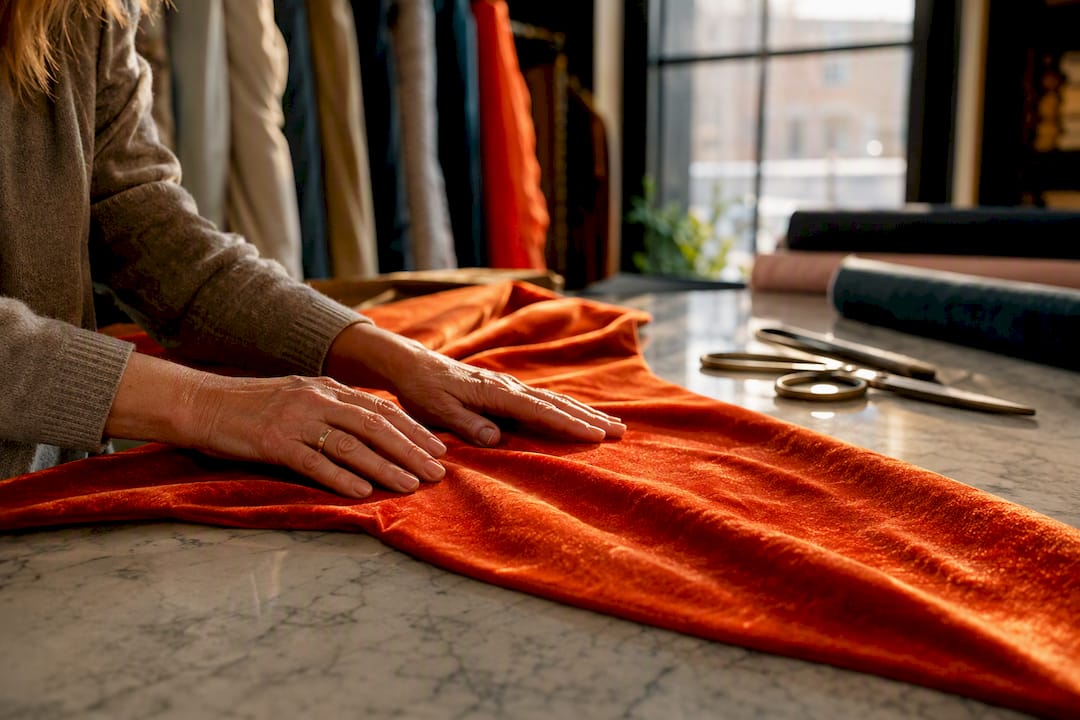
Velour is a plush, knitted pile fabric that looks like velvet but stretches like a T-shirt. That stretch is the whole story: because velour starts as a knitted fabric rather than a woven one, it has built-in mechanical give that woven velvet simply can’t match. Manufacturers make it from cotton, polyester, spandex blends, or combinations of all three, and the fiber choice changes everything from breathability to washability.
For your projects, the practical upshot is this:
Velour is a knitted, stretchy pile fabric best matched to a project by checking its GSM, fiber content, and pile height before buying.
| Point | Details |
|---|---|
| Definition | Velour is a knitted pile fabric, stretchier than woven velvet, made from cotton, polyester, or spandex blends. |
| Check the spec sheet | Look for GSM between 180 and 350 g/m² and pile height around 2 to 5 mm before purchasing. |
| Match fiber to fiber use | Choose cotton for soft apparel, polyester for washable upholstery and commercial settings. |
| Cut and sew with the nap | Keep pattern pieces facing one direction and use a walking foot to prevent shading and grinning. |
| Care by fiber content | Wash cotton velour warm, polyester on cold, and always avoid direct high heat when pressing. |
Run your hand across velour and you’re feeling two things at once: pile height and pile density. Pile height is how tall the cut fibers stand off the base knit, usually somewhere between 2 and 5 millimeters for quality velour. Density is how many of those fibers are packed into each square inch. Higher density plus moderate pile height gives you the deep, shadowy color shift you see when velour catches light from different angles, the same “nap direction” effect that makes velvet famous.
Weight matters just as much as touch. Velour typically runs from around 180 to 350 grams per square meter, according to sourcing data from Leeline Apparel, and where a fabric falls in that range tells you a lot:
Fiber content drives the rest. Cotton velour breathes well and feels soft against skin, though it’s pricier since cotton remains one of the world’s dominant textile fibers, per Statista’s production data. Polyester velour resists wrinkling and holds up to repeated washing. Add spandex to either and you get noticeably better stretch recovery, which matters if you’re sewing anything fitted.
Velour starts as a double knit structure with two yarn systems working together: a ground yarn that forms the stable base, and a pile yarn that gets knitted in as loops. Here’s the sequence that turns those loops into the plush surface you recognize:
Shearing quality is the detail most buyers skip past, but it shouldn’t be. Uneven shearing or low pile density is what causes shedding, bald patches, and that dull, matted look after a few washes.
Pro Tip: Before buying yardage, run your hand hard across the pile in both directions. If clumps of fiber pull loose or the base fabric shows through, the shearing was rushed and the piece won’t hold up.
Not all velour is built for the same job. Matching the variant to your project saves you from a fabric that pills after one wash or refuses to stretch when you need it to.
If you want velvet’s luxury look with knit-level flexibility, this is the trade you’re making on purpose. Designers pick velour specifically because it offers velvet-like visual depth with garment-friendly stretch, a combination weaving simply can’t produce.
Velour earns its keep across three very different settings, and the fiber content usually signals which one it was built for.
If a project calls for a firmer hand, sharper drape, or a more formal sheen, woven velvet is usually the better call instead. Velour wins whenever motion, machine washability, or budget are the deciding factors.
Velour rewards a little patience and punishes shortcuts, particularly around heat and pile direction.
Pro Tip: Never press velour directly with a hot iron; it crushes the pile permanently. Steam it from the back over a terry towel, or hold the iron just above the surface and let the steam do the work.
Store finished pieces hanging rather than folded to avoid crease lines in the pile, and brush occasionally with a soft-bristle garment brush to keep the nap standing upright.

The confusion between these three fabrics comes down to one word: construction. Velour is knitted. Velvet and velveteen are woven. That single difference cascades into everything else.
If you’re still weighing the two side by side, our detailed velvet versus velour breakdown walks through pile measurements in more depth, and our guide to velvet fabric covers the woven side of that comparison.
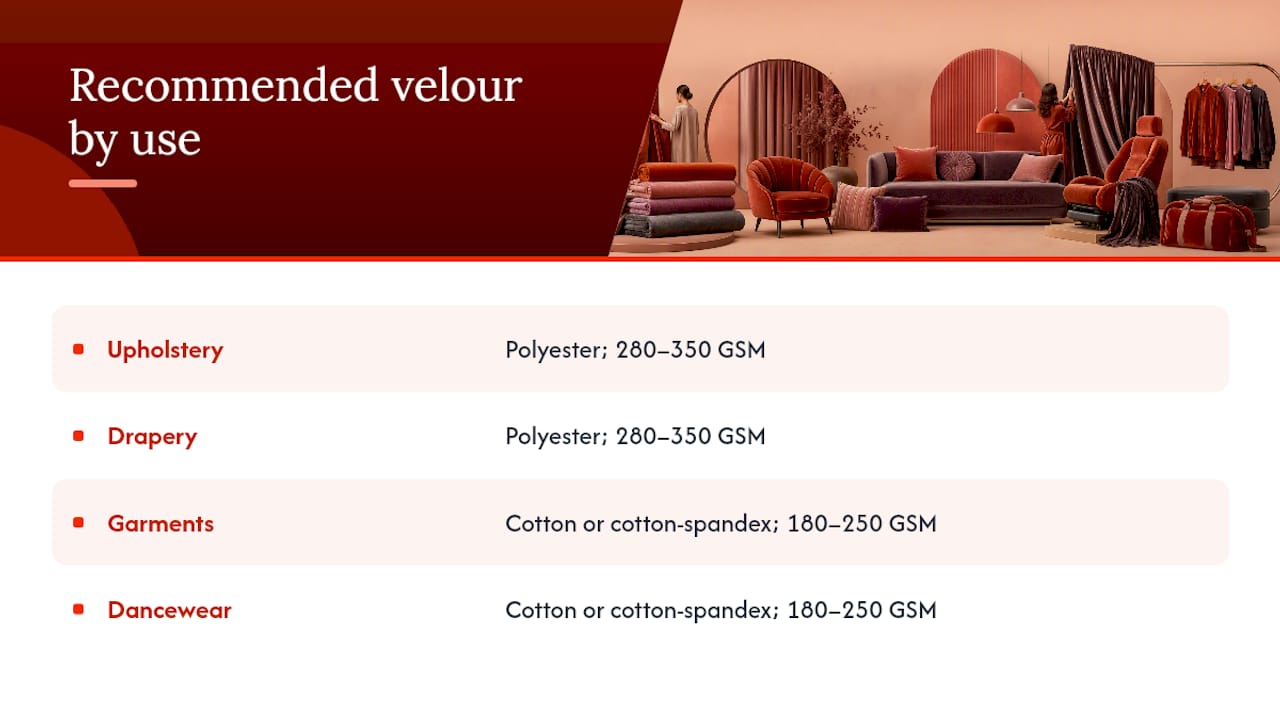
For upholstery and drapery, lean toward heavier polyester velour in the 280 to 350 GSM range; it handles wear better than cotton over years of use. For garments and dancewear, a cotton or cotton-spandex blend in the 180 to 250 GSM range gives you softness with recovery.
Before you buy yardage, check four things: GSM, fiber content, stretch percentage, and fabric width, since width affects how efficiently you can cut pattern pieces. Browse our home decor fabric collection for upholstery-weight options, or check backdrop fabrics if you need drapery-grade material for a stage or event setup.
Most guides treat velour like a cheaper stand-in for velvet, and that framing undersells it. The two fabrics solve different problems. Velvet is a woven fabric built for structure and drama; it holds a tailored silhouette and throws deep, dramatic shadows under light. Velour is a knit built for motion. Treating it as “budget velvet” leads people to buy the wrong fabric for stretch-dependent projects like dancewear or fitted loungewear, then blame the fabric when the garment doesn’t perform.
The bigger mistake I see is buyers skipping the spec check entirely. GSM and pile height aren’t marketing numbers, they’re the two figures that predict whether a piece will shed and mat after a month of use or hold its plush surface for years. A fabric labeled simply “velour” with no GSM or pile height listed is a coin flip. Ask for those numbers before you commit to yardage, especially for upholstery projects where you can’t easily swap the fabric once it’s on the frame.
The other overlooked point: nap direction discipline separates amateur results from professional ones. It costs nothing but a little extra planning during cutting, yet it’s the single most common reason a home-sewn velour garment looks visibly “off” compared to a store-bought one.
Is velour fabric durable? Yes, particularly polyester velour and higher GSM constructions. Durability depends on shearing quality and pile density; poorly sheared, low density velour sheds and mats faster, while well-made pieces in the 250 to 350 GSM range hold up to years of regular use.
What is the difference between velour and velvet? Velour is knitted and stretches; velvet is woven and holds a stable, non-stretch shape. Velour also has a shorter pile and softer sheen than velvet, which makes velvet the pick for formal drape and velour the pick for fitted, moving garments.
Can you machine wash velour? Most velour, especially polyester and polyester-spandex blends, tolerates gentle machine washing on cold with a low or no-heat dry cycle. Cotton velour handles warm water, but always skip high heat, since it flattens the pile permanently.
What is velour fabric best used for? Loungewear, tracksuits, dancewear, robes, upholstery, cushions, and curtains all suit velour well. The stretchier cotton and spandex blends fit apparel, while heavier polyester versions fit upholstery and commercial applications like stage drapery.
For more technical detail, Wikipedia’s velour entry covers construction basics, and Sewport’s fabric directory breaks down pile-length comparisons. For fiber market context, see Statista’s cotton production data. To keep building your fabric library, browse our guides on caring for velvet and sewing with velvet.