

 US Dollar

What Is a Boucle Fabric? Texture, Uses & Care
Posted by BLG on 2026 Jun 13th
Posted by BLG on 2026 Jun 13th

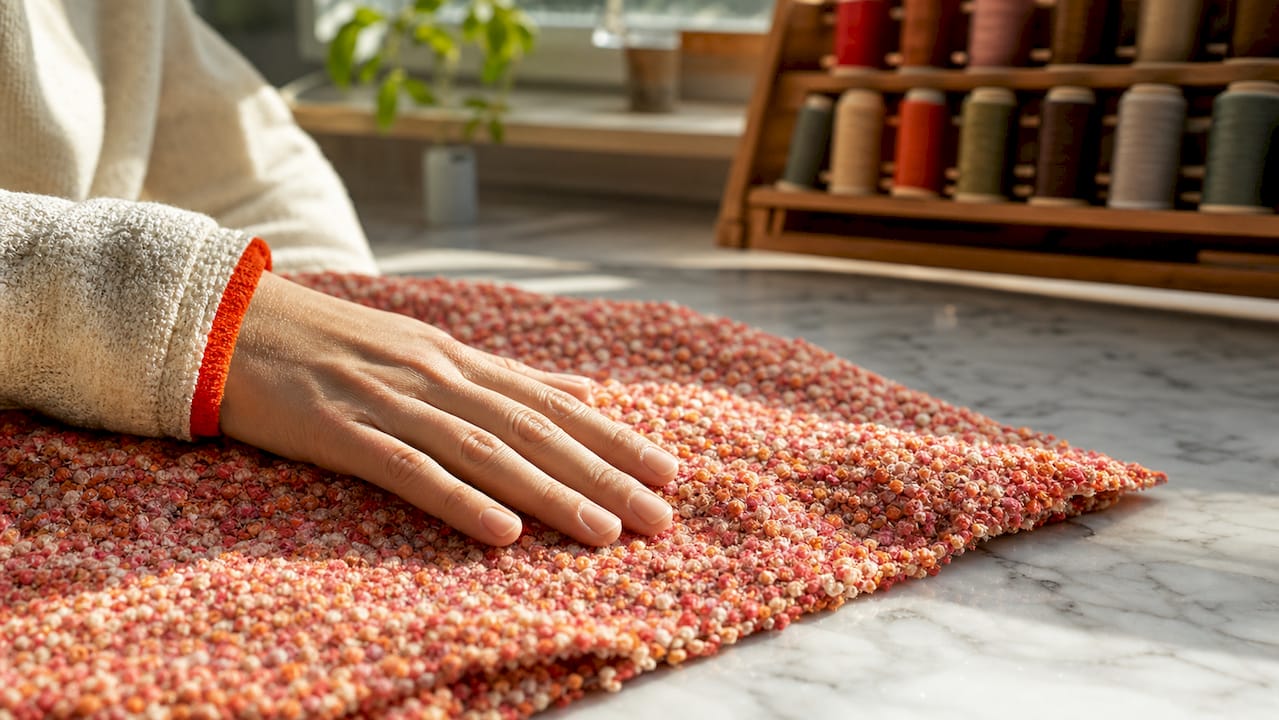
TL;DR:
- Bouclé fabric features an engineered looped yarn construction that creates a distinctive nubby texture. Its fiber content varies from wool and mohair to synthetics like polyester and acrylic, influencing durability and feel. Proper care includes gentle cleaning, wider seam allowances, and careful handling, making it suitable for upholstery and fashion.
Bouclé fabric is defined as a looped yarn textile named from the French word meaning “to curl,” producing a nubby, bumpy surface unlike any other woven material. The looped construction is the defining characteristic, not the fiber content. Whether you are sewing a structured jacket, reupholstering an accent chair, or shopping for home decor textiles, understanding what boucle fabric is will help you choose, use, and care for it correctly. This guide covers fiber types, construction, care, and real-world applications so you can work with boucle confidently.
Bouclé is both a yarn and the fabric made from it. The yarn is spun with intentional loops and curls that sit proud of the surface, creating that signature nubby texture you can feel immediately. As design writer Melinda Marquardt describes it, boucle’s dense texture makes it ideal for plush, sculptural applications. The loops are not a defect or a byproduct of loose spinning. They are engineered into the yarn during production, which is why the fabric looks the same from bolt to bolt.
The name comes directly from French textile vocabulary, where “bouclé” means “buckled” or “curled.” The term applies to both the yarn and the finished cloth. You will see it spelled with and without the accent mark in American retail contexts, but both refer to the same material. Recognizing this helps when you are searching product listings or comparing fabrics at a store.
The fiber content of bouclé varies widely, and your choice of fiber changes how the fabric performs, feels, and wears over time. Bouclé is traditionally made from wool or mohair, but synthetic versions using polyester, acrylic, and blended fibers are common in modern production.
Here is how the main fiber types compare:
Natural fibers dominate high-end bouclé because they produce a richer, more complex loop texture. Synthetic fibers dominate budget and performance applications because they are easier to clean and more resistant to fading.
Pro Tip: Choose fiber based on end use. For upholstery that will see daily wear, a polyester or blended bouclé offers better durability. For a fashion jacket or coat, wool or mohair bouclé gives you the drape and warmth that synthetics cannot replicate.
The loop is everything in bouclé. The yarn is made by twisting together at least two strands at different tensions. One strand forms the base, and the other creates the loops by feeding through faster than the base strand can absorb. The result is a yarn covered in small to large curls that stand away from the core.
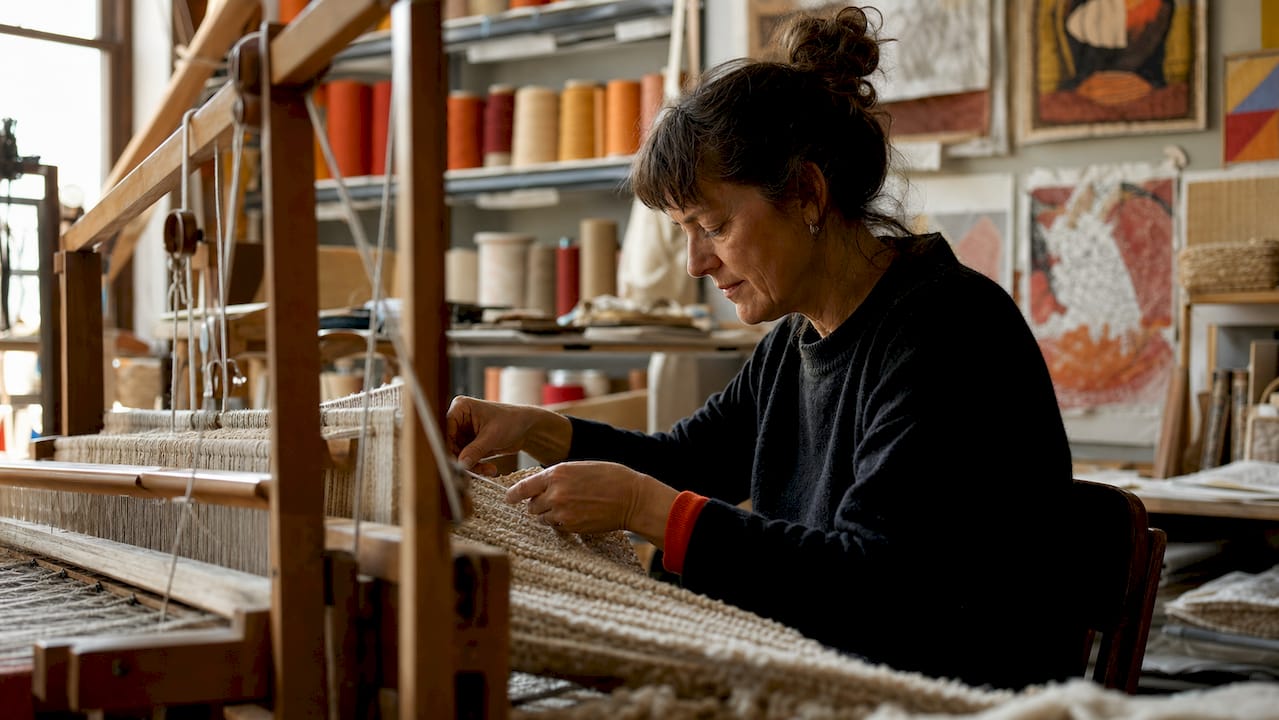
Loop size and density vary significantly across bouclé types, from fine and tight loops to large, chunky ones. Tight loop bouclé behaves more like a flat weave in terms of handling and sewing. Chunky loop bouclé requires more careful cutting and wider seam allowances to keep the loops from unraveling at the edges.
Here is how bouclé compares to similar textured fabrics:
| Fabric | Texture Source | Loop Structure | Best Use |
|---|---|---|---|
| Bouclé | Looped yarn construction | Intentional, engineered loops | Upholstery, fashion garments |
| Sherpa | Knit pile surface | No loops; cut pile | Lining, casual outerwear |
| Sheepskin | Natural wool on hide | Natural, irregular curl | Footwear, accessories |
| Teddy fleece | Knit polyester pile | No loops; dense pile | Blankets, casual wear |
The key difference is that bouclé loops are structural. They are part of the yarn itself, not a surface treatment applied after weaving. That is why bouclé holds its texture through repeated use in a way that cut-pile fabrics cannot always match.
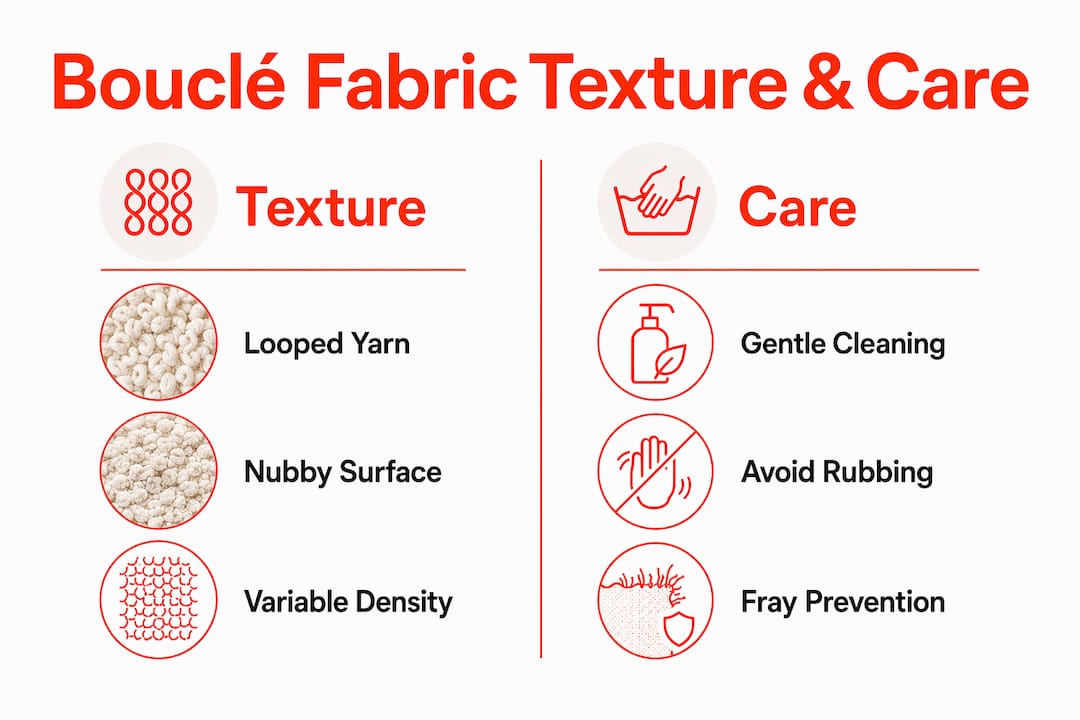
One practical challenge is that the looped surface traps lint, pet hair, and debris easily. The loops act like tiny hooks, catching particles that a smooth fabric would shed. This is not a flaw in the fabric. It is a direct result of the same structure that makes it so visually interesting.
Pro Tip: When cutting bouclé for a sewing project, use sharp fabric shears and cut slowly. Rushing causes the loops to snag and pull, which distorts the edge before you even reach the sewing machine.
Bouclé rewards gentle handling. The looped surface is more vulnerable to damage from aggressive cleaning than most flat-weave fabrics, and aggressive cleaning can damage loop texture permanently. Follow these steps to keep your bouclé looking its best:
For sewing projects, the care requirements extend to construction. Bouclé cut edges fray at a higher rate than flat weaves, and seam allowances of 0.5 to 0.75 inches are recommended compared to the standard 0.375 inches. Finishing raw edges with a serger or a zigzag stitch is not optional with bouclé. It is the difference between a garment that holds together and one that unravels at the seams after a few wears.
Pro Tip: Always test your cleaning method on a hidden area of the fabric first. Bouclé dyes and fiber blends react differently to moisture and soap, and a small test patch saves you from damaging a visible section.
For more detailed handling and sewing guidance, Fabric-fabric’s fabric care resource covers upholstery and apparel applications in depth.
Bouclé appears across two major categories: fashion garments and upholstered furniture. In both contexts, it brings warmth, texture, and a tactile richness that smooth fabrics cannot deliver.
Bouclé is widely used in upholstery for sculptural, curved furniture pieces. The Womb Chair designed by Eero Saarinen in 1948 is the most cited historical example. Its curved, enveloping form paired with bouclé upholstery became a defining image of mid-century modern design. That combination of organic shape and looped texture remains influential in contemporary interior design.
Common applications include:
Quality bouclé upholstery rates at 15,000–30,000 double rubs and carries a lifespan of 7–15 years with proper care. That places it above delicate fabrics like velvet in durability terms, though below leather or performance textiles. For residential use in low-to-moderate traffic areas, bouclé is a practical and stylish choice.
In fashion, Chanel has used bouclé as a signature fabric in its iconic tweed-adjacent suits since the mid-20th century. The fabric’s texture photographs well, holds structure without stiffening, and communicates luxury through touch alone. For hobbyists and home sewers, bouclé opens up the same design territory at a fraction of the cost of couture. If you want to explore how texture shapes upholstery choices, Fabric-fabric’s guide on fabric texture in upholstery is worth reading alongside this one.
Bouclé fabric’s looped yarn construction defines its texture, performance, and care requirements more than any other single factor.
| Point | Details |
|---|---|
| Loop structure is primary | The engineered loops in the yarn create bouclé’s texture, regardless of fiber content. |
| Fiber choice affects performance | Wool and mohair suit fashion; polyester and blends suit upholstery and high-use applications. |
| Fraying requires wider seams | Use 0.5–0.75 inch seam allowances and finish all raw edges to prevent unraveling. |
| Gentle cleaning preserves texture | Vacuum first, blot stains from outside in, and schedule professional cleaning every 12–18 months. |
| Durability is moderate | Quality bouclé rates at 15,000–30,000 double rubs, suitable for residential upholstery with proper care. |
Working with bouclé for the first time surprises most people. The fabric looks delicate because of its looped surface, but it performs better than its appearance suggests. The real learning curve is not durability. It is technique.
Most beginners underestimate the seam allowance issue. I have seen beautifully cut bouclé jackets fall apart at the shoulder seams because the maker used standard 0.375-inch allowances. The loops at the edge simply have nothing to grip. Adding that extra quarter inch and finishing the edge properly changes everything.
The cleaning side trips people up too. The instinct when something spills is to rub it out fast. With bouclé, that instinct will cost you. The loops lock debris in place, and rubbing drives it deeper while distorting the surface. Patience and a blotting motion are the only tools that work.
What I find most interesting about bouclé is its position in the textile world. It sits between casual and formal, between luxury and accessible. A wool bouclé coat reads as expensive and considered. A polyester bouclé accent chair reads as modern and warm. The same construction principle delivers very different results depending on fiber and context. That versatility is rare in textiles, and it is why bouclé keeps returning to fashion and interior design cycles decade after decade.
If you are new to working with it, start with a small upholstery project or a simple structured garment. The fabric teaches you its rules quickly, and once you understand them, you will reach for it often.
— kev
Ready to work with bouclé yourself? Fabric-fabric carries a wide selection of textiles suited for both home decor and fashion projects, with detailed product descriptions that tell you exactly what you are buying before it arrives.
Whether you are reupholstering an accent chair, sewing a structured coat, or adding texture to a room with throw pillows, the right fabric makes the difference. Browse Fabric-fabric’s home decor fabric collection for bouclé and related textured fabrics by the yard, with options across fiber types and price points. For a broader look at what is available, the full fabric catalog covers everything from upholstery weights to lightweight fashion textiles.
Bouclé fabric is made from wool, mohair, polyester, acrylic, or blended fibers. The fiber content varies by price point and intended use, but the looped yarn construction is consistent across all types.
Quality bouclé rates at 15,000–30,000 double rubs and lasts 7–15 years with proper care, making it suitable for residential upholstery in low-to-moderate traffic areas.
Use seam allowances of 0.5–0.75 inches instead of the standard 0.375 inches, and finish all raw edges with a serger or zigzag stitch to prevent the loops from unraveling.
Bouclé has engineered loops built into the yarn structure, while sherpa has a cut pile surface applied after knitting. Bouclé holds its texture longer because the loops are structural, not surface-level.
Wool and mohair bouclé typically require dry cleaning or careful hand washing in cold water. Polyester and acrylic bouclé tolerate gentle machine washing, but always check the care label first.