

 US Dollar

The Best Fabrics for Curtains: A Practical Buying Guide
Posted by BLG on 2026 Aug 10th
Posted by BLG on 2026 Aug 10th

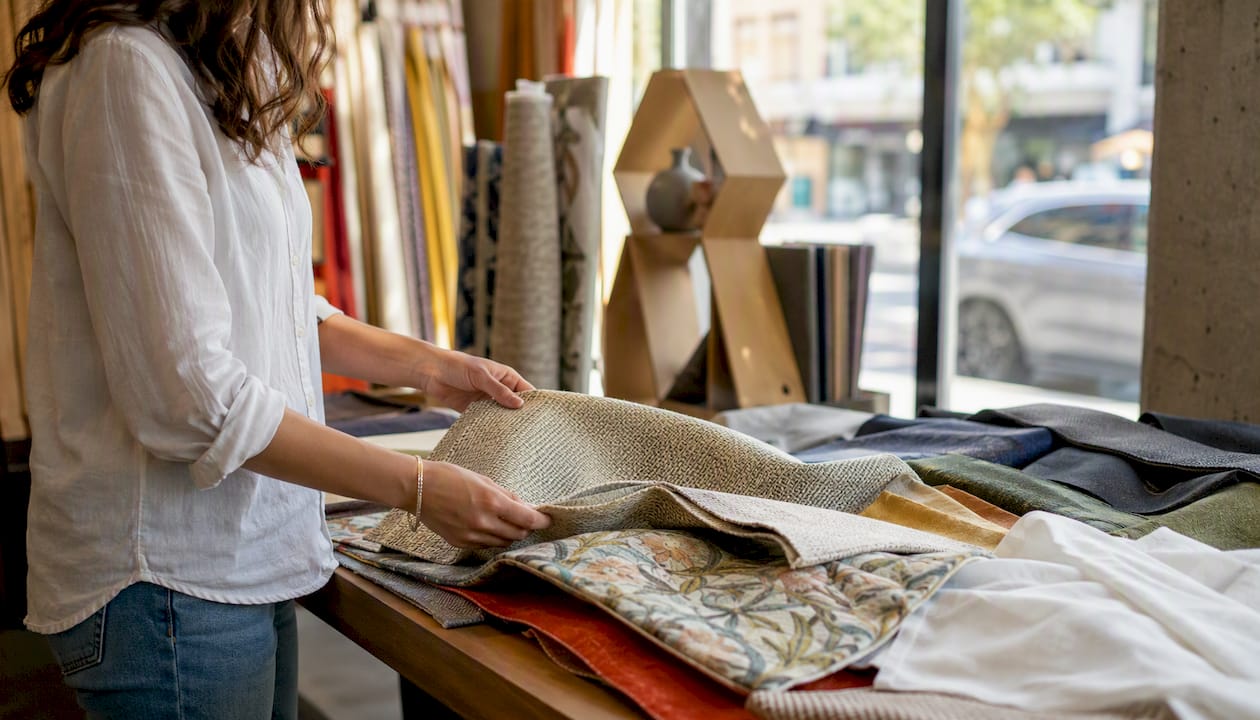
For sheers and relaxed rooms, linen and voile are the go-to choices. For everyday panels, cotton and cotton-poly blends hold up best. Polyester blends cover the low-maintenance, high-durability bracket. Velvet and wool handle insulation and blackout duty. For porches and patios, you need olefin, acrylic, or outdoor-rated polyester — nothing else survives. According to FibreGuard’s drapery fabric guide, curtain fabrics span cotton, linen, polyester, silk, wool, rayon/viscose, acrylic, and blends, each with distinct drape, maintenance, and light-control characteristics.
Here is the shortlist by room and use:
Before you order yardage, order swatches first and test them in your actual room at different times of day.
The most effective curtain fabric choice matches fiber weight and opacity to the room’s light, privacy, and maintenance requirements before considering color or pattern.
| Point | Details |
|---|---|
| Match fabric to function first | Choose weight and opacity for your room’s needs; add color and pattern after performance is confirmed. |
| Use the 150–250 GSM range | This weight range balances drape and body for most everyday curtain styles; go lighter for sheers, heavier for thermal or pleated panels. |
| Always line your curtains | Even a basic lining improves drape, extends colorfastness, and adds privacy at modest extra cost. |
| Test swatches before ordering yardage | A 12 × 12-inch swatch tested at different times of day and weighted for a drape test prevents the most expensive mistakes. |
| Fabric-fabric for yardage and swatches | Fabric-fabric stocks cotton, linen blends, velvet, jacquard, and outdoor-rated options sold by the yard with swatch ordering available. |
Fabric is not just decoration. It determines how much light enters a room, how much heat escapes through the glass, whether neighbors can see in at night, and whether your curtains still look good in three years. Get it wrong and you end up with panels that let in too much morning sun, sag badly, or fade within a season.
Here is what fabric choice controls:
The weight and weave of a fabric determine how it folds. A loosely woven linen falls in soft, irregular waves. A tightly woven polyester jacquard holds a crisp, structured pleat. Neither is wrong — they just produce different results.
Pro Tip: When performance and aesthetics conflict, solve the performance problem first. You can always layer a decorative sheer over a functional blackout panel, but you cannot un-fade a silk curtain that spent two years facing west.
Product listings throw around terms like GSM, denier, and opacity without much explanation. Here is what they mean and which ones to prioritize.
Weight is measured in grams per square meter (GSM) or ounces per yard. A practical guideline puts balanced drape for most domestic curtain styles in the 150–250 GSM range. Below that, you are in sheer territory. Above it, you are moving toward pleated drapes and thermal curtains.
Drape describes how a fabric folds and falls. It is a product of weight, weave structure, and fiber type together. A fabric can be heavy but stiff (canvas), or lightweight but fluid (silk charmeuse). For curtains, you want fluid drape, not structural rigidity.
Opacity runs from fully sheer to blackout. Weave density and fiber type both affect it, but so does color — a dark linen blocks more light than a pale one of identical weight.
Durability indicators to look for in product specs:
Care trade-offs matter more than most buyers realize. Silk and wool are dry-clean-only in most cases. Cotton and polyester are typically machine washable. Velvet needs careful steaming, not aggressive washing.
| Property | What to look for | Priority by room |
|---|---|---|
| Weight (GSM) | 150–250 for general use; lighter for sheers | All rooms |
| Drape | Fluid, not stiff; test by hanging a swatch | Living room, bedroom |
| Opacity | Sheer to blackout; match to privacy needs | Bedroom, bathroom |
| Colorfastness | High rating for south/west-facing windows | All sun-exposed rooms |
| Care | Machine washable preferred for kitchen, kids’ rooms | Kitchen, kids’ rooms |
| UV resistance | Treated finish or synthetic fiber | South/west-facing windows |
| Thermal performance | Weight + lining combination | Bedroom, older homes |
Thermal and acoustic performance come primarily from weight and lining, not fiber alone. A medium-weight cotton with a thermal interlining outperforms a heavy polyester with no lining in most cold-climate situations.
Curtain fabrics fall into four broad groups: natural fibers, synthetics, specialty textiles, and blends. Each has a distinct personality.
Cotton is the workhorse. It takes dye well, washes easily, and works in almost every room. Medium-weight cotton sits comfortably in the 150–250 GSM range that sewing guides recommend for balanced drape. The downside: it fades in direct sun and shrinks if you skip pre-washing.
Linen softens light and creates a relaxed, textured drape that suits casual and Scandinavian-style interiors. Wrinkles are part of its character, not a flaw. It is stronger than cotton but less forgiving to wash.
Silk drapes beautifully and catches light in a way no synthetic replicates. It is also the most fragile option: UV exposure degrades it quickly, and it is almost always dry-clean-only.
Wool is underused in North American homes but excellent for insulation. It is naturally fire-resistant and adds real acoustic dampening.
Polyester and polyester blends dominate the ready-made curtain market for good reason. They resist wrinkles, shrinking, and fading, making them the lowest-maintenance option available. The trade-off is that they can look slightly plastic in cheaper versions.
Acrylic mimics wool’s look at a fraction of the cost and handles outdoor exposure better than most fibers. It is a common choice for covered patios.
Olefin (polypropylene) is the most moisture- and mildew-resistant synthetic available, making it the top pick for outdoor-rated curtains alongside specialized outdoor polyester.
Nylon appears less often in curtains than in upholstery, but it adds strength and abrasion resistance when blended with other fibers.
Velvet is the heaviest and most dramatic option. Velvet, chenille, and pile weaves add weight and structure, producing deeper folds and greater thermal performance. The pile direction matters: always hang velvet panels with the pile running downward for consistent color.
Jacquard is a woven pattern, not a fiber. It can be cotton, polyester, or a blend, and it adds visual texture without printing. It holds its shape well and suits formal rooms.
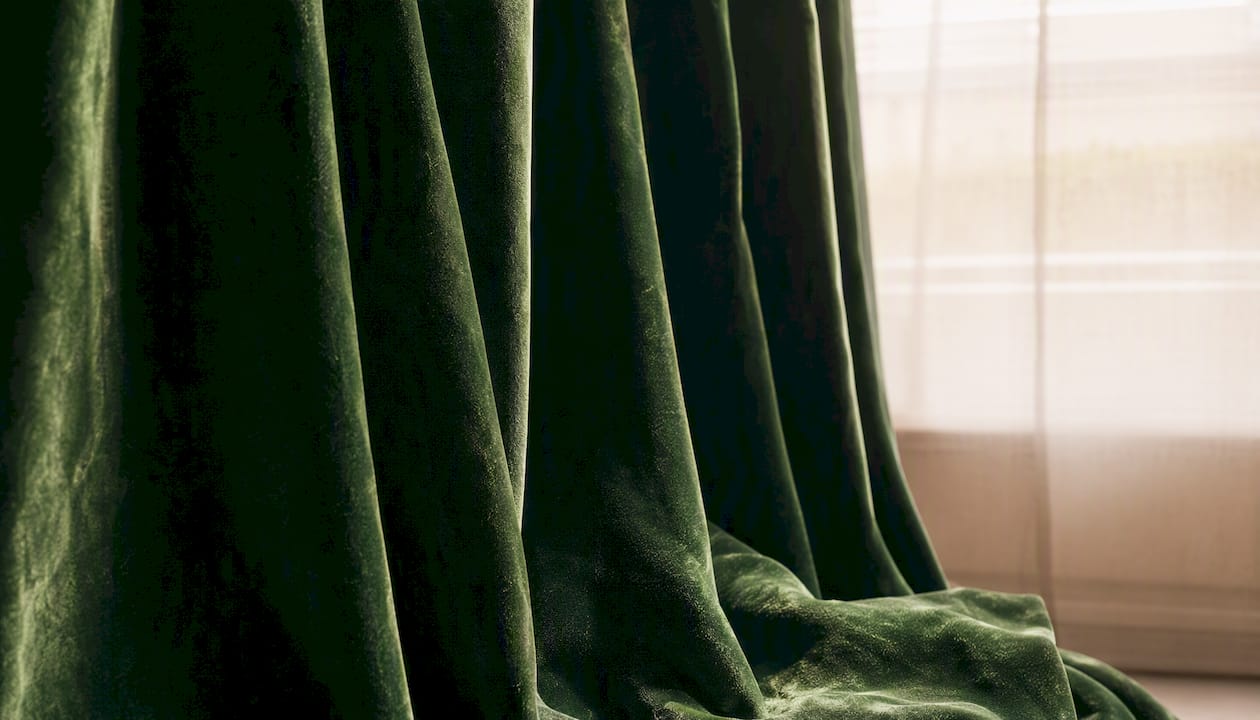
Chenille is soft, heavy, and insulating. It works well in bedrooms and living rooms where you want warmth and texture, but it can be tricky to sew because the pile sheds.
Sheer families include voile (lightweight, soft), organza (crisp, slightly stiff), and chiffon (fluid, delicate). All three diffuse light without blocking it. None offers meaningful privacy at night.
Blackout-coated fabrics have a foam or acrylic coating bonded to the back. They block virtually all light but are usually not as attractive on their own, so they work best as a lining layer rather than a face fabric.
Cotton-poly blends give you cotton’s natural look with polyester’s durability and easier care. Linen-poly blends reduce linen’s tendency to wrinkle while keeping its texture. Silk-poly blends bring the drape of silk at a lower price point and with better UV resistance. Blends are often the practical sweet spot for buyers who want the look of a natural fiber without the maintenance demands.
Voile and organza are the standard choices. Voile is softer and more casual; organza holds a crisper silhouette. Layering a sheer with an opaque panel is the most flexible system: you get privacy when you need it and soft diffused light when you don’t. For this setup, you need a double rod or a track with two carriers.

Medium-weight cotton or linen-poly blends in the 150–250 GSM range handle daily use without drama. They wash well, hold color reasonably, and work with most header styles. For kitchens specifically, polyester or cotton-poly blends are smarter than pure linen because they tolerate steam and occasional grease splatter without permanent damage.
This is where blackout performance matters most. Your options:
Heavier fabrics like velvet improve insulation and sound dampening, which is a real advantage in bedrooms that face a street or share a wall.
Go heavy and add interlining. Velvet or wool face fabric plus a thermal interlining plus a standard lining is the highest-performing combination for cold climates. Velvet and chenille pile weaves hang with deeper folds that trap more air near the glass.
Outdoor-rated curtains require olefin, acrylic, or specialized outdoor polyester to resist mildew, water damage, and color fading. Indoor fabrics degrade fast outside — they trap moisture, grow mold, and lose color within a single season. Look for solution-dyed fibers, which means the color runs through the yarn rather than sitting on the surface, so UV exposure cannot strip it.
Example pairings:
Lining is the layer sewn to the back of your face fabric. It is not optional if you care about longevity. Retail and supplier guides consistently note that lining is a small extra cost that materially improves drape, protects the face fabric from sun damage, and makes colors last longer.
Here is how the options compare:
When to add lining: always, unless you are making sheers or lightweight café curtains where opacity is not the goal. When to add interlining: for formal rooms, cold climates, or any situation where you want the curtains to hang with real weight and presence.
When ordering custom curtains or buying fabric to sew your own, tell your seamstress the finished drop, the fullness ratio, the header type, and the lining choice before cutting. Lining and interlining both affect the total yardage calculation.
The fastest way to ruin curtains is to wash them wrong. Here is the short version by fiber:
Do-not-do alerts:
For stains on dry-clean-only fabrics, blot (never rub), apply a small amount of dry-cleaning solvent to a white cloth, and test on a hidden seam first. If the stain is large or set, call a professional.
Sun damage is slow but cumulative. UV-resistant treatments and lining both extend colorfastness. Rotating panels seasonally in south- and west-facing rooms adds years to their life.
Getting the math right before you order saves money and prevents the frustration of panels that are two inches too short.
Measure your window. Width: measure the rod or track from end to end, not just the glass. Height: measure from the rod to where you want the hem (floor, sill, or apron). Add 1–2 inches above the rod for the header and 4–6 inches at the hem for a double-fold.
Decide on fullness. Standard fullness is 1.5–2x the rod width for a gathered look. Formal pinch-pleat curtains use 2–2.5x. Flat panels use 1–1.25x. Multiply your rod width by your chosen fullness ratio to get the total fabric width needed.
Account for pattern repeat. Pattern repeat affects yardage — matching prints across panels requires extra fabric. Add one full repeat per panel cut to your yardage calculation. Check the product listing for the repeat measurement before ordering.
Calculate total yardage. Divide your total fabric width by the fabric width on the bolt to get the number of widths needed. Multiply that by your finished drop (plus hem and header allowances). Divide by 36 to convert inches to yards.
Add shrinkage allowance. For cotton and linen, add 5–10% to your total yardage to account for pre-washing shrinkage.
Check header compatibility. Pinch pleat requires stiff buckram tape and heavier fabric. Grommets work best with medium-weight fabrics that won’t distort at the hole. Rod pocket suits lighter fabrics. Eyelet headers need a fabric that won’t fray aggressively at the cut edge.
Pro Tip: Always order a minimum of half a yard extra beyond your calculation. Cutting errors, fabric flaws, and the occasional re-do happen. The cost of extra yardage is far lower than the cost of a mismatched dye lot if you run short.
Ordering swatches is not optional — it is the single step that prevents the most expensive mistakes. Here is a protocol that actually tells you what you need to know.
Order a swatch at least 12 × 12 inches. Smaller samples do not drape, and you cannot assess color accurately on a 4-inch square. Request a sample from the middle of the roll, not the selvage edge, where color and texture can differ.
Test in natural light at different times of day. Pin the swatch to your window frame at 8 AM, noon, and 4 PM. Colors shift dramatically between morning and afternoon light, especially on north-facing walls.
Run the drape test. Clip a few binder clips along the bottom edge of the swatch to simulate weight, then hang it from a rod or curtain wire. A fabric that drapes well in a small sample will drape well at full scale. One that bunches or sticks out will not improve with size.
Hold the swatch to the light. This is your opacity test. Hold it directly in front of a bright window. If you can clearly see your hand through it, the fabric is sheer. If you see a faint shadow, it is semi-opaque. If you see nothing, it is effectively blackout without lining.
Launder the swatch (where the care label permits). Wash it the way you plan to wash the finished curtains. Check for shrinkage, color bleeding, and texture change. A fabric that pills or bleeds in a swatch will do the same at full scale.
Interpret the results. Color that looks warm in the store can read cool on a gray wall. A fabric that feels stiff in hand often softens after washing. Pile fabrics like velvet show a color shift depending on which direction you view them — check this before committing.
Pro Tip: Photograph the swatch pinned to your actual window and compare it side-by-side with the product image on your screen. The gap between the two tells you exactly how much the room’s light and wall color are shifting your perception.
For a deeper look at matching fabric to room style, Fabric-fabric’s home decor fabric guide covers pattern, texture, and color coordination in detail.
Most curtain failures are predictable. Here is where buyers go wrong and how to fix it before you order.
Underestimating fullness. Flat panels look cheap and unfinished. Use at least 1.5x fullness for any gathered or pleated style. Remedy: recalculate yardage with a 2x multiplier before placing the order.
Choosing the wrong header for the fabric weight. Grommets in a flimsy polyester voile distort and sag. Pinch pleat in a stiff canvas won’t fold cleanly. Remedy: match header type to fabric weight — grommets for medium-weight, rod pocket for light, pinch pleat for structured fabrics.
Skipping lining. Unlined curtains fade faster, drape worse, and offer less privacy. Remedy: add a standard cotton sateen lining at minimum; upgrade to blackout lining for bedrooms.
Ordering swatches that are too small. A 4-inch square tells you nothing about drape or true color. Remedy: request at least a 12 × 12-inch sample and test it in your room.
Ignoring pattern repeat. A large repeat can add a yard or more per panel to your yardage requirement. Remedy: check the repeat measurement in the product listing and add one full repeat per panel cut.
Using indoor fabric outdoors. Cotton, linen, and untreated polyester will mildew, fade, and degrade within one season outside. Remedy: use only olefin, acrylic, or outdoor-rated polyester for any exposed exterior application.
Ordering without a shrinkage allowance. Cotton and linen shrink. Remedy: add 5–10% to your yardage total and pre-wash the fabric before cutting.
Most people spend their decision-making energy on color and pattern, then treat fabric type as an afterthought. That is backwards. Color is easy to change. A curtain that lets in too much light, sags after one wash, or fades within a year is a problem you live with every morning.
The single most underrated step in this entire process is the drape test with a weighted swatch. Most buyers skip it because it feels fussy. But a fabric that looks beautiful on a bolt can hang completely wrong at full scale. A 12-inch swatch weighted with binder clips and hung for 10 minutes tells you more about a fabric’s real behavior than any product description.
The other thing worth saying plainly: lining is not a luxury. It is the difference between curtains that look finished and curtains that look like they came from a college dorm. Even a basic cotton sateen lining adds body, protects the face fabric from UV degradation, and makes the whole panel hang with more authority. The cost is modest. The visual improvement is immediate.
For a room-by-room breakdown of which fabrics work best where, Fabric-fabric’s guide goes deeper on matching fabric weight and texture to specific room conditions.
Fabric-fabric carries the full range of curtain-ready fabrics discussed in this guide: natural cotton drapery, linen blends, velvet, jacquard, and specialty textiles sold by the yard. The difference from buying ready-made panels is that you control the width, the fullness, and the lining choice from the start.

If you are still narrowing your options, start with swatches. If you have already tested and confirmed your fabric, browse the home decor fabric collection for current stock, pricing, and yardage options. Cotton drapery fabric is a strong starting point for everyday panels. For heavier decorative options, the backdrop and specialty fabric range covers velvet, jacquard, and structured weaves. Order swatches first when you are unsure. Order full yardage once you have run the drape and opacity tests in your room.
The following sources informed this guide and are worth bookmarking for deeper reading: