

 Canadian Dollars

What Fabric Is Best for Chair Upholstery: A Practical Guide
Posted by BLG on 2026 Jul 2nd
Posted by BLG on 2026 Jul 2nd

TL;DR:
- The best fabric for chair upholstery depends on its intended use, household demands, and style goals. There is no single fabric that suits all situations, as durability, comfort, and ease of cleaning vary by fabric type. Natural fibers like cotton and wool are breathable and attractive but less stain-resistant, while synthetics like microfiber and vinyl offer higher durability and easier maintenance.
The best fabric for chair upholstery is one that matches the chair’s function, your household’s demands, and your style goals. No single material wins every situation. A dining chair in a home with three kids needs something completely different from an accent chair in a formal sitting room. The right choice balances durability, comfort, ease of cleaning, and how the fabric holds up over time. Understanding the key performance traits of each fabric type, including abrasion resistance and breathability, makes that decision far easier.
The answer starts with knowing that no single fabric works best for every chair. The right upholstery fabric is fit-for-purpose. It balances durability, visual appeal, and maintenance requirements for the specific chair and room it will live in. Industry standards like double-rub counts measure abrasion resistance and give you a starting point for comparing options. But abrasion ratings alone do not tell the whole story. Comfort, breathability, stain resistance, and how the fabric behaves when stretched over a frame all matter just as much.
The three primary considerations are durability, comfort, and ease of cleaning. Get all three right for your situation, and you have found your best fabric. Miss one, and you will be reupholstering again sooner than you planned.
Cotton, linen, wool, polyester, microfiber, vinyl, and blends are the most widely used upholstery fabrics, each with distinct performance traits. Knowing what each brings to the table helps you narrow down the right fit fast.
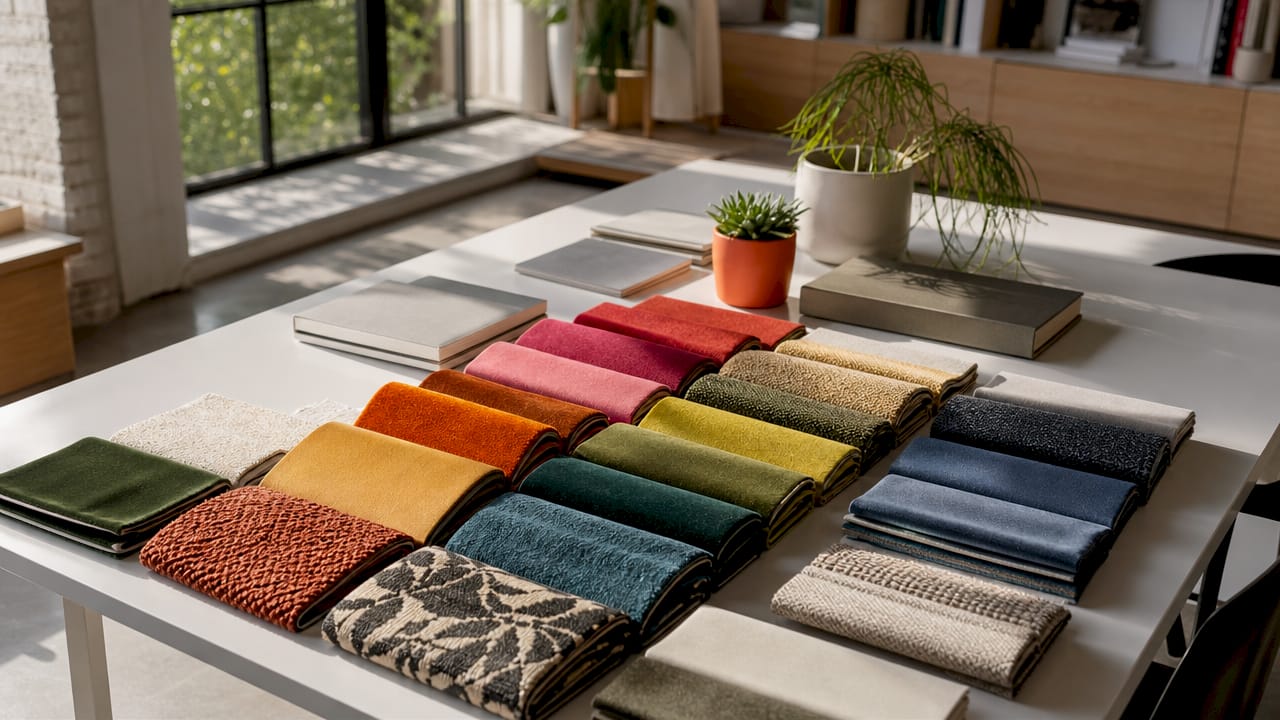
Natural fibers are breathable, comfortable, and visually rich. Cotton is soft, widely available, and easy to dye, making it a popular choice for decorative chairs. Linen has a crisp, textured look that suits formal and Scandinavian-style rooms, though it wrinkles easily and stains without a protective finish. Wool is naturally resilient and resists pilling better than most synthetics, but it comes at a higher price point and requires more careful cleaning.
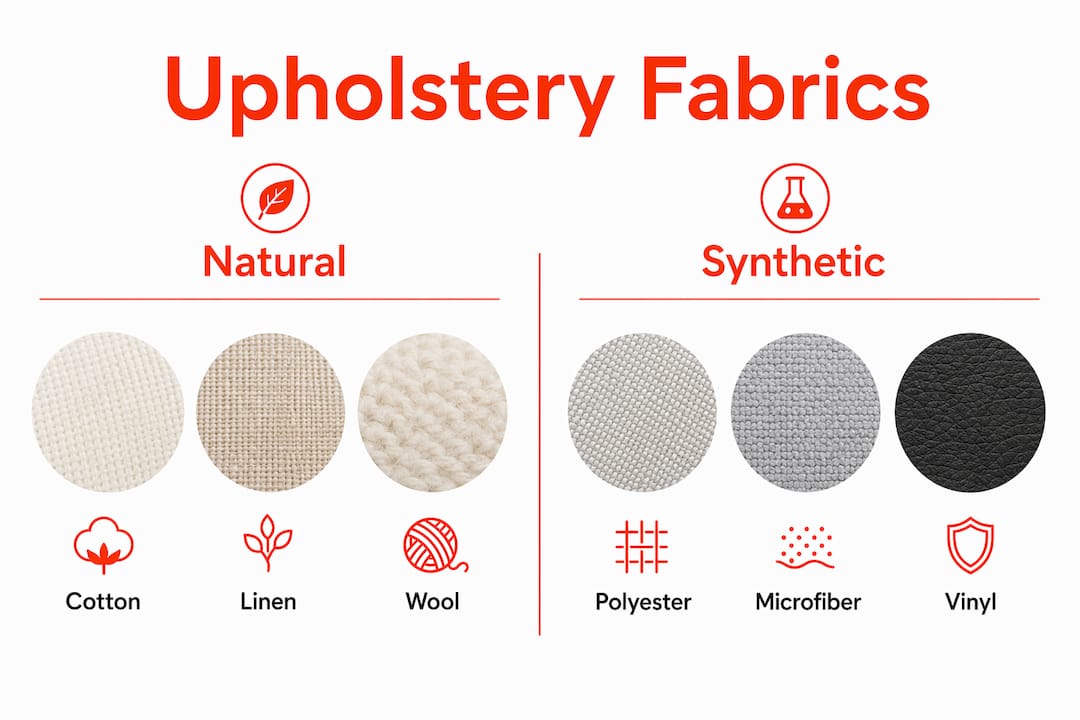
Synthetic fabrics generally outperform natural fibers on durability and stain resistance. Key options include:
Blends combine the strengths of natural and synthetic fibers. A cotton-polyester blend, for example, gives you the softness of cotton with improved durability and wrinkle resistance. The trade-off is that blends can dilute the best qualities of each fiber if the ratio is off. A fabric that is 80% polyester and 20% cotton behaves mostly like polyester, not like cotton.
Fabric weave and finish also affect performance. A tight weave resists abrasion better than a loose one. A stain-resistant finish adds a layer of protection but can change how the fabric feels to the touch.
Durability in upholstery is measured using double-rub counts. One double rub equals one back-and-forth motion across the fabric surface. Residential upholstery typically requires 15,000 double rubs or more. Heavy-duty residential use calls for 25,000 or higher. Commercial settings often demand 100,000 or more.
Double-rub counts do not guarantee upholstery success on their own. Stretch factor and seam behavior are equally critical. A fabric with a high double-rub count but excessive stretch will pucker and distort over curved chair frames. Low-stretch fabrics generally produce better-tailored upholstery even when abrasion ratings are equal.
Here is how the most common fabrics compare on durability and cleaning:
| Fabric | Durability | Stain resistance | Cleaning ease |
|---|---|---|---|
| Microfiber | High | High | Easy |
| Vinyl | High | Very high | Very easy |
| Polyester | Medium to high | Medium | Easy |
| Cotton | Medium | Low | Moderate |
| Linen | Medium | Low | Moderate |
| Wool | Medium to high | Medium | Careful hand wash |
Pilling is another durability factor that rarely gets enough attention. Loosely woven fabrics and low-quality synthetics pill quickly under friction. Seam strength matters too. A fabric that looks great but tears at the seam after six months of use is not durable upholstery fabric regardless of its double-rub count.
Pro Tip: Before cutting any fabric, drape and pin it over the actual chair frame. This reveals how the material behaves on curves, where seams will land, and whether the pattern aligns correctly. Skipping this step is the single most common cause of distorted, puckered upholstery.
Breathability is the most underrated factor in chair upholstery. About 65% of office workers prefer breathable fabrics such as mesh or high-quality blends for long-term comfort. That preference reflects a real physical reality: non-breathable fabrics trap heat and moisture, making extended sitting uncomfortable.
The most breathable upholstery fabrics for chairs are:
Vinyl and standard microfiber sit at the opposite end of the breathability scale. They trap heat and feel uncomfortable during long sitting sessions. For comfort in relaxation chairs, fabric selection directly affects how long you can sit without discomfort. The trade-off is real: the most breathable fabrics are often the least stain resistant. You have to decide which matters more for each specific chair.
Matching fabric to function is the core skill in upholstery selection. Here is a practical framework:
Budget matters, but cost per use is a better metric than upfront price. A $15-per-yard microfiber that lasts ten years costs less in practice than a $10-per-yard cotton that needs replacing in three.
DIY upholstery mistakes are almost always avoidable. The most common errors come from skipping preparation steps, not from poor fabric choices.
Pro Tip: For patterned fabrics, always center the dominant motif on the seat and back before cutting. A pattern that lands off-center looks like a mistake, even if the upholstery work itself is flawless.
For a full walkthrough of the process, the guide to upholstering dining chairs covers each step from fabric selection through final installation.
The best fabric for chair upholstery is always the one that fits the chair’s use, your household’s demands, and your budget over the long term.
| Point | Details |
|---|---|
| Match fabric to function | High-traffic chairs need microfiber or vinyl; accent chairs can use velvet or linen. |
| Double-rub counts are a starting point | Stretch behavior and seam strength matter as much as abrasion ratings. |
| Breathability affects comfort | Natural fibers and mesh outperform vinyl for long sitting sessions. |
| Test before cutting | Draping fabric on the frame reveals distortion and seam issues before you waste material. |
| Thread and needle matter | Mismatched thread weight causes seam failure regardless of fabric quality. |
Most upholstery guides treat fabric selection as a checklist. Pick a durability rating, check the stain resistance box, done. My experience working with fabric across dozens of reupholstery projects tells a different story.
The biggest mistakes I have seen come from ignoring how a fabric behaves rather than what it is. A polyester with a beautiful hand feel and a high double-rub count can still look terrible on a curved chair back if it has too much stretch. I have watched homeowners spend real money on premium fabric only to end up with puckered seams because they skipped the drape test.
The other thing I would push back on is the idea that natural fibers are always the “better” choice. Synthetic fabric performance depends entirely on construction quality. A well-engineered polyester blend outperforms a poorly finished linen every time. The fiber type is less important than the weave, the finish, and how the fabric is constructed. Buy from a supplier who can tell you those details, not just the fiber content.
For anyone choosing fabric for prolonged sitting comfort, I always recommend testing the fabric in person before committing. Touch it, stretch it, hold it up to light. No product description replaces that.
— kev
Choosing the right upholstery fabric is easier when you can see and compare real options in one place. Fabric-fabric carries a wide selection of upholstery and home decor fabrics, from durable synthetics built for family life to premium natural blends suited for statement chairs.
Whether you are reupholstering a dining chair or refreshing a living room accent piece, the home decor fabric collection at Fabric-fabric gives you practical options at prices that make DIY projects worth doing. The site organizes fabrics by use and type, so finding the right weight and finish for your specific chair takes minutes, not hours. Browse the full range and order swatches before you commit to a full yardage purchase.
Microfiber and vinyl are the most durable options for everyday chair upholstery. Microfiber resists stains and pet hair, while vinyl is waterproof and withstands heavy use with minimal maintenance.
Calculate the fabric needed by measuring the seat, back, and arms, then add at least 15% extra for pattern matching and cutting errors. Most dining chair seats require 1–2 yards of fabric.
Neither is universally better. Natural fabrics like linen and wool offer breathability and a premium look, while synthetics like polyester and microfiber deliver better stain resistance and durability for high-use chairs.
Microfiber is the top choice for homes with pets and children. Its tight fiber structure resists staining, cleans easily, and holds up to heavy daily contact better than most natural fabrics.
A double-rub count measures how many back-and-forth abrasion cycles a fabric withstands before showing wear. Residential upholstery generally requires 15,000 or more double rubs for reliable longevity.