

 US Dollar

The Real Benefits of Bulk Fabric Buying Explained
Posted by BLG on 2026 May 24th
Posted by BLG on 2026 May 24th

TL;DR:
- Bulk fabric buying offers significant cost savings, supply stability, and access to premium textiles for small businesses and crafters. It requires careful planning to manage inventory, storage, and supplier relationships, ensuring purchases align with actual demand and project needs. Strategic bulk purchasing enhances operational efficiency and supports sustainable sourcing while avoiding excess inventory.
Whether you’re a crafter running through yards of cotton every month or a small business owner trying to keep production humming, fabric sourcing is one of the most budget-sensitive decisions you make. The benefits of bulk fabric buying go far beyond a simple discount. Done strategically, buying fabric in bulk stabilizes your supply, opens access to premium textiles, and changes how you plan and operate. This article breaks down exactly what you gain, what to watch out for, and how to decide if bulk purchasing fits your needs.
| Point | Details |
|---|---|
| Real cost savings | Bulk fabric discounts typically range from 10% to 50%, reducing your per-yard cost substantially. |
| Inventory stability | Keeping 50 to 60% of stock as reorderable core fabrics keeps cash flow predictable. |
| Quality and variety access | Wholesale sourcing unlocks exclusive patterns and consistent dye lots unavailable in small orders. |
| Know the risks | Minimum order quantities and storage demands require planning before committing to large purchases. |
| Start strategic | Match your bulk order size to your actual project volume and scale up as confidence grows. |
The single most-cited reason people explore bulk fabric purchasing advantages is price. And the numbers back it up. Bulk buying reduces per-yard costs by anywhere from 10% to 50% compared to buying small quantities at retail. That range is wide because it depends on the fabric type, supplier, and order volume. But even at the low end, 10% savings on a 500-yard order is meaningful money.
There are several layers of savings stacked on top of that per-unit reduction:
Pro Tip: Calculate your projected fabric use for the next six months before approaching a supplier. Walking in with a volume estimate gives you real negotiating leverage on price and terms.
One of the underrated buying fabric in bulk benefits is the way it smooths out your workflow. When you run low on a specific fabric mid-project, you face delays, substitutions, or frantic reordering. Bulk buying eliminates that.
For retailers and production businesses, this stability is even more critical. Core reorderable fabrics should make up about 50 to 60% of your inventory to keep cash flow predictable and restocking consistent. These are your revenue stabilizers. They’re the fabrics customers come back for and the ones your production line depends on.
When you buy in bulk, you’re not just getting fabric. You’re buying time and predictability. Knowing you have three months of a key textile on hand lets you focus on design and production rather than supply logistics.
Here’s something that surprises many first-time bulk buyers: the quality often goes up as the order size increases. Wholesale sourcing gives you access to premium textiles and exclusive patterns that simply aren’t available in small quantities. Mills and wholesale distributors reserve their best and most specialized offerings for buyers who commit to volume.
Buying in bulk also gives you something called dye lot consistency. Every large cut from the same dye lot will match perfectly in color. When you buy small amounts at different times, you risk subtle color variation between batches, which can ruin a cohesive product line or home decor project.
For those working with specialty materials, check out how velvet and satin fabrics behave differently at scale. Direct mill sourcing unlocks options that retail channels simply don’t stock.
Most crafters and small businesses operate reactively, buying fabric when they need it and hoping it’s still available. Bulk buying flips that model. Seasonal and fashion-forward fabrics typically make up 10 to 25% of a well-planned inventory, and buying them in advance lets you time product releases with market trends instead of chasing them.
This is especially valuable for home decor and event businesses. If you know your customers want jewel-toned velvet in the fall or bright sequin fabric for the holiday season, you can lock in your supply before demand spikes and prices climb. You’re no longer at the mercy of whatever is left on the shelf in October.
Pro Tip: Treat seasonal fabrics as a separate budget category. Cap them at no more than 20 to 25% of your total fabric spend so one seasonal miss doesn’t create a cash flow problem.
Bulk purchasing reduces packaging waste and transportation footprint compared to multiple small shipments. Fewer trucks, fewer boxes, fewer single-use packaging materials. For crafters and businesses with sustainability goals, this is a genuine and measurable benefit, not just a talking point.
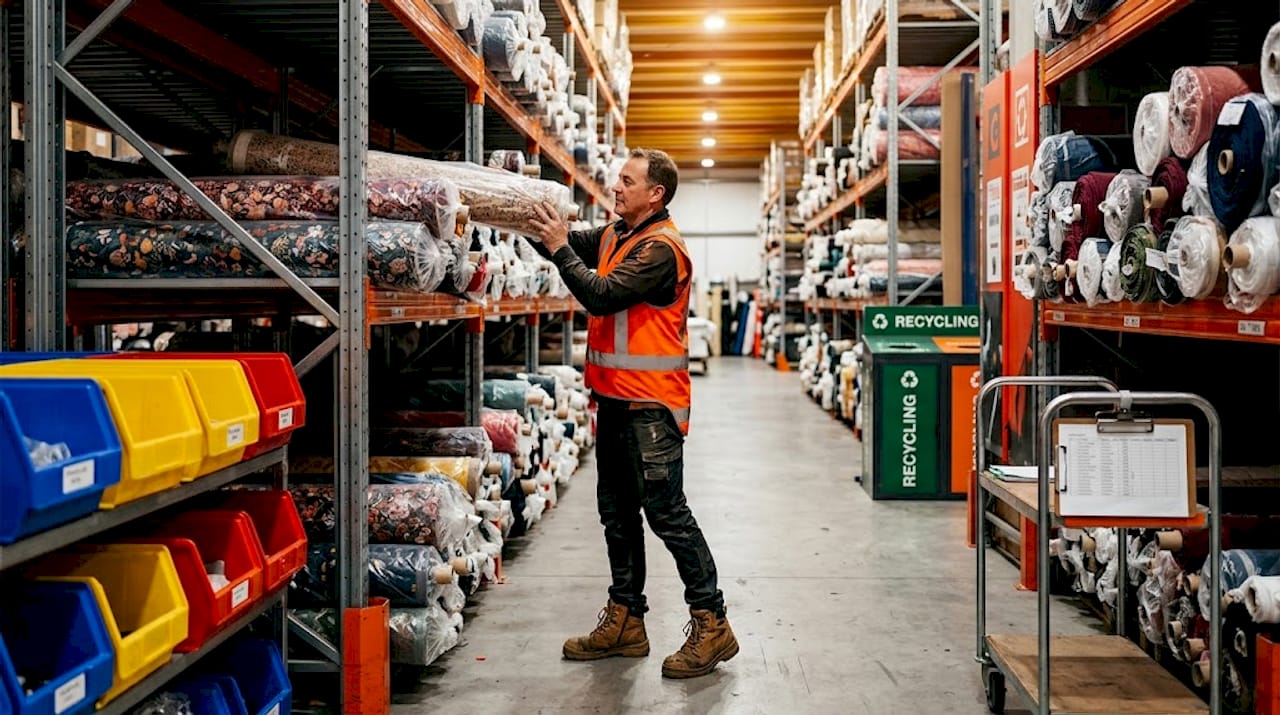
Many wholesale suppliers are also actively shifting toward eco-conscious offerings, which means buying in bulk can put you in direct contact with suppliers who prioritize certified organic fabrics, recycled textiles, and responsible dye practices. You often need volume to access these tiers.
When you buy consistently and in volume, you become a valuable customer. That relationship translates into tangible benefits: priority access to new stock, advance notice on price changes, flexible payment terms, and sometimes custom sourcing. Suppliers remember buyers who make their lives easier.
This dynamic is especially true when you explore direct mill sourcing versus working through a distributor. Mills value steady, predictable clients. A buyer who orders 1,000 yards three times a year gets treated very differently than someone ordering 50 yards when the need arises. Building that relationship is one of the wholesale fabric buying pros that rarely gets mentioned in basic buying guides.
No honest look at bulk fabric buying skips the downsides. Mills and importers often require minimum orders of 500 to 2,000 yards per color. For a small crafter or indie retailer, that is a serious cash commitment before you’ve sold a single yard.
Here are the core challenges and how to approach them:
Pro Tip: Before adding any new fabric to your bulk order, ask yourself: do I have a confirmed use case or customer for this? If the answer is “maybe,” skip it for this order.
Not all bulk buying looks the same. Where you source matters as much as how much you buy. Here’s a practical comparison to help you decide which channel fits your needs:
| Sourcing channel | Minimum order | Price point | Variety | Exclusivity |
|---|---|---|---|---|
| Retail by-the-yard | 1 yard | Highest | High | None |
| Wholesale distributor | 10 to 50 yards | Moderate | High | Low |
| Mill direct | 500 to 2,000 yards | Lowest | Moderate | High |
| Deadstock suppliers | Varies | Low to moderate | Variable | Medium |
Distributors are the practical middle ground for most crafters and small businesses. They offer better pricing than retail without the enormous minimums that mills demand. As your volume grows, direct mill relationships become worth pursuing for the price and exclusivity benefits they unlock. For a structured approach to planning your sourcing, the bulk fabric ordering guide from Fabric-fabric is a useful starting point.
Before you commit to a large order, run through this checklist honestly:
If you answer yes to most of these, the case for buying in bulk is strong. If you’re uncertain on two or more, start smaller. Buy a half-order or pilot with one fabric type before scaling. There’s no rule that says you have to go all-in immediately. The goal is to plan fabric inventory in a way that fits your real operating rhythm, not some idealized version of it.
I’ve watched a lot of crafters and small businesses approach bulk fabric buying with the wrong goal. They focus almost entirely on the per-yard discount and treat the purchase as a math problem. Buy more, pay less. Simple.
But the buyers who actually benefit consistently are the ones who think about bulk buying as inventory curation. They’re not just buying cheap fabric. They’re building a reliable supply of specific materials they know they’ll use. I’ve seen people lock in 1,000 yards of a trendy print, miss the trend by one season, and end up with a storage unit full of fabric they can’t move.
The mindset shift that makes bulk buying work is this: restraint is a skill. Buying exactly what you need in bulk, not everything that looks attractive at a good price, is what separates buyers who thrive from those who get stuck holding inventory they regret. Know your core fabrics. Know your confirmed demand. Then buy big on those and stay disciplined about experiments.
— kev
If you’re ready to put bulk buying strategy into practice, Fabric-fabric has the range and pricing to make it work.
Whether you’re sourcing backdrop fabrics for events and creative installations or stocking up on home decor fabric for your next production run, Fabric-fabric offers curated collections across dozens of fabric types with competitive pricing at volume. The product catalog covers everything from velvet and satin to sequins and lace, each with clear descriptions and usage guidance so you know exactly what you’re ordering before you commit. Explore the full range and find the fabrics worth buying in bulk.
Bulk fabric discounts typically range from 10% to 50% off retail per-yard pricing, depending on the fabric type, supplier, and order volume.
It varies by supplier. Wholesale distributors often start at 10 to 50 yards, while direct mill sourcing typically requires 500 to 2,000 yards per color.
Yes, if you use a fabric type consistently. The cost savings on fabric and supply stability benefits apply to individual crafters as long as storage and upfront cash are manageable.
About 50 to 60% of your fabric inventory should be core reorderable goods to maintain predictable cash flow and supply stability.
Only buy in bulk for fabrics with confirmed demand or a clear project use case. Treat minimum order quantities as planning constraints and limit experimental fabrics to no more than 20 to 25% of your total bulk spend.