

 Canadian Dollars

Understanding the Role of Sustainable Textiles in Fashion
Posted by BLG on 2025 Sep 3rd
Posted by BLG on 2025 Sep 3rd


Sustainable textiles are completely reshaping how clothes and fabrics are made and used around the world. Most people think fashion is just about style or trends but the truth runs deeper. Traditional textile production can consume thousands of liters of water for just a single shirt, and that’s only one part of its impact. Instead of following the same old path, sustainable textiles flip the script by focusing on cleaner methods, ethical labor, and materials designed for reuse and recycling. This shift is changing what we wear and the way we think about fashion’s role in the environment.
| Takeaway | Explanation |
|---|---|
| Sustainable textiles reduce environmental impact | These fabrics use processes that minimize water consumption and carbon emissions, addressing ecological concerns effectively. |
| Prioritize renewable and recycled materials | Fabrics made from organic cotton, recycled polyester, and other sustainable resources greatly lessen ecological footprints. |
| Support ethical labor practices | Sustainable textiles ensure safe and fair working conditions throughout the production process, promoting worker welfare. |
| Embrace the circular economy model | Transition to regenerative practices that focus on reusing materials, minimizing waste, and ensuring longevity in clothing. |
| Innovate with advanced manufacturing techniques | Utilize new technologies to cut water and chemical usage, fostering an environmentally friendly production approach. |
Sustainable textiles represent a transformative approach to clothing and fabric production that prioritizes environmental responsibility, ethical manufacturing, and reduced ecological impact. These innovative materials go beyond traditional textile creation by integrating ecological considerations into every stage of production.
Sustainable textiles are fabric materials produced through processes that minimize environmental harm, maximize resource efficiency, and support ethical labor practices. Unlike conventional textile manufacturing, which often involves significant water consumption, chemical pollution, and carbon emissions, sustainable textiles focus on reducing overall environmental footprint.
Key characteristics of sustainable textiles include:
The role of sustainable textiles in fashion extends far beyond material creation. According to NC State University researchers, innovative approaches like developing bio-inspired textiles using nanocrystals can significantly reduce traditional dyeing processes’ environmental consequences. These advanced techniques demonstrate how sustainable textiles can transform industrial practices.
Sustainable textiles offer comprehensive benefits that address multiple global challenges:
By choosing sustainable textiles, designers, manufacturers, and consumers actively participate in a broader movement toward responsible, environmentally conscious fashion production. This approach represents not just a trend, but a fundamental reimagining of how textiles can be created, used, and ultimately recycled or returned safely to natural ecosystems.
The fashion industry sits at a critical intersection of environmental impact and global economic activity, making sustainable textiles not just an option, but an urgent necessity. As global consumption patterns continue to shift, understanding the profound implications of textile production becomes increasingly crucial for designers, manufacturers, and consumers alike.
Fashion represents more than aesthetic expression. According to MIT research, the industry accounts for 7% of global exports while generating substantial environmental challenges. Sustainable textiles emerge as a powerful strategy to address these complex ecological issues, targeting critical areas of environmental degradation.
Key environmental challenges in traditional textile production include:
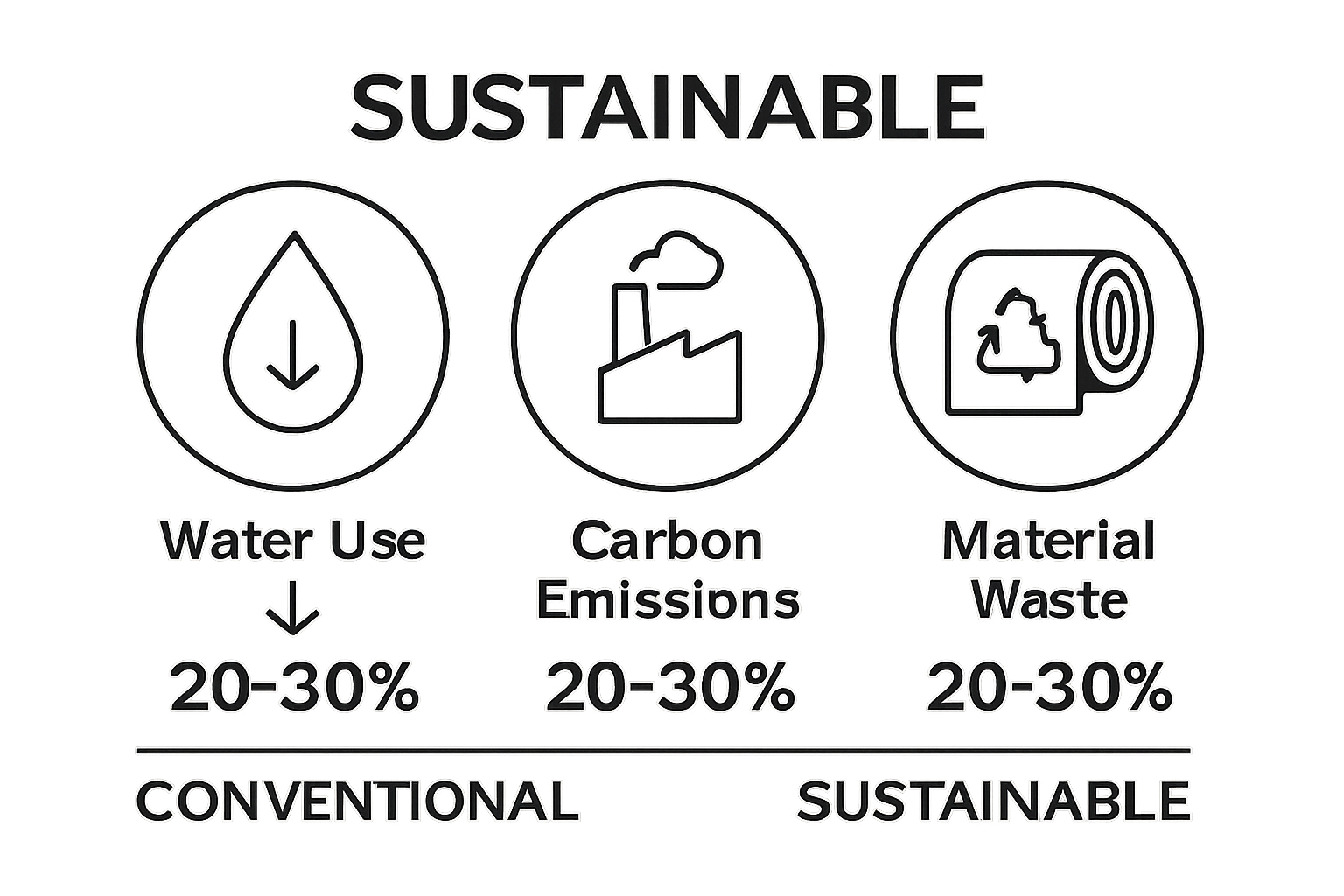
Sustainable textiles represent more than an environmental solution they signal a comprehensive approach to reimagining industrial practices. By prioritizing ethical manufacturing, resource efficiency, and innovative production techniques, the fashion industry can create significant positive change.
The transformative potential of sustainable textiles extends across multiple domains:
As designers and manufacturers increasingly recognize the role of sustainable textiles in fashion, they are not just reducing environmental harm but actively constructing a more responsible, forward thinking industrial ecosystem.
Below is a comparison table summarizing key differences between traditional and sustainable textile production, as discussed in the article.
| Aspect | Traditional Textile Production | Sustainable Textile Production |
|---|---|---|
| Raw Materials | Conventional cotton, synthetic fibers | Organic cotton, recycled polyester, hemp, bamboo |
| Water Usage | High (thousands of liters per shirt) | Low (closed-loop and water-saving methods) |
| Chemical Usage | Heavy use of pesticides and toxic dyes | Reduced, with bio-based alternatives |
| Worker Conditions | Often unsafe or exploitative | Emphasis on safe, ethical labor practices |
| Waste Generation | Massive textile waste in landfills | Minimal waste through recycling/upcycling |
| Environmental Impact | High ecological footprint | Lower carbon emissions and reduced pollution |
| Production Model | Linear (take-make-dispose) | Circular (reuse, recycle, longevity) |
Sustainable textile production represents a sophisticated blend of innovative materials, advanced manufacturing techniques, and environmental consciousness. Unlike traditional textile creation, these processes prioritize ecological responsibility while maintaining high-quality fabric standards.
The foundation of sustainable textiles begins with thoughtful raw material selection. Renewable and recycled resources play a critical role in creating environmentally responsible fabrics. These materials are carefully sourced to minimize ecological impact and reduce overall industrial waste.
Key sustainable raw materials include:
According to EcoaTEX research, innovative manufacturing processes can dramatically reduce environmental consequences. Cutting-edge technologies now enable textile production with significantly reduced water consumption and chemical usage.
Sustainable manufacturing processes focus on:
By integrating advanced materials and innovative production techniques, sustainable textile manufacturers are reimagining how fabrics can be created.
This table outlines the most common sustainable raw materials mentioned in the article, along with their primary environmental benefits.
| Sustainable Material | Main Source | Key Environmental Benefits |
|---|---|---|
| Organic Cotton | Pesticide-free cotton crops | Avoids toxic chemicals, reduces water usage |
| Recycled Polyester | Reused plastic bottles | Diverts plastic waste, lowers energy demand |
| Hemp | Hemp plants | Needs little water, no pesticides |
| Bamboo | Bamboo grass | Grows rapidly, low-impact processing |
| Tencel (Lyocell) | Sustainably harvested wood | Closed-loop process, biodegradable fibers |
This approach transforms textile production from an environmentally destructive process to a model of responsible, forward-thinking industrial design. The result is not just fabric, but a comprehensive solution that addresses environmental challenges while meeting the highest standards of quality and performance.
Sustainable fashion represents a profound paradigm shift that goes beyond aesthetic considerations, integrating complex ecological, economic, and social principles into textile and clothing production. This holistic approach demands reimagining traditional manufacturing models through innovative conceptual frameworks.
The circular economy model stands as a transformative concept for sustainable textile production. Traditional linear production models of take-make-dispose are being systematically replaced by regenerative approaches that prioritize continuous material reuse and minimal waste generation.
Key principles of circular fashion include:
According to Ellen MacArthur Foundation research, sustainable fashion requires comprehensive strategies that address environmental challenges holistically. These strategies extend beyond individual product improvements to reimagine entire industrial ecosystems.
Critical sustainability strategies encompass:
By integrating these conceptual approaches, the fashion industry can transition from a resource-depleting model to a regenerative system that supports environmental restoration and social responsibility. This transformation represents more than an environmental imperative it signals a fundamental reconstruction of how we conceptualize clothing production, consumption, and lifecycle management.
Are you frustrated by the difficulty of finding quality sustainable textiles that truly align with your values and your creative projects? This article shows just how important responsible materials are in today’s fashion world, highlighting the challenges of sourcing eco-friendly fabrics, combating waste, and meeting rising consumer expectations for ethical choices. At fabric-fabric.com, we understand these challenges and are committed to making sustainable textiles easy to find and integrate into your work, whether you are designing for apparel, interiors, or DIY projects.

Now is the time to make a real difference in your sourcing habits. Discover our extensive marketplace at fabric-fabric.com, where you can browse innovative and responsibly produced fabrics, each carefully categorized for your specific needs. Experience an online platform designed for both professionals and hobbyists, with options to shop in bulk or retail. Join a community that leads the way toward a more sustainable and ethical fabric industry. Visit fabric-fabric.com and take the next step in transforming your designs while supporting a better textile future.
Sustainable textiles are fabrics produced with a focus on minimizing environmental harm, promoting ethical manufacturing practices, and maximizing resource efficiency. They often use renewable or recycled materials, lower water and energy consumption, and ensure safe working conditions.
Sustainable textiles are crucial in the fashion industry because they address significant environmental challenges such as excessive water usage, carbon emissions, and chemical pollution. By adopting sustainable practices, the industry can reduce its ecological footprint and make fashion more responsible and ethical.
Sustainable textiles are made using environmentally-friendly raw materials like organic cotton, recycled polyester, and hemp, along with advanced manufacturing techniques that minimize water consumption, reduce chemical usage, and implement energy-efficient processes. This ensures a lower environmental impact compared to traditional textile production.
Sustainable textiles promote worker protection by ensuring safe and fair working conditions in manufacturing. This approach contributes to social equity and enhances the well-being of workers in the textile industry, fostering a more responsible and conscious fashion ecosystem.