

 Canadian Dollars

Step by Step Home Decor Fabric Guide for DIY Projects
Posted by BLG on 2025 Nov 22nd
Posted by BLG on 2025 Nov 22nd


Over 60 percent of american households invest in DIY home decor each year, hoping to create a unique and comfortable space. The right fabric can completely change the mood of a room, yet sorting through endless options often leaves people frustrated. If you want results that look professional and last through daily life, understanding fabric selection, prep, and finishing is crucial. This guide provides clear steps so you can confidently craft beautiful home accents that reflect your own style.
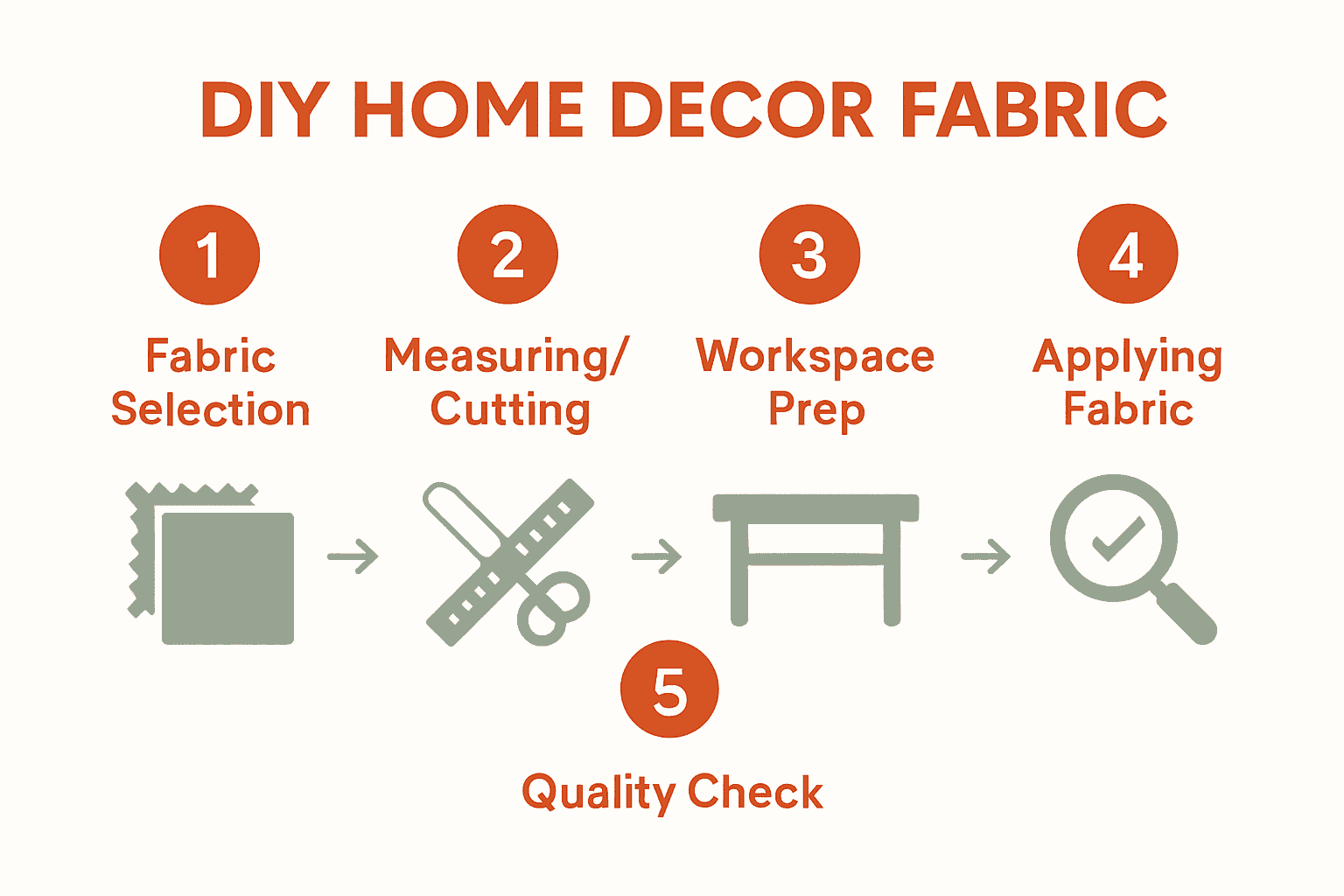
| Key Point | Explanation |
|---|---|
| 1. Choose fabric based on project needs | Assess specific uses like upholstery or curtains, evaluating durability and fiber content before selecting fabric. |
| 2. Measure fabric accurately | Use proper tools and techniques to ensure precision in measurements and cuts, avoiding mistakes in your project. |
| 3. Organize your workspace | Set up a clean, clutter-free area with appropriate lighting and tools to facilitate a smooth crafting process. |
| 4. Apply fabric with care | Position fabric methodically, smoothing out wrinkles and air bubbles, to achieve a professional finish on decor surfaces. |
| 5. Inspect for quality after finishing | Check seams and edges thoroughly in natural light, addressing any imperfections immediately to elevate your project quality. |
Choosing the right home decor fabric can transform your DIY project from ordinary to extraordinary. According to New Mexico State University, successful fabric selection requires thoughtful planning and understanding of different textile characteristics.
Start by assessing your specific project needs. Consider the fabric’s intended use like upholstery, curtains, or throw pillows. Key factors include durability, fiber content, and overall construction. As Australian Academy of Interior Design recommends, evaluate materials like cotton, silk, leather, and rayon based on their unique properties. Cotton offers breathability and easy maintenance, while silk provides luxurious texture but requires delicate handling.
Pro tip: Always purchase a small fabric sample and test it in your actual space before committing to large quantities. Check how the fabric responds to light, handles wrinkles, and complements your existing decor. By carefully examining texture, color, and performance, you will select a fabric that not only looks stunning but also stands up to daily use.
Accurate fabric measurement and cutting are fundamental skills that can make or break your DIY home decor project. Sewing.org highlights the critical importance of using the right measuring tools to ensure precision in textile work.
Begin by selecting the appropriate measuring instruments like a quilting ruler, retractable tape measure, and fabric scissors. As recommended by Sewing Trip, understanding your fabric’s grain and properties is crucial before making any cuts. Lay your fabric on a flat surface, ensuring it is smooth and free of wrinkles. Measure twice and cut once to avoid costly mistakes.
Pro tip: Always add an extra half inch to inch of fabric for seam allowances and potential adjustments. This small buffer provides flexibility during your project and prevents you from running short on material. Check your fabric against a reliable measuring tool and use sharp fabric scissors to create clean, straight cuts that will set the foundation for a professional looking final product.
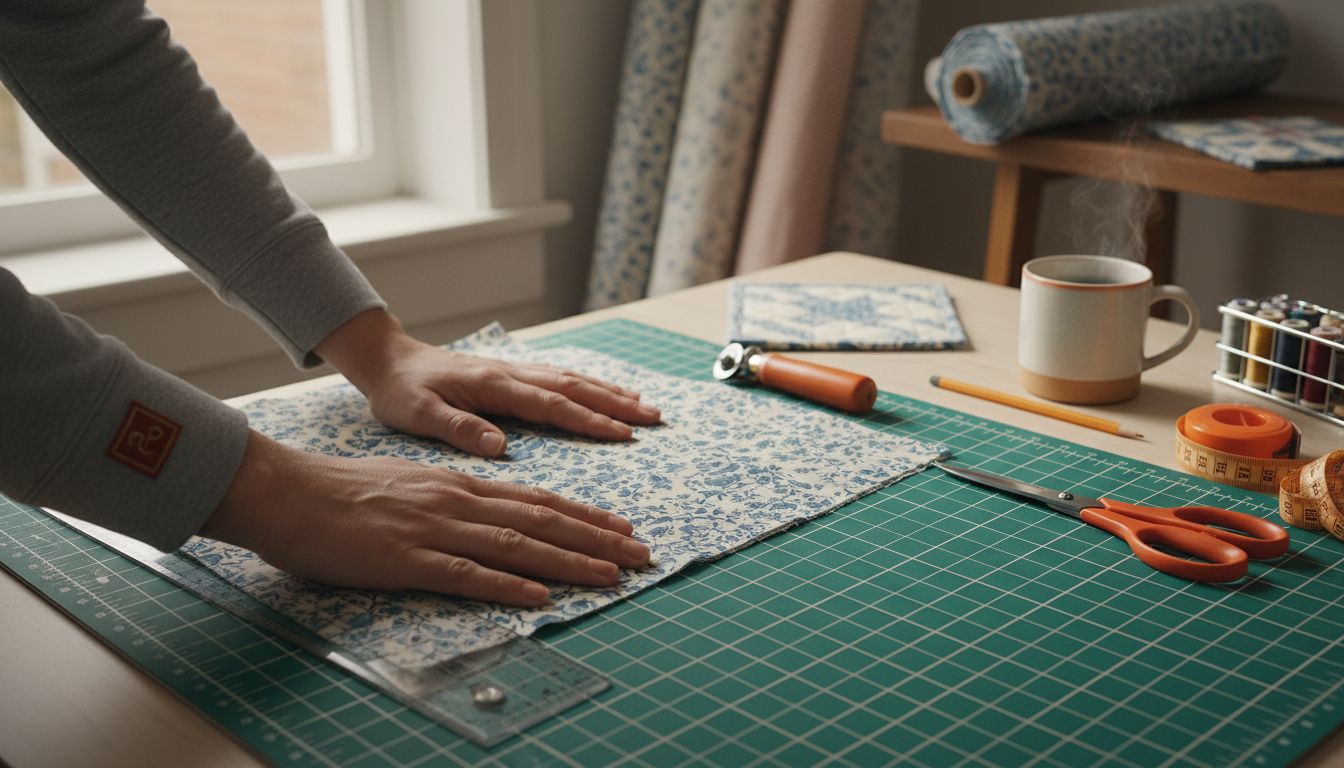
Preparing a well organized workspace is crucial for successful home decor fabric projects. Sewing.org emphasizes that an efficient work environment directly impacts the quality and ease of your crafting process.
Start by selecting a clean flat surface with ample lighting and space to spread out your materials. As recommended by Sewing Trip, ensure your workspace is free from clutter and has a sturdy cutting surface like a large cutting mat or smooth table. Gather essential tools beforehand: sharp fabric scissors, rotary cutter, cutting mat, quilting ruler, measuring tape, pins, and an iron for pressing fabric.
Pro tip: Create a dedicated workspace that minimizes distractions and allows you to focus on precision. Keep your tools organized in a nearby container or tray, and have a small trash bin for fabric scraps to maintain a tidy work environment. By setting up your space thoughtfully, you will streamline your project and set yourself up for crafting success.
Applying fabric to decor surfaces requires precision and careful technique to achieve a professional finish. Research from ArXiv highlights the importance of understanding sequential pulling policies to effectively smooth and position fabric on various surfaces.
Begin by preparing your surface and laying out the fabric smoothly. When covering upholstery or furniture, start from the center and work outwards, eliminating wrinkles and air bubbles as you progress. ArXiv suggests using methodical approaches to manipulate fabric dynamics, which means taking your time to ensure each section is carefully positioned and secured.
Pro tip: Use a flat tool like a plastic smoothing card or credit card to help press out air bubbles and create crisp edges. Work slowly and systematically, pulling the fabric taut but not so tight that it distorts the material or creates unwanted tension. Your patience during this stage will determine the final aesthetic and durability of your home decor project.
Ensuring the highest quality finish is the final critical step in your home decor fabric project. ArXiv research emphasizes the importance of precise pattern making and meticulous fabric manipulation to achieve professional results.
Carefully examine every seam, edge, and surface for consistency and accuracy. Look for potential issues like uneven fabric tension, loose threads, or slight misalignments that could compromise the overall appearance. ArXiv suggests using systematic heuristic techniques to evaluate fabric processing accuracy, which means taking a methodical approach to your quality check.
Pro tip: Natural light provides the best conditions for detecting subtle imperfections. Rotate your project under good lighting, running your hands gently over the surface to feel for any irregularities that might not be immediately visible. If you discover minor issues, address them immediately rather than hoping they will somehow disappear. A few extra minutes of careful refinement can transform a good project into an exceptional one.
Transforming your home with fabric requires more than just creativity it demands selecting the right materials and tools to bring your vision to life. The article highlights critical challenges such as choosing durable fabrics that complement your style, measuring and cutting accurately, and applying fabric smoothly to decor surfaces for that flawless finish. These steps can feel overwhelming without the right support or resources.
At fabric-fabric.com, we understand the frustration of searching for quality home decor textiles that deliver both beauty and function. Our extensive collection includes everything from luxurious velvet to breathable cotton that meets your unique project needs. Imagine having easy access to detailed fabric descriptions and expert recommendations all in one place to help you make confident choices and avoid costly mistakes.

Ready to elevate your DIY home decor with fabrics designed to inspire and perform? Visit fabric-fabric.com now and explore our curated selections. Start your project with confidence today and enjoy seasonal discounts and free shipping offers crafted to make your creative journey smooth and affordable.
Choosing the right fabric involves assessing your project’s needs, such as intended use and required durability. Evaluate materials based on their properties, like breathability and texture, by purchasing small samples and testing them in your space.
You will need a retractable tape measure, a quilting ruler, and sharp fabric scissors for accurate measuring and cutting. Make sure to measure twice and always add seam allowances to avoid running short on fabric.
Create a dedicated workspace with ample lighting and a clean, flat surface. Organize essential tools, such as scissors, measuring tape, and an iron, to streamline your crafting process and minimize distractions.
Start from the center of the surface and work outwards to avoid wrinkles and air bubbles. Use a flat tool to press out bubbles and ensure fabric is taut without distorting, making adjustments as needed for a professional finish.
Examine every seam and edge for consistency, looking for any loose threads or misalignments. Use natural light to identify imperfections and address them promptly for a refined and polished final product.
It’s recommended to add an extra half inch to a full inch for seam allowances when cutting your fabric. This extra material provides flexibility during sewing and adjustments, reducing the risk of running short on fabric.