

 US Dollar

Shiny Cotton Fabric Name: What Designers Need to Know
Posted by BLG on 2026 Jun 3rd
Posted by BLG on 2026 Jun 3rd

TL;DR:
- Cotton sateen is the industry-standard shiny cotton fabric, characterized by a satin weave structure that creates a reflective surface using 100% cotton fibers. Its lasting luster is achieved through a satin weave and optional finishing processes like mercerization, which chemically treat the fibers to enhance shine and durability. Proper sourcing requires specifying the weave, fiber quality, and finishing method to ensure the fabric’s appearance and longevity meet expectations.
Cotton sateen is the primary shiny cotton fabric name recognized across the textile industry, defined by its satin weave structure that produces a smooth, reflective surface using 100% cotton fiber. The shine in cotton sateen comes from a specific 4-over-1-under float weave, not from synthetic coatings or chemical tricks. Finishing processes like mercerization can amplify that luster further, making the fabric a top choice for luxury bedding, formal shirts, and high-end drapery. If you are sourcing a shiny cotton fabric for apparel or home decor, understanding what creates the shine determines whether you get lasting elegance or a finish that fades after a few washes.
Cotton sateen is the industry-standard term for shiny cotton fabric, and its luster is entirely structural. The satin weave structure runs four warp yarns over a single weft yarn before passing under, creating long surface floats that lie flat and reflect light uniformly. Plain weave cotton, by contrast, interlaces yarns in a simple over-under pattern that scatters light and produces a matte finish. The difference in visual effect is immediate and dramatic.

Those long floats are what give cotton sateen its signature softness and sheen. Because more yarn surface faces outward, the fabric catches and reflects light the way a polished surface does. Sateen fabrics are widely used for luxury bedding and formal shirts precisely because of this natural shine. The hand feel is noticeably smoother than standard cotton, which is why sateen sheets command a premium price point.
The trade-off is durability. Cotton sateen’s long yarn floats make the fabric more prone to snagging and abrasion than plain weave cotton. This means sateen requires higher yarn quality and careful end-use consideration. A sateen shirt worn daily will show wear faster than a poplin shirt, so the fabric rewards thoughtful application.
Key characteristics of cotton sateen at a glance:
Pro Tip: Choose a high-thread-count sateen (400 threads per inch or above) for better durability and a more consistent shine. Lower-density sateen looks attractive on the bolt but pills and snags faster in real use.
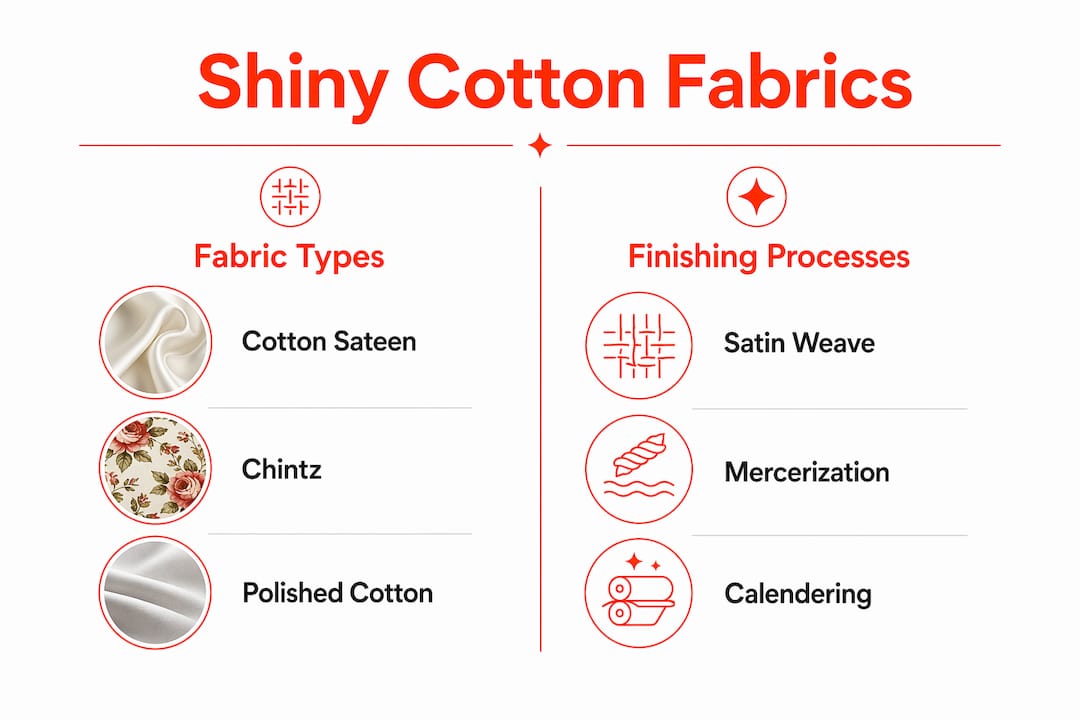
Cotton’s natural appearance is matte. The shine is introduced either through weave structure or finishing techniques applied after weaving. Two finishing methods dominate the industry: mercerization and calendering. They produce very different results, and confusing them leads to sourcing mistakes.
Here is how each process works and what it delivers:
Mercerization. This chemical finishing process treats cotton yarn or fabric with a sodium hydroxide solution under tension. The fiber swells, becomes rounder in cross-section, and reflects light more uniformly. Mercerization enhances surface luster and dye affinity, creating a permanent shine that survives repeated washing. High-end cotton production relies on mercerization to improve both light reflection and fabric strength. The result is a permanent, deep luster that reads as luxurious rather than plastic.
Calendering. This mechanical process passes fabric between heavy heated rollers under pressure, flattening the surface and creating a high-gloss finish. Calendering creates a temporary shine that fades after several washes. It is cheaper and faster than mercerization, which is why it appears on budget fabrics that look impressive in the store but lose their appeal quickly.
Fiber quality. Extra-long staple cottons like Egyptian and Pima carry a permanent natural luster from fiber length and fineness alone. This inherent sheen adds sophistication without any chemical treatment.
Synthetic coatings. Some fabrics receive polymer coatings that mimic the look of mercerized cotton. These are not cotton luster at all. The shine is surface-level and the fabric loses breathability and natural drape.
The practical implication is straightforward. Mercerized cotton and high-quality sateen woven from Egyptian or Pima fiber deliver shine that lasts. Calendered cotton and coated fabrics deliver shine that disappears. Experts distinguish natural luster from mechanical shine, with natural luster preferred for long-lasting luxurious textiles.
Pro Tip: Before sourcing any shiny cotton, ask your supplier for the fiber content report and the finishing method used. “Shiny cotton” is not a specification. “Mercerized Egyptian cotton sateen, 400 thread count” is.
Several cotton fabric types produce a shiny or glossy surface, and designers frequently confuse them. Each has a distinct construction, finish, and performance profile.
| Fabric | Shine source | Durability | Best use |
|---|---|---|---|
| Cotton sateen | Satin weave structure | High (with quality yarn) | Bedding, shirts, dresses |
| Chintz | Resin or wax glaze coating | Low (washes out) | Drapery, decorative cushions |
| Polished cotton | Calendering (mechanical) | Medium (fades over time) | Apparel linings, light drapery |
| Mercerized cotton | Chemical fiber treatment | Permanent | Thread, shirting, fine apparel |
| Cotton-polyester blend | Polyester fiber content | High | Everyday apparel, workwear |
Chintz is a glazed cotton fabric, traditionally printed with floral patterns and finished with a resin or wax coating that gives it a crisp, glossy surface. The glaze is not permanent. Chintz loses its sheen after washing, which is why it works better in home decor applications like drapery than in garments that require frequent laundering.
Polished cotton sits between chintz and sateen. It receives a calendering treatment that produces a moderate shine, softer than chintz but less durable than mercerized sateen. For cotton drapery projects where the fabric will not be washed often, polished cotton is a practical and affordable option.
Rayon and Tencel are frequent look-alikes that confuse buyers. Both fibers produce a natural drape and sheen that resembles cotton sateen, but they behave differently in construction and care. Rayon wrinkles easily and weakens when wet. Tencel is more stable but still not cotton. Fiber composition testing such as burn tests can help verify fabric content when supplier documentation is unclear. Cotton burns cleanly and smells like burning paper. Rayon burns faster and leaves minimal ash. Tencel burns slowly and produces a soft ash.
Misidentification of synthetic-coated cotton as genuine shiny cotton is common. Buyers should insist on fiber content reports and conduct burn tests when sourcing from unfamiliar suppliers.
Sourcing shiny cotton fabric by appearance alone is the single most common mistake designers make. Visual appearance can be misleading without clear supplier fabric specification, especially when ordering online or from wholesale catalogs where photography flattens the difference between a mercerized sateen and a calendered blend.
Follow these sourcing practices to get the fabric you actually want:
For apparel projects, cotton sateen in the 300 to 600 thread count range delivers the best balance of shine, drape, and durability. For home decor, the shiny stretch fabric options available from specialty retailers add flexibility for upholstered pieces and decorative accents where structure matters as much as surface appearance.
The mercerized cotton category is worth understanding in depth before you source, because it crosses over between thread, shirting, and fine apparel fabrics in ways that affect your project outcome significantly.
Cotton sateen is the correct industry term for shiny cotton fabric, and its luster comes from weave structure and fiber quality rather than surface coatings.
| Point | Details |
|---|---|
| Cotton sateen is the standard name | The satin weave’s 4-over-1-under float creates the reflective surface that defines shiny cotton. |
| Mercerization creates permanent shine | Chemical treatment on Egyptian or Pima cotton produces lasting luster that survives washing. |
| Calendering and chintz glaze fade | Mechanical and coating-based shine diminishes after several washes, limiting durability. |
| Burn tests verify fiber content | When supplier specs are unclear, a burn test distinguishes cotton from rayon, Tencel, or synthetic blends. |
| Source by specification, not appearance | Request “mercerized cotton sateen” from suppliers rather than relying on photos or generic descriptions. |
I have seen designers spend weeks searching for the “perfect shiny cotton” and end up with calendered polished cotton that looks flat after two washes. The frustration is real, and it is entirely preventable. The problem is not the fabric market. The problem is that most people search by visual result rather than by construction.
When I work with a fabric that has genuine luster, the difference is tactile before it is visual. Mercerized Egyptian cotton sateen has a weight and smoothness that synthetic-coated fabric simply cannot replicate. You feel it before you see it under good light. That tactile quality is also what tells you the shine will last through a season of use.
The market confusion around shiny cotton is partly a language problem. Suppliers use “shiny,” “lustrous,” “polished,” and “glazed” interchangeably in product listings, which means none of those words actually tells you what you are buying. Insisting on the technical name, the fiber origin, and the finishing method is not pedantic. It is the only way to get consistent results across multiple orders.
My honest advice: treat fabric sourcing the way a chef treats ingredient sourcing. A chef does not order “good tomatoes.” They order San Marzano tomatoes, grade A, from a specific region. The same precision applied to cotton sateen will save you money, time, and the disappointment of a beautiful project built on a fabric that does not hold up.
— kev
Fabric-fabric carries a curated selection of sateen, mercerized cotton, and glossy cotton blend fabrics suited for both apparel and home decor projects. Whether you are building a formal shirt, a set of luxury drapes, or a statement cushion cover, the product listings include clear fiber content details and finish descriptions so you know exactly what you are ordering. Browse the home decor fabric collection for sateen-weight options by the yard, with free shipping thresholds and seasonal discounts that make sampling affordable. The site also stocks coordinating textiles including lace, velvet, and satin for projects that mix textures. Visit Fabric-fabric to request samples and find the right shiny cotton for your next build.
Cotton sateen is the standard industry name for shiny cotton fabric. Its luster comes from a satin weave structure that runs four warp yarns over one weft yarn, creating long surface floats that reflect light.
No. Mercerized cotton refers to a chemical finishing process that permanently increases luster and dye affinity in cotton fiber. Sateen refers to a weave structure. A fabric can be both mercerized and sateen-woven, which produces the highest level of shine available in 100% cotton.
Fabrics finished with calendering or a resin glaze, such as chintz and polished cotton, lose their shine because the mechanical or coating-based finish breaks down with water and heat. Mercerized sateen retains its shine because the luster is built into the fiber structure itself.
A burn test is the most reliable method. Cotton burns cleanly with a paper-like smell and leaves a soft gray ash. Synthetic fibers melt, bead, or produce a chemical smell. Requesting a fiber content certificate from your supplier before ordering is the most reliable approach for bulk sourcing.
Cotton sateen woven from Egyptian or Pima cotton is the best choice for home decor projects that require lasting luster. For decorative applications with less frequent washing, chintz offers an affordable glossy option, though its glaze will fade over time.