

 Canadian Dollars

Role of Fabric Grain: Why It Shapes Fit and Finish
Posted by BLG on 2025 Dec 30th
Posted by BLG on 2025 Dec 30th

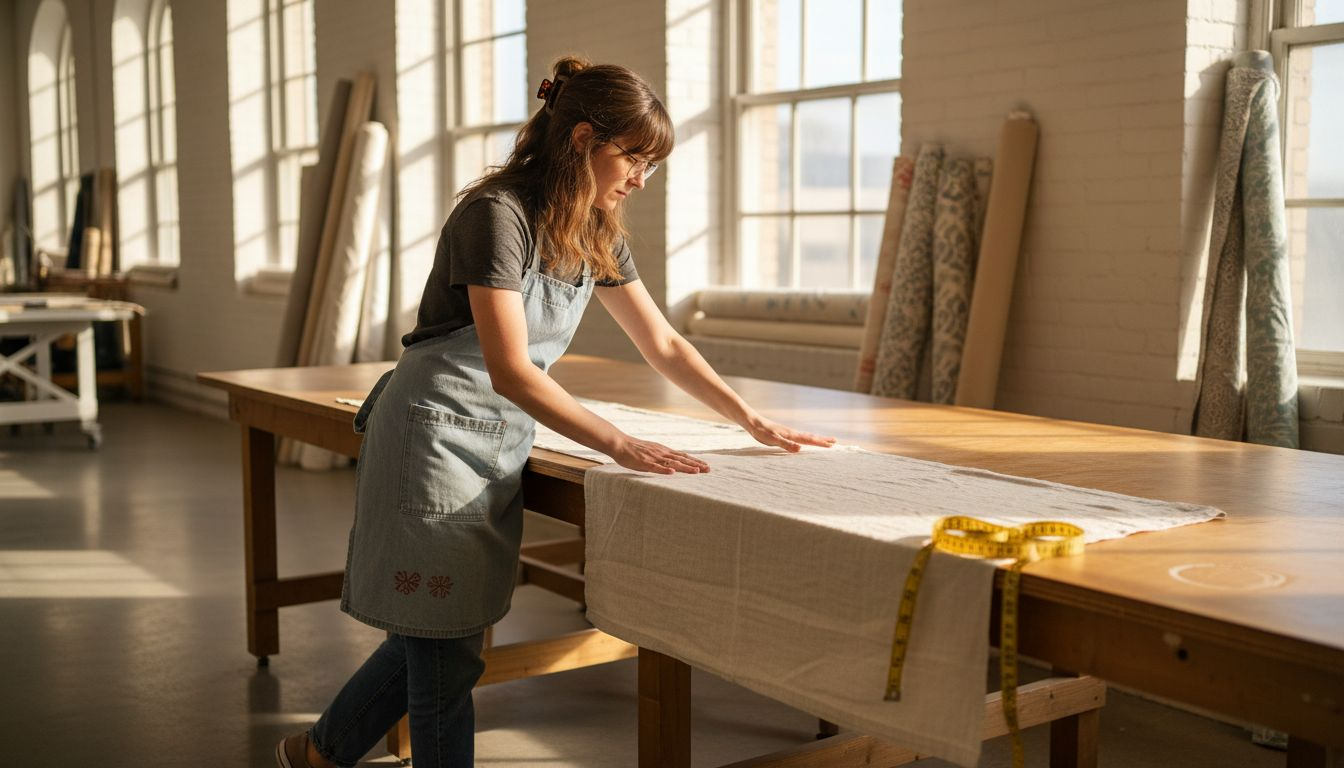
Most american sewists have experienced a garment that hangs awkwardly or a quilt block that stretches out of shape, often because over 80 percent of sewing issues trace back to fabric grain mistakes. A solid grasp of fabric grain unlocks consistent fit, crisp seams, and lasting project quality. Whether crafting tailored jackets or intricate quilts, learning how grain alignment works brings professional results and confidence to every cut of fabric.
| Point | Details |
|---|---|
| Understanding Fabric Grain | Fabric grain is essential for determining garment behavior, influencing stretch, drape, and fit. Correct grain alignment is crucial for professional results. |
| Primary Grain Directions | The three main grain types are straight, cross, and bias, each providing unique characteristics that affect garment construction. Understanding these allows for better design choices. |
| Impact on Sewing Projects | Proper grain alignment enhances garment performance, comfort, and appearance. Mistakes in alignment can lead to better garments that may distort or not wear well. |
| Common Mistakes to Avoid | Common fabric grain mistakes include cutting off-grain and ignoring production defects. Prevention involves careful inspection and precise pattern placement. |
Fabric grain represents the fundamental directional alignment of threads in woven textiles, determining how the material will behave during construction and wear. Understanding fabric grain) involves recognizing the precise orientation of warp (lengthwise) and weft (crosswise) threads that create the fabric’s structural foundation.
In practical terms, fabric grain influences three critical aspects of textile performance: stretch, drape, and overall garment fit. The three primary grain directions - straight grain (parallel to warp threads), cross grain (parallel to weft threads), and bias grain (45-degree diagonal alignment) - each provide unique characteristics that sewists and designers must carefully consider. Straight grain typically offers minimal stretch, cross grain provides moderate elasticity, and bias grain delivers the most significant flexibility and fluid movement.
Professional textile designers and home sewists alike recognize that proper grain alignment is crucial for achieving professional-looking results. Textile grain fundamentally determines how pattern pieces will interact with fabric’s inherent mechanical properties, affecting everything from a garment’s silhouette to its comfort and durability. Cutting fabric against its natural grain can result in distorted seams, uneven draping, and premature wear.
Pro tip: Always use a marked selvage edge and fabric grain line to ensure precise alignment when cutting pattern pieces for the most professional textile construction results.
In textile design and garment construction, understanding the three primary fabric grain types is crucial for achieving optimal results. Fabric grain variations) provide distinct characteristics that significantly impact how a piece of clothing will ultimately look and feel. These fundamental grain orientations - straight, cross, and bias - each offer unique properties that sewists and designers must strategically leverage.
The straight grain, aligned parallel to the warp threads, represents the most stable fabric direction with minimal stretch. Running along the fabric’s length, it provides structural integrity and is typically used for garment body panels where maintaining shape is critical. In contrast, the cross grain, running perpendicular to the selvedge and parallel to weft threads, offers slightly more elasticity and is often utilized in areas requiring moderate movement or gentle contouring.
The bias grain, positioned diagonally at a precise 45-degree angle to both warp and weft threads, delivers the most dynamic textile behavior. Textile grain characteristics make the bias direction exceptionally fluid, allowing maximum stretch and exceptional drape. This unique orientation enables fabric to curve and flow around body contours, making it ideal for creating elegant, form-fitting designs like circular skirts, fluid sleeves, and intricate necklines that require exceptional movement and adaptability.
Pro tip: When working with bias-cut patterns, always use extra fabric to account for potential stretching and allow for precise fitting adjustments during the construction process.
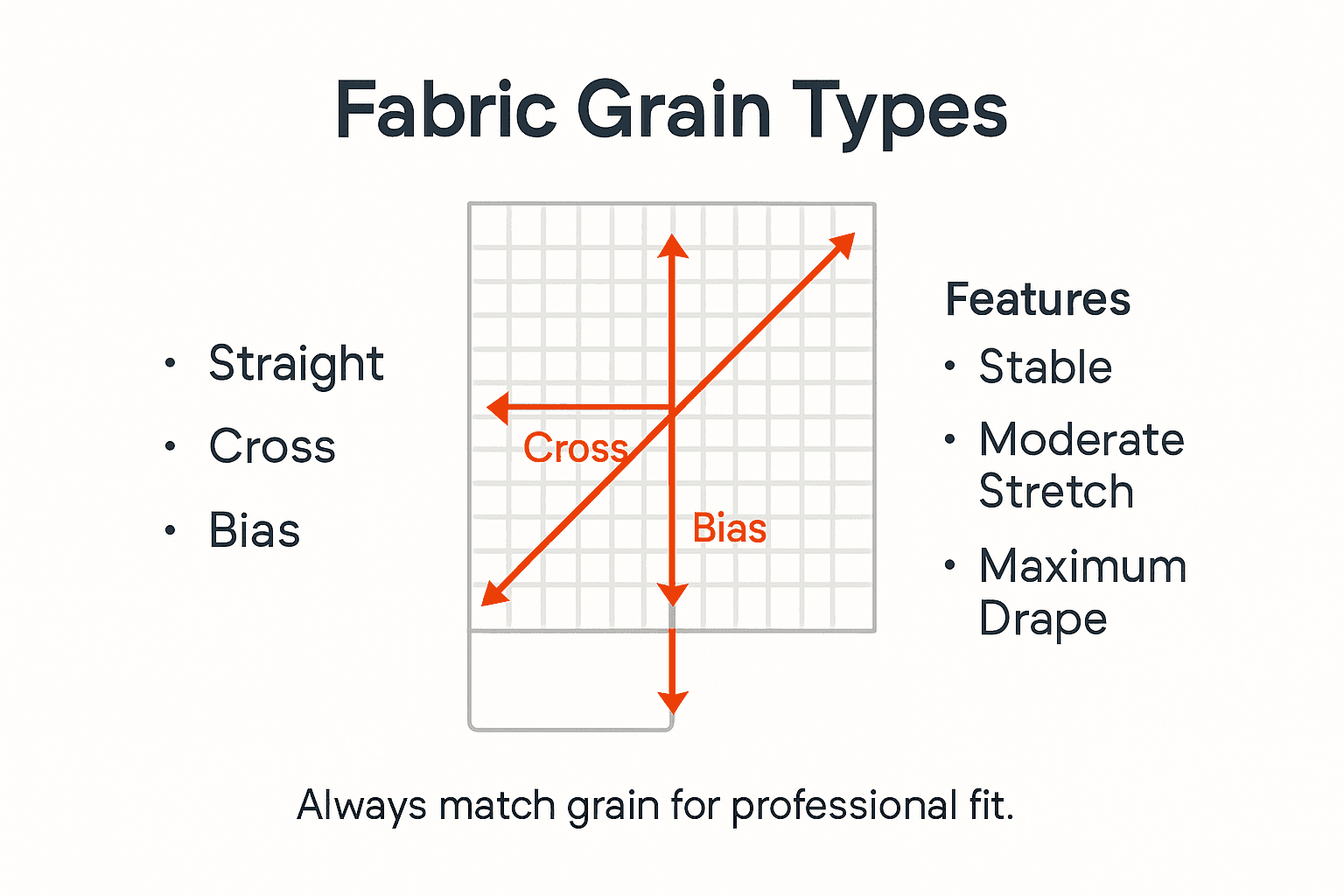
Here’s a comparison of the three primary fabric grain directions and their effects on garment construction:
| Grain Direction | Stretch & Drape | Best Used For | Issues if Misaligned |
|---|---|---|---|
| Straight Grain | Minimal stretch, firm | Structured panels, stable garments | Garments lose shape, seams twist |
| Cross Grain | Moderate elasticity | Sleeves, loose tops, moderate movement | Fabric may sag, fit inconsistencies |
| Bias Grain | Maximum stretch, fluid | Curved seams, draping, fitted garments | Excessive distortion, uneven hems |
Understanding fabric grain dynamics) is fundamental to creating professional-quality sewing projects that maintain their shape, fit, and aesthetic appeal. Every fabric’s grain orientation dramatically influences how pattern pieces will behave during construction, ultimately determining the final garment’s performance, comfort, and visual elegance.
When cutting pattern pieces, sewists must pay meticulous attention to grain alignment. Cutting along the straight grain provides maximum stability and minimal stretch, making it ideal for structured garment sections like bodices, jackets, and tailored pants. Cross grain offers slightly more flexibility, allowing gentle contouring in areas requiring moderate movement, such as shirt sleeves or loose-fitting tops. The bias grain, positioned at a 45-degree angle, introduces the most dynamic fabric behavior, enabling exceptional drape and stretch that can transform simple designs into fluid, form-embracing silhouettes.
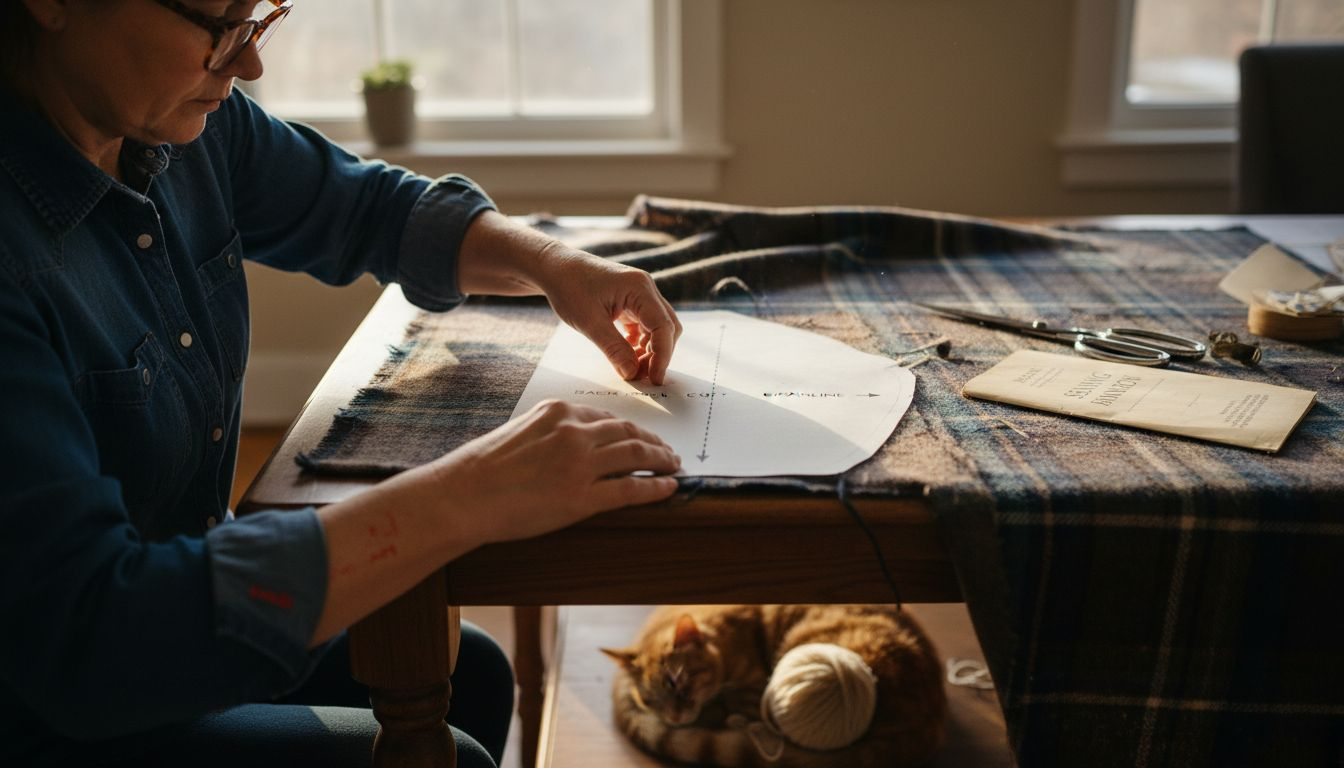
Fabric grain’s critical role extends beyond initial construction, affecting how garments ultimately wear and maintain their shape. Incorrect grain alignment can lead to disastrous consequences like twisting seams, uneven hemlines, and distorted fit. Professional designers and home sewists alike must carefully consider grain orientation during pattern layout, understanding that each fabric type—whether lightweight chiffon or sturdy denim—will respond differently to cutting and sewing techniques.
Pro tip: Always mark your pattern’s grain line and align it precisely with the fabric’s selvage edge to ensure optimal garment performance and longevity.
Precision in fabric grain alignment is the cornerstone of creating professional-quality garments that drape beautifully and maintain their intended shape. Every seasoned sewist understands that the way fabric is cut and positioned directly influences the final product’s appearance, comfort, and longevity.
The fundamental technique begins with carefully folding fabric lengthwise, ensuring the selvage edges align perfectly. Pattern pieces must be strategically positioned so their grain lines run parallel to the fabric’s straight grain. This meticulous placement prevents unwanted fabric distortion, allowing garments to hang naturally and move with the body’s contours. Professional sewists use specialized tools like grain alignment rulers and marking tools to guarantee precise positioning, understanding that even slight deviations can dramatically impact the finished piece.
Fabric cutting techniques) require careful consideration of fabric width, pattern piece orientation, and the specific design requirements. Different fabrics—from delicate silk to sturdy denim—demand unique approaches to grain alignment. Lightweight fabrics might require extra stabilization during cutting, while stretchy materials need additional attention to maintain their inherent elasticity. Cross grain and bias cuts become strategic choices, used intentionally to create specific design effects or work within fabric width constraints.
Pro tip: Invest in a large cutting mat with grid lines and use pattern weights instead of pins to minimize fabric distortion when initially positioning your pattern pieces.
Cutting fabric off-grain) remains the most pervasive and potentially destructive mistake in textile crafting. This seemingly minor error can transform an otherwise promising project into a misshapen, poorly fitting garment that fails to meet even basic design expectations.
One critical mistake involves neglecting the selvage edge during pattern placement. Sewists often rush through cutting, failing to align pattern pieces precisely with the fabric’s inherent grain line. This carelessness leads to garments that twist, sag, and distort during wear. Stretchy materials are particularly unforgiving, with bias-cut sections potentially changing length dramatically after initial construction, creating unexpected fit challenges that can render an entire project unwearable.
Fabric manufacturing defects also contribute significantly to grain-related problems. Issues like bow and skew—where fabric weave becomes slightly distorted during production—can create subtle but problematic misalignments. These manufacturing inconsistencies require careful inspection before cutting, as they can cause seam puckering, uneven draping, and structural weaknesses that compromise the entire garment’s integrity. Professional sewists develop a keen eye for detecting these subtle grain deviations, using techniques like stretch testing and visual alignment checks.
Pro tip: Always steam or press fabric before cutting to relax fibers and reveal true grain line, helping you identify and correct potential alignment issues before they become critical design problems.
Below is a summary of common fabric grain mistakes and how to prevent them:
| Mistake Type | Description | Prevention Tip |
|---|---|---|
| Off-grain Cutting | Cuts not aligned with grain lines | Always match grain line to selvage |
| Ignoring Manufacturing Defects | Overlooking bow/skew in fabric | Inspect and correct before cutting |
| Rushing Pattern Placement | Careless alignment during layout | Take extra time on pattern alignment |
| Inadequate Fabric Preparation | Cutting unpressed, distorted fabric | Steam or press before cutting |
Understanding fabric grain is essential to avoid common pitfalls such as distorted seams and uneven draping. If you want to ensure your sewing projects have the right stretch and drape every time, choosing high-quality fabric aligned with your design needs is key. Fabric grain direction—from straight grain to bias—shapes how your garment fits and moves.
Take control of your next project by shopping the carefully curated selection at Fabric-Fabric. Whether you need stable fabrics for structured garments or bias-friendly textiles for fluid silhouettes, our range offers detailed descriptions to help you pick the ideal material. Don’t risk wasting fabric or time. Visit Fabric-Fabric today and experience how proper grain alignment paired with premium textiles can transform your creations. Act now to explore seasonal discounts and free shipping offers while they last.
Fabric grain refers to the direction of the warp and weft threads in woven textiles. It is crucial because it affects how the fabric behaves during construction and wear, influencing aspects like stretch, drape, and overall garment fit.
The three primary types of fabric grain are straight grain, cross grain, and bias grain. Straight grain offers minimal stretch and is stable, cross grain provides moderate elasticity, and bias grain allows for maximum stretch and fluid movement, each playing a distinct role in garment design and fit.
To ensure proper fabric grain alignment, fold the fabric lengthwise with selvage edges aligned, and position pattern pieces so their grain lines run parallel to the fabric’s straight grain. Use tools like grain alignment rulers for precision.
Common mistakes include cutting fabric off-grain, ignoring manufacturing defects like bow and skew, rushing pattern placement, and not adequately preparing the fabric. Avoid these pitfalls by taking your time and inspecting fabric before cutting.