

 Canadian Dollars

Role of Fabric Drape – How It Shapes Quilting Projects
Posted by BLG on 2026 Jan 7th
Posted by BLG on 2026 Jan 7th

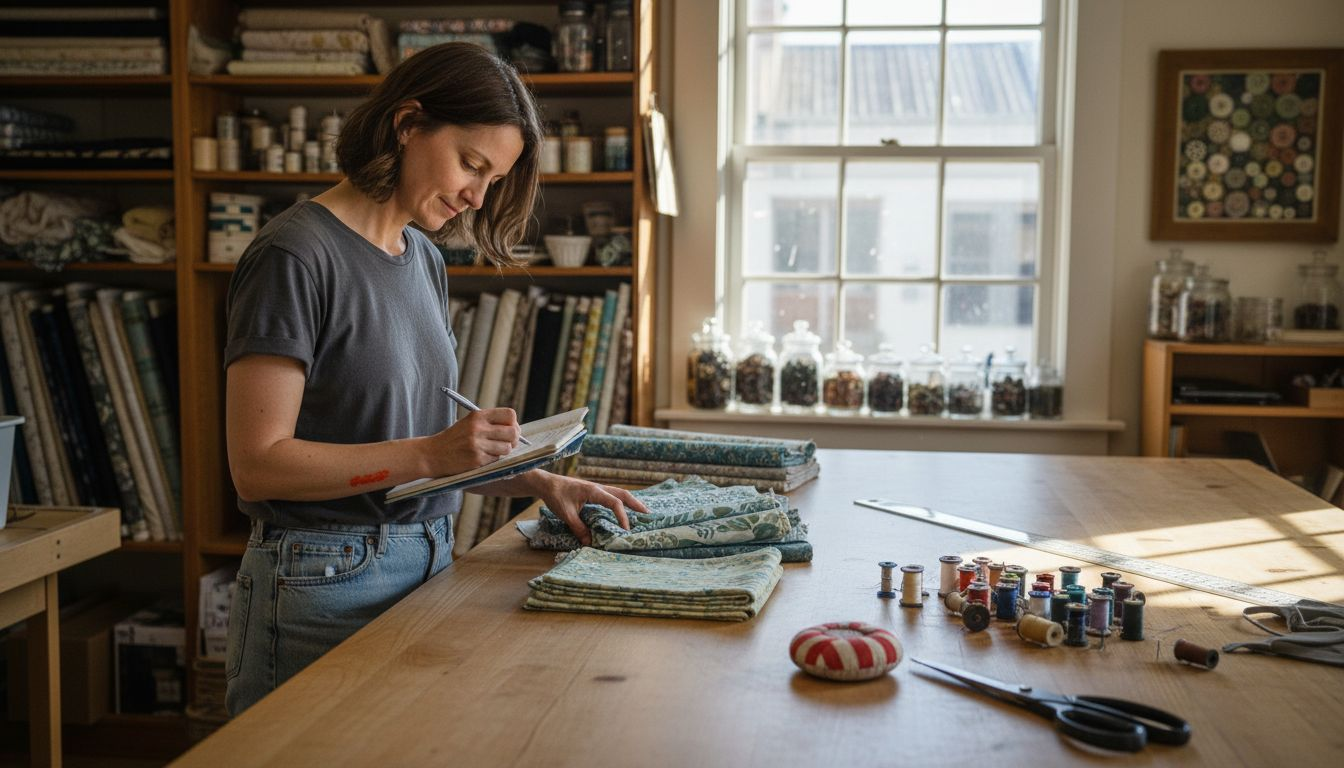
Most American quilting enthusiasts are surprised to learn that fabric drape depends on much more than just weight. Over 60 percent of crafting mistakes come from misunderstandings about textile behavior. For anyone passionate about the art of quilting or home decor, understanding drape is the key to achieving projects that look polished and hang beautifully. This guide untangles common misconceptions and reveals the fabric secrets every creative American should know.
| Point | Details |
|---|---|
| Understanding Fabric Drape is Essential | Fabric drape affects both the aesthetic and functionality of quilting projects, necessitating careful material selection. |
| Drape Types Influence Project Outcomes | Different drape classifications—stiff, moderate, and fluid—impact how a quilt appears and behaves. |
| Key Factors in Evaluating Drape | Factors like bending rigidity, shear stiffness, and fiber composition play crucial roles in how fabrics drape. |
| Avoid Common Misjudgments | Relying solely on visual or tactile assessments can lead to poor fabric choices; comprehensive testing methods are vital. |
Fabric drape represents a critical yet often misunderstood concept in textile design, specifically describing how a fabric naturally falls or hangs when suspended. Researchers have systematically explored fabric drape to understand its complex mechanics beyond simple weight considerations. The fundamental definition encompasses a fabric’s ability to deform gracefully under its own weight, revealing intricate interactions between material properties and gravitational forces.
Common misconceptions about fabric drape frequently emerge from oversimplified assumptions. Many quilters mistakenly believe drape is determined solely by fabric weight, when in reality, multiple factors contribute to how a textile behaves. Fabric structure, fiber composition, weave density, and stiffness all play significant roles in determining how a material will fold, flow, and conform to different shapes. A lightweight silk might demonstrate more dramatic drape than a heavier cotton, challenging traditional assumptions about fabric behavior.
Understanding fabric drape becomes particularly crucial in quilting, where the way fabric moves and settles directly impacts the final project’s aesthetic and functional qualities. Experienced quilters recognize that drape influences everything from how blocks align to how a finished quilt will hang and move. The nuanced interplay between fabric properties means that selecting materials requires careful consideration beyond basic visual appeal or color coordination.
Pro tip: Before starting a quilting project, always test fabric drape by suspending a small sample and observing how it naturally falls to predict its potential behavior in your design.
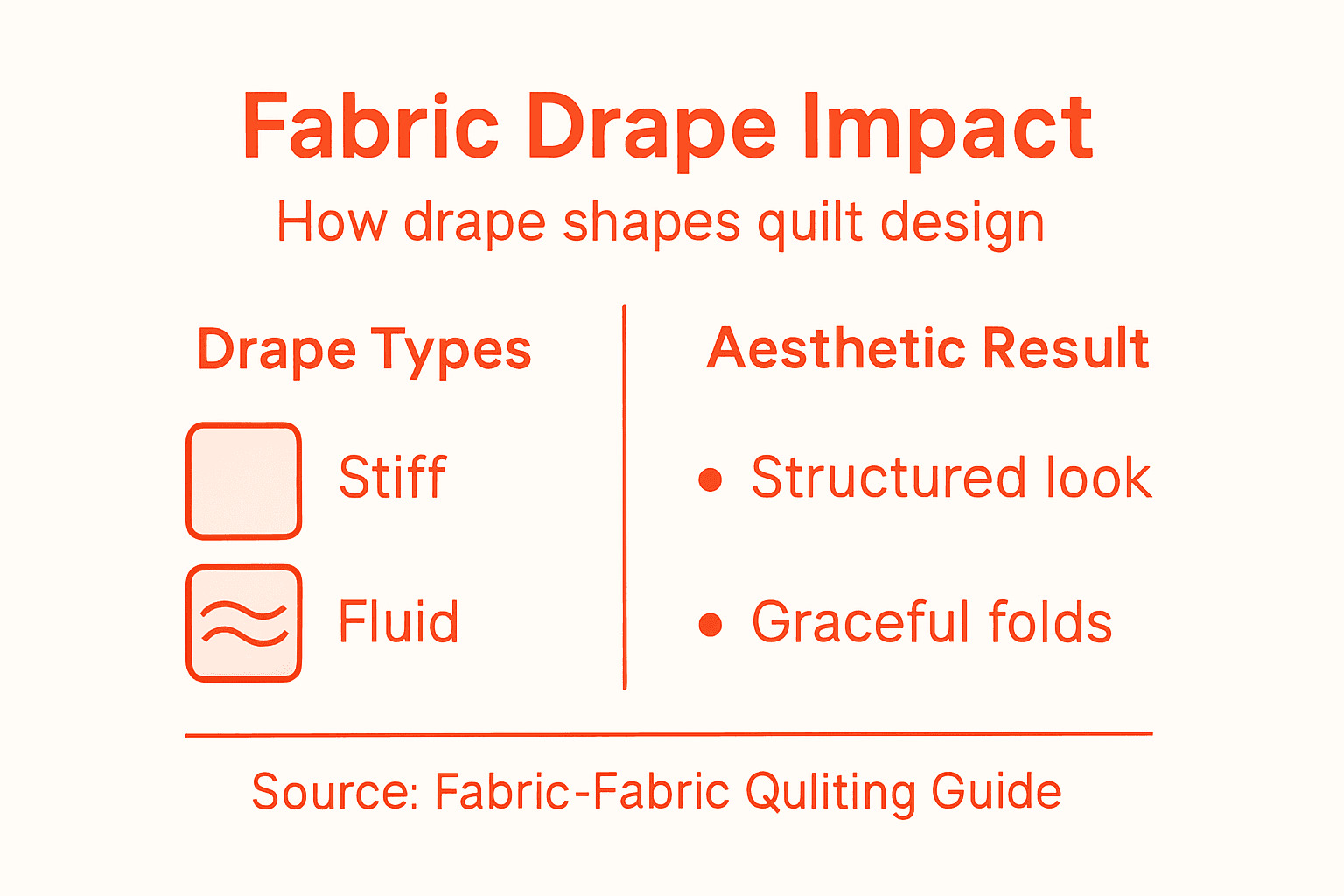
Fabric drape is not a one-size-fits-all characteristic, but rather a nuanced spectrum of material behavior. Systematic research on drape types reveals distinct categories that help quilters understand how different textiles will perform in their projects. These categories range from stiff and structured to fluid and graceful, with each type offering unique properties that can dramatically influence a quilt’s final appearance and functionality.
Quilters typically encounter three primary drape classifications: stiff, moderate, and fluid. Stiff fabrics like heavy cotton canvas or thick wool maintain their shape rigidly, creating structured designs with crisp edges and defined geometric patterns. Moderate drape fabrics such as medium-weight cotton blends provide a balanced approach, offering enough flexibility to create gentle folds while maintaining some structural integrity. Fluid drape fabrics like silk, lightweight rayon, and fine chiffon demonstrate exceptional movement, allowing for soft, flowing designs that create organic, almost painterly quilt compositions.
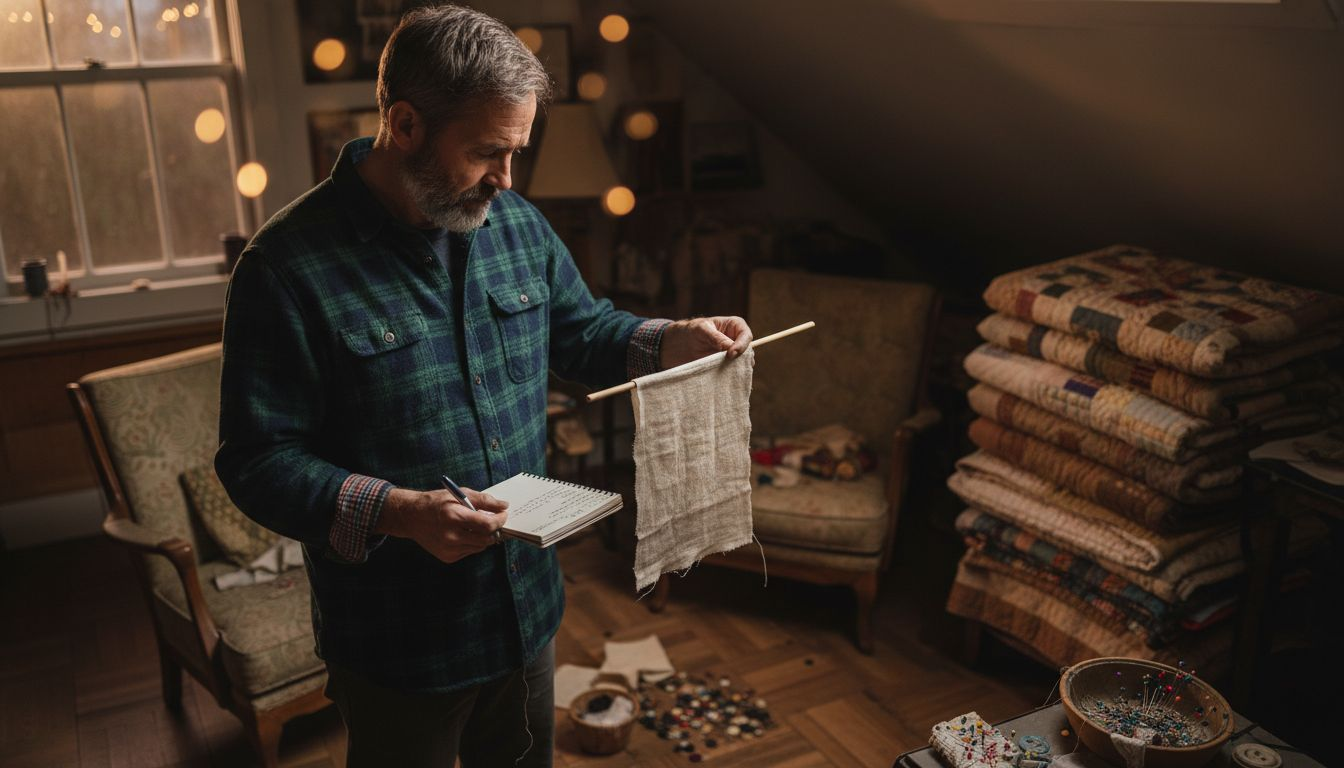
The practical implications of these drape types extend far beyond aesthetic considerations. A quilt’s drape directly impacts its functional qualities, affecting how it will hang, fold, and provide warmth. Stiff fabrics create quilts with more architectural forms, ideal for wall hangings or structured bed coverings. Moderate drape fabrics work wonderfully for traditional bed quilts, providing a balance between structure and comfort. Fluid drape fabrics excel in creating lightweight, versatile quilts that can be easily draped over furniture or used as decorative throws.
Here’s a summary of how common drape types compare for quilting uses:
| Drape Type | Visual Result | Best For | Example Fabrics |
|---|---|---|---|
| Stiff | Crisp, geometric look | Wall art, structured quilts | Cotton canvas, thick wool |
| Moderate | Gentle, balanced folds | Everyday bed quilts | Cotton blends, linen |
| Fluid | Soft, flowing presence | Throw quilts, art textiles | Silk, rayon, chiffon |
Pro tip: Always create a small test block using your chosen fabric to evaluate its drape characteristics before committing to a full quilting project.
Fabric drape is a complex interplay of multiple textile characteristics that go far beyond simple weight measurements. Multidimensional textile analysis reveals that drape emerges from a sophisticated combination of mechanical and structural properties. Quilters and textile designers must understand these intricate factors to predict how a fabric will behave in their specific project.
The primary factors influencing fabric drape include bending rigidity, shear stiffness, fiber composition, yarn type, and fabric structure. Bending rigidity determines how easily a fabric folds and maintains its shape, while shear stiffness impacts how the fabric moves and drapes across surfaces. Fiber composition plays a crucial role, with natural fibers like silk and fine wool offering dramatically different drape characteristics compared to synthetic materials such as polyester or nylon. Yarn construction and twist also contribute significantly, with looser, softer yarns typically producing more fluid drape compared to tightly spun, compact yarns.
Understanding these factors becomes particularly important in quilting, where fabric behavior directly influences design outcomes. A fabric’s thickness, weight, and finishing treatments can dramatically alter its draping properties. For instance, mercerized cotton will behave differently from untreated cotton, and a fabric with sizing or special finishing might demonstrate more structured drape compared to its untreated counterpart. Experienced quilters learn to assess these subtle characteristics, selecting fabrics that will create the desired visual and functional effects in their projects.
Key factors and their influence on fabric drape:
| Factor | Influence | Example Effect |
|---|---|---|
| Bending Rigidity | Controls fabric folds | Stiffer fabrics hold shape |
| Shear Stiffness | Affects movement angle | Softer fabric flows easier |
| Yarn Type | Alters overall softness | Looser yarns drape more |
| Fiber Composition | Impacts textile behavior | Silk drapes more than nylon |
Pro tip: Create a fabric drape test by suspending a small sample between two points and observing how it naturally folds and moves, which will reveal more about its true characteristics than simply feeling its weight.
Fabric drape transcends mere technical measurement, emerging as a critical aesthetic element that breathes life into quilting and home decor projects. Innovative design research reveals how fabric movement creates visual poetry, transforming static textiles into dynamic artistic expressions. The way a fabric folds, cascades, and interacts with light can dramatically alter the emotional impact of a quilting design, turning simple geometric patterns into captivating visual narratives.
Quilters understand that drape fundamentally shapes the visual language of their creations. Soft, fluid fabrics create gentle, organic designs with rounded edges and smooth transitions, while stiffer materials produce sharp, architectural compositions with defined geometric precision. The interplay of different drape characteristics allows artists to craft visual depth and texture, using fabric’s inherent properties to create dimensional storytelling. A quilt with carefully selected fabrics can evoke different emotional responses - from structured and controlled designs that suggest stability to flowing, romantic patterns that suggest movement and softness.
In home decor, fabric drape becomes an even more nuanced design tool. Wall hangings, throw pillows, and decorative quilts leverage drape to create visual interest and tactile complexity. The way a textile falls across furniture or hangs from a wall communicates subtle design intentions, transforming spaces through careful fabric selection. Light, ethereal drapes can make a room feel expansive and delicate, while heavier, more structured fabrics can ground a space and create a sense of warmth and intimacy.
Pro tip: Experiment with layering fabrics of different drape characteristics to create complex visual textures and depth in your quilting and decor projects.
Choosing the right fabric drape requires understanding how different project types demand unique textile characteristics. Design research reveals that fabric selection is not just about aesthetics, but about matching material properties to specific design intentions. Each quilting or decor project presents its own set of requirements that can be met through strategic fabric drape selection.
Wall hangings and decorative quilts often benefit from fabrics with moderate to fluid drape, allowing for graceful movement and soft visual texture. Geometric wall art might require stiffer fabrics that maintain crisp lines and defined shapes, while art quilts designed for dynamic representation need fabrics that can create nuanced folds and subtle dimensional effects. Bed quilts demand a balanced approach, typically utilizing medium-weight fabrics that provide enough structure to maintain shape while offering comfortable flexibility.
Functional projects like throw pillows, table runners, and lap quilts require even more precise drape considerations. Throw pillow fabrics should have enough body to hold decorative shapes but sufficient fluidity to create elegant curves. Table runners need drape that allows elegant draping over table edges without excessive wrinkling, while lap quilts benefit from softer drapes that conform comfortably to the body. Understanding these subtle distinctions helps quilters and textile artists make informed fabric choices that elevate their creative vision.
Pro tip: Always create a small sample block using your selected fabrics to test how they interact and drape together before committing to a full project.
Evaluating fabric drape is far more complex than many quilters realize, with numerous potential pitfalls that can lead to misguided material selections. Research highlights critical assessment errors that frequently undermine accurate fabric understanding. Novice quilters often fall into the trap of making superficial judgments based on limited sensory experiences, overlooking the nuanced mechanical properties that truly define a fabric’s draping potential.
One of the most common mistakes is relying exclusively on visual inspection or a single tactile assessment. Fabric drape involves intricate interactions between multiple properties, including bending modulus, extensibility, weight, and structural complexity. Quilters frequently misjudge a fabric’s potential by feeling its weight or observing its initial appearance, without considering how it will behave when suspended, folded, or integrated into a complex design. Some mistakenly assume that heavier fabrics automatically create better drape, when in reality, factors like fiber composition and weave structure play equally critical roles.
Professional textile designers understand that comprehensive drape evaluation requires multiple testing methods and a holistic approach. This means examining fabric behavior under different conditions, understanding how mechanical properties interact, and recognizing that no single metric can fully capture a textile’s draping characteristics. Experienced quilters develop a nuanced understanding that goes beyond simple touch tests, considering factors like fabric circularity, wavelength potential, and how different materials might interact within a single project.
Pro tip: Create a standardized drape testing method by cutting consistent fabric samples and suspending them from a fixed point to objectively compare their movement and folding characteristics.
Understanding fabric drape is essential to creating quilts that not only look stunning but also feel just right. As highlighted in the article, many quilters struggle with selecting fabrics that drape properly due to factors like bending rigidity and fiber composition. This challenge can impact the visual flow and functionality of your quilting projects leading to frustration and disappointment. Recognizing the distinct drape types and testing fabrics before committing makes all the difference in achieving beautiful, lasting results.
Unlock your creative potential with a diverse range of fabrics tailored to fit every drape need at Fabric-Fabric. Discover lightweight silks for fluid softness or sturdy cotton canvases for crisp structure. Our detailed product descriptions help you match fabric properties to your project goals so you can confidently select materials that bring your artistic vision to life. Start your next quilting adventure today by exploring our fabric collection and enjoy expert guidance combined with seamless shopping convenience.
Fabric drape refers to how a fabric naturally falls or hangs when suspended. It’s essential in quilting because it affects the aesthetic and functional qualities of the final project, influencing everything from block alignment to how the quilt hangs and moves.
To assess a fabric’s drape, suspend a small sample and observe how it naturally falls. This will provide insights into its behavior, allowing you to predict its performance in your quilt design.
The primary types of fabric drape are stiff, moderate, and fluid. Stiff fabrics are suitable for structured designs like wall hangings, moderate drape fabrics work well for everyday bed quilts, and fluid drape fabrics create soft, flowing designs for decorative throws.
Key factors influencing fabric drape include bending rigidity, shear stiffness, fiber composition, yarn type, and fabric structure. Each of these elements plays a role in how the fabric will fold, flow, and conform to shapes in your quilting projects.