

 US Dollar

A Quilter's Guide to All Types of Quilting Cotton
Posted by BLG on 2026 Apr 10th
Posted by BLG on 2026 Apr 10th

TL;DR:
- Choosing the right quilting cotton depends on fiber length, weave, feel, drape, and shrinkage.
- Upland cotton is the most common, affordable, and suitable for practice and beginner projects.
- Long-staple options like Pima and Egyptian cotton offer superior softness, durability, and less shrinkage for heirlooms.
Picking the right quilting cotton sounds simple until you’re standing in a fabric store holding three bolts that all look the same but feel completely different. Softness, weave density, drape, shrinkage, price — every factor pulls you in a different direction. Add in brand names, specialty weaves, and long-staple options, and the choice gets genuinely confusing. The good news is that once you understand what separates one cotton type from another, shopping becomes faster and your finished quilts turn out better. This guide breaks down every major type of quilting cotton so you can walk into any store — or browse online — with real confidence.
| Point | Details |
|---|---|
| Know your project needs | Choose cotton based on the quilt’s purpose, expected durability, and look. |
| Understand fiber quality | Long-staple cottons provide more softness and less shrinkage than standard types. |
| Don’t overlook specialty options | Lightweight and branded cottons can create modern styles and unique finishes. |
| Test before you buy | Always feel the fabric’s drape and hand in person or request samples when possible. |
Before you fall in love with a print or a price tag, it helps to know what you’re actually evaluating. Quilting cotton is not one-size-fits-all, and the differences between types go well beyond color or pattern. Knowing what to look for saves you from buying fabric that fights your project every step of the way.
Here are the primary criteria to assess any quilting cotton before you buy:
When you’re in a store, unfold a corner of the bolt and scrunch it lightly in your fist. Release it and watch how quickly it recovers. A fabric that bounces back cleanly has good fiber integrity. Rub it between your fingers — rough textures often mean shorter, coarser fibers. You can also hold it up to the light; a very open weave will look almost see-through and may not hold up well over time.
One common misconception is that a higher price always means better quality. That’s not always true. A well-made standard cotton can outperform an overpriced novelty fabric in durability and ease of use. For a deeper look at how to assess fabric quality side by side, these textile comparison tips are worth bookmarking.
It also helps to understand the difference between standard and long-staple cotton from the start. As explained in this overview of what is quilting cotton, standard vs Pima/Egyptian cotton vary noticeably in durability, softness, and shrinkage — and that difference shapes every buying decision you’ll make.
Pro Tip: Always pre-wash your quilting cotton before cutting. Even a small amount of shrinkage can distort your blocks after the quilt is finished and laundered.
Upland cotton is the fabric you’ll find on most quilting store shelves. It accounts for roughly 90% of global cotton production, which is exactly why it’s so easy to find and so affordable. For most quilters, especially those just starting out, it’s the default choice — and for good reason.
Key features of Upland quilting cotton include:
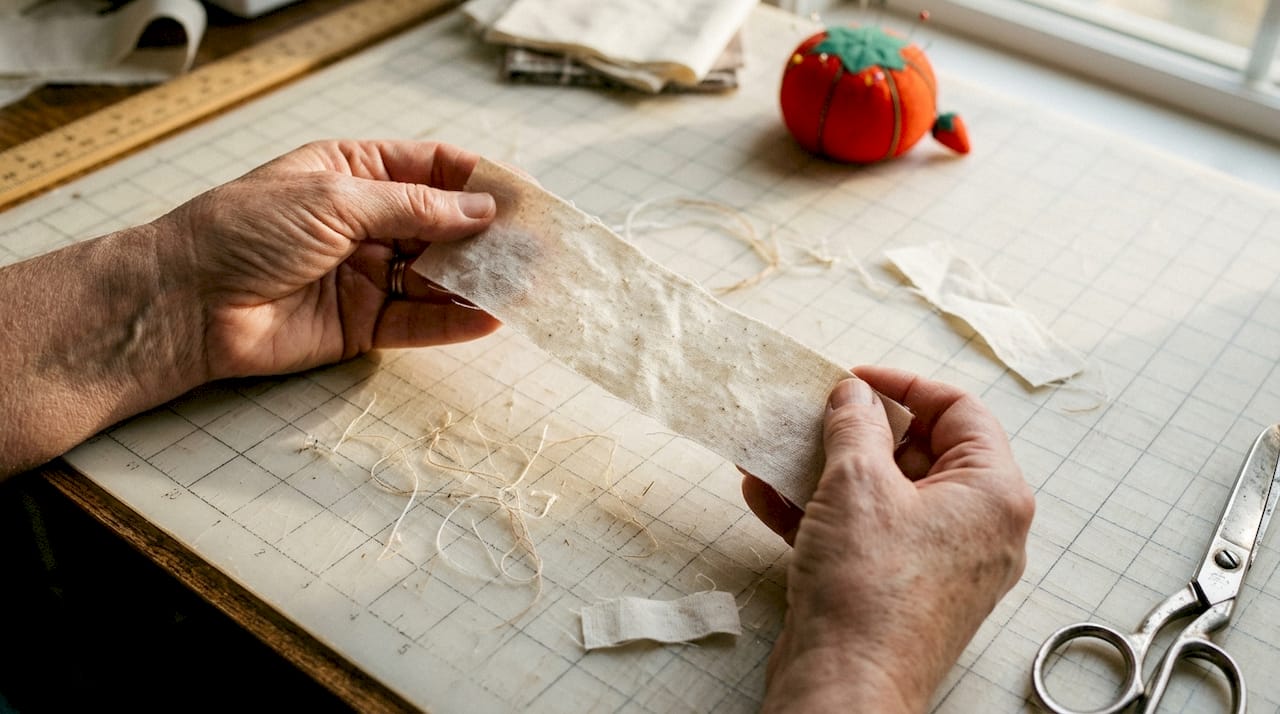
The fiber length of Upland cotton typically runs between 1 and 1.25 inches. That shorter staple length is what gives it a slightly rougher texture compared to premium options. It also means Upland cotton shrinks more than long-staple varieties, particularly if you skip pre-washing.
For beginner quilts, lap quilts, and any project where you’re working through a learning curve, Upland cotton is a smart pick. It’s forgiving, widely available in every imaginable print, and won’t break your budget if you need to re-cut a block. Exploring standard cotton quilt fabrics can help you compare brands within this category before committing to yardage.
The main drawback is that lower-end Upland cottons can feel stiff right off the bolt. That stiffness usually softens after washing, but it’s worth noting. If you’re making a quilt intended as a gift or display piece, you may want to upgrade. For everyday use and practice, though, Upland cotton is hard to beat on value. If you’re working with lighter-weight versions, this lightweight quilting cotton guide covers the nuances well.
Stat: Upland cotton fiber length averages 1 to 1.25 inches, making it shorter and slightly coarser than Pima or Egyptian alternatives.
When a quilt needs to last generations or look truly exceptional, long-staple cottons like Pima and Egyptian are worth every extra dollar. These fibers are noticeably longer, finer, and stronger than standard Upland cotton, and the difference shows up immediately when you touch the fabric.
Here’s what sets them apart:
Pima cotton is grown primarily in the American Southwest and Peru. Egyptian cotton comes from the Nile River valley and is often considered the gold standard for fine textiles. Both are excellent for quilting, though true Egyptian cotton is sometimes mislabeled in the market, so buying from reputable sources matters.
The best use cases for long-staple cottons include heirloom quilts meant to be passed down, quilts that will be washed frequently, and any project where the fabric is highly visible and touch matters. Comparing long-staple quilting cottons can help you decide between Pima and Egyptian options based on your budget and project goals.
Pro Tip: You don’t have to use Pima or Egyptian cotton throughout an entire quilt. Consider using it for the quilt top where it will be seen and felt, and pairing it with a quality Upland cotton for the backing to manage costs.
Beyond standard and luxury options, there’s a whole world of specialty quilting cottons that open up creative possibilities. These fabrics have distinct weave structures and weights that change how a finished quilt looks and moves.
Cotton lawn is a finely woven, lightweight fabric with a slightly crisp hand that softens beautifully after washing. It’s popular for intricate piecing because the tight weave holds seam allowances cleanly. Cotton voile is even lighter and has a subtle sheer quality that creates an airy, flowing effect — ideal for modern quilts or garments.
Designer and brand-name quilting cottons have also carved out a loyal following. Here’s a quick look at how some major brands compare:
| Brand | Weight | Hand | Best for |
|---|---|---|---|
| Kona (Robert Kaufman) | Medium | Crisp, reliable | Traditional quilts, solids |
| Art Gallery Fabrics | Lighter | Silky, drapey | Modern quilts, apparel crossover |
| Ruby+Bee | Medium | Smooth, consistent | Beginner to intermediate quilts |
| American Made Brand | Medium | Sturdy, matte | Everyday quilts, bold prints |
As noted by quilters who have tested these side by side, some prefer Art Gallery for its drape and softness while others swear by Kona for its predictability and wide color range. Neither is wrong — it comes down to what your project needs.
“The ‘best’ quilting cotton is the one that serves your design. A stunning lawn print in the right quilt is worth more than a premium solid used in the wrong place.”
For a full breakdown of lightweight options, this lightweight cotton guide covers lawn, voile, and similar fabrics in detail. You can also browse brand-specific cotton fabrics to see how different designers approach color and print.
Here’s a direct comparison to help you match the right cotton type to your specific project needs.
| Cotton type | Softness | Durability | Shrinkage | Value | Best project fit |
|---|---|---|---|---|---|
| Upland | Moderate | Good | Higher | Excellent | Beginner quilts, practice projects |
| Pima/Egyptian | High | Excellent | Low (2-5%) | Moderate | Heirlooms, gifts, visible quilts |
| Lawn/Voile | High | Moderate | Low | Good | Modern quilts, summer throws |
| Brand solids (Kona, etc.) | Moderate-High | Good | Moderate | Good | All-purpose, color-focused quilts |
This best quilting cotton comparison digs deeper into how these cotton types rank across durability, softness, shrinkage, and cost for different quilting goals.
Here’s a numbered guide for matching cotton type to project:
Here’s something most cotton guides won’t tell you: the technical specs matter far less than how a fabric feels in your hands for your specific quilt. Seasoned quilters know this instinctively, but it takes a few projects to really believe it.
General advice about Pima being superior or Kona being the most reliable is useful as a starting point. But the moment you start working with a fabric that feels right to you, those rankings become secondary. Some quilters find that Upland cotton gives their geometric quilts exactly the crispness they want. Others discover that a mid-range lawn from an unexpected brand drapes better than anything in a premium line.
The real insight is that testing hand and weight is essential because no single type fits all quilters or all projects. Buy a quarter yard of three different cottons before committing to a full project. Wash them, press them, and sew a few test seams. That small experiment will teach you more than any chart. Your style is yours — let the fabric serve it, not the other way around.
Now that you know what separates one cotton type from another, the fun part begins: actually finding the fabrics that will bring your next quilt to life. At fabric-fabric.com, we carry a wide variety of quilting cottons across every weight, weave, and style category covered in this guide.
Whether you’re hunting for a reliable Upland cotton for a beginner project or a specialty fabric with a beautiful drape, our selection makes it easy to browse by type and weight. We also carry a curated range of backdrop fabrics for creative display projects, and our home decor quilting cottons are perfect for quilters who want to extend their craft beyond the quilt frame. Shop with confidence knowing every fabric listing includes clear descriptions and usage suggestions.
Upland cotton has shorter fibers and higher shrinkage, while Pima and Egyptian cotton are softer, stronger, and shrink significantly less, making them better suited for heirloom or high-visibility projects.
Check for a smooth hand, a tight weave, and confirm whether it’s made from long-staple fibers like Pima or Egyptian cotton, which signal better durability and softness.
No. Pima and Egyptian cotton shrink only 2 to 5%, while standard Upland cotton can shrink considerably more if it hasn’t been pre-washed before use.
Absolutely. Lawn and voile cottons offer excellent drape and a soft hand, making them a popular choice for modern quilts, summer throws, and any project where fluid movement is part of the design.