

 US Dollar

Ikat Fabric: History, Techniques, and Buying Guide
Posted by BLG on 2026 Jul 14th
Posted by BLG on 2026 Jul 14th

TL;DR:
- Ikat is a resist-dyeing technique where yarns are dyed before weaving, creating blurred, feathered edges. Authentic handwoven ikat shows pattern visibility on both sides and features irregularities reflecting craftsmanship. Its intricate process and cultural significance make it highly valued among textile collectors and enthusiasts.
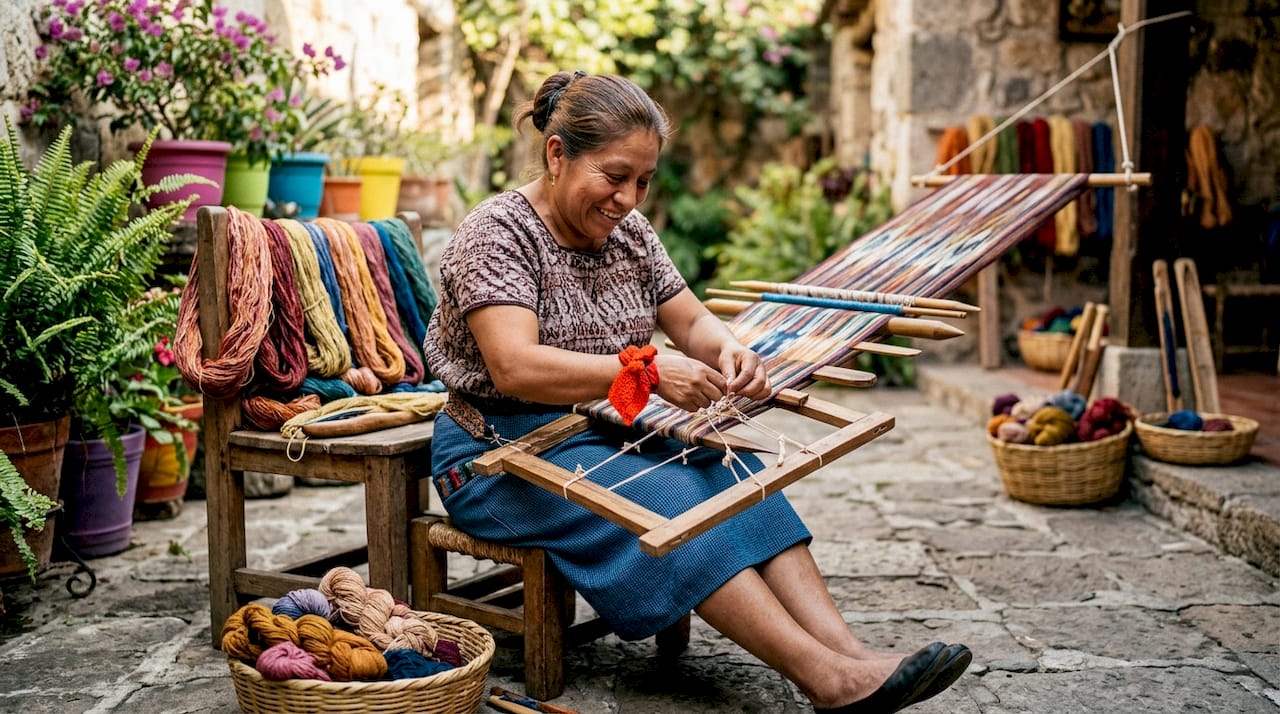
Ikat is defined as a resist-dyeing technique where artisans bind and dye yarns before weaving them into cloth, producing textiles with the craft’s signature blurred, feathered-edge patterns. Unlike printed fabrics, the pattern in ikat lives inside the fiber itself. Three main types exist: warp ikat, weft ikat, and double ikat. Traditions like Pochampally in Telangana, Patola in Gujarat, and Geringsing in Bali represent the pinnacle of this craft, and several have earned UNESCO recognition and Geographical Indication tags that protect their authenticity and cultural heritage.
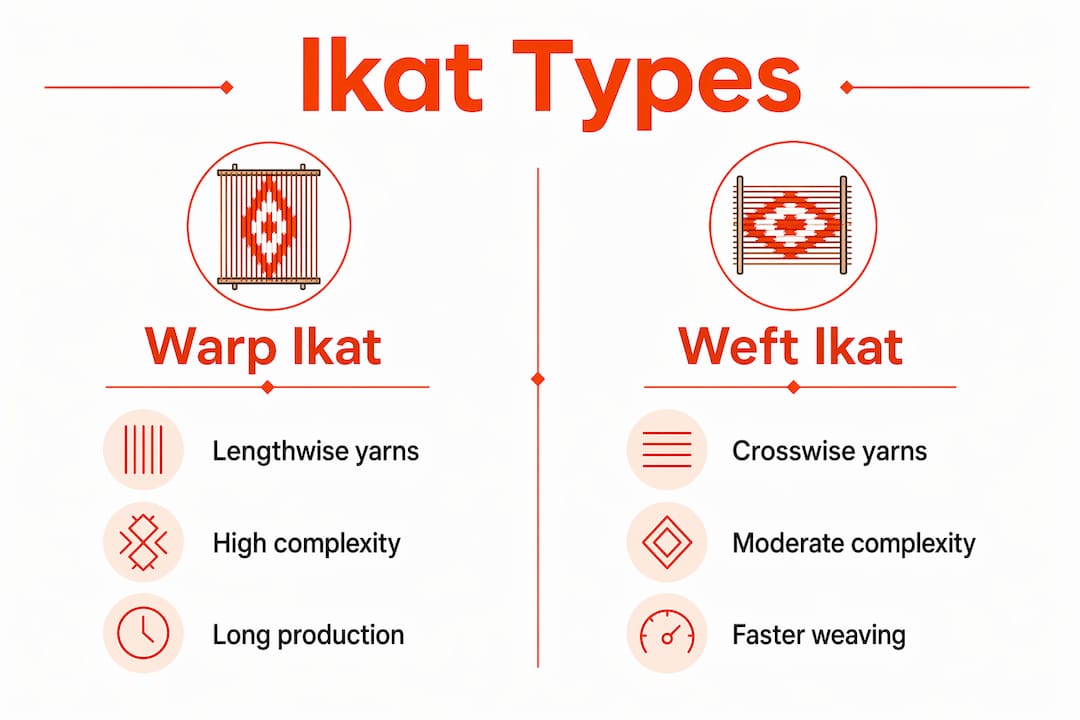
Ikat weaving techniques divide into three categories based on which yarns receive the resist treatment before the loom is threaded.
Warp ikat dyes only the lengthwise yarns. The weaver stretches these threads on a frame, ties sections with resist material, then immerses them in dye. After untying and re-tying for additional colors, the dyed warp goes onto the loom. The weft threads are typically a single solid color. Warp ikat is the most widespread form globally, appearing in Central Asian Atlas ikat, Japanese Kasuri, and Indonesian traditions.
Weft ikat reverses the process. Only the crosswise yarns are dyed before weaving. The pattern emerges as the shuttle passes through the warp. This method is common in parts of India and Cambodia, and it demands careful counting of threads to keep the design aligned.
Double ikat dyes both warp and weft yarns independently before weaving. The artisan must then align both sets of pre-dyed threads so their patterns meet precisely on the loom. Double ikat takes 4–6 months per piece to complete. That production span explains why authentic Patola sarees from Gujarat and Geringsing cloths from Bali command prices that can reach thousands of dollars.
The full production process for any authentic piece follows a clear sequence:
| Type | Yarns dyed | Complexity | Production time | Key regions |
|---|---|---|---|---|
| Warp ikat | Warp only | Moderate | Days to weeks | Central Asia, Japan, Indonesia |
| Weft ikat | Weft only | Moderate | Days to weeks | India, Cambodia |
| Double ikat | Both warp and weft | Very high | 4–6 months | Gujarat (India), Bali (Indonesia) |
Pro Tip: When shopping for warp ikat, look at the fabric on a diagonal. The pattern will appear crisp along the warp direction but slightly blurred across the weft. That directional blur is a reliable sign of genuine resist dyeing.
The market carries a large volume of machine-printed fabric sold under the ikat name. Knowing the difference protects your investment and supports real artisans.
The most reliable visual test is the edge quality of the pattern. Blurred or feathered edges are a marker of handwoven authenticity, not a flaw. They result from slight yarn shifts during weaving. Printed imitations show razor-sharp, perfectly symmetrical lines because a machine stamps the pattern onto finished cloth.
The back of the fabric tells the same story. The reverse side of genuine ikat shows the pattern nearly as clearly as the front, because the color lives in the yarn itself. A printed fabric typically has a faded or blank back.
Use this checklist before you buy:
Pro Tip: Hold the fabric up to a light source. On genuine handwoven ikat, you will see slight variations in thread density across the weave. Printed fabric looks completely uniform under light.
For a deeper look at quality indicators across fabric types, the fabric quality guide at Fabric-fabric covers the key tests worth knowing.
Southeast Asian warp ikat traditions trace back over 6,000 years to Neolithic weaving, according to a phylogenetic study published in PLOS One in 2012. Independent development of similar resist-dyeing methods also occurred across South Asia, Central Asia, Japan, and pre-Columbian South America. That geographic spread reflects a universal human instinct to encode meaning into cloth.
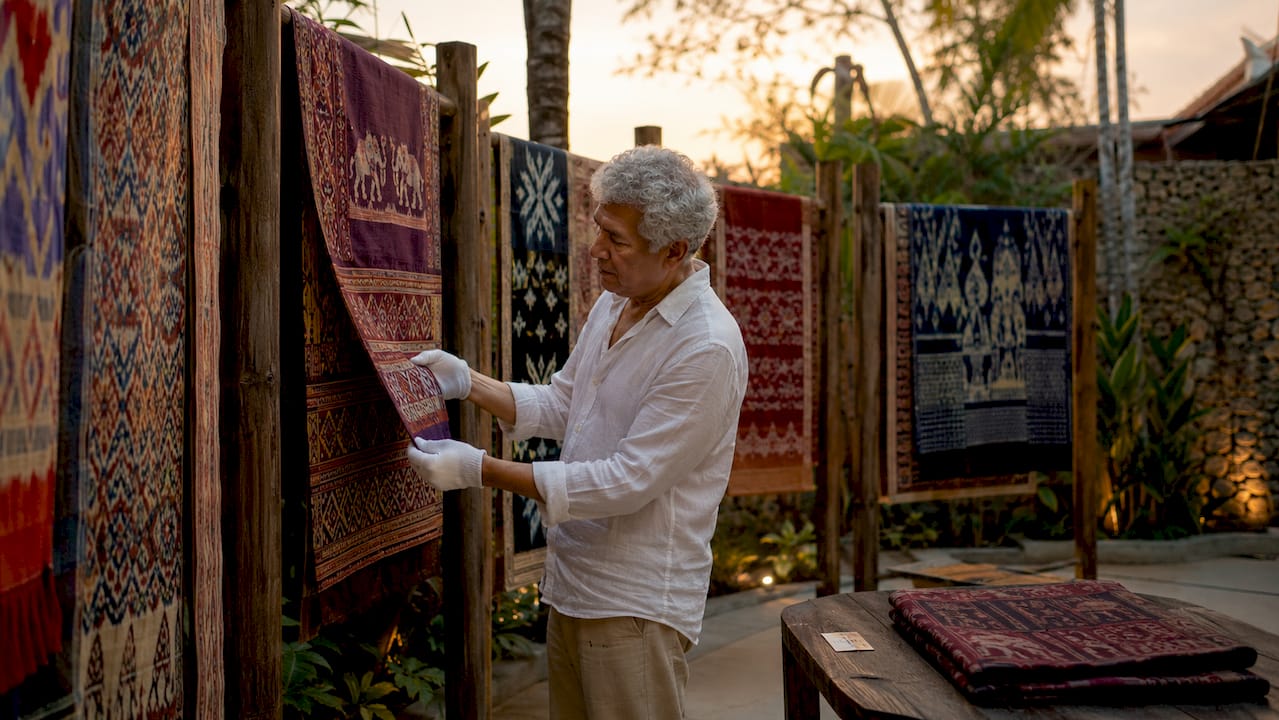
Ikat textiles appear worldwide in distinct regional forms: Patola silk from Gujarat, Kasuri from Japan, Geringsing from Bali, and Atlas ikat from Central Asia each carry their own motifs and symbolic vocabulary. The table below shows how meaning shifts by region.
| Region | Tradition | Key motifs | Cultural meaning |
|---|---|---|---|
| Gujarat, India | Patola | Elephants, flowers, geometric grids | Auspicious use in weddings and rituals |
| Bali, Indonesia | Geringsing | Sacred double-ikat patterns | Healing, protection, ceremonial use |
| Japan | Kasuri | Geometric, nature-inspired | Everyday wear, rural identity |
| Central Asia | Atlas ikat | Bold stripes, abstract forms | Status, regional identity |
| Telangana, India | Pochampally | Diamond and chevron patterns | Artisan community heritage |
Historically, Patola sarees were reserved for royalty and temple rituals. Geringsing cloth from the village of Tenganan in Bali is still considered sacred and used only in specific ceremonies. These textiles were never purely decorative. They marked life events, social rank, and spiritual protection.
Artisans today reinterpret traditional motifs creatively for global markets, a shift researchers describe as “sacred flexibility.” The core technique stays intact while color palettes and scale adapt to contemporary tastes. This evolution keeps the craft economically viable without erasing its cultural roots. For context on how similar resist-dye traditions function in decor, the role of batik in decor offers a useful parallel.
Caring for authentic ikat correctly preserves both the color and the weave structure for decades.
Washing. Hand wash silk ikat in cold water with a mild, pH-neutral detergent. Never wring or twist the fabric. Roll it in a clean towel to remove excess water, then dry flat in shade. Cotton ikat tolerates gentle machine washing on a cold, delicate cycle, but hand washing extends its life significantly.
Storage. Store ikat folded in acid-free tissue paper or rolled on a tube to prevent permanent crease lines. Keep pieces away from direct sunlight, which fades natural dyes faster than synthetic ones. Avoid plastic bags, which trap moisture and encourage mildew.
Buying authentic pieces. The specialty fabric sourcing guide at Fabric-fabric outlines how to evaluate sellers before purchasing. Key buying tips include:
Fiber types and their trade-offs. Silk ikat produces the most vivid color depth and the finest pattern detail, but it requires the most careful handling. Cotton ikat is more durable, washes more easily, and suits everyday use. Wool ikat, found in Central Asian traditions, offers warmth and a coarser texture suited to outerwear and home furnishings.
Pro Tip: When evaluating a piece for your collection, photograph the back of the fabric alongside the front. Side-by-side images make pattern visibility on the reverse immediately obvious and give you a permanent record for insurance or resale purposes.
Ikat’s global resurgence on runways and in interior design proves that ancient techniques thrive in modern aesthetics. Investing in authentic pieces supports artisan communities and gives you textiles that gain character with age rather than wearing out.
Authentic ikat is defined by resist-dyed yarns, feathered pattern edges, and visible patterning on both fabric sides, with double ikat representing the most labor-intensive form, requiring 4–6 months of production per piece.
| Point | Details |
|---|---|
| Three ikat types | Warp, weft, and double ikat differ by which yarns are dyed before weaving. |
| Double ikat production | Takes 4–6 months per piece due to independent dyeing of both warp and weft yarns. |
| Authenticity test | Flip the fabric. Genuine ikat shows the pattern clearly on both sides. |
| Certification matters | GI tags and the Silk Mark verify Indian ikat; low prices signal printed imitations. |
| Cultural depth | Traditions like Patola, Geringsing, and Kasuri carry ritual and symbolic meaning beyond decoration. |
I have handled a lot of fabric over the years, and ikat consistently stops me in a way that printed textiles simply do not. The reason is mathematical. Every piece of double ikat is a solved alignment problem. The artisan dyes two independent sets of threads and then weaves them together so their patterns meet at exact intersections. There is no room for error, and yet the result always carries a slight human wobble that no machine can replicate. That wobble is the point.
What I find most undervalued in conversations about ikat is the generational knowledge embedded in the process. A Pochampally weaver does not consult a manual. The pattern lives in muscle memory passed down through families. When you buy a printed copy at a fraction of the price, you are not buying a cheaper version of the same thing. You are buying something categorically different.
The modern fashion industry has picked up ikat motifs and run with them, which is genuinely good for awareness. The risk is that mass-market exposure trains buyers to accept printed approximations as the real thing. My advice is to handle one authentic handwoven piece before you buy anything labeled ikat. The weight, the texture, and the depth of color will recalibrate your expectations permanently. After that, the difference between genuine craft and a printed shortcut is impossible to miss.
— kev
Textile enthusiasts who want to work with quality patterned fabrics will find a well-organized selection at Fabric-fabric, covering everything from apparel cloth to home decor fabric suited to ikat-inspired interiors. The site carries a range of fiber types and weave styles, making it practical for crafters who want to experiment with pattern and texture without committing to a single material.
For quilters and crafters drawn to bold geometric patterns similar to ikat fabric patterns, the quilting fabric collection at Fabric-fabric offers cotton options by the yard with the kind of color depth that works well alongside handwoven textiles. The site also features backdrop fabrics for display and decor projects where rich pattern and drape matter most.
Ikat is a resist-dyeing textile technique where yarns are bound and dyed before weaving, creating fabrics with distinctive blurred or feathered-edge patterns built into the fiber itself.
Double ikat dyes both warp and weft yarns independently before weaving, requiring precise alignment on the loom. Warp ikat dyes only the lengthwise threads, making it significantly faster and less complex to produce.
Flip the fabric over. Genuine handwoven ikat shows the pattern clearly on both sides because the color is in the yarn. Printed ikat has a faded or blank reverse side.
The blurred edges result from slight yarn shifts during weaving. They are a sign of handwoven authenticity, not a defect, and distinguish genuine resist-dyed cloth from machine-printed imitations.
Southeast Asian warp ikat traditions date back over 6,000 years to Neolithic weaving. Independent ikat traditions also developed across India, Japan, Central Asia, and pre-Columbian South America.