

 Canadian Dollars

Identifying Fabric Types: A Practical Guide for Crafters
Posted by BLG on 2026 Jun 24th
Posted by BLG on 2026 Jun 24th

TL;DR:
- Identifying fabric types involves inspecting labels, performing tactile tests, and conducting burn tests to determine fiber content accurately. Combining these methods yields the most reliable results, especially when labels are missing or unclear.
Identifying fabric types is defined as the process of determining a textile’s fiber content, structure, and properties through label inspection, tactile tests, and physical experiments. Whether you sew garments, decorate your home, or work with quilting cotton, knowing what a fabric is made of determines how it behaves, how it washes, and whether it suits your project. A reliable identification process includes checking fiber content labels compliant with Federal Trade Commission rules, physical characteristic tests, and confirming uncertain findings with a burn test. Getting this right from the start saves you from ruined projects and wasted money.
The fiber content label is the fastest and most accurate starting point for recognizing fabric materials. In the United States, the Federal Trade Commission requires most textile products to carry a label listing fiber content by percentage, country of origin, and manufacturer identity. A label reading “100% cotton” or “60% polyester, 40% rayon” tells you exactly what you are working with before you touch a flame or a microscope.
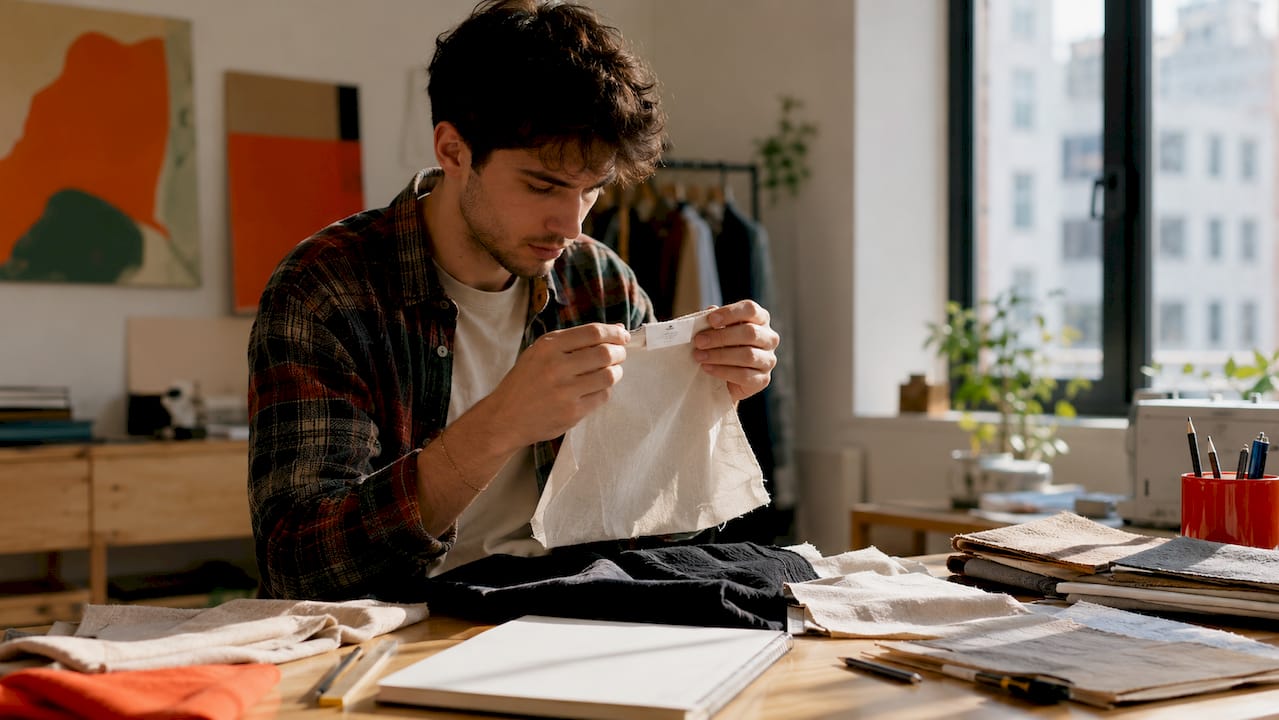
Labels do have limits. They can be missing on vintage fabrics, cut away by previous owners, or simply wrong on low-quality imports. When the label is absent or unclear, you need to move to physical and experimental tests.
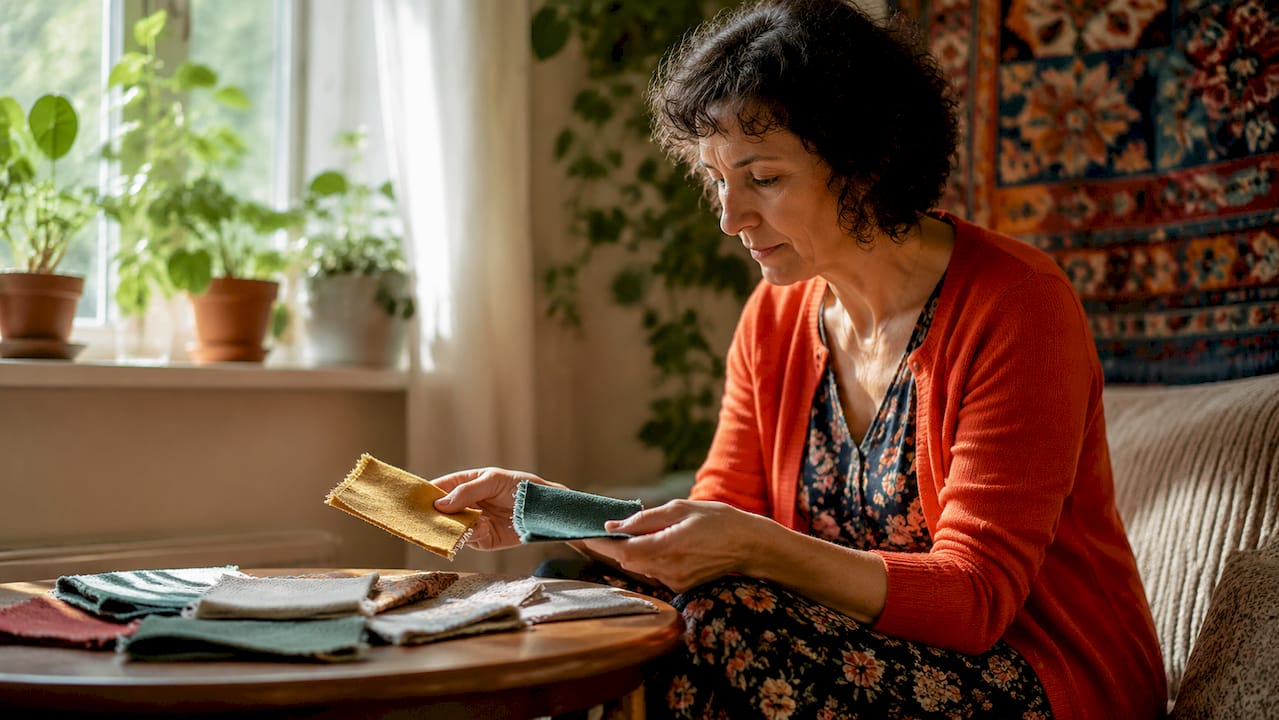
Touch is the fastest secondary test after label reading. Natural fibers like cotton, linen, and silk feel distinctly different from synthetics like polyester and nylon. Cotton feels soft and slightly rough. Linen feels crisp and cool. Silk slides between your fingers with almost no resistance. Polyester often feels slick or slightly waxy.
Drape tells you even more. Hold a cut piece at one corner and let it fall. Silk and rayon drape in fluid, flowing folds. Stiff fabrics like canvas or buckram hold their shape. Knit fabrics stretch and recover. Combining touch and drape narrows your options before you run any test.
Pro Tip: Wet a small corner of the fabric. Natural fibers like cotton and linen absorb water quickly. Most synthetics bead water on the surface or absorb it very slowly.
The burn test is the most widely used DIY method for confirming fiber content when labels are missing. Burning synthetic fibers releases toxic fumes, so always work in a well-ventilated area, use metal tweezers, and burn over a flame-proof metal tray. The test takes 3–5 minutes and requires observing three things: how the fiber burns, what it smells like, and what residue it leaves.
Cotton burns steadily like paper and leaves a soft gray ash. Wool burns slowly, smells like burning hair, and leaves a crushable black bead. Polyester melts and burns quickly, smells like plastic, and leaves a hard, shiny bead. Silk burns with a smell similar to burning feathers and self-extinguishes. Nylon melts before it burns and leaves a hard, gray bead.
Microscopic examination offers high accuracy for identifying natural fibers by revealing distinct fiber structures that are invisible to the naked eye. Cotton fibers look like twisted ribbons under magnification. Linen shows visible nodes along the fiber length. Wool displays overlapping scales. Silk appears as smooth, triangular filaments.
The process uses a water-mounted slide and takes 10–15 minutes for a skilled analyst. This method works best for natural fibers. Manufactured fibers like polyester and nylon are harder to distinguish visually because the manufacturing process alters their structure. For synthetics, combine microscopy with burn testing and label information.
Blended fabrics are the hardest to identify because two or more fiber types are woven or knit together. Isolating yarn fibers from both warp and weft directions is the correct method for identifying blends, rather than relying on surface appearance alone. Pull a single thread from the lengthwise direction and another from the crosswise direction, then test each separately.
A fabric that feels like cotton but has a slight sheen might be a cotton-polyester blend. Testing each thread individually reveals which fiber is in which direction. This matters for sewing, washing, and pressing, since each fiber in a blend behaves according to its own properties.
For a deeper look at how blends work in real projects, the fabric blends guide at Fabric-fabric covers common blend combinations and their practical effects.
The smell test is an underused but genuinely useful tool for assessing fabric quality before you buy. Natural fibers usually carry neutral or organic scents. A new fabric with a strong chemical smell often signals low-quality finishing agents masking synthetic fillers. That sharp, acrid odor is a red flag worth taking seriously.
High-quality wool smells faintly earthy. Silk has almost no smell. A bolt of fabric that smells strongly of formaldehyde or industrial chemicals has likely been treated with finishing agents that can irritate skin and degrade over time. This test costs nothing and takes seconds.
Natural fabrics come from plant or animal sources and share a set of recognizable traits. Here is how the most common ones behave:
Pro Tip: Rub a small piece of linen between your fingers. The friction generates a slight warmth. That reaction is unique to linen and helps distinguish it from cotton, which stays cool.
Synthetic fabrics are made from petroleum-based chemicals. Regenerated fibers like rayon, viscose, and modal come from natural cellulose but are processed chemically. Both groups have distinct traits:
No single test is fully reliable alone. Combining burn results, touch, drape, and label information gives you the most accurate identification, especially for synthetics that look similar to each other.
The table below covers the core differences that matter most for crafting, fashion, and home decor decisions.
| Trait | Natural fibers | Synthetic fibers |
|---|---|---|
| Burn behavior | Burns steadily, leaves ash or crushable bead | Melts, drips, or shrinks; leaves hard bead |
| Smell when burned | Paper, hair, or feathers | Plastic, chemical, or rubber |
| Touch | Soft, breathable, slightly textured | Smooth, slick, or waxy |
| Moisture absorption | High | Low to moderate |
| Wrinkle resistance | Low to moderate | High |
| Care requirements | Often delicate or dry clean | Machine washable in most cases |
Regenerated fibers like rayon fall between these two groups. They burn like natural fibers but often feel and drape more like synthetics. When you are unsure, test a thread from each direction and compare results.
The method you use should match your project type and how much accuracy you need.
Pro Tip: When shopping for fabric in person, always carry a small lighter and metal tweezers. Ask the retailer if you can test a loose thread before buying. Most specialty fabric stores expect this.
Reliable fabric identification requires combining label inspection, tactile assessment, and at least one physical test such as burning or microscopy, since no single method gives a complete answer on its own.
| Point | Details |
|---|---|
| Start with the label | Fiber content labels are the fastest and most accurate first step for any fabric. |
| Combine multiple tests | Burn test, touch, drape, and microscopy together give the most reliable result. |
| Test blends by direction | Pull and test warp and weft threads separately to identify blended fabrics correctly. |
| Use smell as a quality check | A strong chemical odor on new fabric signals low-quality finishing agents. |
| Match method to project | Fashion, quilting, and upholstery each require different identification priorities. |
The biggest mistake I see crafters make is trusting appearance alone. A fabric can look like linen and feel like linen but burn like cotton. That matters when you are washing a finished quilt or pressing a garment seam. I learned this the hard way after a batch of “linen-look” fabric shrank unevenly in the wash. It was a cotton-linen blend, and I had not tested the weft threads separately.
Microscopy changed how I think about fiber identification. Seeing the twisted ribbon structure of cotton or the scaled surface of wool under a lens makes the burn test results click into place. You stop guessing and start reading the fabric. That shift from guessing to reading is what separates a confident crafter from a frustrated one.
The burn test still makes beginners nervous, and I understand why. Flame near fabric feels counterintuitive. But a single thread held in metal tweezers over a metal tray is genuinely safe when you follow the precautions. The information you get in those 3–5 minutes is worth the discomfort. Just never skip the ventilation.
One more thing: the smell test has saved me money more than once. I walked away from a bolt of beautiful fabric at a market because it smelled sharply chemical. Two weeks later, a friend bought the same fabric and found it faded and stiffened after one wash. Trust your nose.
— kev
Every fabric in the Fabric-fabric catalog comes with clear descriptions, fiber content information, and usage guidance so you know exactly what you are buying before it arrives.
Whether you are building a quilt, redecorating a room, or sewing a garment from scratch, starting with well-labeled fabric cuts your identification work in half. The quilting fabric collection at Fabric-fabric covers cotton quilting fabric by the yard with detailed specs for every listing. For home projects, the home decor fabric range includes upholstery-weight and lighter decorating options, each described by fiber content and care requirements. Shop at Fabric-fabric and spend your time sewing, not guessing.
The most reliable method combines fiber content label inspection, a burn test, and tactile assessment. No single test is fully reliable alone, so using two or three methods together gives the most accurate result.
Run a burn test on a single thread using metal tweezers over a metal tray in a well-ventilated area. Observe the flame behavior, smell, and residue to match against known fiber characteristics for cotton, wool, polyester, or silk.
The three main categories are natural fibers (cotton, wool, silk, linen), synthetic fibers (polyester, nylon, acrylic, spandex), and regenerated fibers (rayon, viscose, modal). Each category has distinct burn, touch, and drape characteristics.
Pull individual threads from both the warp and weft directions and test each separately with a burn test. Blends often show different burn behaviors in each direction, which reveals which fibers are present and in which part of the weave.
Yes. OEKO-TEX® STANDARD 100 certification tests over 1,000 harmful substances and provides more reliable quality assurance than country-of-origin labels like “Made in Italy.” It is the strongest third-party trust signal available for fabric buyers.