

 Canadian Dollars

Gingham Fabric: The Crafter's Guide for 2026
Posted by BLG on 2026 Jun 9th
Posted by BLG on 2026 Jun 9th

TL;DR:
- Yarn-dyed gingham is a reversible, colorfast fabric made from dyed yarns woven into a balanced plain weave, unlike printed check fabrics. It offers enhanced pattern accuracy, durability, and versatility for quilting, garments, and home decor due to its woven-in check pattern and stable construction. Proper pre-washing, precise cutting along the woven grid, and selecting the appropriate check size and fiber content are essential for successful projects.
Gingham is defined as a yarn-dyed, plain-woven fabric with a checkered pattern formed by dyed yarns woven directly into the cloth, not printed on the surface. That single distinction separates true gingham from the dozens of printed check fabrics that flood the market. Most commonly made from cotton or cotton blends, gingham produces a medium-weight, balanced weave with a crisp hand and a clean, graphic look. Because the color runs through every thread, the fabric looks identical on both sides. That reversibility is what makes gingham the go-to choice for quilters, home decorators, garment sewers, and small business crafters who need a fabric that performs as well as it looks.
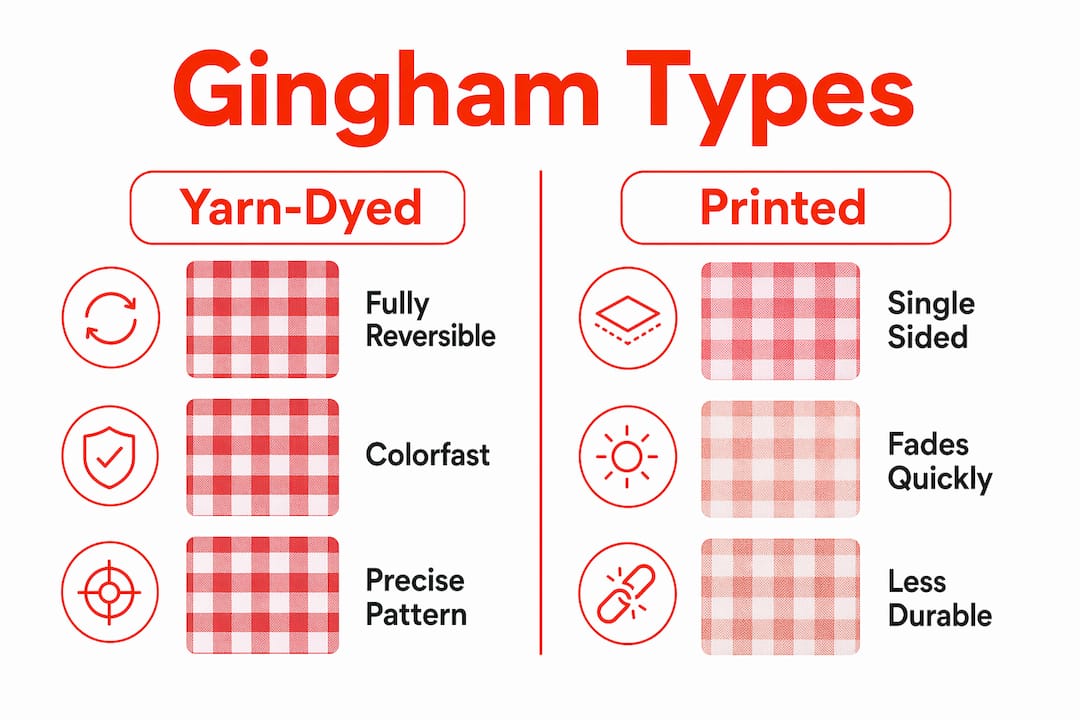
Gingham’s defining quality is its construction method. Printed checks carry color only on the face of the fabric, which means the reverse side looks faded or mismatched. Yarn-dyed gingham, by contrast, uses threads that are dyed before weaving, so the color saturates every fiber completely. The result is a fabric that is fully reversible and holds its color through repeated washing far better than printed alternatives.
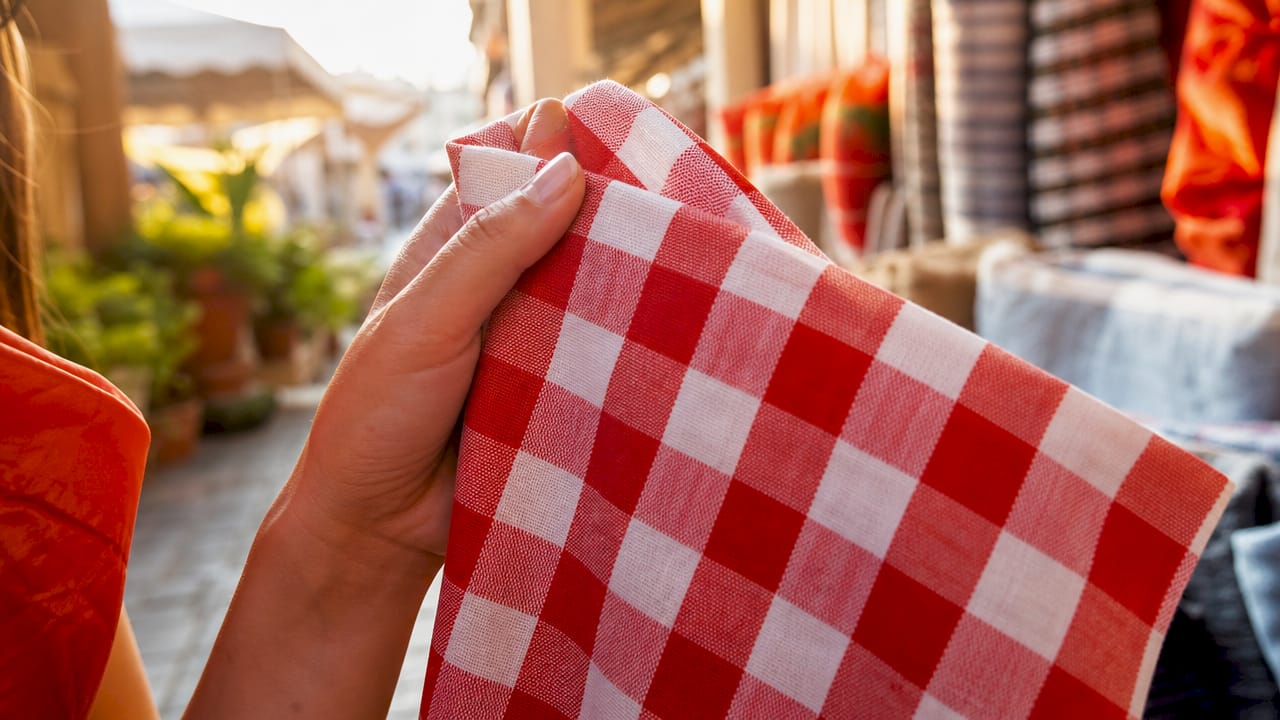
The weave structure reinforces this quality. Gingham uses a balanced plain weave, meaning each weft thread passes over one warp thread and under the next in a consistent, alternating pattern. This creates an even, stable cloth with no dominant face or back. The check pattern itself is always formed by alternating blocks of colored and white threads in equal proportions, which produces the characteristic two-tone grid.
| Feature | Yarn-dyed gingham | Printed check |
|---|---|---|
| Reversibility | Fully reversible, identical on both sides | One-sided; back appears faded |
| Colorfastness | High; dye penetrates every fiber | Lower; surface dye fades faster |
| Pattern precision | Crisp, woven-in grid | Can shift or blur at edges |
| Best for | Quilts, visible seams, garments | Decorative use, single-face projects |
| Cost | Generally higher | Generally lower |
Pro Tip: Flip the fabric over before you buy. If the check pattern looks equally sharp on both sides, you have yarn-dyed gingham. If the back looks washed out or blank, it is a printed check and will not perform the same way in reversible or visible-seam projects.
The reversible quality also matters for quilting projects where seam allowances are visible from the inside of a quilt sandwich. Yarn-dyed gingham keeps the seam logic consistent on both sides, which reduces the visual noise inside a finished quilt.
Check size is the first decision, and it shapes everything else. Gingham squares range from micro at 1/16 inch up to jumbo at 1 inch, and each scale suits a different application. Micro checks read almost as a solid from a distance, making them ideal for dress shirts, children’s uniforms, and face masks. Medium checks around 1/4 inch work well for quilts and structured garments. Jumbo checks at 1/2 inch or larger make a bold statement in home decor, curtains, and cushion covers.
| Check size | Approximate measurement | Best project types |
|---|---|---|
| Micro | 1/16 inch | Shirts, uniforms, masks, fine accessories |
| Small | 1/8 inch | Blouses, children’s clothing, quilts |
| Medium | 1/4 inch | Quilts, structured dresses, tote bags |
| Large | 1/2 inch | Curtains, cushion covers, tablecloths |
| Jumbo | 1 inch | Statement home decor, upholstery accents |
Fiber content is the second major variable. Pure cotton gingham offers the best breathability, ease of pressing, and compatibility with most sewing machines. Cotton blends with polyester add durability and wrinkle resistance, which suits uniform production or items that see heavy use. A useful reference point: typical cotton gingham specs include 100% cotton, a width around 56 inches, and a weight near 142 gsm with a soft drape. Knowing these numbers before you order helps you plan yardage and predict how the fabric will behave on the cutting table.
Use the fabric swatch selection guide to order samples before committing to a full yardage purchase. Key factors to confirm from a swatch include:
Pre-washing is not optional. Shrinkage of up to 2% is common even in pre-shrunk cotton gingham, and that margin is enough to throw off pattern matching in a quilt or misalign checks across a garment seam. Wash the fabric the same way you plan to wash the finished item. If the end product will go through a hot machine wash, pre-wash in hot water. If it will be hand-washed, pre-wash by hand.
Follow these steps every time you prepare gingham for a project:
Pro Tip: Use the woven grid of the gingham itself as your cutting guide. Align your ruler along the color blocks rather than the selvage edge, and cut directly along the thread lines. Then pin through the exact intersection points when joining pieces. This technique, recommended by Missouri Star Quilt Company and Blackbird Fabrics, produces seams that match so cleanly the join becomes nearly invisible.
The fabric care checklist from Fabric-fabric covers laundering best practices for a range of fabric types, including cotton weaves, and is worth bookmarking for ongoing reference.
Gingham’s reversible quality opens up project possibilities that single-face fabrics simply cannot match. A reversible tote bag, a double-sided quilt, or a no-hem curtain panel all benefit from a fabric that looks finished on both sides without extra lining work.
Here are the strongest applications across four creative categories:
The geometric regularity of gingham also makes it one of the most beginner-friendly fabrics for learning pattern matching. The grid is built into the cloth, so you always have a visual reference for alignment.
Yarn-dyed gingham is the only fabric type that delivers full reversibility, colorfastness, and precise pattern matching across quilting, garment sewing, and home decor projects.
| Point | Details |
|---|---|
| Yarn-dyed beats printed | Only yarn-dyed gingham is fully reversible and colorfast; printed checks fade faster and show only on one side. |
| Check size drives project fit | Match micro checks to shirts and uniforms, medium checks to quilts, and jumbo checks to home decor and curtains. |
| Pre-wash before cutting | Wash and press to bone dry before cutting to prevent up to 2% shrinkage from distorting pattern alignment. |
| Use the grid as your guide | Cut along the woven color blocks and pin at intersections for seams that align cleanly without extra effort. |
| Specs matter before you buy | Confirm weight, width, and check size from product listings or swatches to plan yardage and predict drape accurately. |
Working with gingham over the years has taught me one lesson that no tutorial spells out clearly enough: the quality gap between yarn-dyed and printed gingham is not subtle. It is dramatic. I have watched beginners spend hours trying to match seams on a printed check fabric, not realizing the pattern itself is slightly off-register from the printing process. Yarn-dyed gingham does not have that problem. The grid is woven in, so it is always true.
The other thing I tell every small business crafter who asks about gingham: buy more than you think you need, and pre-wash all of it at once. Buying a second cut of the same fabric later, even from the same supplier, can produce a slightly different check size after washing if the dye lot or finishing process varies. Measuring your post-wash check size and recording it before you cut is the kind of detail that separates a professional result from a frustrating one.
For beginners, I recommend starting with a medium check in a single color on white. The scale is forgiving enough to show off good seam matching without punishing minor misalignment. Once you have matched a few seams cleanly, you will understand exactly why quilters and garment sewers treat yarn-dyed gingham as a staple rather than a novelty.
— kev
Fabric-fabric carries a curated selection of fabrics suited for every project type covered in this guide, from quilting and garment sewing to curtains and table linens. Whether you are sourcing fabric for a single craft project or stocking up for a small business production run, the home decor fabric collection includes options across weights, widths, and patterns that work with gingham’s clean aesthetic. For backdrop and display projects where fabric appearance on both sides matters, the backdrop fabric range is worth browsing. Use the step-by-step fabric buying guide to narrow your selection before you add to cart.
Gingham is most commonly made from 100% cotton or cotton blends, woven in a balanced plain weave with yarn-dyed threads that form the checkered pattern. The yarn-dyeing process is what gives gingham its reversible appearance and strong colorfastness.
Gingham uses only two colors, typically one color paired with white, arranged in equal-sized squares in a simple plain weave. Plaid uses multiple colors in varying stripe widths and can be woven in more complex structures, producing an asymmetrical, multi-color grid.
Medium checks around 1/4 inch are the most practical for quilting because they are large enough to align visually at seams but small enough to work within standard block sizes. Micro checks can read as near-solids in a quilt, which limits their graphic impact.
Yes. Cotton gingham at 56 inches wide and around 142 gsm drapes well for curtain panels and holds up to regular laundering. Larger check sizes at 1/2 inch or more create a stronger visual presence on windows and table linens.
Cotton gingham can shrink up to 2% even when labeled pre-shrunk. Pre-washing the full yardage before cutting and pressing it completely dry before laying out pattern pieces prevents this shrinkage from affecting your finished project dimensions.