

 US Dollar

What Is Fabric GSM and Its Role in Textile Choices
Posted by BLG on 2025 Dec 25th
Posted by BLG on 2025 Dec 25th


Most American quilters know the frustration of choosing a fabric that looks perfect but falls flat in the finished project. With over 90 percent of crafters relying on touch alone, many miss out on the accuracy provided by understanding Fabric GSM. This simple measurement reveals the real weight and density of textiles, empowering you to select materials that suit each project’s comfort and durability demands.
| Point | Details |
|---|---|
| Understanding GSM is Essential | Proper knowledge of Grams per Square Meter aids in selecting the right fabric for various projects. |
| GSM Does Not Equal Thread Count | Many crafters confuse GSM with thread count, but they measure different aspects of fabric. |
| Weight Categories Matter | Different GSM ranges signify distinct fabric categories: lightweight, medium, and heavyweight, each with specific applications. |
| Testing for Comfort is Crucial | Assessing fabric samples under various conditions ensures you understand their performance in your projects. |
Understanding Fabric GSM is crucial for quilters and crafters seeking the perfect textile for their projects. GSM or Grams per Square Meter is a standardized measurement that reveals fabric weight and density, helping you select materials with precision. Fabric weight metrics provide critical insights into textile characteristics beyond simple visual assessment.
Many crafters mistakenly conflate GSM with thread count or physical thickness, but these are distinct qualities. GSM specifically measures the weight of fabric per square meter, which means two fabrics with identical GSM can feel completely different depending on fiber composition and weave structure. For quilters, this means a 200 GSM cotton might feel entirely different from a 200 GSM polyester blend.
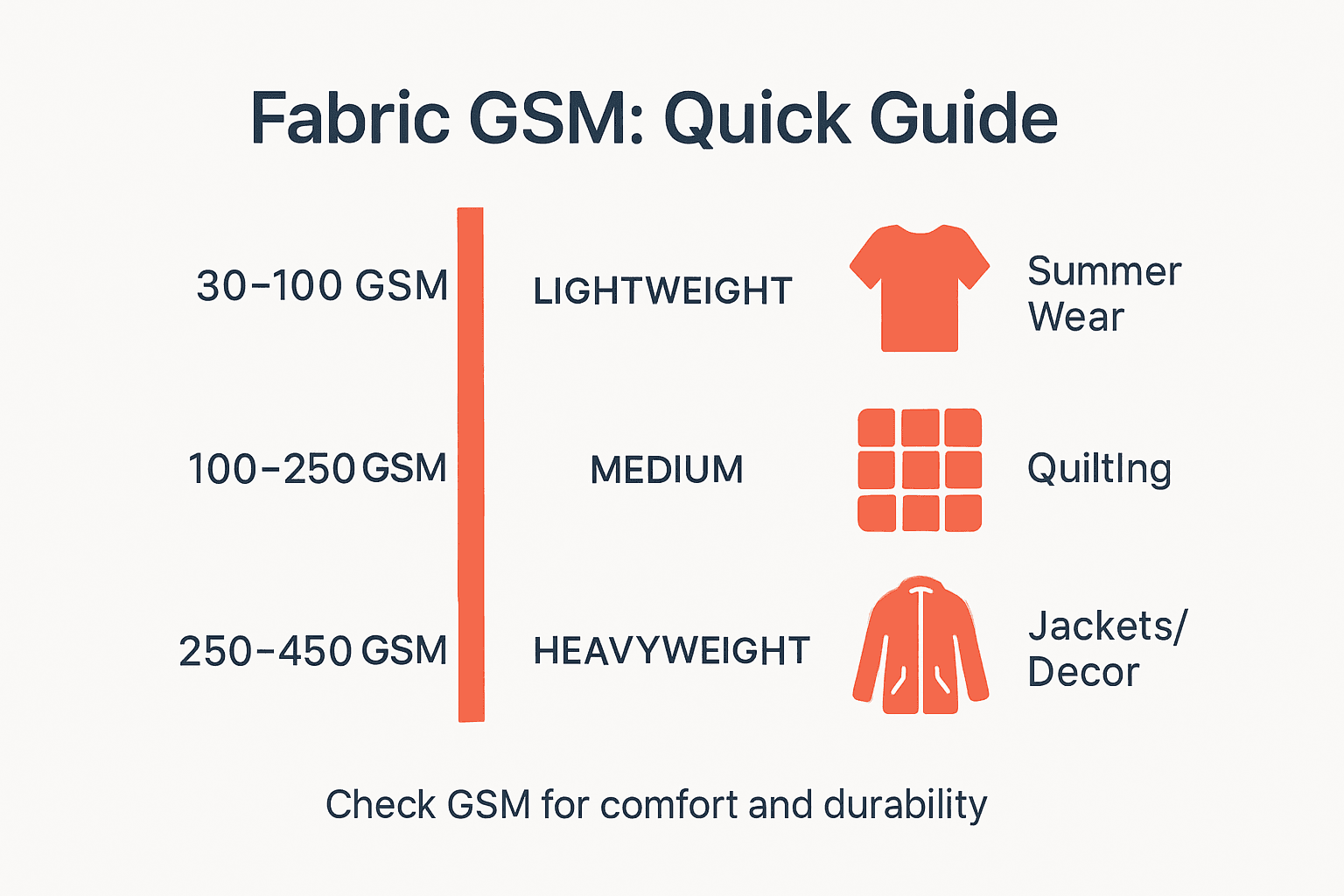
To break down GSM ranges for crafting projects, consider these general guidelines:
Pro Tip for Fabric Selection: Always request a fabric sample or swatch before purchasing large quantities, as GSM alone doesn’t tell the complete story of a textile’s performance and feel.
When selecting fabrics, understanding GSM helps eliminate guesswork by providing a quantifiable metric for comparing textiles. Professional quilters and hobbyists alike use this measurement to predict how a fabric will behave in different projects, ensuring consistent results and preventing unexpected surprises during crafting.
Here’s a quick reference comparing how fiber type and weave influence fabric feel and use, even when GSM is identical:
| GSM Value | Fiber Type | Weave Type | Typical Feel | Common Uses |
|---|---|---|---|---|
| 200 GSM | Cotton | Plain | Soft, breathable | Quilting, shirts |
| 200 GSM | Polyester | Twill | Smooth, less breathable | Light jackets, crafts |
| 250 GSM | Wool | Plain | Warm, insulating | Winter quilts, blankets |
| 250 GSM | Linen | Basket | Textured, absorbent | Table linens, decor |
Quilters and crafters navigating fabric selection must understand how Grams per Square Meter (GSM) categorizes different textiles. Comprehensive market analysis reveals predictable fabric performance ranges that help makers choose materials suited to specific projects and climates.
Light Weight Fabrics (30-150 GSM) represent the thinnest textile category, perfect for delicate summer projects and lightweight layering. These fabrics include:
Medium Weight Fabrics (150-250 GSM) form the backbone of most quilting and crafting projects. Fabric weight classifications help quilters select ideal materials for different seasonal needs. These versatile textiles include:
Heavyweight Fabrics (250-450 GSM) provide substantial structure for winter projects, home decor, and robust crafting applications. Textiles in this range include:
Pro Tip for Fabric Weight Selection: Always check fabric drape and flexibility alongside GSM, as weight alone doesn’t guarantee the exact performance characteristics you need for your specific project.
Fabric GSM plays a critical role in determining textile performance, directly impacting both comfort and durability for North American crafters and consumers. Textile weight measurements reveal complex interactions between fabric density and user experience that go far beyond simple numerical ratings.
Lower GSM fabrics (30-150 GSM) excel in breathability and lightweight comfort. These textiles are ideal for summer clothing, lightweight quilting, and applications requiring maximum air circulation. Chiffon, tulle, and lightweight cotton voile represent perfect examples of how reduced fabric weight translates to enhanced wearability and cool-weather performance.
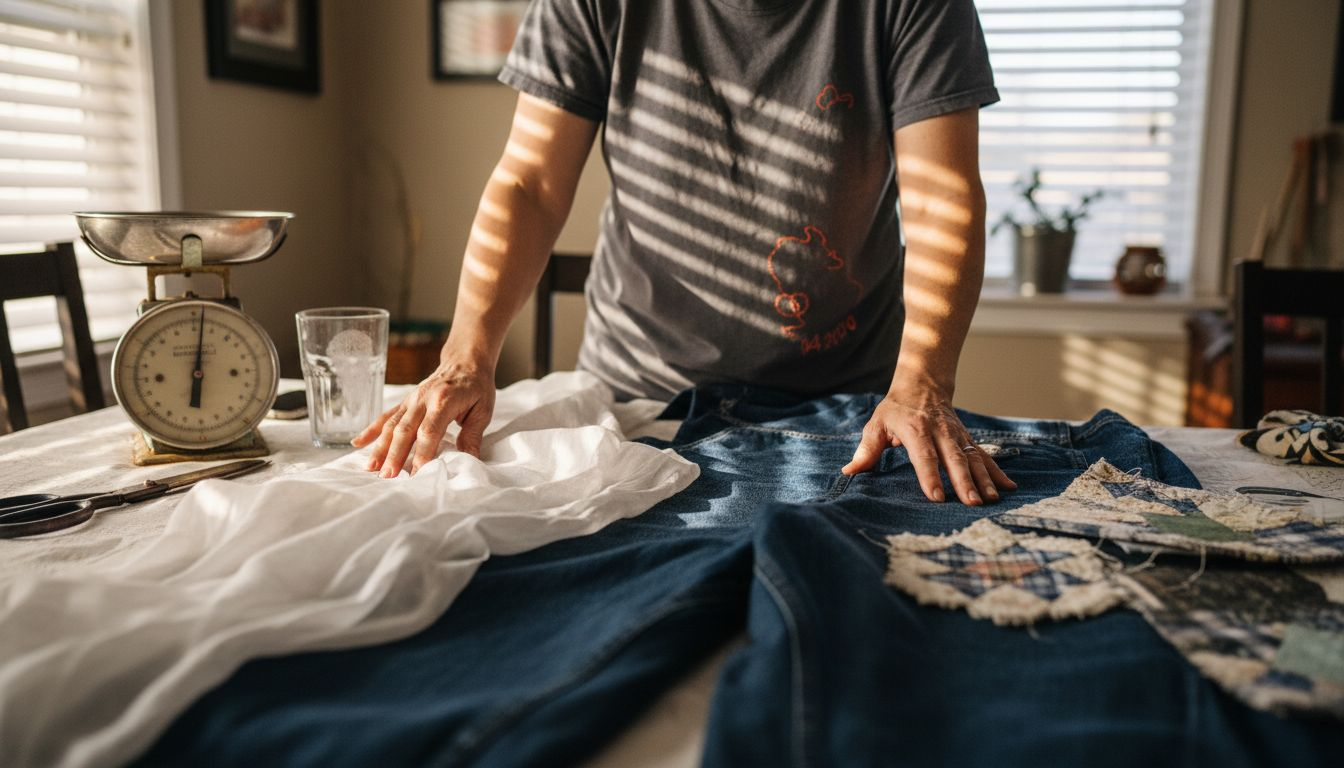
Medium to heavyweight fabrics (150-450 GSM) demonstrate superior durability and structural integrity. Fabric density directly correlates with textile resilience and resistance to wear. Quilters and crafters can expect thicker fabrics to withstand more handling, maintain shape better, and provide increased insulation. Denim, canvas, and wool exemplify how higher GSM contributes to long-lasting textile performance.
The relationship between GSM and comfort is nuanced, requiring makers to balance weight, fiber composition, and intended use. Heavier fabrics provide warmth and structure, while lighter fabrics offer breathability and flexibility.
Pro Tip for Textile Selection: Always test fabric samples across different environmental conditions to understand how GSM truly impacts comfort and durability for your specific project.
Fabric weight measurement requires precision and specialized equipment that goes beyond basic home crafting tools. Professional textile laboratories utilize standardized techniques for accurate GSM calculations that ensure consistent and reproducible results across different fabric types.
The primary tool for GSM measurement is the specialized GSM cutter, a circular cutting device designed to extract uniform fabric samples. These precision instruments create standardized circular samples typically 100 square centimeters in area, allowing crafters and manufacturers to obtain consistent weight measurements. Professional labs follow strict protocols including conditioning fabric samples in controlled humidity environments and using high-precision digital scales capable of measuring minute weight variations.
Modern GSM measurement techniques adhere to rigorous industry standards established by organizations like ASTM International and ISO. The measurement process involves several critical steps:
For hobbyist quilters and crafters without professional laboratory equipment, approximating GSM requires careful sample weighing and area measurement. While not as precise as professional methods, home techniques can provide useful estimates for fabric selection and project planning.
Pro Tip for DIY GSM Measurement: Use a kitchen scale and graph paper to measure your fabric sample’s weight and area, ensuring you cut a perfectly square piece for the most accurate home-based estimation.
Fabric weight selection is a nuanced art for quilters and crafters, requiring careful consideration of project requirements and seasonal demands. Fabric GSM plays a critical role in determining the ultimate performance and feel of textile projects, influencing everything from comfort to durability.
For summer and lightweight quilting projects, crafters should focus on lower GSM fabrics between 30-150 GSM. These lighter weight textiles provide exceptional breathability, creating quilts perfect for warm weather or layering. Chiffon, voile, and lightweight cotton represent ideal fabric choices that offer softness and minimal thermal retention, ensuring comfort during hot months.
Winter and decorative quilting projects demand higher GSM fabrics ranging from 250-450 GSM. These denser textiles provide superior warmth, structural integrity, and a luxurious feel. Wool, canvas, and thick cotton blends excel in creating substantial quilts that offer insulation and visual depth. Crafters can leverage these heavier fabrics to create statement pieces with significant tactile and visual impact.
The selection process requires balancing multiple factors beyond simple weight measurements. Fiber composition, weave structure, and intended use must complement the GSM to achieve optimal results. A 200 GSM wool quilt will perform dramatically differently from a 200 GSM cotton quilting fabric, highlighting the importance of comprehensive textile understanding.
For best project results, compare GSM with other selection factors in this summary:
| Selection Factor | Why It Matters | Impact on Project |
|---|---|---|
| GSM (Weight) | Determines thickness and density | Affects warmth and durability |
| Fiber Composition | Influences softness and breathability | Impacts comfort and use cases |
| Weave Structure | Defines drape and flexibility | Changes visual texture and handling |
| Intended Use | Guides optimal material choices | Ensures project success |
Pro Tip for Fabric Weight Selection: Always obtain and compare fabric swatches before committing to large purchases, feeling the material’s weight and drape to ensure it matches your specific project requirements.
Choosing the right fabric GSM can be confusing without hands-on experience or detailed information. Whether you are tackling lightweight summer quilting or creating a durable winter throw, understanding Fabric GSM is essential to ensure your project feels just right. Avoid the frustration of mismatched fabric weight and texture by exploring carefully categorized fabric options designed to meet your exact needs.
Start your next crafting adventure with confidence by browsing premium fabrics on Fabric-Fabric.com. Our extensive selection includes everything from delicate lightweight cotton to heavyweight upholstery textiles, all clearly described with fabric weight and usage suggestions. Don’t wait to elevate your textile choices with informed selections and enjoy special promotions available now. Visit Fabric-Fabric.com and find the ideal fabric GSM for your unique crafting or quilting project today.
GSM stands for Grams per Square Meter, a measurement that indicates the weight and density of fabric, helping in the selection of textiles for various projects.
GSM influences comfort and durability; lower GSM fabrics are ideal for lightweight projects, while higher GSM fabrics provide warmth and structure, making them suitable for heavier quilts and colder climates.
Yes, two fabrics with the same GSM can feel different due to variations in fiber composition and weave structure, affecting their softness and breathability.
For summer quilting projects, lightweight fabrics in the range of 30-150 GSM are recommended, as they offer breathability and comfort in warmer weather.