

 US Dollar

Role of Fabric Finishes in Sustainable Apparel
Posted by BLG on 2026 Feb 8th
Posted by BLG on 2026 Feb 8th


Selecting the right fabric finishes can make or break the quality of sustainable apparel lines for North American designers and small business owners. In the drive for eco-conscious fashion, every detail matters, especially when finishes can transform cotton fabrics by improving softness, strength, and comfort. This article unwraps the science and strategy behind specialized treatments applied to textiles and explains how finishes directly influence product performance, durability, and customer appeal while reducing environmental impact.
| Point | Details |
|---|---|
| Fabric finishes enhance apparel performance | Specialized treatments improve durability, comfort, and functionality, meeting consumer expectations effectively. |
| Sustainability is crucial in fabric finishing | Designers should prioritize eco-friendly techniques to reduce environmental impact while enhancing fabric properties. |
| Consumer safety and compliance are vital | Manufacturers must adhere to regulatory standards and provide transparency regarding chemical usage in textile treatments. |
| Collaboration with experts is beneficial | Engaging textile chemists can lead to better understanding and implementation of sustainable finishing strategies. |
Fabric finishes are specialized treatments applied to textiles that transform raw materials into functional, performance-enhanced apparel. These chemical or physical processes fundamentally alter fabric properties, creating textiles with enhanced characteristics beyond their original state. Textile finishing techniques) encompass multiple methods designed to improve appearance, feel, and utility of fabrics.
At their core, fabric finishes serve several critical purposes in sustainable apparel design:
The science behind fabric finishes is complex and nuanced. Chemical treatments applied to cotton fabrics can significantly modify fundamental textile characteristics, influencing everything from softness and strength to moisture management and wrinkle resistance. Sustainable designers leverage these techniques to create high-performance garments that meet rigorous consumer expectations while minimizing environmental footprint.
Modern fabric finishing represents a sophisticated intersection of chemistry, materials science, and design innovation. By strategically applying these treatments, apparel manufacturers can dramatically enhance textile performance without compromising ecological considerations.
Pro tip: Always research the specific chemical composition and environmental impact of fabric finishes before integrating them into sustainable design processes.
Fabric finishes represent a diverse array of chemical and mechanical treatments designed to enhance textile performance and aesthetic qualities. Chemical fabric finishes) offer designers multiple strategies for transforming raw textiles into sophisticated, functional materials that meet precise apparel requirements.
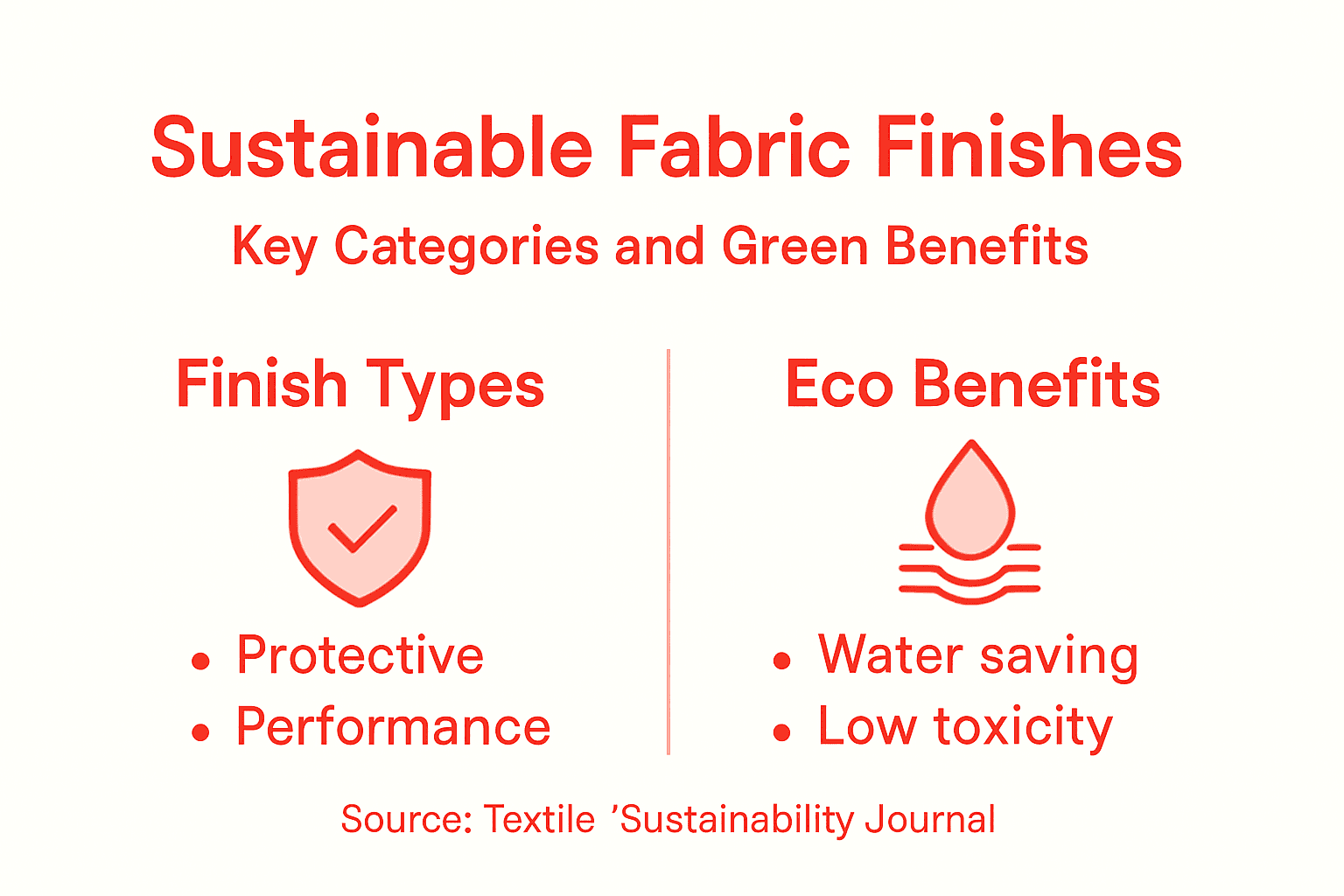
The primary categories of fabric finishes for sustainable apparel include:
Protective Finishes
Performance Enhancement Finishes
Aesthetic Improvement Finishes
Polysiloxane-based soft finishes represent a sophisticated approach to fabric treatment, enabling designers to create textiles with enhanced comfort and functionality. These advanced chemical treatments can dramatically improve fabric properties without compromising the material’s fundamental characteristics.
Sustainable apparel designers must carefully select fabric finishes that balance performance requirements with environmental considerations. Each finish represents a strategic choice that impacts the garment’s durability, comfort, and ecological footprint.
Pro tip: Consult with textile chemists to understand the precise environmental impact of specific fabric finishing techniques before implementation.
Here’s a summary of common fabric finish types and their core advantages in apparel design:
| Finish Category | Key Purpose | Typical Use Cases |
|---|---|---|
| Protective Finishes | Safeguard against hazards and stains | Outdoor gear, uniforms |
| Performance Enhancements | Boost functionality and comfort | Sportswear, activewear |
| Aesthetic Improvements | Enhance look and feel | Fashion, luxury garments |
Fabric finishing techniques represent a transformative approach to textile engineering, enabling designers to dramatically improve fabric performance and functionality. These sophisticated treatments go beyond simple surface modifications, fundamentally reshaping the intrinsic properties of textile materials to meet complex consumer and industrial requirements.
Fabric finishes enhance textiles through multiple critical mechanisms:
Mechanical Performance
Functional Properties
Aesthetic Improvements
Cotton fabric enhancements demonstrate how targeted chemical treatments can revolutionize textile characteristics. Advanced finishing processes enable fabrics to adapt to environmental conditions, providing unprecedented levels of comfort and performance that traditional manufacturing methods cannot achieve.

The strategic application of fabric finishes allows designers to create textiles that are not just materials, but intelligent solutions tailored to specific user needs. By carefully selecting and implementing appropriate finishing techniques, manufacturers can develop garments that offer superior functionality, sustainability, and user experience.
Pro tip: Collaborate with textile chemists to develop custom finishing strategies that align with your specific performance and sustainability goals.
Textile finishing processes represent a critical environmental challenge in sustainable apparel manufacturing, contributing significantly to global ecological footprints. These complex chemical treatments consume substantial resources and generate considerable environmental waste, making them a key focus for sustainability innovation.
The primary environmental concerns associated with fabric finishes include:
Chemical Pollution
Resource Consumption
Carbon Footprint Implications
Synthetic fiber production introduces additional environmental complications, particularly through microplastic generation and carbon-intensive manufacturing techniques. These processes compound the ecological challenges inherent in traditional fabric finishing approaches.
Sustainable design strategies must prioritize reducing chemical intensity, minimizing water consumption, and developing alternative finishing technologies that decrease environmental impact. Innovative approaches like bio-based finishes, closed-loop water systems, and regenerative chemical treatments offer promising pathways toward more environmentally responsible textile production.
Pro tip: Conduct comprehensive life-cycle assessments of fabric finishing techniques to identify and mitigate potential environmental risks before implementation.
To highlight sustainability strategies, here’s a comparison of conventional and eco-friendly fabric finishing methods:
| Method | Resource Use | Environmental Impact | Sustainable Features |
|---|---|---|---|
| Conventional Finishing | High water, energy | Chemical pollution risk | Often lacks eco-certification |
| Eco-Friendly Finishing | Reduced resources | Minimized waste and emissions | Bio-based, closed-loop |
Stain repellent fabric finishes present a complex landscape of safety considerations, regulatory challenges, and evolving consumer expectations. The intersection of performance, health, and environmental concerns drives increasingly sophisticated approaches to textile chemical treatments.
Key safety and compliance factors include:
Chemical Regulation
Consumer Safety Priorities
Compliance Framework Elements
Occupational health standards play a critical role in defining acceptable chemical exposures during textile production. These frameworks protect workers while simultaneously addressing broader consumer safety concerns about chemical treatments in apparel manufacturing.
Navigating the complex terrain of safety and perception requires a holistic approach that balances technical performance, regulatory compliance, and consumer trust. Manufacturers must continuously adapt their finishing techniques to meet increasingly stringent safety requirements and evolving environmental expectations.
Pro tip: Develop comprehensive chemical tracking systems that document every stage of fabric finish application to ensure transparency and regulatory compliance.
Sustainable apparel demands more than just awareness of fabric finishes. It calls for access to high-quality textiles that support durability, comfort, and eco-friendly innovation. If you are seeking to incorporate fabric finishes that enhance performance while reducing environmental impact, start by choosing the right base materials. Our fashion collection offers a curated selection of fabrics designed for longevity and versatility, perfect for sustainable garment creation.

Explore natural and innovative textiles to elevate your sustainable apparel projects today. Visit https://fabric-fabric.com to browse our extensive catalog and find fabrics that match your sustainability goals. Don’t wait to make responsible choices that combine style, safety, and environmental care. Shop now and create fashion that makes a positive difference.
Fabric finishes are specialized treatments applied to textiles that enhance their functionality and aesthetic qualities. They improve durability, comfort, and reduce environmental impact, making them crucial in sustainable apparel design.
Fabric finishes fall into three primary categories: protective finishes (like water repellency and stain resistance), performance enhancement finishes (such as moisture-wicking and wrinkle resistance), and aesthetic improvement finishes (including softening and color enhancement).
Fabric finishes enhance textiles by increasing mechanical performance (e.g., strength and durability), providing functional properties (e.g., moisture management and temperature regulation), and improving aesthetics (e.g., texture and drape).
The environmental concerns include chemical pollution from hazardous runoff, high resource consumption (water and energy), and carbon footprint implications from manufacturing processes. Sustainable practices aim to minimize these impacts through innovative finishing techniques.