

 Canadian Dollars

Complete Guide to Why Use Sustainable Fabrics
Posted by BLG on 2025 Nov 1st
Posted by BLG on 2025 Nov 1st


Did you know fashion and textiles account for up to 20% of global industrial water pollution? Our daily fabric choices can quietly shape the world around us. Whether you design clothes, craft at home, or simply care about what you wear, understanding sustainable fabrics opens up a chance to support healthier people and a cleaner planet. Discover how innovative materials are changing what it means to create responsibly and beautifully.
| Point | Details |
|---|---|
| Sustainable Fabrics Defined | Sustainable fabrics minimize environmental impact through renewable or recycled sources and low-impact production processes. |
| Types and Benefits | Diverse sustainable fabric types like organic cotton and hemp offer various environmental advantages and performance features. |
| Environmental and Social Impact | Fabric choices significantly influence environmental health and ethical manufacturing, making informed selection critical. |
| Importance of Certifications | Eco-friendly textiles should be verified through recognized certifications, ensuring transparency and responsible practices in production. |
Sustainable fabrics are innovative textile solutions designed to minimize environmental impact while providing functional and aesthetically pleasing materials. According to Textile School, these textiles are derived from renewable or recycled sources, strategically developed to reduce water usage, chemical pollution, and carbon emissions compared to conventional fabric production methods.
At their core, sustainable fabrics represent a holistic approach to textile manufacturing that prioritizes ecological responsibility. These materials can be sourced through various methods, including:
The key distinguishing factor of sustainable fabrics is their comprehensive environmental consciousness. MDPI Research emphasizes that these textiles are not just about the end product, but about the entire production lifecycle. This means considering water consumption, chemical usage, energy expenditure, and overall carbon footprint from raw material extraction through final product creation.
For crafters, fashion designers, and home decorators, sustainable fabrics offer a powerful way to make environmentally responsible choices without sacrificing quality or aesthetic appeal. These materials prove that ecological consciousness and superior textile performance can coexist, providing an exciting frontier in textile innovation that supports both creative expression and planetary health.
Sustainable fabrics represent a diverse ecosystem of textile materials, each with unique environmental characteristics and performance attributes. Textile School highlights several prominent sustainable fabric types that are transforming the textile industry, offering crafters and designers innovative ecological alternatives.
Here are the most notable sustainable fabric types:
Each sustainable fabric brings distinct advantages to textile production. For instance, hemp fabric offers exceptional durability and natural resistance to bacteria, while Tencel Lyocell provides incredible softness and moisture-wicking properties. The manufacturing processes for these materials prioritize reduced water consumption, minimal chemical usage, and lower carbon emissions compared to traditional textile production.
Here’s a comparison of notable sustainable fabric types and their key environmental attributes:
| Fabric Type | Source Material | Environmental Benefits | Performance Features |
|---|---|---|---|
| Organic Cotton | Organic cotton plant | Reduced water & pesticide use | Soft, breathable |
| Hemp | Hemp plant | Rapid growth, minimal chemicals | Highly durable, antibacterial |
| Linen | Flax plant | Biodegradable, low environmental impact | Cool touch, strong fibers |
| Tencel Lyocell | Wood pulp (eucalyptus, etc.) | Closed-loop production, low waste | Moisture-wicking, silky texture |
| Recycled Polyester | Recycled plastic | Diverts plastic from landfills | Strong, wrinkle resistant |
For crafters and designers seeking ecological alternatives, understanding these fabric differences becomes crucial.
 Selecting the right sustainable fabric means balancing environmental impact, performance characteristics, and aesthetic requirements. Whether you’re creating a quilting project, designing fashion pieces, or developing home decor, these sustainable textiles offer a responsible pathway to creative expression that supports planetary wellness and reduces environmental strain.
Every fabric choice carries profound environmental and social consequences that extend far beyond aesthetic preferences. Textile School reveals that conventional fabrics like polyester and traditional cotton are significant contributors to environmental degradation, characterized by excessive water consumption, chemical pollution, and non-biodegradable waste.
The environmental impact of fabric production can be staggering. Unsustainable textile manufacturing processes contribute to:
MDPI Research highlights an emerging consumer trend where individuals are increasingly making fabric choices based on environmental and personal health considerations. This shift demonstrates a growing awareness that textile selection is not just a personal preference, but a collective responsibility toward planetary sustainability.
For crafters, designers, and consumers, understanding these impacts transforms fabric selection from a mere aesthetic decision to a powerful environmental statement. By consciously choosing sustainable fabrics, individuals can directly contribute to reducing ecological harm, supporting ethical manufacturing practices, and promoting a more responsible textile industry that respects both environmental systems and human communities.
Textile certifications serve as critical guideposts for consumers and manufacturers seeking genuine sustainable fabric solutions. Textile School highlights that eco-friendly textiles are validated through specific standards ensuring rigorous environmental and social responsibility throughout production.
Key certifications that crafters and designers should recognize include:
These certifications provide more than just a label. They represent comprehensive assessments of a textile’s entire lifecycle, from raw material sourcing to final production. For conscientious crafters and designers, understanding these standards means making informed choices that support both environmental sustainability and ethical manufacturing practices.
When selecting sustainable fabrics, look beyond surface-level claims. Genuine certifications offer transparency, allowing you to trace a fabric’s environmental and social impact. By prioritizing certified sustainable textiles, you’re not just choosing a material – you’re casting a vote for responsible production, worker welfare, and planetary health.
Sustainable fabric selection is a nuanced process that requires careful consideration of multiple factors. Textile School emphasizes that choosing eco-friendly textiles involves strategically evaluating environmental impact, specific fabric properties, and relevant certifications to align with broader sustainability goals.
When selecting sustainable fabrics for projects or business, consider these critical evaluation criteria:
Practical strategies for making informed sustainable fabric choices involve deep research and intentional decision-making. Crafters and business owners should examine fabric origins, manufacturing processes, and potential environmental trade-offs. This means looking beyond surface-level marketing claims and understanding the comprehensive ecological footprint of each textile option.
Ultimately, choosing sustainable fabrics is about creating a holistic approach to design and production. By prioritizing materials that minimize environmental harm, support ethical manufacturing, and deliver exceptional quality, you’re not just selecting a fabric – you’re participating in a broader movement toward responsible, conscious creation that respects both planetary resources and creative potential.
Fabric choices represent far more than aesthetic decisions – they are powerful environmental statements. Textile School reveals that sustainable fabrics like organic cotton and hemp dramatically reduce environmental impact by requiring significantly less water and pesticides compared to conventional textile production.
Key differences between sustainable and conventional fabrics include:
MDPI Research highlights that consumers increasingly perceive natural fibers as more sustainable, associating them with improved comfort and reduced environmental consequences. This shift represents more than a trend – it’s a fundamental reimagining of textile production that prioritizes ecological responsibility alongside performance and aesthetic quality.
For crafters, designers, and conscious consumers, understanding these differences transforms fabric selection from a simple purchasing decision into a meaningful environmental choice. By recognizing the profound impact of textile production, individuals can make informed decisions that support planetary health, ethical manufacturing, and long-term sustainability.
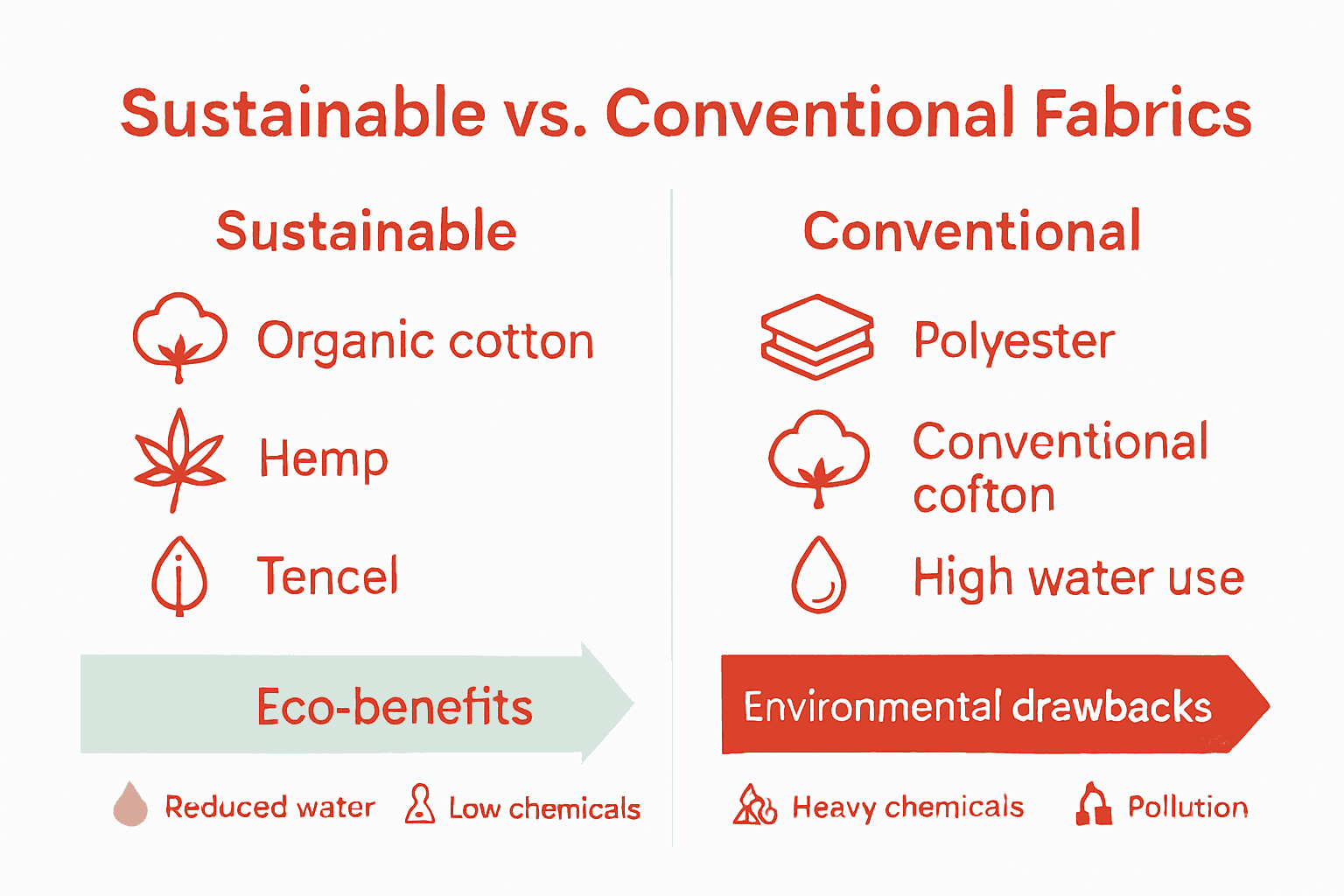
Choosing sustainable fabrics is more than just a trend it is a commitment to reduce environmental impacts like water consumption and chemical pollution while enhancing your projects with durable, eco-friendly materials. If you have been searching for textiles that balance exceptional quality with a responsible footprint you are not alone. The article highlights key challenges many crafters and designers face such as selecting fabrics with verified certifications, minimizing ecological harm, and achieving professional performance without compromise.
Take the next step in your creative journey by exploring our wide selection of sustainable and high-quality fabrics at Fabric-Fabric. Whether you need textiles for apparel, quilting, or home decor you will find detailed descriptions and customer-friendly tools to simplify your choices. Act now to enjoy seasonal promotions and free shipping offers that make eco-conscious sourcing easier than ever. Visit Fabric-Fabric today and start crafting with sustainable fabrics that truly align with your values.
Sustainable fabrics are textiles designed to minimize environmental impact, typically sourced from renewable or recycled materials. They prioritize ecological responsibility throughout their production lifecycle, focusing on reduced water usage, chemical pollution, and carbon emissions.
Using sustainable fabrics helps reduce ecological harm by conserving natural resources, lowering chemical exposure, and decreasing carbon emissions. They also offer quality alternatives that perform well in terms of durability, comfort, and aesthetics.
Sustainable fabrics significantly reduce water usage, chemical exposure, and carbon footprint compared to conventional fabrics. They often come from renewable sources and are biodegradable, while many conventional fabrics contribute to pollution and environmental degradation.
Key certifications include the Global Organic Textile Standard (GOTS), OEKO-TEX Standard 100, Bluesign Certification, Cradle to Cradle Certification, and Fair Trade Textile Standard. These ensure that fabrics meet rigorous environmental and social responsibility standards.