

 Canadian Dollars

Complete Guide to Fabric Blends in Fashion
Posted by BLG on 2025 Nov 7th
Posted by BLG on 2025 Nov 7th


Blended fabrics have completely transformed how we experience clothing and textiles. In fact, over 70 percent of everyday garments now contain some type of fabric blend, offering better comfort and resilience compared to single-fiber materials. For anyone creating, designing, or choosing textiles, understanding what makes these combinations so effective is more important than ever. Discover how different fibers work together behind the scenes to improve everything from wearability to sustainability.
| Point | Details |
|---|---|
| Understanding Fabric Blends | Fabric blends combine multiple fibers to enhance durability, comfort, and aesthetic appeal, allowing for targeted performance characteristics. |
| Key Advantages | Fabric blends offer enhanced durability, improved comfort, cost-effectiveness, and versatile applications suited for specific needs. |
| Impact on Clothing Performance | Strategic fiber combinations improve clothing attributes such as flexibility, shape retention, and moisture-wicking capabilities. |
| Sustainability Focus | Eco-friendly fabric blends reduce environmental impact and improve biodegradability while maintaining high-performance standards. |
A fabric blend represents a sophisticated textile innovation where multiple fiber types combine to create materials with enhanced performance characteristics. According to Wikipedia, a fabric blend is a textile product crafted from a mixture of two or more fibers, strategically combined to achieve specific desired traits like improved durability, increased comfort, or distinctive aesthetic appeal.
The core purpose of fabric blending goes far beyond simple material mixing. As PSSCIVE explains, blended fabrics are intentionally created by merging different fiber types to produce textiles that leverage the most favorable properties of each component. This purposeful engineering allows manufacturers to design fabrics with targeted performance attributes.
Key advantages of fabric blends include:
For crafters, fashion designers, and textile professionals, understanding fabric blends is crucial. Understanding the Role of Textiles in Fashion can provide deeper insights into how these innovative materials transform design possibilities and performance characteristics.
Fabric blends have revolutionized textile manufacturing, offering designers and consumers versatile materials with enhanced performance characteristics. According to Six Dragon Fabrics, common fabric blends like cotton-polyester strategically combine different fiber properties to create textiles that excel in both functionality and comfort. For instance, a cotton-polyester blend leverages cotton’s breathability with polyester’s wrinkle resistance and durability, making it ideal for everyday clothing.
Group GF highlights several popular fabric blends that showcase innovative textile engineering:
Each blend serves a unique purpose, carefully selecting fiber characteristics to meet specific performance requirements.
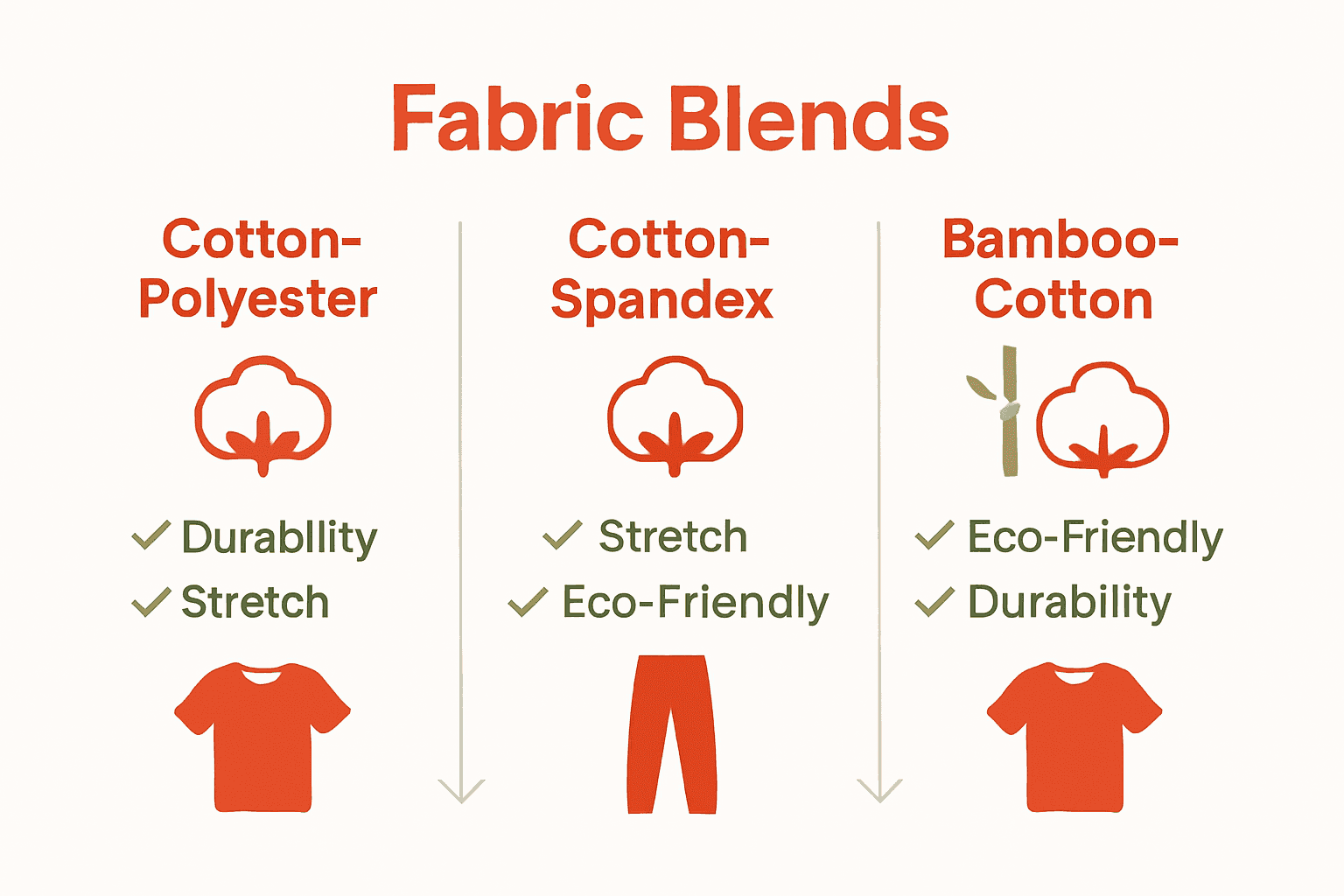 Designers and manufacturers use these strategic combinations to create fabrics that outperform single-fiber textiles in comfort, durability, and aesthetic appeal.
For those looking to dive deeper into fabric selection, the 7 Types of Wholesale Fabrics Every Designer Should Know guide can provide additional insights into the intricate world of textile design and material selection.
Fabric blends fundamentally transform clothing performance by strategically combining different fiber characteristics to create superior textiles. According to Wikipedia, blending fibers like cotton and polyester can dramatically enhance clothing attributes, resulting in fabrics that are more durable and easier to maintain compared to single-fiber materials.
The Garment Solution highlights how specific fiber combinations unlock remarkable performance benefits. Blending cotton with spandex, for instance, creates garments that offer:
Performance improvements extend across different clothing categories. Athletic wear benefits from moisture-wicking blends, professional attire gains wrinkle resistance, and casual clothing achieves better durability. These strategic fiber combinations mean clothing can now adapt to multiple environmental conditions while maintaining comfort and aesthetic appeal.
To understand more about selecting the right fabrics for specific needs, check out our Understanding the Role of Fast Fashion Fabrics in Design guide, which provides deeper insights into textile performance and design considerations.
The textile industry is experiencing a transformative shift towards more sustainable manufacturing practices, with eco-friendly fabric blends emerging as a critical innovation. According to SEFT, these sustainable blends like cotton-lyocell and bamboo-cotton are revolutionizing textile production by combining natural fibers with semi-synthetic materials to create environmentally responsible textiles that don’t compromise on comfort.
Fashion Sustainability Directory provides a deeper perspective, framing fabric blending as a complex socio-technical construct that reflects broader industrial strategies and environmental consciousness. Key sustainable fabric blend characteristics include:
These eco-friendly blends represent more than just a trend. They signify a fundamental reimagining of textile production, balancing consumer needs with environmental responsibility. Designers and manufacturers are increasingly recognizing that sustainability can coexist with high-performance, aesthetically pleasing fabrics.
For those eager to explore sustainable textile options in more depth, our Complete Guide to Why Use Sustainable Fabrics offers comprehensive insights into the world of environmentally conscious textile design.
Understanding the nuances of fabric blends requires a comprehensive approach that balances potential advantages with potential pitfalls. According to PSSCIVE, blended fabrics present a complex landscape of benefits and challenges that demand careful consideration.
Pros of fabric blends include:
However, the journey of fabric blending isn’t without potential complications. Common mistakes that designers and manufacturers must avoid include:
Understanding these intricate details requires deep technical knowledge. For those looking to dive deeper into fabric selection strategies, our 7 Steps to a Successful Fabric Selection Checklist provides a comprehensive framework for making informed textile choices.
Choosing the right fabric blend can feel overwhelming with so many options and technical details to consider. The article highlights challenges like blending ratios, fiber compatibility, and fabric performance — pain points that often leave designers and crafters uncertain about which materials will best meet their needs. Whether your goal is enhanced durability, comfort, or sustainability, understanding these fabric blend factors is key to creating garments or home projects that truly shine.
Explore a carefully curated selection of high-quality blended fabrics at Fabric-Fabric designed to bring your creative vision to life. Benefit from detailed descriptions, usage tips, and competitive pricing tailored for both hobbyists and professionals. Don’t wait to experience the advantages of the perfect blend — browse now and take advantage of seasonal promotions and free shipping offers to make your project a success. Start your fabric search today with our comprehensive resources like Understanding the Role of Textiles in Fashion and 7 Steps to a Successful Fabric Selection Checklist to make confident, informed choices.
Fabric blends are textiles created from a mixture of two or more fiber types. They enhance performance characteristics, such as durability, comfort, and aesthetic appeal, allowing manufacturers to design fabrics that meet specific needs in fashion.
Popular fabric blends include cotton-polyester for breathability and wrinkle resistance, cotton-modal for softness, cotton-spandex for stretch, and wool-polyester for warmth and durability. These blends offer various performance benefits tailored to specific clothing needs.
Fabric blends enhance clothing performance by combining the best traits of different fibers. For example, blends like cotton and spandex provide flexibility and shape retention, while moisture-wicking blends improve comfort for athletic wear. This allows garments to better adapt to different environments and use cases.
Eco-friendly fabric blends, such as cotton-lyocell and bamboo-cotton, reduce environmental impact by lowering carbon footprints and optimizing raw material use. They also improve biodegradability and enhance fabric durability, resulting in sustainable textiles that meet both consumer and environmental needs.