

 Canadian Dollars

Double gauze fabric: soft, breathable, and made for crafting
Posted by BLG on 2026 May 5th
Posted by BLG on 2026 May 5th

TL;DR:
- Double gauze is a lightweight, breathable fabric made from two loosely woven cotton layers that trap air for softness and puffiness. It is versatile for garments, baby items, and home décor due to its drape, softness, and layered warmth, becoming softer with each wash. To sew it successfully, prewash, handle minimally, use sharp tools, and choose appropriate stitches to preserve its texture and structure.
Double gauze has a way of fooling people. You pick it up for the first time and think, “Is this muslin? Is it too flimsy for a real project?” But experienced sewists know that feeling fades the moment you actually work with it. This fabric is deceptively light, remarkably soft, and surprisingly versatile. Whether you’re making a summer dress, a baby swaddle, a breezy curtain, or your next quilt top, double gauze deserves a serious spot in your fabric stash. Here’s everything you need to know to work with it confidently.
| Point | Details |
|---|---|
| Unique construction | Double gauze is made by stitching two layers of cotton gauze, creating softness and breathability. |
| Versatile uses | This fabric is ideal for apparel, quilts, baby items, and home decor projects. |
| Easy to sew with tips | Prewashing, stabilization, and dense quilting help you get pro results. |
| Comparison to other fabrics | Double gauze stands out for softness and comfort but differs from muslin and poplin in structure and use. |
Double gauze is one of those fabrics that earns a dedicated fan base the moment crafters understand what they’re actually holding. It looks simple but has a clever internal structure that makes it behave completely differently from single-layer cotton.
Double gauze is a lightweight, breathable fabric made by tacking or stitching together two thin layers of loosely woven cotton gauze fabric, creating air pockets for softness and opacity.
That layered structure is the whole story. Two open-weave cotton layers, loosely joined together, trap tiny pockets of air between them. Those air pockets give double gauze its characteristic puffiness, softness, and breathability all at once. It’s not stiff. It’s not sheer. It drapes gently and feels almost cushion-like against your skin.
Here’s what sets double gauze apart from fabrics it gets confused with:
The fiber content is almost always 100% cotton, which means double gauze is washable, natural, and skin-friendly. You’ll occasionally find bamboo or polyester blends, but the pure cotton version is what most crafters seek out for its breathability and feel.
Now that you know what double gauze is, let’s explore how it stands out for practical crafting and sewing projects.
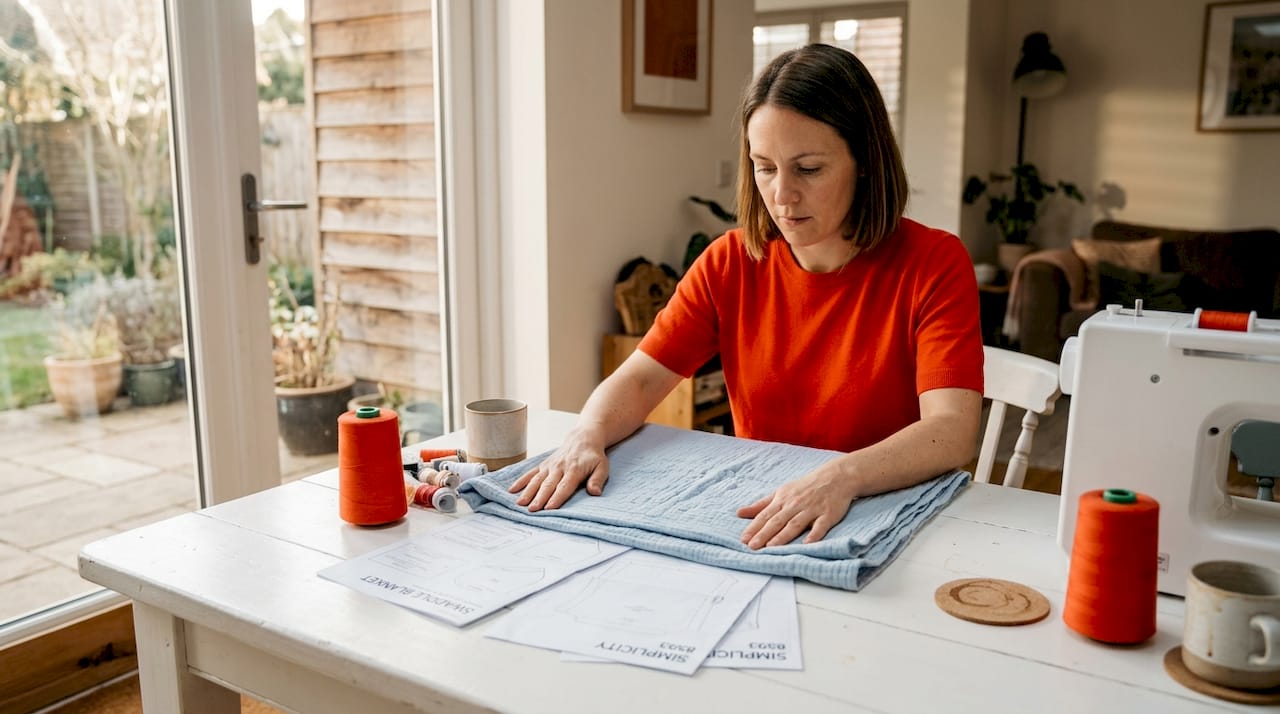
Double gauze is widely used for garments, blankets, and baby items because of its airy softness. That’s not marketing talk. It genuinely has properties that make it ideal across a wide range of project types.
Why crafters love double gauze:
Best project uses by category:
Pro Tip: If you’re sewing a project for a baby shower, double gauze swaddle blankets are fast to make and genuinely impressive. Cut a square, do a simple rolled hem or serged edge, and the result looks and feels like a boutique product.
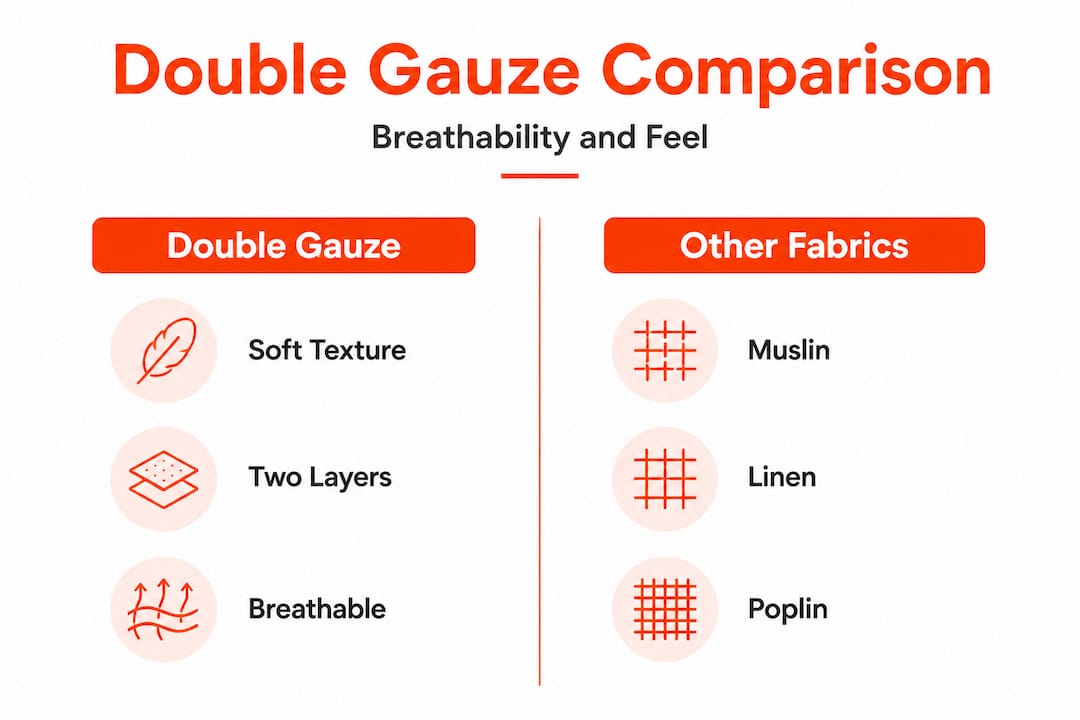
Double gauze isn’t the only breathable fabric on the block. Let’s see how it stacks up against other favorites so you can pick the right material for your specific project.
Double gauze is one of several breathable fabrics ideal for summer and airy projects, but each option brings something different to the table. Consulting resources on best summer fabrics can help you narrow down your choices for warm-weather garments.
| Fabric | Weight | Opacity | Drape | Best for |
|---|---|---|---|---|
| Double gauze | Light to medium | Semi-opaque | Soft, flowing | Apparel, baby items, quilts |
| Muslin | Light | Semi-opaque | Crisp, minimal | Mockups, linings, utility projects |
| Lawn | Light | Semi-transparent | Fluid, silky | Blouses, heirloom sewing, linings |
| Voile | Very light | Semi-transparent | Elegant, sheer | Curtains, overlays, romantic garments |
| Poplin | Medium | Opaque | Structured | Shirts, structured dresses, uniforms |
When comparing these fabrics for different uses, keep a few specific differences in mind:
Knowing where each fabric shines helps you make confident decisions. A detailed lightweight fabrics guide can point you toward the right choice for your specific project needs. If you’re working primarily in cotton, understanding the full range of cotton fabric types is a smart investment of your time as a crafter.
Understanding double gauze’s unique structure is key. Here’s how to sew and quilt it without frustration.
Prepping your fabric:
Sewing techniques that work:
Pro Tip: When topstitching double gauze, use a walking foot if you have one. The two-layer structure can cause shifting between the layers, and a walking foot feeds both layers evenly for a cleaner result.
Quilting with double gauze:
Double gauze is bulkier than typical cottons; dense quilting on a 1-inch grid or quilt-as-you-go (QAYG) methods work well to handle the extra loft without creating a stiff finished quilt.
| Quilting method | Why it works with double gauze |
|---|---|
| 1-inch grid quilting | Controls loft and prevents layers from shifting during use |
| QAYG (quilt as you go) | Reduces bulk at borders and binding seams |
| Simple diagonal lines | Works well for baby quilts where dense quilting isn’t required |
| Minimal echo quilting | Highlights double gauze’s natural texture beautifully |
Pairing double gauze with woven cotton quilting fabric creates wonderful tactile contrast in your quilt blocks. The plush double gauze sections stand out next to flat-woven cottons in a way that adds visual and physical depth. If you love geometric shapes in your work, mixing double gauze squares with geometric quilting fabric gives you a modern, layered aesthetic with built-in softness.
Here’s something the tutorials don’t often say out loud: most people over-handle double gauze, and that’s what makes their projects go sideways.
When you’re used to working with structured fabrics like quilting cotton or poplin, the instinct is to keep smoothing, re-pinning, and fussing to get every edge perfectly aligned. With double gauze, that habit works against you. The more you handle it, the more the layers shift and stretch out of shape. A project that starts with perfectly aligned layers can end up misshapen before it ever reaches the machine, simply because of too much touching and repositioning.
The real skill with double gauze is knowing when to stop. Cut confidently with sharp tools, press lightly, pin once, and sew. Resist the urge to stretch it flat or over-press seams. The texture you’re trying to preserve is the same texture that makes over-handling so damaging.
There’s also a perfectionism trap specific to double gauze quilting. Because the fabric has visible texture and a slight pucker between layers, some quilters assume their work looks “unfinished” or irregular. In reality, that texture is exactly what makes a double gauze quilt feel handmade in the best sense. The slight variation is a feature, not a flaw.
The crafters who get the most joy out of double gauze are the ones who learn to trust the fabric and work with its loose, forgiving nature rather than fighting it. Exploring resources on lightweight cotton fabrics for quilters can help you develop that instinct across a range of fabrics, not just double gauze. Once you build that kind of material intuition, your results improve dramatically because you stop trying to force every fabric into the same handling routine.
You now have a solid foundation for working with double gauze. The next step is finding fabric that inspires you to actually start a project.
At fabric-fabric.com, we carry a wide selection of specialty and everyday fabrics for sewists, quilters, and home crafters at every skill level. Whether you’re hunting for soft double gauze for a new baby blanket or browsing home decor fabric for a fresh set of light curtains, our collections are organized so you can find exactly what your project calls for. We also offer fabric options suited for event and display use, including a range of backdrop fabrics if your creative interests extend into photography or staging. Browse our full collection and use our expert guides to match the right fabric to the right project every time.
Most double gauze fabrics are made from 100% cotton, but blends with bamboo or polyester also exist for added stretch or texture.
Yes, double gauze can shrink noticeably; always prewash your fabric before cutting and sewing to lock in the final dimensions.
Double gauze creates air pockets for softness and opacity, so it is less sheer than single gauze, though light colors may still show a little transparency.
Absolutely. Double gauze works well in quilts, especially when you use a dense 1-inch quilting grid or the quilt-as-you-go method to manage the extra bulk.
Double gauze feels softer and airier than single-layer muslin, with a cushioned, almost spongy texture that muslin simply cannot replicate.