

 Canadian Dollars

Cotton Linen Fabric: What to Buy and How to Care for It
Posted by BLG on 2026 Aug 8th
Posted by BLG on 2026 Aug 8th

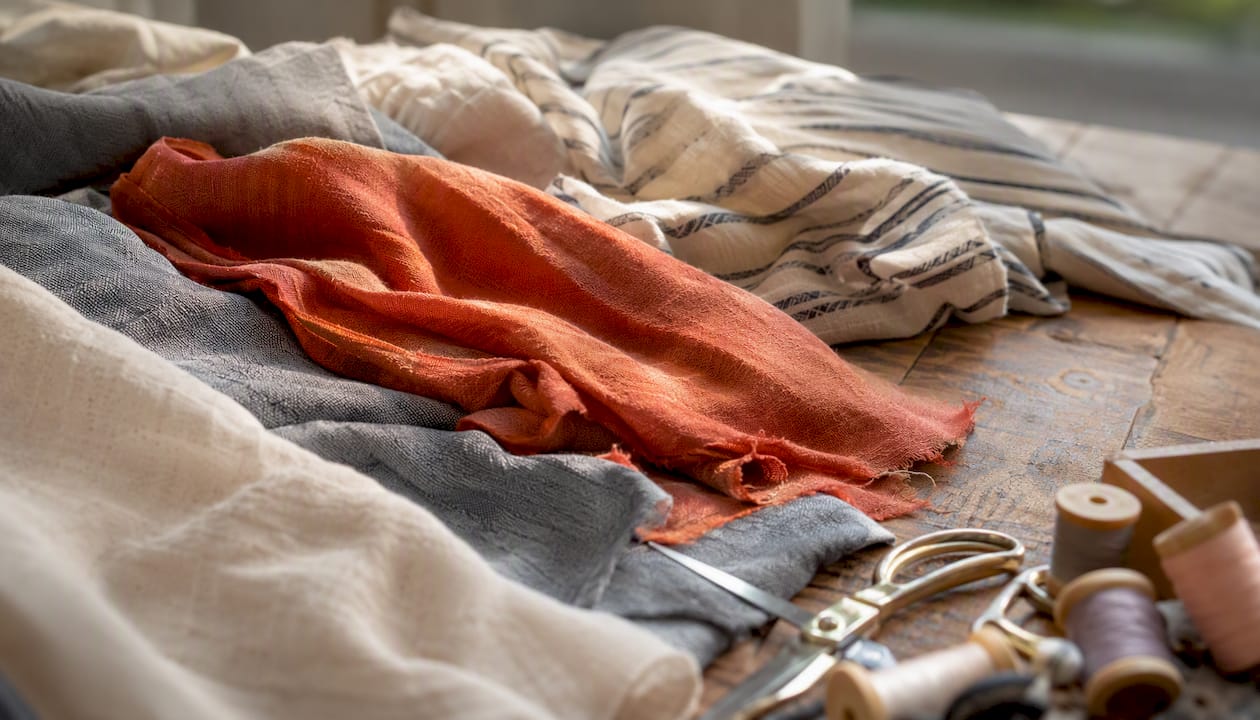
Cotton-linen is a blended natural-fiber fabric that pairs cotton’s softness with linen’s breathability and texture. It’s the go-to yardage for summer garments, casual dresses, lightweight shirts, relaxed pants, and home decor projects where you want fabric that breathes, holds its shape, and develops character with every wash.
Buy it when:
Skip it when: your pattern calls for crisp suiting weight, stretch, or a fabric that requires zero ironing.
Fabric weight is listed in GSM (grams per square meter) or oz/yd². Most apparel-weight cotton-linen blends fall within a common weight range suitable for various uses. Look for Oeko-Tex certification on the listing if you’re sewing for children or sensitive skin.
A 50/50 cotton-linen blend is the most versatile starting point for sewists: it balances linen’s breathability and tenacity with cotton’s softness and wrinkle recovery across apparel and home decor projects, but 55/45 linen-cotton and 70/30 cotton-linen blends are also common for different feel and drape.
| Point | Details |
|---|---|
| Match weight to project | Sheeting (120–160 GSM) for dresses; canvas (200–280 GSM) for bags and upholstery. |
| Always prewash | Cotton-linen can shrink 3–5% in the first wash; cut patterns only after prewashing. |
| Cold gentle wash | Cold water, mild detergent, air-dry to preserve fiber strength and texture. |
| Check certifications | Oeko-Tex Standard 100 verifies low harmful-substance processing; GOTS covers organic sourcing. |
| Fabric-fabric selection | Fabric-fabric lists GSM, width, and fiber content on every product page to help you match fabric to project before ordering. |
Cotton comes from the seed hair of the Gossypium plant; linen comes from the stem of the flax plant (Linum usitatissimum). Both are cellulose fibers, but they behave differently at the fiber level. Linen carries higher moisture regain and higher dry tenacity than cotton, while cotton offers greater elongation and a softer initial hand. Blending them captures both qualities.
Common blend ratios and what they mean:
Naming conventions to know: product pages use “cotton-linen,” “linen-cotton,” “linen + cotton,” and labeled percentages interchangeably. None of these is 100% cotton unless the listing explicitly says so. Always check the fiber content line before ordering.
For upholstery, a 50/50 or higher-cotton blend tends to balance linen’s character with cotton’s softness, making it one of the more practical natural choices for residential use.
The linen cotton fabric you find at retail comes in several distinct constructions, each suited to different projects.
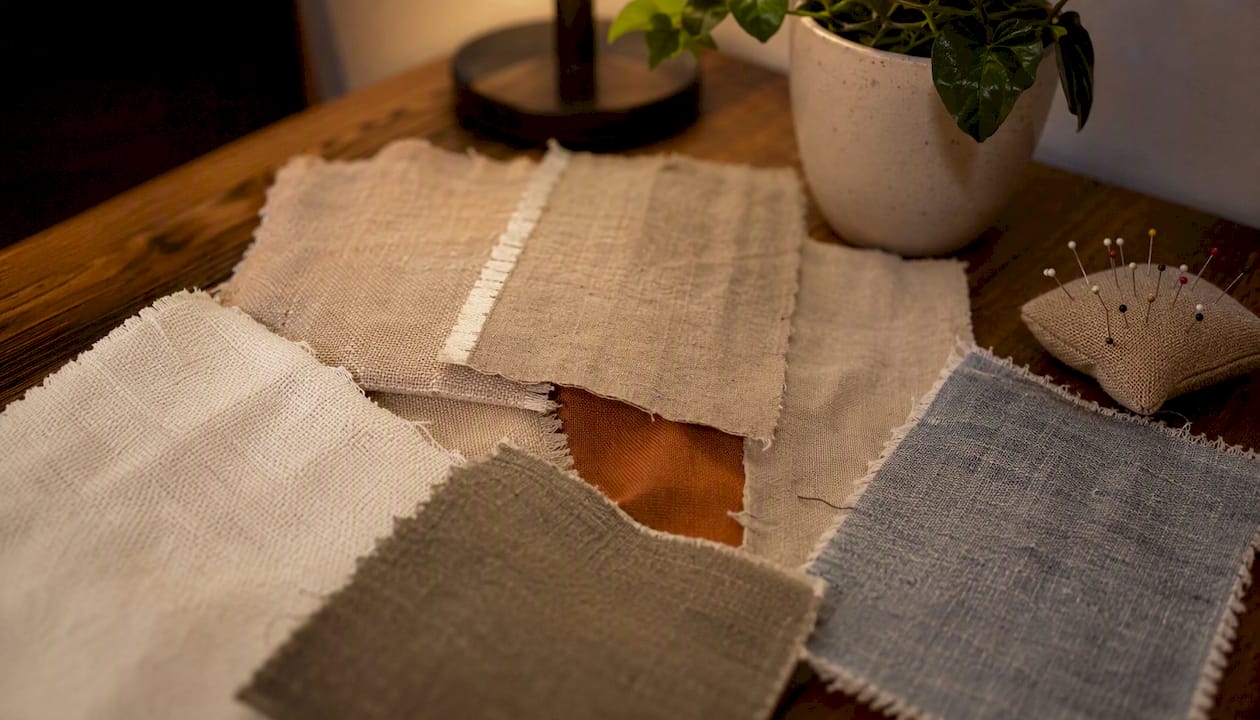
Oxford weave: A basket-weave structure that adds body and a subtle grid texture. Typically 160–200 GSM. Good for structured shirts, light jackets, and tote bags.
Canvas: Heavier plain weave, usually 200–280 GSM (7–10 oz/yd²). Holds shape well. Use it for bags, upholstery, and home decor where durability matters more than drape.
Sheeting: Smooth, tightly woven, 120–160 GSM. The most versatile weight for dresses, skirts, and lightweight curtains. Drapes well and is easy to cut and sew.
Double-gauze: Two loosely woven layers stitched together, 100–130 GSM. Soft, airy, and slightly textured. Ideal for baby items, scarves, and relaxed summer tops.
Chambray-style weaves: A plain weave with a colored warp and white weft (or vice versa), giving a two-tone effect. Usually 130–160 GSM. Works for shirts, dresses, and light home textiles.
| Fabric type | Weight range | Best uses |
|---|---|---|
| Sheeting | 120–160 GSM / 3.5 oz | Dresses, skirts, lightweight curtains |
| Oxford | 160–200 GSM | Shirts, tote bags, light jackets |
| Chambray-style | 130–160 GSM / 4–5 oz | Shirts, casual dresses, home textiles |
| Double-gauze | 100–130 GSM / 3–4 oz | Baby items, scarves, relaxed tops |
| Canvas | 200–280 GSM / 7–10 oz | Bags, upholstery, home decor |
For lightweight summer collections, sheeting and chambray-style weaves are the most versatile starting points.
The core trade-off is straightforward: linen adds tenacity and moisture-wicking capacity; cotton adds softness and wrinkle recovery. Together, a 50/50 blend sits between the two extremes on almost every performance metric.
A Kawabata KES-FB study on 50/50 cotton/linen blends found measurable differences in compression energy and surface friction compared with pure cotton and pure linen, particularly after enzyme treatments. In plain terms: the blend has a distinct hand that neither parent fiber replicates, and finishing changes that hand further.
Key performance contrast: Linen’s higher dry tenacity means the blend holds up to repeated wear and washing better than an equivalent-weight pure cotton. Cotton’s elongation keeps the fabric from feeling brittle.
Finishing matters more than most product listings suggest. Research on cellulase and pectinase treatments shows these enzyme finishes measurably change thermal conductivity and water-vapor permeability. Some enzyme treatments increase thermal conductivity (the fabric feels cooler to the touch); softening finishes can reduce water-vapor permeability (the fabric breathes slightly less). If a listing mentions “enzyme-washed,” “bio-washed,” or “softened finish,” that fabric will feel and perform differently from an untreated version of the same blend.
| Property | Pure cotton | 50/50 blend | Pure linen |
|---|---|---|---|
| Dry tenacity | Moderate | Moderate-high | High |
| Moisture regain | Moderate | Moderate-high | High |
| Initial softness | High | Medium-high | Low-medium |
| Wrinkle recovery | Good | Moderate | Poor |
For summer garments, a blend with an enzyme finish typically offers the best combination of cool feel and manageable wrinkle behavior.
The single best rule: match project type to weight, then check weave and fiber content percentage. Everything else on the listing is secondary.
Buying checklist:
Pro Tip: Wet a small swatch under a faucet, then squeeze it. Good cotton-linen drains quickly and feels cool. If it stays soggy and heavy, the weave is too dense for warm-weather garments.
When a listing has no weight spec, look at the product photo for weave openness and slub visibility. A clearly visible slub and open weave usually indicate a lighter, more breathable construction.
The safest standard care for most cotton-linen blends: cold gentle wash, mild detergent, air-dry flat or on a hanger, iron while still slightly damp on a medium setting.
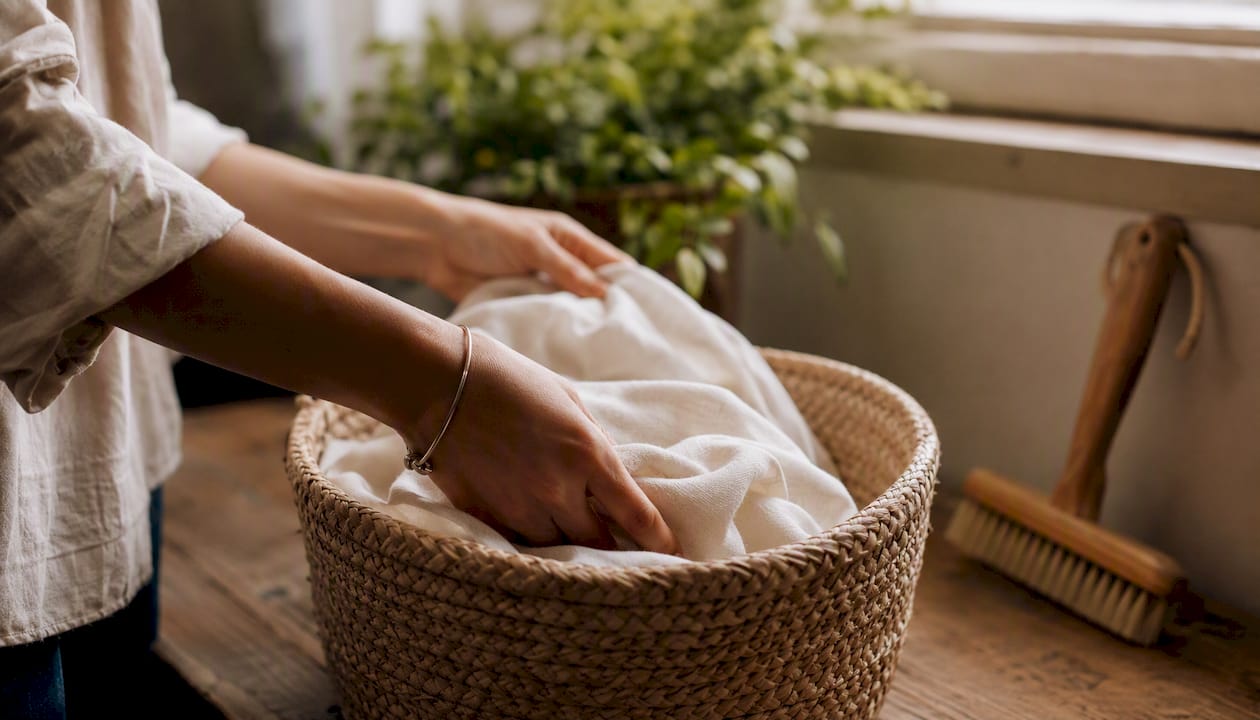
Care specialists recommend cold-water gentle washing and air-drying to prevent weakening and distortion of the fibers. High heat is the main enemy: it accelerates fiber breakdown and can cause significant shrinkage in a single cycle.
Step-by-step care:
Do not:
For natural-fiber blends, the dominant fiber guides care, but even a minority fiber percentage can require a modified approach. When the blend is close to 50/50, treat it as linen-dominant and err toward gentle.
Pro Tip: If you’re ordering yardage for a fitted garment, ask whether the fabric has been prewashed at the mill. Mill-prewashed fabric shrinks less on your first home wash, which means your pattern measurements stay accurate.
Price varies by weight and certification. Apparel-weight cotton-linen (120–180 GSM) typically runs in the mid-range for natural-fiber yardage, with lighter sheeting weights at the lower end and heavier canvas or certified-organic options at the higher end. Oeko-Tex certified or organic-cotton blends generally carry a price premium over uncertified equivalents.
Most online fabric retailers in North America sell cotton-linen in half-yard increments with continuous cuts. That means if you order 3.5 yards, you receive one uncut piece, not separate half-yard sections.
Shopping checklist for online orders:
On certifications: natural fibers like cotton and flax are biodegradable and generally require lower synthetic inputs than many man-made fibers, but “natural” alone doesn’t guarantee low-chemical processing. Oeko-Tex Standard 100 is the most widely recognized third-party test for harmful substances. GOTS (Global Organic Textile Standard) covers the full supply chain for organic claims.
Dye type affects how a fabric holds color through washing, sunlight, and friction. For cotton-linen blends, reactive dyes are the standard for quality yardage. They form a covalent bond with the cellulose fiber, which means the color is part of the fiber rather than sitting on its surface. The result is better wash fastness and light fastness compared with direct dyes, which are cheaper but fade faster.
What to look for on a listing:
Colorfastness ratings, when listed, follow ISO or AATCC standards on a scale of 1–5 (5 = no change). For garments, look for a wash fastness rating of 4 or higher. For upholstery or drapery exposed to sunlight, a light fastness rating of 4–5 matters more.
Both fibers have a reasonable environmental profile compared with most synthetics. Cotton and flax are biodegradable, and flax in particular requires relatively little water and pesticide input compared with conventional cotton. Organic cotton practices can outperform synthetics on several environmental metrics, and a blend that uses certified-organic cotton extends those benefits.
The honest caveat: “natural” doesn’t automatically mean “sustainable.” Conventional cotton farming is water-intensive, and dyeing and finishing processes add chemical load regardless of fiber origin. The most reliable way to verify a sustainability claim is third-party certification. Oeko-Tex Standard 100 covers harmful substance testing. GOTS covers organic fiber sourcing and processing. Neither is perfect, but both are independently audited and publicly verifiable.
For sewists and makers who prioritize sustainability, the practical steps are: choose Oeko-Tex or GOTS certified yardage when available, buy only what you need (account for shrinkage so you don’t over-order), and care for the fabric in ways that extend its life. Cold washing and air-drying reduce energy use and fiber degradation simultaneously. See Fabric-fabric’s guide to sustainable fabrics for a broader look at certified natural options.
The two most common mistakes are buying by color alone and skipping the prewash.
Weight mismatch is the bigger problem. A shopper picks a beautiful 55/45 linen-cotton in a midweight range suitable for dresses, then wonders why the finished garment has no body. Or they buy a canvas-weight blend for a flowy summer dress and end up with something that stands on its own. The weight column on a product listing isn’t decorative; it’s the most important spec on the page.
Skipping the prewash is the second mistake, and it’s especially costly for fitted garments. Cotton-linen can shrink noticeably in the first wash. Cutting your pattern from unprewashed yardage and then washing the finished garment can pull seams, distort hems, and ruin the fit. Two minutes of planning before you cut saves hours of frustration after.
The third thing buyers underestimate: finishing. An enzyme-washed cotton-linen and an untreated version of the same blend are genuinely different fabrics in terms of hand and thermal performance. If a listing mentions any finishing treatment, factor that into your project decision, not just your care routine.
Fabric-fabric carries cotton-linen in multiple weights and weaves, with detailed specs on each listing so you can match fabric to project before you order. Every product page includes fiber content percentage, weight in GSM, width, and care instructions, which means you spend less time guessing and more time sewing.
For home decor projects, the home decor fabric collection includes upholstery-weight and sheeting-weight options suited to cushions, drapery, and table linens. For heavier craft and backdrop work, the backdrop fabrics section covers canvas-weight selections. Swatches are available on request for larger orders, and the site ships across North America with clear return policies listed on each product page. Browse by weight or weave type, check the certification notes, and order a swatch before committing to full yardage on any project over 3 yards.