

 US Dollar

Best Drapery Materials: Top Fabrics for Every Room
Posted by BLG on 2026 Aug 11th
Posted by BLG on 2026 Aug 11th

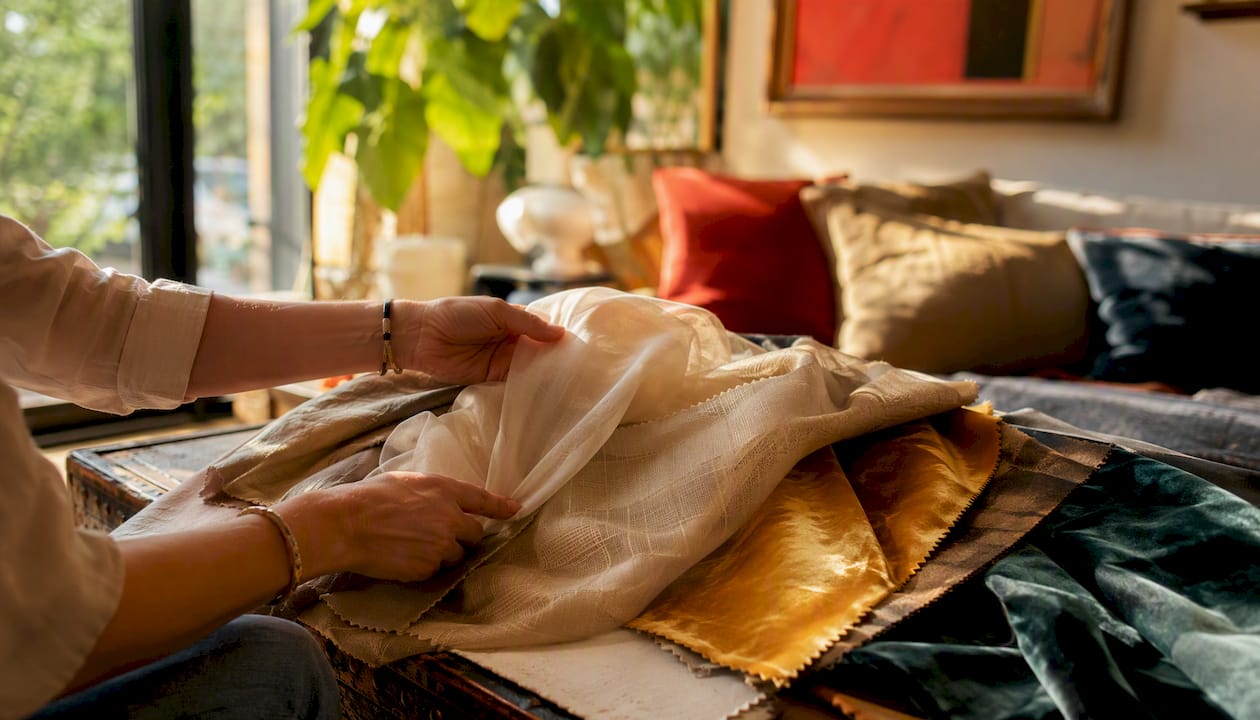
For most homeowners, the right choice comes down to a short list: polyester blends for durability and easy care, linen for casual elegance, cotton for versatility, velvet or blackout-backed fabrics for bedrooms, and voile for sheers. Here is how those picks map to common needs:
Each of these fabrics is covered in depth below, with GSM ranges, care notes, and room-by-room guidance so you can match the right material to your specific window.
Polyester blends, linen, and cotton cover most everyday drapery needs, while blackout-backed fabrics or velvet with interlining are the reliable choices for bedrooms requiring full light control.
| Point | Details |
|---|---|
| Match fabric to function first | Decide on light control and durability needs before choosing aesthetics. |
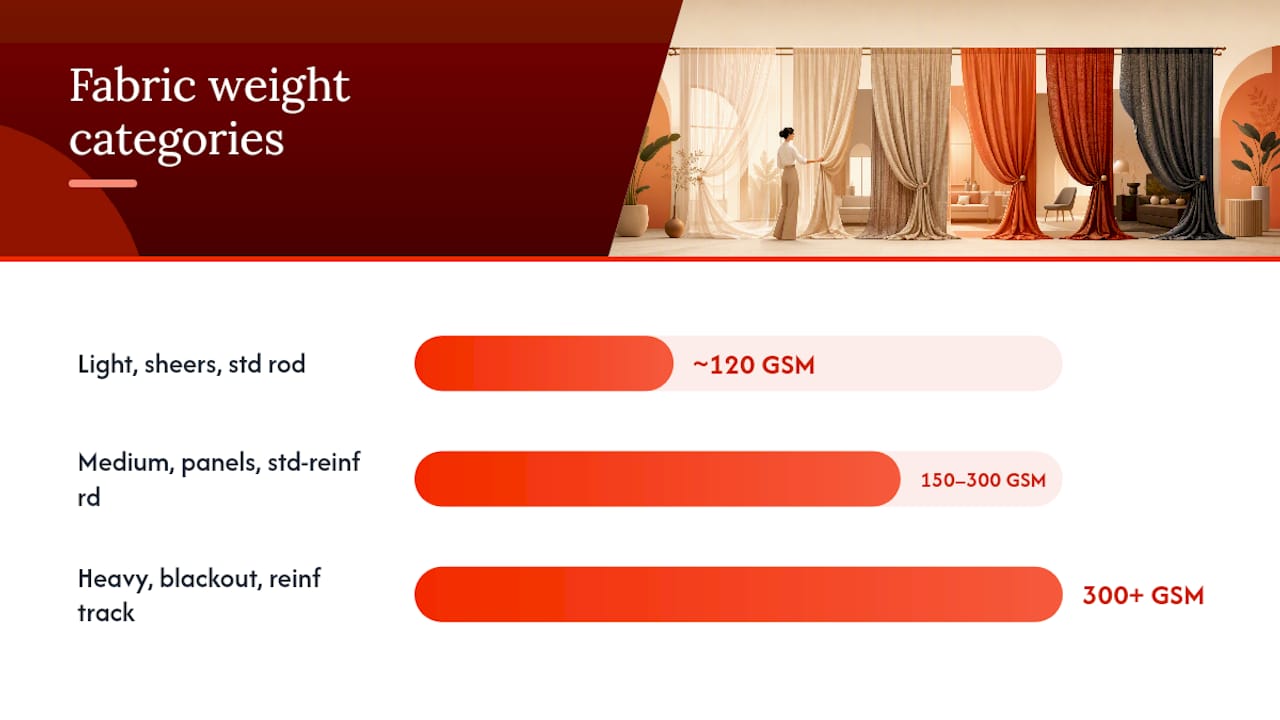
| Use GSM as your guide | Light (~120 GSM) for sheers, medium (150–300 GSM) for everyday panels, heavy (300+ GSM) for blackout and thermal. |
| Always test swatches at the window | Photograph swatches in morning, midday, and evening light before ordering yardage. |
| Line every panel you care about | Even standard cotton lining adds body, extends fabric life, and improves drape significantly. |
| Fabric-fabric for swatches and yardage | Browse home decor fabrics and request swatches at fabric-fabric.com before committing to a full order. |
The best drapery material for your space depends on five decisions made in order: light control, durability, maintenance, climate, and cost. Get those right and the aesthetic almost picks itself.
1. Light control and opacity. Fabric weight drives this more than any other variable: light fabrics around 120 GSM create airy, diffused effects; medium weights (150–300 GSM) filter light noticeably; heavy fabrics above 300 GSM deliver real privacy and thermal benefit. If you need a dark bedroom, start with a blackout construction, not just a heavy face fabric.
2. Durability. High-traffic rooms and south-facing windows punish natural fibers. Polyester and UV-stable blends hold up far better than linen or cotton in direct sun. In humid climates, solution-dyed acrylics or UV-stable polyester blends resist mildew and sag across multiple seasons where natural fibers would degrade.
3. Maintenance. Be honest about how often you will actually clean these panels. Machine-washable polyester or cotton blends are practical for kitchens and kids’ rooms. Silk, velvet, and damask usually require dry cleaning, which adds up over time.
4. Climate and hardware. Heavy interlined panels need stronger brackets and wider rods. A standard 1-inch rod buckles under a velvet panel with interlining. Plan hardware before you cut fabric.
**5. Skipping on fullness is the single most common reason curtains look flat and cheap.
Room-based examples:
Pro Tip: Order swatches before committing to yardage. Pin the swatch to the window and photograph it in morning light, midday sun, and evening lamp light. Color, translucency, and texture all shift more than you expect.
Sheers are not just decorative. A well-chosen sheer diffuses glare, softens the view from outside during the day, and layers with heavier panels to give you flexible light control throughout the day.
Voile (40–90 GSM) is the standard sheer fabric for good reason. It is lightweight, drapes smoothly, and is available in cotton, polyester, and blends. Sheer voile works best in layering systems and looks right at 3x fullness, meaning you need three times the window width in fabric to get that soft, gathered look. Polyester voile is more durable and easier to launder; cotton voile has a slightly softer hand but wrinkles more.
Chiffon is finer and more fluid than voile, with a slight sheen. It works well in formal rooms and bedrooms where you want an elegant, flowing look. Polyester chiffon is machine-washable; silk chiffon is not.
Sheer linen offers a more textured, organic look than voile. The irregular weave creates a dappled light effect that suits relaxed, natural interiors. It wrinkles more than polyester sheers and needs a gentle wash cycle.
Lightweight polyester sheers are the most practical option for high-traffic rooms. They resist fading, dry quickly, and hold their shape after washing. Performance fabrics now mimic linen and cotton textures while staying machine-washable, which makes them a smart pick for families who want a natural look without the upkeep.
When layering sheers with heavier panels, hang the sheer rod closest to the glass and the drapery rod 4–6 inches in front. This lets you operate each layer independently and gives the window a finished, layered look. Use a gentle wash cycle and avoid high heat in the dryer; sheers are thin enough that even moderate heat can cause pilling or distortion.
These are the fabrics that carry most living rooms, dining rooms, and home offices. The goal is a fabric that drapes well, holds up to regular handling, and fits the room’s style without requiring a professional cleaner every six months.
Linen is the go-to for casual, relaxed interiors. At 200–280 GSM, it filters daylight with a soft, irregular texture and suits living rooms and north-facing rooms where filtered light is preferred. Designers often use unlined linen in north-facing rooms to maximize daylight, adding a separate sheer layer for nighttime privacy. The downside: linen wrinkles under humidity and fades under more than four hours of direct sun. For more on linen drapes specifically, Fabric-fabric’s linen guide covers construction and care in detail.
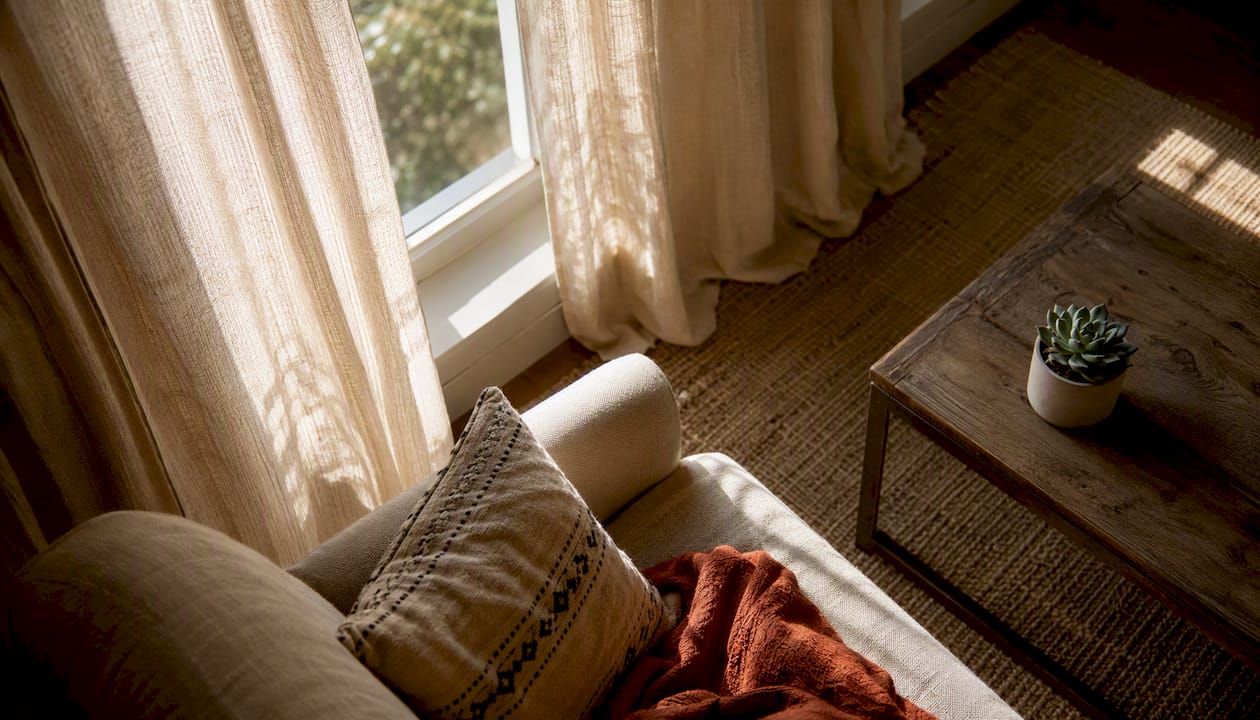
Cotton and cotton blends are broadly versatile. Medium- to heavy-weight cotton (150–250 GSM) in twill or duck weave hangs well, holds a pleat, and lasts longer than lightweight quilting cotton. Cotton takes dye evenly, so colors stay true. It is often machine-washable, though it can shrink on the first wash — pre-wash your yardage before cutting. Browse cotton drapery options at Fabric-fabric for a range of weights and weaves.
Polyester and polyester blends are the most durable curtain fabrics available. They resist staining, wash at 40°C, retain shape after repeated laundering, and handle humidity without mildewing. UV-stable variants hold their color in south-facing rooms where linen or cotton would fade within a season. The trade-off is a slightly synthetic hand that some decorators find less appealing than natural fibers, though modern performance fabrics now convincingly mimic linen and cotton textures.
Rayon and viscose drape beautifully and have a subtle sheen that reads as slightly formal. They are softer than polyester but less durable. Rayon is prone to shrinking when wet, so dry cleaning is usually the safer choice. Weight range: 120–200 GSM.
Damask is a woven fabric with a self-pattern created by contrasting weave structures, typically in silk, cotton, or polyester. It suits formal dining rooms and traditional interiors. Heavier damask (250+ GSM) hangs with real authority and holds a pinch pleat well. Care depends on fiber content: polyester damask is machine-washable; silk damask is not.
Nylon is rarely used as a face fabric for residential drapery, but it appears in performance blends where abrasion resistance matters. It is more common in commercial or outdoor-adjacent applications. If you see nylon in a blend, it is usually there to add strength to a softer fiber.
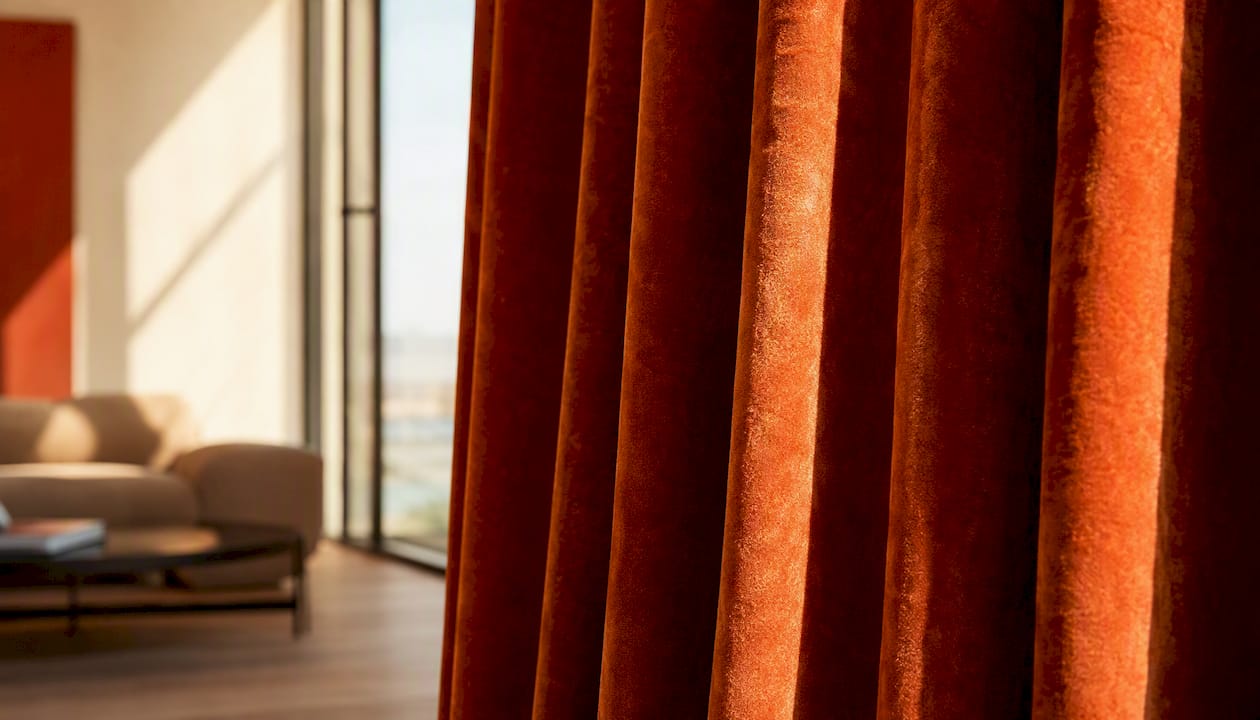
Velvet earns its own section below, but in everyday drapery terms: cotton velvet at 300–400 GSM is the most livable option. It is rich without being fussy, and it works in both casual and formal rooms depending on the color and heading style.
| Fabric | GSM range | Drape | Maintenance |
|---|---|---|---|
| Linen | 200–280 | Relaxed, textured | Gentle wash; fades in direct sun |
| Cotton (twill/duck) | 150–250 | Structured, clean | Machine wash; pre-wash to prevent shrinkage |
| Polyester blend | 150–300 | Smooth, consistent | Machine wash at 40°C; UV-stable options available |
| Rayon/viscose | 120–200 | Fluid, slight sheen | Dry clean preferred |
| Damask | 200–280 | Formal, structured | Depends on fiber content |
Blackout performance comes from construction, not just fabric weight. There are three main approaches, each with different trade-offs.
Blackout-backed polyester is the most common and affordable option. It is machine-washable, widely available, and easy to sew. The coating can crack or peel over time, especially with repeated washing or exposure to heat.
Triple-weave fabric uses three layers of yarn woven together: two outer layers with a black yarn core. No coating means no peeling, and the fabric feels more like a conventional drapery fabric. It is heavier than coated options and drapes well. Machine-washable in most cases.
Lined face fabrics give you the most flexibility. Choose any face fabric you like (linen, cotton, velvet) and add a separate blackout lining that blocks 90–100% of light. This approach lets you match the face fabric to your room’s style while achieving full blackout performance. The lining also protects the face fabric from UV degradation.
Velvet with interlining is the premium blackout option. Velvet’s dense pile blocks roughly 85–95% of light and adds acoustic dampening that coated fabrics cannot match. Add an interlining layer and you get near-total blackout, significant thermal benefit, and a panel that falls in sculptural, couture folds. The cost is real: heavier panels need stronger hardware, and velvet with interlining usually requires dry cleaning.
Installation notes for blackout panels:
Lining is not optional if you want curtains that perform and look professional. It protects the face fabric, adds body, and dramatically changes what the panel does for the room.
Standard cotton lining adds body and protects the face fabric from UV exposure. It does not significantly block light, but it makes the panel hang better and extends the life of the face fabric by years.
Thermal lining cuts roughly half the incoming light and adds meaningful R-value to the window. It is a practical upgrade for cold climates where single-pane windows lose heat through the glass.
It is heavier than standard lining, so hardware needs to be rated for the additional weight.
Interlining is a layer of soft batting or bump cloth sewn between the face fabric and the lining. It adds fullness, acoustic insulation, and a sculptural quality to the panel’s fold. An interlined linen panel falls in cleaner, more sculptural folds than an unlined one, but it requires larger brackets and may force dry-clean-only care. Heavier interlined panels increase fabrication cost noticeably, but they deliver couture drape and better thermal and acoustic performance.
Hardware checklist:
Pro Tip: For very wide windows (over 100 inches), use a center support bracket and consider a double-track system so sheers and drapery panels operate independently without tangling.
| Fabric | Cleaning method | Sun-fade risk | Shrinkage behavior |
|---|---|---|---|
| Linen | Gentle machine wash or hand wash | High (fades in 4+ hours of direct sun) | Moderate; pre-wash yardage before sewing |
| Cotton | Machine wash cold or warm | Moderate | Can shrink 3–5% on first wash; pre-wash |
| Polyester blend | Machine wash at 40°C | Low (UV-stable variants available) | Minimal |
| Rayon/viscose | Dry clean preferred | Moderate | High when wet; avoid machine washing |
| Velvet | Dry clean | Low to moderate | Low, but pile can crush if washed |
| Silk | Dry clean only | High | Low, but fiber weakens with UV exposure |
| Damask (polyester) | Machine wash | Low | Minimal |
| Damask (silk/cotton) | Dry clean | Moderate to high | Low to moderate |
Sun-fade prevention comes down to three practical steps. First, line every panel that faces south or west. Even a standard cotton lining buys years of color life by absorbing UV before it reaches the face fabric. Second, consider window film on south-facing glass. Low-emissivity film blocks a significant portion of UV without visibly changing the light quality. Third, rotate panels seasonally if you have matching pairs: swap left and right panels every six months so both sides fade at the same rate.
Pro Tip: For spot-cleaning velvet, use a soft brush and a barely damp cloth, working in the direction of the pile. Never rub against the pile or use a hot iron directly on velvet — both crush the fibers permanently. Store unused velvet panels rolled, not folded, to prevent permanent crease marks.
For a full fabric care reference, Fabric-fabric’s care guide covers washing, storage, and long-term maintenance by fiber type.
Understanding a few technical specs lets you read product listings accurately and predict how a fabric will behave before you order.
GSM (grams per square meter) measures fabric weight. For drapery:
Ounces per square yard is the imperial equivalent. To convert: multiply oz/yd² by 33.9 to get GSM. So a 6 oz/yd² fabric is roughly 203 GSM.
Denier measures the weight of a single yarn. Sheer curtains typically use 550–900 denier yarns; standard draperies use 1,500–3,000 denier; blackout and theatrical drapes use 3,000–9,000 denier. Higher denier means a thicker, heavier yarn, which increases opacity and durability but reduces drape fluidity. A specifier can substitute a tighter weave at a lower denier to achieve similar opacity with better drape.
Weave types and their effect on drape:
Always add 10–12 inches per panel for side hems and seam allowances.
| Spec | Light | Medium | Heavy |
|---|---|---|---|
| GSM | ~120 | 150–300 | 300+ |
| Typical use | Sheers, voile | Everyday panels | Blackout, velvet, formal |
| Hardware need | Standard rod | Standard to reinforced | Reinforced track or rod |
Skipping the swatch step is the most expensive mistake in drapery projects. Fabric color, translucency, and hand all change under real window light in ways that a monitor cannot show you.
Pro Tip: When photographing swatches for opacity testing, place a piece of white paper behind the swatch and photograph it in direct sunlight. This gives you a clear, comparable record of how much light the fabric transmits, which is far more reliable than eyeballing it indoors.
For customization ideas and pattern matching, especially when working with patterned fabrics that require repeat matching, planning the layout before cutting saves significant yardage.
Natural fibers like linen, cotton, and silk are biodegradable, but their production is not automatically low-impact. Conventional cotton is one of the most water-intensive crops grown, and most silk production involves processes that many consumers find ethically complex. Linen, made from flax, uses significantly less water than cotton and often requires fewer pesticides, making it one of the more sustainable natural fiber options for drapery.
Polyester is derived from petroleum, which raises legitimate concerns about fossil fuel use and microplastic shedding during washing. That said, recycled polyester (rPET), made from post-consumer plastic bottles, is now widely available and performs comparably to virgin polyester in drapery applications. If you are choosing polyester for durability, looking for rPET options is a straightforward way to reduce the environmental footprint without sacrificing performance.
Rayon and viscose sit in a complicated middle ground. They are made from plant cellulose, which sounds natural, but the manufacturing process uses harsh chemicals that can be environmentally damaging if not managed carefully. Lyocell (often sold under the brand name Tencel) is a cleaner alternative in the same fiber family, produced in a closed-loop process that recovers most of the solvent used.
Longevity is the most underrated sustainability factor in drapery. A well-lined panel in a durable fabric that lasts 15–20 years has a far lower environmental cost than a cheap polyester panel replaced every three years. Lining your curtains protects the face fabric from UV degradation, which is one of the most direct ways to extend panel life regardless of fiber choice.
For outdoor-adjacent or sun-exposed windows, outdoor fabric durability and weather resistance follows similar principles: UV-stable, solution-dyed fibers outperform standard dyed fabrics by a significant margin in direct sun exposure.
Drapery fabrics collect dust, pet dander, and pollen, which makes fabric choice genuinely relevant for allergy sufferers. The key variables are weave tightness, surface texture, and how easily the fabric can be laundered.
Velvet, with its dense pile, traps allergens more readily than smooth-faced fabrics. If you love velvet but have allergies, commit to a regular vacuuming schedule using an upholstery attachment, and choose a cotton velvet over synthetic pile where possible, as cotton velvet tends to release trapped particles more easily when vacuumed.
Tightly woven polyester and polyester blends are the most practical choice for allergy-sensitive households. The smooth surface gives allergens fewer places to cling, and machine-washability means you can launder panels every few months without damage. Washing at 60°C kills dust mites, though most drapery fabrics should be washed at 40°C to prevent shrinkage or coating damage.
Linen and cotton are natural fibers that are generally well-tolerated by people with sensitivities, but they do collect dust and should be washed or shaken out regularly. Untreated, undyed natural fibers are the safest choice for people with chemical sensitivities or contact dermatitis.
Avoid heavily treated or finished fabrics if chemical sensitivity is a concern. Wrinkle-resistant finishes, flame retardants, and some dye processes use formaldehyde-based compounds or other chemicals that can off-gas, particularly when new. Washing fabric before sewing or hanging it reduces this significantly.
Silk and rayon are smooth and less likely to trap allergens than textured fabrics, but their dry-clean-only care requirements make regular cleaning less practical, which can offset the surface advantage.
The conventional wisdom says: pick a fabric you like the look of, then figure out the rest. That order is backwards, and it is why so many beautiful curtains end up looking wrong in the room or falling apart within a few years.
Function should come first. Decide what the window needs to do: block light, insulate, diffuse glare, or simply frame the view. That decision narrows the fabric category immediately. A bedroom that needs darkness is not a linen situation, no matter how much you love the texture. A sunny kitchen is not a silk situation, no matter how formal you want the room to feel.
The swatch test is where most projects succeed or fail. Fabric on a bolt in a store looks nothing like fabric hanging at a window in your specific light. The color shifts. The opacity surprises you. The weight feels different when it is hanging rather than folded. Spending $10–20 on swatches before ordering 15 yards of fabric is not optional caution; it is the difference between a project you are proud of and one you redo in two years.
One thing that rarely gets said plainly: lining is almost always worth it. Even a standard cotton lining adds body, protects the face fabric, and makes the panel hang better. The cost difference between lined and unlined panels is modest compared to the difference in how they look and how long they last. If budget is tight, choose a less expensive face fabric and line it properly rather than spending more on a premium face fabric and skipping the lining.
Choosing the right face fabric, lining, and weight is easier when you can see and feel the options before committing to yardage. Fabric-fabric carries a wide selection of home decor fabrics suited to drapery projects, from lightweight voile and sheer polyester to heavier cotton and velvet options, with clear weight and care information on each listing.
For larger or blackout applications, the backdrop fabrics collection includes wide-width, heavier-weight textiles that work well for full-length drapery panels and room-darkening projects. Swatch ordering is available so you can test drape and opacity at your actual window before buying full yardage. Browse the home decor fabric range, request swatches, and contact the Fabric-fabric team if you need help matching a fabric to a specific room or project requirement.