

 US Dollar

10 Fabric Types Beginners Can Sew Confidently, Plus 4 ID Tests
Posted by BLG on 2026 Sep 21st
Posted by BLG on 2026 Sep 21st

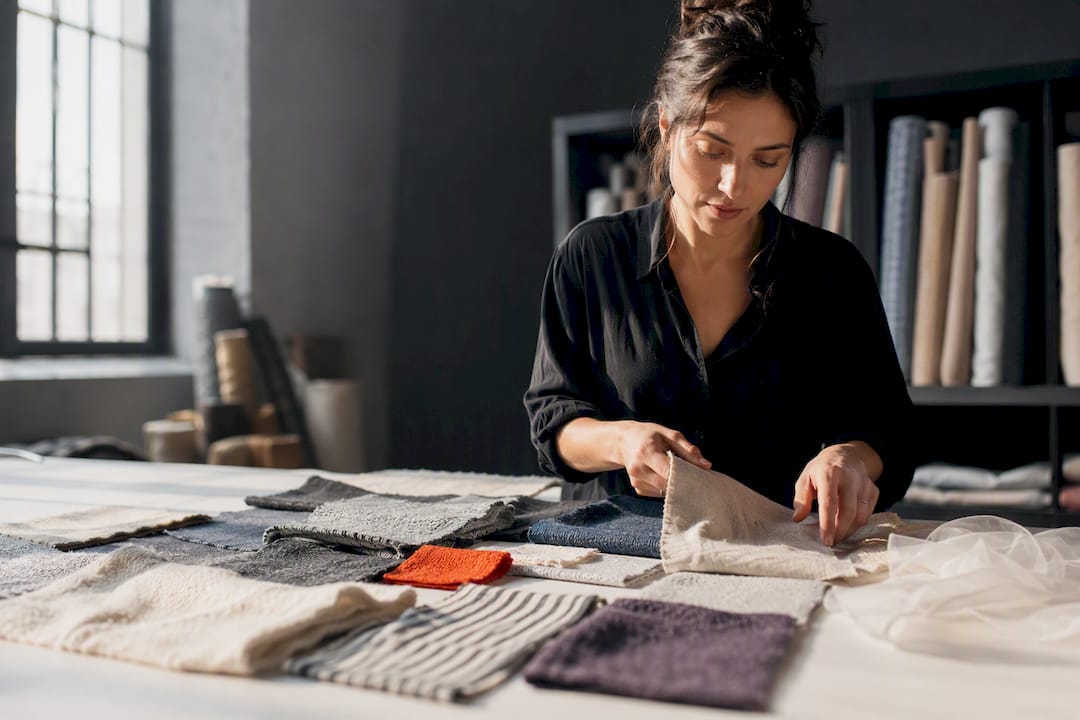
Cotton, linen, silk, wool, polyester, nylon, rayon, denim, jersey knit, and satin cover many projects that a beginner will touch, from a quilt top to a prom dress. Each one solves a different problem: cotton forgives mistakes, silk drapes like water, jersey stretches with your body, and denim survives years of wear. Learn what each fabric feels like, how it behaves under an iron and a washing machine, and you’ll stop guessing at the fabric store. The sections below walk through each one, then hand you a selection checklist and a few DIY tests for the scraps you can’t identify by sight alone.
TL;DR:
- Cotton fabric is ideal for beginners due to its stable weight, ease of handling, and forgiving nature, especially in quilting weight.
- Linen wrinkles quickly and requires prewashing and careful seam finishing to prevent fraying, making it a less forgiving option for novices.
- Silk, silk blends, and satin need delicate handling, with many requiring dry cleaning or hand washing, and they are less suitable for first projects.
- Denim and wool demand specific sewing techniques, such as heavier needles and careful pressing, and are better for experienced sewists tackling structured garments.
- Plastic-based fibers like polyester and nylon resist wrinkling and shrinkage but shed microplastics and melt under high heat, necessitating low-heat pressing and careful washing.
Cotton comes from the fluffy fibers of the cotton plant, spun into yarn and woven or knit into fabric. It feels soft, breathes well, and holds a crease when you iron it, which is exactly why quilters love it. Weight varies a lot: quilting cotton is light and crisp, while canvas (a heavier cotton weave) has enough body for tote bags and upholstery. You’ll find it in quilts, T-shirts, button-down shirts, and curtains. Wash it in warm water and tumble dry on medium. It shrinks more than most synthetics, so prewashing before you cut saves you from a shirt that no longer fits after its first trip through the dryer. Beginner tip: start here. A midweight quilting cotton is stable under the needle and stays put while you pin, which is why sewing guides consistently point new sewers toward it.
Linen comes from the flax plant and has a slightly rough, cool hand that softens with every wash. It wrinkles fast and drapes with a relaxed, slightly stiff fall rather than a soft flow, which is part of its charm in summer clothing and table linens. You’ll see it in button-downs, napkins, and lightweight jackets. Wash it in cool water and expect it to wrinkle on the line, or iron it while still damp for a crisper finish. Linen may shrink on its first wash, so prewash before cutting a pattern. Beginner tip: use a sharp, fine needle. Linen frays at cut edges faster than cotton, so finish seams early.
Silk is an animal fiber produced by silkworms, often described as luxurious. It’s smooth, lightweight, and drapes in soft, fluid folds, the reason it shows up in blouses, scarves, and eveningwear linings. Care depends on the weave and finish, but many silks need hand washing or dry cleaning, especially formal pieces, since silk needs delicate handling to avoid water spotting and fiber damage. Beginner tip: silk slips under a regular presser foot. Pin within the seam allowance only, and use a fine, sharp needle to avoid visible holes.
Wool is sheared from sheep (or goats, for cashmere and mohair) and has a warm, slightly springy feel with natural elasticity. It drapes with structure and weight, which makes it ideal for coats, suits, and blankets rather than flowy garments. Hand washing wool in cool water with gentle agitation is recommended, then lay flat to dry. Machine agitation and heat cause felting, shrinking, and matting the fibers together permanently. Beginner tip: press wool with a pressing cloth between the iron and fabric to avoid shine marks.
Polyester is a synthetic fiber made from petroleum-based polymers, valued for durability, wrinkle resistance, and low cost. It has a smooth, slightly slick feel, holds its shape well, and drapes anywhere from stiff to fluid depending on how it’s woven or knit. You’ll find it in athletic wear, linings, and budget-friendly apparel. Machine wash warm and tumble dry low. It resists shrinking and wrinkling, making it practical for travel clothes. Beginner tip: polyester can melt under a hot iron, so keep the setting low or use a pressing cloth.
Nylon is a synthetic fiber known for its strength, elasticity, and abrasion resistance. It feels smooth and slightly slippery, similar to polyester but usually with more stretch and a shinier finish. It shows up in swimwear, activewear, windbreakers, and linings. Wash nylon in cold water and air dry to preserve elasticity. Beginner tip: nylon runs when cut without finishing the edge, so use a zigzag stitch or serger on raw seams.
Rayon, often called viscose, is a regenerated fiber made from wood pulp, processed into a soft, semi-synthetic fabric. It has a silky, fluid drape at lower cost than silk, and breathes better than many synthetic fabrics. Common uses include dresses, blouses, and linings that need movement without silk’s price tag. It may shrink and lose shape with machine washing, so hand washing or a gentle cold cycle followed by flat drying is advised. Beginner tip: rayon frays and stretches out of shape on the cutting table, so cut on a stable, flat surface and handle it minimally.
Denim is a durable cotton fabric woven in a twill pattern, often recognized by its diagonal rib and indigo color. It’s stiff when new, softens with wear and washing, and has almost no drape, which is exactly what you want in jeans, jackets, and bags. Wash denim inside out in cold water to preserve color, and air dry when possible to extend its life. Beginner tip: denim needs a heavier needle (size 90/14 or higher) and often a jeans-specific presser foot to handle thick seams without skipping stitches.
Jersey is a knit fabric commonly made from cotton, blends, or polyester, providing comfortable stretch typical in T-shirts. It feels soft, stretches in one or both directions depending on the knit, and drapes close to the body rather than standing away from it. Expect it in T-shirts, leggings, and casual dresses. Machine wash and tumble dry low, since high heat can cause pilling. Beginner tip: use a ballpoint or stretch needle, which slides between fibers instead of piercing them, preventing runs and skipped stitches.
Satin and chiffon aren’t fibers at all. They’re weaves, which means either one can be made from silk, polyester, or rayon depending on the combination of fiber and construction. Satin has a glossy face and a dull back, with a heavy, fluid drape that suits eveningwear and bridal projects. Chiffon is sheer, lightweight, and drapes in soft, floaty layers, common in overlays and scarves. Care depends on the fiber: polyester versions machine wash fine on delicate, while silk versions need hand washing or dry cleaning. Beginner tip: both fabrics slip and shift while cutting, so pin generously or use pattern weights instead of scissors-in-hand cutting.
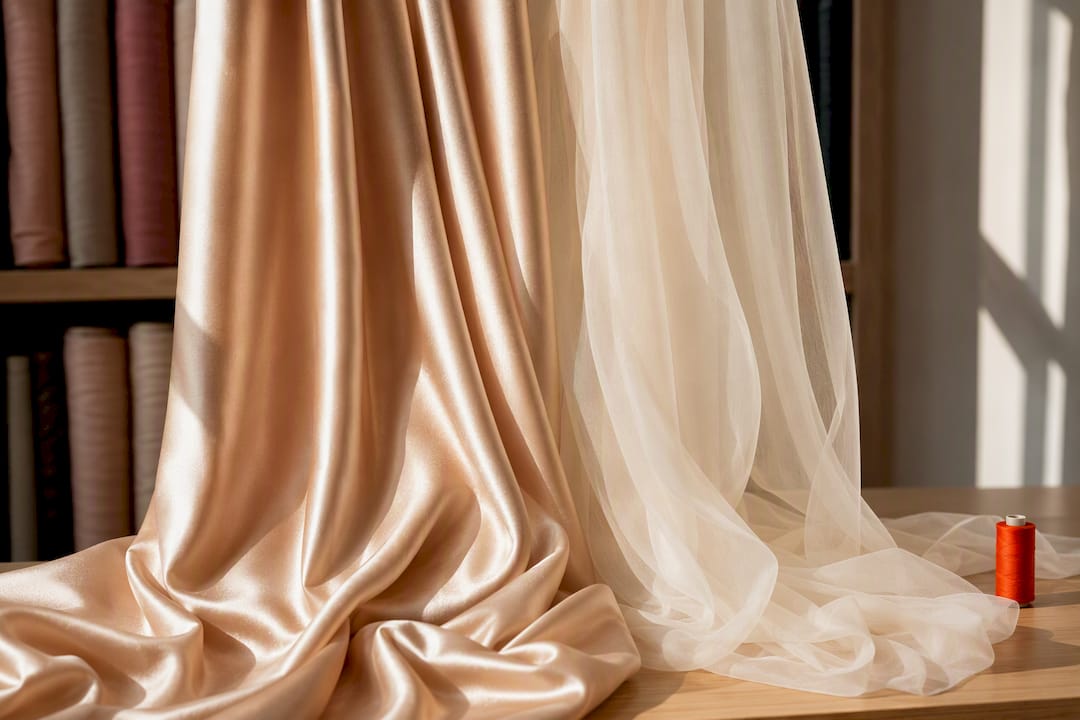
Picking the right material starts with the finished garment or object in mind, not the prettiest bolt on the shelf. Drape determines whether a dress flows or holds a shape, weight determines whether a fabric can support itself or needs lining, and stretch determines whether a fitted silhouette will actually fit. Run through this checklist before you buy or cut:
Running through these questions takes two minutes and prevents most first-project disasters. For a deeper breakdown of matching fabric to garment type, the apparel fabric selection guide walks through pattern-specific recommendations, and the fabric checklist for sewing success covers prep steps before your first cut.
When a tag is missing or you’ve inherited a bin of unlabeled scraps, four quick tests narrow down what you’re working with.
Skip the burn test on delicate antique textiles, anything you can’t sacrifice a swatch from, or if you don’t have proper ventilation and a fire-safe surface. In those cases, a magnifying glass and a small hand-wash sample tell you a lot about fiber structure and how the fabric will behave in the wash.
Pro Tip: Keep a small binder of labeled swatches from past projects, then compare unknown scraps against them side by side. Nothing beats a physical reference when you’re trying to match a mystery remnant to a known fiber.
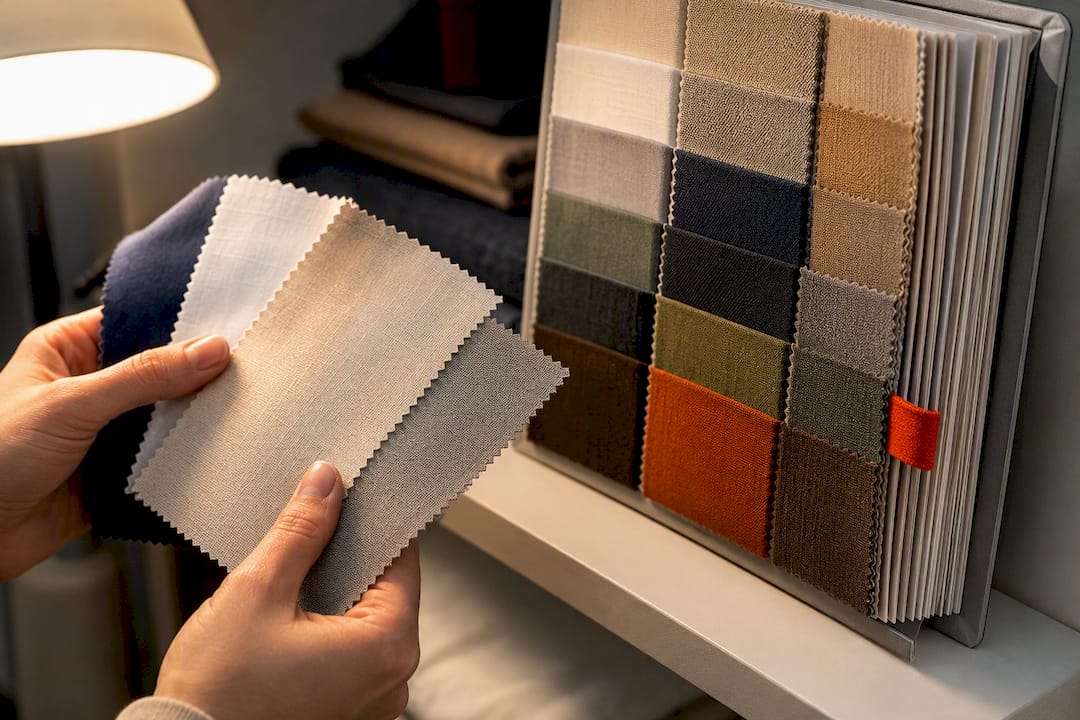
A fiber is the raw material (cotton, silk, polyester), a yarn is that fiber spun into thread, and a weave or knit is how those yarns interlace into fabric. Fiber decides how a fabric breathes, wrinkles, and reacts to heat. Weave decides how it drapes, how much texture it has, and how it catches light.
Knowing the difference stops you from assuming every satin gown needs dry cleaning when a polyester satin might handle a gentle machine cycle just fine. The difference between knit and woven construction covers this distinction in more depth if you want to go further.
Every fabric on this list carries a different environmental cost, and none of them are free of trade-offs.
Many fabric retailers organize their catalogs by intended use, such as apparel, quilting, home decor, and crafts, so practical distinctions like drape, weight, care, and weave often correspond to how listings are sorted. Every product page pairs a fabric type with fiber content and usage notes, the same information this guide leans on for each of the ten entries above.
If you want to go deeper on any single fabric before your next project, these guides pick up where this article leaves off:
Most beginner advice treats fabric selection as a matter of taste, pick the color and print you like, then figure out the rest. That’s backward. The fiber and weave decide whether your project survives the first wash, and taste should come after you’ve narrowed down what the fabric can actually do.
A common confusion is treating weave names like fiber names. For example, “satin” indicates a weave, which can be made from silk, polyester, or rayon, each with different care requirements. I’d rather see a beginner learn to check a tag or run a quick water drop test than memorize a list of fabric names without understanding what makes them behave the way they do.
If you’re just starting out, consider building confidence on a stable midweight cotton fabric before trying challenging fabrics like silk or chiffon. The forgiving fabrics teach you the fundamentals, tension, seam allowance, pressing, without punishing small mistakes the way a slippery satin will.
— kev
Reading about fiber content only gets you so far. At some point you need to feel the weight of a linen against your fingers or see how a satin catches light before committing to yardage for a big project. Some fabric stores organize their catalogs by intended use, allowing shoppers to find fabrics sorted for their specific projects rather than browsing a generic textile category.
Order a swatch before you buy yardage, especially for drape-dependent fabrics like rayon or chiffon where photos rarely capture how a fabric actually falls. If your first project is a quilt or a practice garment, the quilting fabric collection is stocked with the midweight cottons this guide recommends for beginners. If you’re planning something wearable, from a simple top to a bridal piece, browse the fashion fabric category where fabrics are grouped by fiber content and use so you’re not guessing between a dozen unlabeled bolts. Start with a swatch order, confirm the hand and weight match your pattern, then order yardage with confidence.
A few external references back the identification methods and fiber comparisons covered in this guide:
Cotton, linen, silk, wool, polyester, nylon, rayon, denim, jersey knit, and satin cover the vast majority of beginner apparel and craft projects. Each one differs in feel, drape, and care, and common fabric guides group them by similar characteristics to help you match fabric to project.
Beyond the core ten, you’ll encounter variations like canvas (heavy cotton), chiffon (sheer weave), velvet (pile weave), taffeta (crisp weave), spandex (stretch fiber), organza, tweed, flannel, corduroy, and lace, among others. Most of these are either a different weave of a familiar fiber or a specialty blend built for one specific texture or function.
There’s no fixed number, since fabrics can be classified by fiber (over a dozen common types), by weave or knit structure (dozens more), or by finish and blend, which multiplies the possibilities into the hundreds. Guides listing many fabric types are usually counting fiber, weave, and finish combinations separately rather than distinct base materials.
A water drop test is the fastest check: natural fibers like cotton and linen absorb water quickly, while synthetics let it bead on the surface. For a more definitive answer, a burn test on a hidden swatch shows natural fibers producing ash or a crushable bead, while synthetics melt into a hard bead with a chemical smell.
A midweight cotton, especially quilting cotton, is the most forgiving fabric for beginners because it holds its shape under the needle and doesn’t slip while cutting. Slippery or sheer fabrics like satin, chiffon, and rayon are better saved for after you’ve built basic skills on something more stable.