

 Canadian Dollars

Why Use Eco-Friendly Fabrics in Design Projects
Posted by BLG on 2026 Jan 10th
Posted by BLG on 2026 Jan 10th


Over 16 million tons of textile waste end up in American landfills every year. For eco-conscious designers and home decorators, the search for sustainable fabric options has become more urgent than ever. Choosing fabrics with lower environmental impact supports healthier communities and drives innovation in style and performance. This guide breaks down what makes a fabric eco-friendly, uncovers common myths, and explores how American designers can make responsible choices for a greener future.
| Point | Details |
|---|---|
| Eco-Friendly Fabrics Are Essential | They reduce environmental impacts and represent a smart long-term investment for designers. |
| Sustainable Fabrics Do Not Compromise Quality | Modern materials match or exceed traditional fabrics in performance, strength, and aesthetics. |
| Certified Sustainable Production Is Key | Ensure materials have transparent certifications verifying their environmental and ethical claims. |
| Lifecycle Assessment Is Critical | Consider the entire lifecycle impact of fabrics rather than initial costs to support true sustainability. |
Eco-friendly fabrics represent textiles produced through environmentally responsible processes that minimize negative impacts on our planet. These materials are carefully crafted to reduce waste, conserve resources, and support sustainable manufacturing practices across design projects. From organic cotton to recycled polyester, these fabrics offer designers innovative alternatives to traditional textile production methods.
Contrary to popular misconceptions, sustainable fabrics are not simply a passing trend but a critical evolution in textile design. Sustainable fashion myths often misrepresent the economic value of conscious fabric choices. Many designers assume eco-friendly materials are prohibitively expensive, when in reality, they represent a smart long-term investment. The cost-per-wear economics demonstrate that durable, responsibly produced fabrics can actually save money over time by lasting longer and maintaining quality.
The most common myths surrounding eco-friendly fabrics include beliefs that they compromise aesthetic quality, performance, or design flexibility. However, modern sustainable textiles offer remarkable versatility. Innovative manufacturing techniques now produce eco-friendly fabrics that match or exceed traditional materials in strength, texture, and visual appeal. Designers can select from a wide range of sustainable options including organic cotton, hemp, bamboo, recycled synthetics, and advanced bio-based materials that deliver exceptional performance while reducing environmental impact.
Pro tip: When selecting eco-friendly fabrics, prioritize materials with transparent supply chain certifications and third-party sustainability verifications to ensure genuine environmental credentials.
Eco-friendly fabrics encompass a diverse range of materials designed to minimize environmental impact while delivering exceptional performance. Textile materials differ significantly in their sustainability profiles, with variations spanning agricultural practices, chemical processing, water usage, and overall ecological footprint. Understanding these nuanced differences helps designers make informed choices that align with specific sustainability objectives.
Some prominent eco-friendly fabric categories include organic natural fibers, recycled synthetic materials, and innovative bio-based textiles. Organic cotton stands out as a popular choice, eliminating harmful pesticides and reducing water consumption compared to conventional cotton production. Hemp and linen offer additional natural alternatives with minimal environmental requirements, requiring less water and no pesticides during cultivation. Recycled polyester represents a critical synthetic option, transforming plastic waste into high-performance fabric while reducing landfill contributions and energy consumption.
Emergent sustainable fabric technologies continue pushing boundaries in textile innovation. TENCEL™ Lyocell, derived from wood pulp, exemplifies advanced eco-friendly manufacturing, utilizing closed-loop production processes that recycle solvents and minimize waste. Innovative materials like pineapple leather (Piñatex), mushroom leather, and recycled ocean plastic fabrics demonstrate the creative potential of sustainable textile development. These groundbreaking materials not only reduce environmental impact but also challenge traditional design paradigms by offering unique textures and performance characteristics.
Here’s a concise comparison of common eco-friendly fabrics and their unique sustainability features:
| Fabric Type | Key Benefit | Notable Feature |
|---|---|---|
| Organic Cotton | Reduced water usage | Free from pesticides |
| Recycled Polyester | Diverts plastic from waste | High durability |
| Hemp | Minimal water required | Grows quickly, no pesticides |
| TENCEL™ Lyocell | Closed-loop process | Silky texture |
| Piñatex (Pineapple) | Uses waste leaves | Vegan leather option |
| Mushroom Leather | Biodegradable material | Unique texture |
Pro tip: When evaluating eco-friendly fabrics, request detailed sustainability certifications and conduct thorough lifecycle assessments to understand the complete environmental impact of your chosen textile.
Sustainable textile production represents a comprehensive approach to transforming traditional manufacturing processes. Global textile production policies are reshaping manufacturing standards, emphasizing environmentally conscious methods that reduce ecological impact. These innovative approaches encompass everything from raw material selection to final product manufacturing, focusing on minimizing waste, reducing chemical usage, and implementing ethical labor practices.
The manufacturing process for sustainable textiles begins with careful material selection and responsible sourcing. Organic fibers are cultivated using agricultural practices that eliminate synthetic pesticides and minimize water consumption. Recycled materials undergo extensive processing to transform waste products like plastic bottles into high-performance textile fibers. Advanced technologies enable manufacturers to break down existing materials and reconstruct them into new, durable fabrics with significantly reduced environmental footprints. This approach not only reduces waste but also creates a more circular economic model for textile production.

Certification processes play a critical role in verifying sustainable textile production. Industry-standard certifications like OEKO-TEX®, Global Organic Textile Standard (GOTS), and Bluesign® provide rigorous frameworks for evaluating environmental and social responsibility. These certifications examine every stage of textile production, from raw material extraction to final manufacturing, ensuring that fabrics meet stringent sustainability criteria. Designers and manufacturers increasingly rely on these certifications to demonstrate their commitment to environmentally responsible textile creation and to provide transparency to environmentally conscious consumers.
Pro tip: Request detailed certification documentation and trace the entire supply chain when selecting sustainable textiles to ensure genuine environmental credentials and ethical production practices.
Textile production represents a critical environmental challenge, with traditional manufacturing methods generating significant ecological consequences. Textile waste impacts demonstrate substantial environmental risks, particularly in the United States, where fast fashion and disposable clothing contribute to escalating greenhouse gas emissions and waste management challenges. Conventional textile production relies heavily on resource-intensive practices that deplete water supplies, generate chemical pollution, and create substantial carbon footprints.
Sustainable textiles offer a transformative alternative by dramatically reducing environmental and social negative impacts. Compared to traditional manufacturing, sustainable textile production minimizes water consumption, eliminates toxic chemical processing, and supports ethical labor practices. Recycled and organic fabrics require fewer natural resources, generate less waste, and provide a circular economic model that reimagines textile creation. By prioritizing renewable materials, closed-loop manufacturing processes, and responsible sourcing, sustainable textiles create a comprehensive approach to addressing environmental challenges inherent in conventional textile production.
The social dimensions of sustainable textile production extend beyond environmental considerations, addressing critical labor and human rights issues prevalent in traditional manufacturing. While fast fashion models often exploit workers in developing countries, sustainable textile frameworks prioritize fair wages, safe working conditions, and transparent supply chains. These approaches not only mitigate environmental damage but also create more equitable economic opportunities for workers throughout the global textile industry. By supporting sustainable textile production, designers and consumers can actively contribute to positive social transformation and environmental conservation.
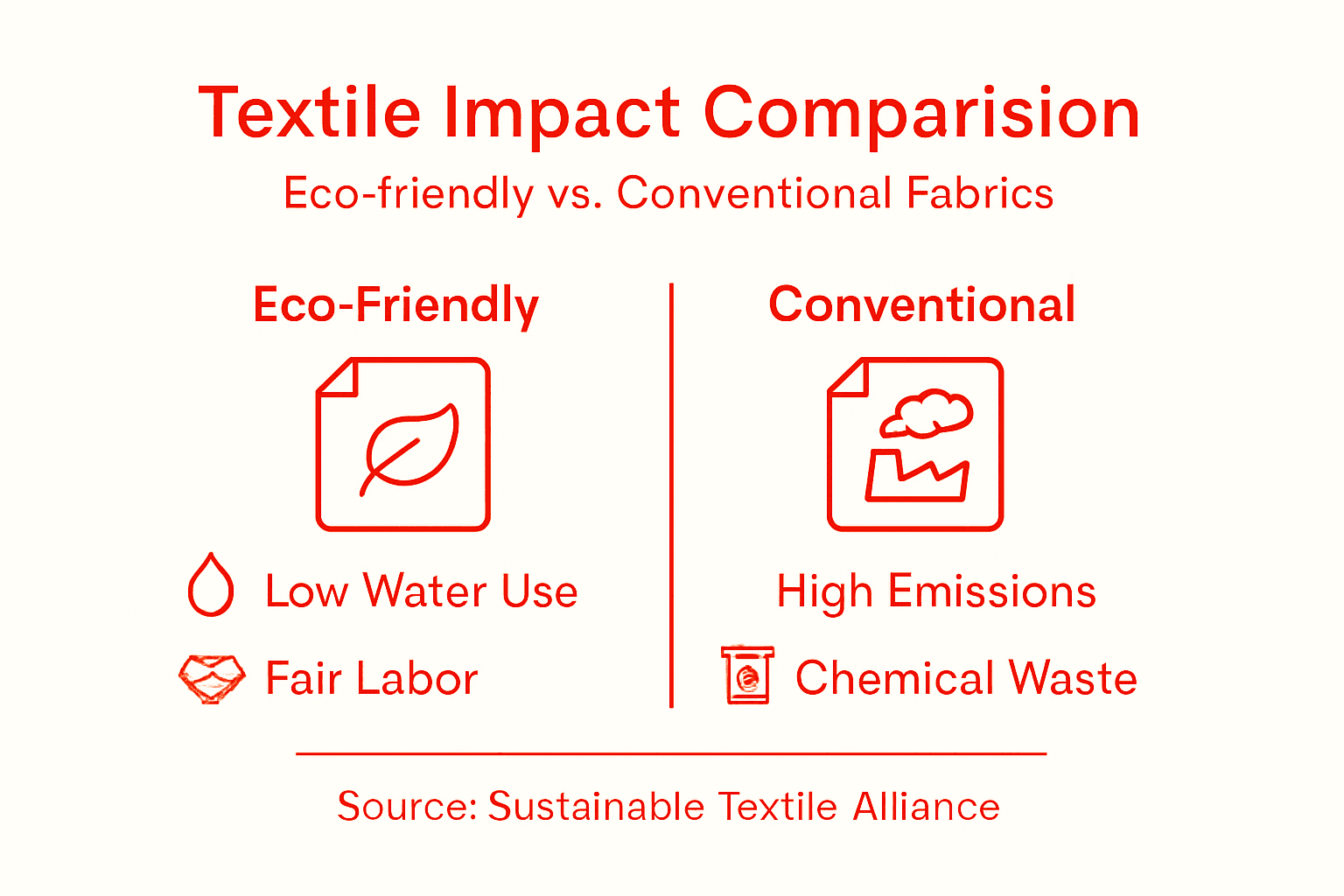
The table below outlines how sustainable and traditional textiles differ in their environmental and social impacts:
| Aspect | Sustainable Textiles | Conventional Textiles |
|---|---|---|
| Water Usage | Significantly reduced | High consumption |
| Chemical Use | Minimal or non-toxic | Frequent and hazardous |
| Labor Practices | Transparent, fair | Often poor, low wages |
| Waste Output | Lower, circular models | High, often landfilled |
| Carbon Footprint | Substantially lower | Large and growing |
Pro tip: Compare the entire lifecycle environmental impact of textile options, not just their initial production costs, to make truly sustainable design choices.
Designers exploring eco-friendly fabrics frequently encounter complex challenges balancing sustainability with practical project requirements. Sustainable fabric selection involves nuanced performance considerations, challenging traditional assumptions about material capabilities and cost-effectiveness. The initial investment in sustainable textiles may appear higher, but comprehensive analysis reveals long-term economic and environmental benefits that extend beyond simple price comparisons.
Performance remains a critical concern when integrating sustainable fabrics into design projects. Modern eco-friendly materials have dramatically evolved, offering comparable or superior characteristics to traditional textiles. Advanced manufacturing techniques now produce sustainable fabrics with enhanced durability, improved moisture-wicking properties, and increased resistance to wear. Innovations in recycled polyester, organic cotton blends, and bio-based synthetics demonstrate that environmental responsibility need not compromise functional quality or aesthetic appeal.
Technological barriers and sourcing limitations represent significant practical challenges for designers committed to sustainable textile adoption. Limited recycling infrastructure, variable material consistency, and complex supply chains can create additional complexity in fabric selection. Designers must develop strategic approaches that balance environmental goals with project-specific performance requirements. This often involves detailed research, collaboration with specialized sustainable textile manufacturers, and a willingness to experiment with emerging material technologies that push traditional design boundaries.
Pro tip: Develop relationships with sustainable textile suppliers who can provide comprehensive performance data and material samples to validate fabric suitability for specific design applications.
Struggling to find sustainable fabrics that combine environmental responsibility with exceptional quality? The article highlights key challenges like higher upfront costs, sourcing complexities, and verifying genuine sustainability credentials. At Fabric-Fabric, we address these pain points by offering a curated selection of eco-friendly textiles that deliver both performance and style without compromise. Whether you seek organic cotton, recycled polyester, or innovative bio-based materials we provide detailed descriptions and transparent sourcing information to empower your decision-making.
Take the next step toward eco-conscious design today. Explore our extensive range of fabrics tailored for apparel, crafts, and home décor projects. Benefit from our seasonal promotions and free shipping offers at Fabric-Fabric. Embrace sustainable creativity with confidence and make your projects stand out while protecting the planet. Visit now to find the perfect eco-friendly fabric that meets your vision and values.
Eco-friendly fabrics are textiles produced through sustainable processes that minimize environmental impact. They are crucial in design projects as they promote responsible sourcing, reduce waste, and support ethical manufacturing, contributing to both environmental conservation and social equity.
Modern eco-friendly fabrics often match or surpass traditional textiles in durability, texture, and aesthetic appeal. Innovations in manufacturing have led to sustainable materials that offer enhanced performance characteristics, including better moisture-wicking and increased resistance to wear, without compromising on quality.
Common myths include the belief that sustainable fabrics are prohibitively expensive or less aesthetically pleasing. In reality, while the initial cost may be higher, eco-friendly fabrics often lead to long-term savings due to their durability and performance, and they come in a wide range of appealing designs and textures.
Designers should prioritize materials with transparent supply chain certifications and third-party sustainability verifications, such as OEKO-TEX® and GOTS. It’s essential to conduct thorough lifecycle assessments and request detailed certification documentation to guarantee that the fabrics meet stringent environmental and ethical standards.