

 Canadian Dollars

What is rayon? Uses, types, and care guide for creators
Posted by BLG on 2026 May 12th
Posted by BLG on 2026 May 12th

TL;DR:
- Rayon is a regenerated cellulose fiber derived from plant materials, existing between natural and synthetic categories. It is produced through chemical processes from raw plant pulp, resulting in various subtypes like viscose, modal, and lyocell, each with distinct properties. Proper care involves gentle cleaning and handling due to its tendency to weaken when wet and wrinkle easily, making it suitable for fashion and home decor projects with mindful maintenance.
Rayon sits in a strange middle ground that trips up even experienced sewers. It’s not a synthetic plastic fiber like polyester, and it’s not a fully natural fiber like cotton either. It starts as real plant material, goes through a serious chemical transformation, and comes out the other side as something genuinely useful but genuinely misunderstood. If you’ve ever grabbed a bolt of fabric labeled “viscose” and wondered how it relates to “rayon” or “modal,” this guide is going to clear that up fast. We’ll cover what rayon actually is, how it’s made, the key subtypes, how to care for it, and where it works best in fashion and decor projects.
| Point | Details |
|---|---|
| Plant-based, man-made | Rayon is derived from plants but created through a man-made process, making it unique among textiles. |
| Varied subtypes | Main rayon types—viscose, modal, and lyocell—differ in feel, use, and care requirements. |
| Delicate when wet | Rayon weakens with moisture and should be handled gently during washing. |
| Versatile for projects | Rayon suits apparel, home decor, and even industrial uses thanks to its adaptability. |
| Check labels closely | Always identify which rayon subtype is used and follow the right care guide for best results. |
Rayon lives in a category all its own. Most people sort fibers into two camps: natural (cotton, wool, silk, linen) or synthetic (polyester, nylon, acrylic). Rayon belongs in neither. It’s a regenerated cellulose fiber, meaning it starts as plant material, dissolves completely, and gets rebuilt into a new fiber form through a man-made process.
“Rayon is a man-made (regenerated) cellulose textile fiber made from purified cellulose derived from plant sources.” — Britannica
The cellulose typically comes from wood pulp, though bamboo and other plants are also used. So the raw ingredient is natural, but the transformation is chemical and industrial. That’s what makes rayon feel like neither category fits perfectly.
Here’s where buyers often get confused: the retail world uses several names for what is technically rayon.
All four are variations of the same concept: plant cellulose, chemically processed into fiber. The confusion kicks in because each name sounds like a different material entirely when you’re shopping. Knowing they’re all in the rayon family helps you make smarter choices for your specific project.
The most common method for turning wood pulp into wearable fabric is called the viscose process. The viscose process dissolves regenerated cellulose into a thick (“viscous”) solution and then pushes it through tiny nozzles called spinnerettes into a chemical bath, which causes the cellulose to solidify again into filaments.
Here’s a simplified look at the steps:
| Manufacturing step | Effect on fiber properties |
|---|---|
| Alkalization | Sets cellulose reactivity, affects absorbency |
| Aging duration | Controls molecular weight and fiber strength |
| Xanthation | Determines solubility and uniformity |
| Spinning speed | Influences filament diameter and drape |
| Coagulation bath | Shapes final crystallinity and strength |
Newer rayon subtypes use different approaches. Modal uses a modified viscose process with stronger stretching, creating a finer, softer fiber that holds up better in wash. Lyocell (sold as Tencel) uses a closed-loop solvent process that recaptures most of the chemicals, making it considerably more environmentally responsible. When selecting sustainable fabrics, understanding these process differences is genuinely important, not just a marketing detail.
Pro Tip: When a fabric label just says “rayon” with no subtype listed, it’s almost certainly standard viscose. If the label says “modal” or “lyocell,” those terms indicate a premium or more sustainable subtype worth noting for project planning.
Rayon is produced in several distinct subtypes including viscose, modal, and lyocell, and the differences between them go well beyond just the name on the label. Each performs differently in the studio, at the washing machine, and over time in use.
Viscose is the original and most widely available rayon. It has a silky drape, beautiful luster, and a luxurious feel at a fraction of the price of real silk. It wrinkles easily, loses strength when wet, and can be tricky to sew. Modal is softer than viscose, more resistant to shrinkage, and tends to keep its shape better through repeated washing, making it a popular choice for apparel meant to last. Lyocell is the most durable of the three, resistant to pilling, and far more eco-friendly in its production. It has a slightly crisper hand compared to viscose.
| Property | Viscose | Modal | Lyocell |
|---|---|---|---|
| Softness | High | Very high | High |
| Drape | Fluid and silky | Smooth and supple | Moderate, slightly structured |
| Moisture absorption | High | High | High |
| Wet strength | Low | Moderate | Better than viscose |
| Shrink resistance | Low | Moderate | Good |
| Eco-friendliness | Low to moderate | Moderate | High |
| Best use | Fashion, linings | Apparel, activewear | Eco projects, home decor |
Here’s how each subtype lines up with common creative projects:
Here is what you will actually experience when you work with rayon. The fabric is soft, smooth, and drapes in a way that closely mimics silk. It has a natural sheen that catches light beautifully. It breathes well and absorbs moisture efficiently, which is why it’s such a popular choice for warm-weather clothing and home textiles in humid climates.
But rayon has a real vulnerability that every creator needs to know upfront.
Rayon loses strength when wet, which is exactly why careless machine washing can permanently damage or distort the fabric.
When rayon gets wet, the fibers swell and the internal structure weakens. That makes aggressive washing, hot water, and rough mechanical action genuinely damaging in ways that cotton or linen wouldn’t even notice. This is not a minor quirk. It’s a fundamental characteristic of the fiber chemistry. Treating rayon like a delicate fabric with minimal agitation and gentle detergents is the only approach that keeps it looking good long-term.
Here’s a practical washing guide for rayon:
For eco fabric options, lyocell rayon is the most forgiving in the laundry because of its better wet strength. Standard viscose rayon demands the most careful handling.
Pro Tip: Always pre-wash rayon yardage before cutting your project. Viscose in particular can shrink noticeably after the first wash, and you want that to happen before you’ve cut and sewn your pieces, not after.
One more property worth knowing: rayon wrinkles. It wrinkles a lot. This is especially true for viscose, and it gets worse when the fabric is wet. If you’ve seen someone struggle with rayon care, it’s usually the wrinkle problem catching them off guard.
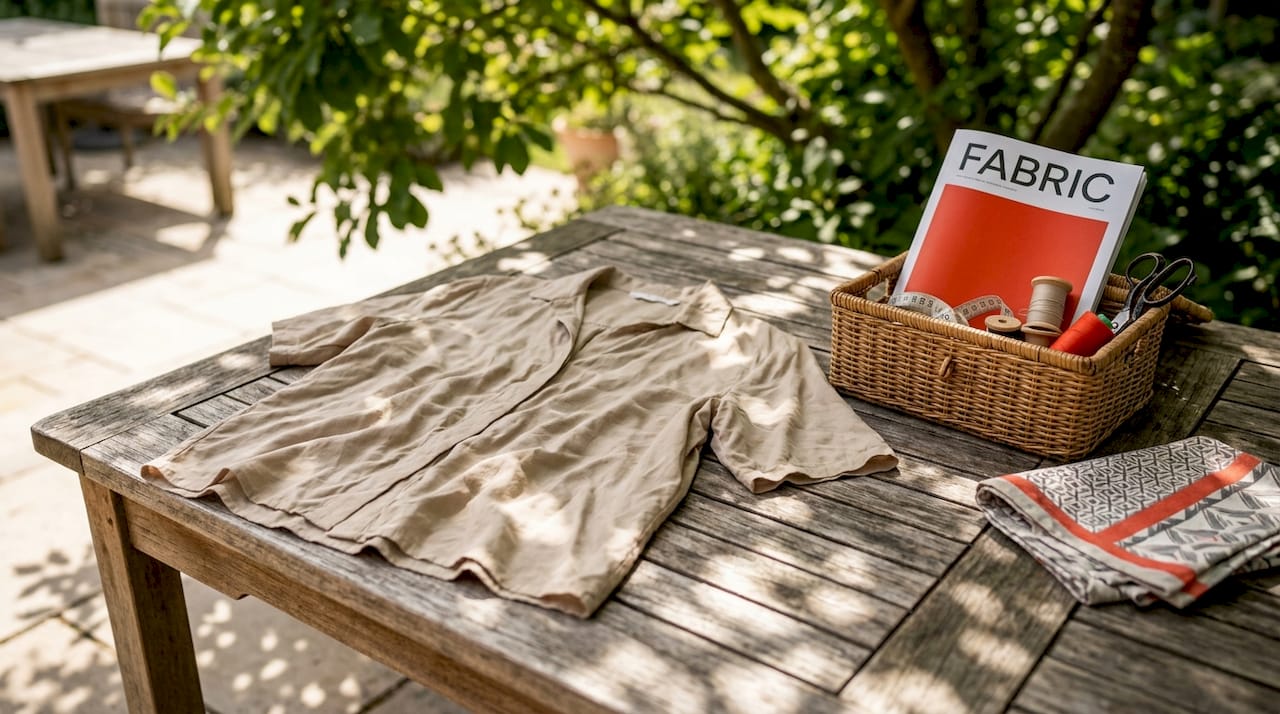
Rayon earns its place in the fabric world by being genuinely versatile. Rayon is widely used in apparel, often alone or blended with cotton and other fibers, and it can even be engineered into high-strength industrial applications like tire cord, which tells you something about its range.
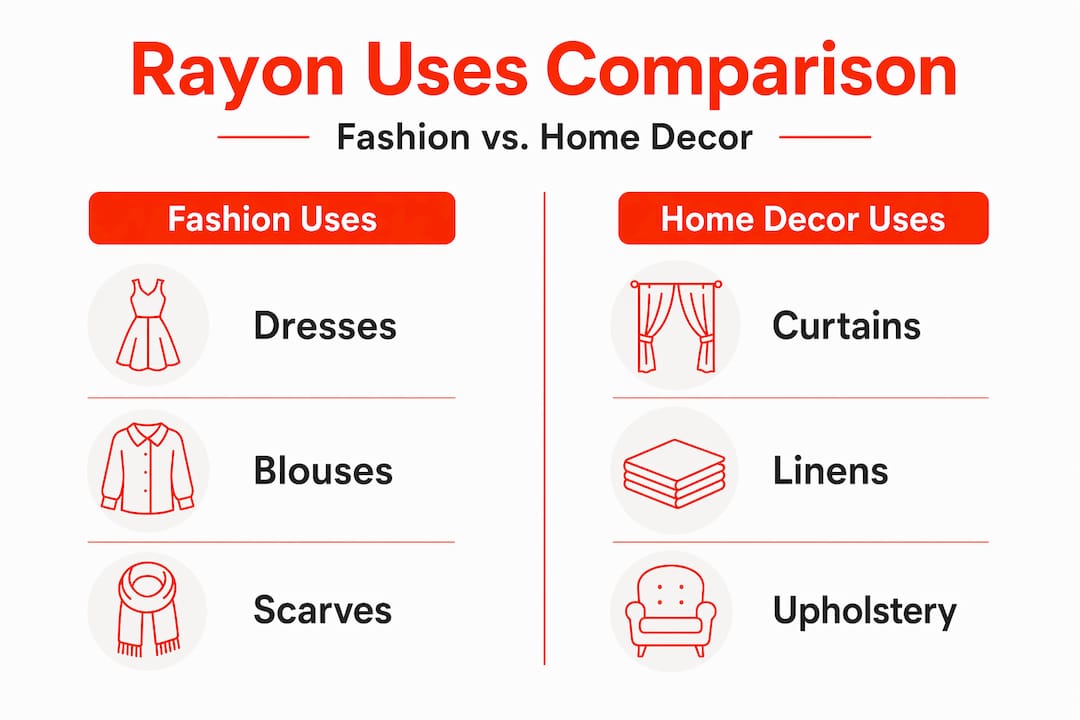
For fashion and home decor creators, the most relevant uses look like this:
| Rayon subtype | Top fashion uses | Top home decor uses |
|---|---|---|
| Viscose | Dresses, blouses, scarves | Lightweight drapes, decorative panels |
| Modal | T-shirts, loungewear, activewear | Soft furnishing fabrics, light upholstery |
| Lyocell | Casual wear, sustainable fashion | Pillow covers, eco-conscious decor |
Understanding the eco-friendly fabric benefits of each subtype helps you align your material choices with your project goals and your values. Lyocell works beautifully for a creator who wants performance and a lighter environmental footprint. Viscose delivers unbeatable drape for fashion at an accessible price point.
Here’s an honest perspective worth sharing after working with rayon across dozens of project types: the natural/synthetic binary is the single biggest obstacle to using rayon well.
Too many designers either write rayon off as a “cheap synthetic” or market it as a “natural eco fabric” when the reality is more interesting and more useful than either of those labels. Rayon is a plant-based material that goes through a significant industrial transformation. That process gives it properties that pure natural fibers can’t match at the same price point, particularly that silk-like drape and moisture-handling ability. But the process also creates real environmental questions, especially with standard viscose.
The common mistake is applying one blanket judgment to all rayon. A creator who rejects viscose on sustainability grounds but would happily use lyocell is making a nuanced and informed decision. A creator who assumes all bamboo rayon is automatically eco-friendly because it says “bamboo” on the label is falling for marketing language.
The more useful framework is project-specific assessment. Ask what the project needs in terms of drape, care requirements, durability, and longevity. Then match the rayon subtype to those demands. A flowy summer dress from viscose might wrinkle and require careful washing forever, but it will drape like nothing else at that price. A lyocell blend for home decor upholstery gives you durability and better environmental credentials. Neither is universally right or wrong.
You can explore this kind of thoughtful material sourcing through a conscious fabric guide that helps you evaluate fabrics based on actual project needs rather than broad categories.
Pro Tip: When a project demands something that “moves like silk but costs like cotton,” viscose rayon is almost always your best tool. When the project needs to last through many washes and maintain its shape, reach for modal or lyocell instead.
Armed with a true understanding of rayon, you’re ready to shop for the right materials for your next project.
At fabric-fabric.com, you’ll find fabric options suited to both fashion and interior projects, including selections that work beautifully for draped garments, decorative panels, and creative decor. Whether you’re sourcing lightweight rayon for a flowing dress or something more structured for a home decor application, browsing the backdrop fabrics collection gives you a solid starting point for decorative and event projects. For interior design and upholstery needs, the home decor fabric section covers a wide range of options by weight, texture, and intended use. Take the knowledge from this guide and apply it directly to your shopping decisions.
Rayon is plant-based and can biodegrade, but its eco-friendliness depends heavily on the manufacturing method; lyocell is generally the most sustainable subtype because of its closed-loop production process.
Rayon can be machine washed on a gentle cycle with cool water and mild detergent, but it loses strength when wet and should never be exposed to hot water, high agitation, or tumble dryers on high heat.
Viscose is the most common form of rayon, made using the classic viscose manufacturing route that dissolves cellulose and extrudes it through spinnerettes; the two terms are used interchangeably in most retail and fashion contexts.
Yes, rayon wrinkles readily, especially viscose, and the problem gets worse when the fabric is wet, so wet fiber weakness is the key reason pressing or gentle handling is essential after washing.
Rayon is generally soft and breathable, making it comfortable for most skin types, but the chemical residues from some manufacturing processes may occasionally cause irritation for people with highly sensitive skin.