

 US Dollar

Explore 6 Sustainable Fabric Options for Eco Projects
Posted by BLG on 2026 Apr 15th
Posted by BLG on 2026 Apr 15th


TL;DR:
- Sustainable fabric choice relies on comprehensive life cycle assessments and certified claims.
- No single fabric is universally the most sustainable; impact depends on context and usage.
- Prioritize durability, repairability, and supply chain transparency when selecting eco-friendly textiles.
Choosing a truly sustainable fabric has gotten complicated. Organic, recycled, and natural labels flood every product page, but the actual environmental story behind each fiber is rarely that simple. Fashion designers and eco-conscious consumers need more than a buzzword to make smart sourcing decisions. This guide cuts through the noise with a practical framework for evaluating fabrics, a breakdown of the top options available today, and a side-by-side comparison to help you match materials to real apparel and home decor projects.
| Point | Details |
|---|---|
| No one-size-fits-all | The ‘best’ sustainable fabric depends on use, processing, and local context. |
| Look for certifications | True eco-friendly fabrics should have third-party certifications to avoid greenwashing. |
| Prioritize durability | Long-lasting, repairable fabrics reduce overall environmental footprint. |
| Case-by-case decisions | Match each project with the most suitable low-impact fabric for optimal results. |
Before you can pick the right fabric, you need a way to judge it honestly. The most reliable tool is a Life Cycle Assessment, or LCA. An LCA measures a fabric’s environmental impact from raw material extraction all the way through production, use, and disposal. It accounts for water use, energy consumption, greenhouse gas emissions, chemical inputs, and end-of-life scenarios. No single number tells the whole story, which is why LCA insights are so useful for comparing options in context.
Certifications matter just as much as raw data. Look for GOTS (Global Organic Textile Standard) for organic fibers, and OEKO-TEX Standard 100 for textiles tested free of harmful substances. These third-party labels verify claims that brands make about their materials. Without them, you are largely taking a company’s word for it.
Greenwashing is a real problem in the textile industry. Vague terms like “eco-friendly” or “natural” carry no legal definition and no accountability. As Sustainable Fabrics Ranked 2025 points out, no single fabric is universally the most sustainable because impact depends heavily on LCA context, regional conditions, and processing methods. Prioritizing certifications is the most reliable way to cut through those claims.
When you evaluate any fabric, run through these key factors:
For deeper guidance on applying these factors to your sourcing decisions, the eco-friendly fabric criteria framework is a strong starting point. You can also explore sourcing certified fabrics to understand how to vet suppliers before you buy.
“The most sustainable fabric is the one that performs best for your specific project with the lowest verified impact. Context always wins over category.”
Pro Tip: Regional supply chains matter more than most designers realize. A linen grown and processed in Europe has a very different footprint than linen shipped halfway around the world for dyeing and finishing. Always ask where the full process happens, not just where the fiber originates.
Once you have your evaluation framework, you can apply it to specific materials. Here is a practical breakdown of the leading options.
Organic cotton reduces pesticide exposure and supports healthier soil compared to conventional cotton. However, high water use and significant land requirements mean it is not a perfect solution. It works best for everyday apparel, quilting, and soft home textiles. Look for GOTS certification. Explore the organic cotton benefits in more detail before committing to it for large runs.
Linen is rain-fed, requires minimal pesticides, and biodegrades cleanly at end of life. It is one of the most durable natural fibers available. The pros and cons of linen are worth reviewing if you are considering it for upholstery or structured garments, where its slight stiffness can be an asset.
Hemp shares many of linen’s advantages. It grows quickly, improves soil health, and needs very little water. It is increasingly available in softened, blended versions that work well for apparel.
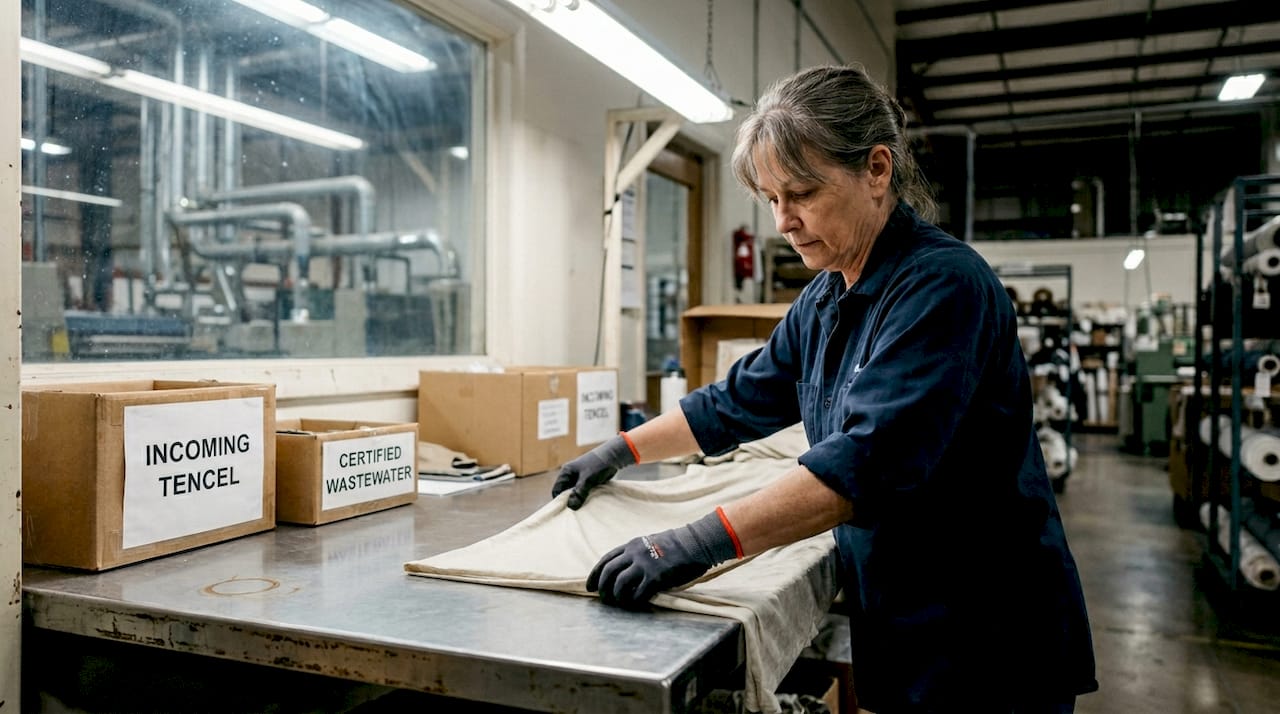
Lyocell and TENCEL rank among the highest-performing sustainable options because of their closed-loop production, where solvents are captured and reused rather than discharged. The result is a soft, breathable fiber with a low chemical footprint. See the full TENCEL explained breakdown for specifics on certifications and sourcing.
Recycled polyester (rPET) diverts plastic bottles from landfills and uses significantly less energy than virgin polyester. That said, recycled polyester sheds microplastic fibers during washing, which enter waterways. It is best reserved for performance applications where natural fibers cannot deliver.
Innovative options like Piñatex (from pineapple leaf fiber), nettle fabric, and recycled cotton are gaining traction. They are still limited in availability and scale, but worth watching for specialty projects.
Pro Tip: When recycled polyester is your only realistic option for a performance project, choose tightly woven constructions and wash items in a microfiber-catching laundry bag. This significantly reduces shedding without sacrificing function.
For a broader look at what is available, the sustainable fabric examples and sustainable textiles guides cover additional fiber types with project-specific recommendations.
The table below summarizes the core trade-offs across the most commonly used sustainable fabrics. Use it as a quick reference when making sourcing decisions.
| Fabric | Water use | GWP (CO2e/kg) | Biodegradable | Durability | Best use |
|---|---|---|---|---|---|
| Organic cotton | High | ~12.23 kg* | Yes | Medium | Apparel, quilting |
| Linen | Low | Low | Yes | High | Home decor, structured garments |
| Hemp | Very low | Very low | Yes | High | Apparel, upholstery |
| Lyocell/TENCEL | Low | Low | Yes | Medium-high | Apparel, soft furnishings |
| Recycled polyester | Low | Medium | No | High | Activewear, performance gear |
| Recycled cotton | Low | Low | Yes | Medium | Casual apparel, accessories |
*LCA data shows 12.23 kg CO2e per organic cotton trouser pair, with lower GWP for certain blended constructions.
One insight that surprises many designers: the raw material stage dominates total lifecycle impacts, accounting for 43 to 45% of a garment’s environmental footprint. That means fiber selection matters more than almost any other production decision you make.
For a deeper look at how natural fibers stack up across these dimensions, the natural fiber advantages guide offers additional context. The guide to sustainable fabrics also provides a useful framework for conscious creators working across multiple project types.
Here is a quick match guide based on the comparison data:
Check fabric rankings for updated scoring as new processing data becomes available.
Knowing which fabrics perform well is one thing. Matching them to a specific project is where the real decisions happen. Follow these steps to make a confident choice.
Here is a project-specific match table:
| Project type | Recommended fabric | Key reason |
|---|---|---|
| Drapery | Linen or hemp | Durability, low input, natural look |
| Upholstery | Hemp canvas or organic cotton duck | Abrasion resistance |
| Everyday T-shirt | Organic cotton or Lyocell | Softness, certifiable, breathable |
| Activewear | Recycled polyester (tight weave) | Stretch, moisture management |
| Quilting | Organic or recycled cotton | Easy to work with, widely available |
| Tote bags | Hemp or recycled cotton | Strength, low-impact production |
For edge cases where only a synthetic will perform, choose rPET tight weaves to minimize microfiber release. And keep in mind that durability and repairability are increasingly central to circular design standards under EU regulations, which is shaping how professional designers approach material selection.
Pro Tip: For specialty apparel like structured jackets or technical outerwear, explore fabric finishes for apparel to understand how finishes affect both performance and environmental impact before you commit to a material.
The sustainable fashion conversation tends to crown a new “best” fabric every few years. Bamboo was the answer, then Tencel, now hemp. Each time, the reality is more nuanced than the trend suggests.
No fiber wins in every category. Hemp uses little water but can be rough to process. Lyocell has a clean production story but still requires land and energy. Organic cotton is better than conventional, but its circularity and repairability profile matters just as much as how it was grown, especially under evolving EU standards.
What actually moves the needle is not finding the single greenest material. It is building a practice of asking better questions: Is this certified? Will it last? Can it be repaired or recycled? Does the supply chain hold up to scrutiny? Making smart eco-friendly choices is an iterative process, not a one-time decision. Start with the lowest-impact option that genuinely fits your project, then improve from there.
Ready to put this framework into practice? Whether you are sourcing for a structured linen jacket, a hemp upholstery project, or performance activewear, the right material is out there.
At fabric-fabric.com, you will find a wide selection of fabrics organized by project type, making it easy to filter by use case and material. Browse sustainable home decor fabrics for linen, cotton, and natural fiber options suited to drapery, upholstery, and soft furnishings. If you are working on display or event projects, the backdrop fabrics section covers specialty materials as well. From certified naturals to high-performance recycled options, the catalog supports designers and shoppers who want quality without compromise.
There is no single most sustainable fabric because impact depends on material, processing, location, and use. Certifications and fit for purpose are the most reliable guides.
Recycled polyester lowers greenhouse gas emissions compared to virgin polyester, but it sheds microfibers during washing. Opt for tightly woven fabrics and use a microfiber filter bag to limit impact.
Prioritize third-party certifications like GOTS and OEKO-TEX, and check for product LCA data when available. Vague terms like “eco-friendly” without certification backing are a red flag.
Linen and hemp are top choices for home decor because they are rain-fed, low-input crops with strong lifecycle profiles and excellent durability for upholstery and drapery applications.