

 US Dollar

Cotton Fleece Fabric: What It Is and How to Use It
Posted by BLG on 2026 Aug 6th
Posted by BLG on 2026 Aug 6th

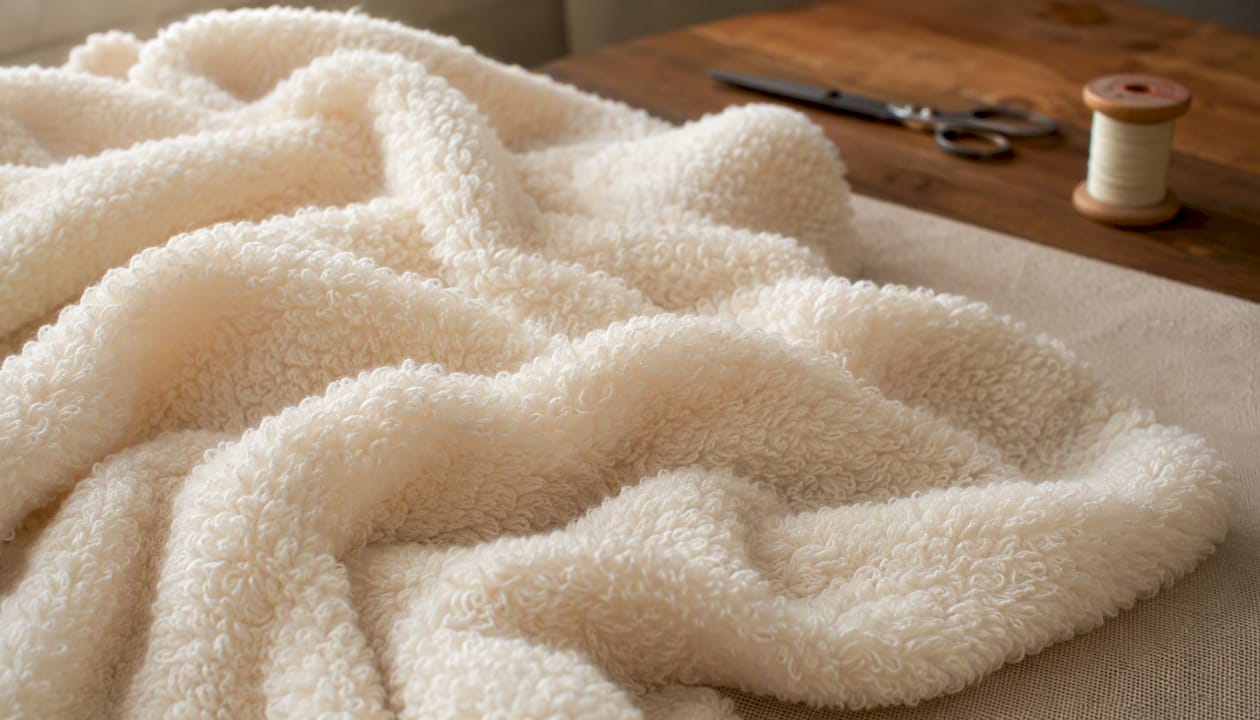
Cotton fleece is a knitted cotton fabric that has been brushed on one or both sides to raise a soft, plush pile, giving it a smooth outer face and a fuzzy, insulating inner surface. It’s the fabric behind your favorite hoodie, and understanding it helps you buy smarter and sew better.
Quick facts:
The construction process is what separates cotton fleece from other knits, and it’s worth understanding before you shop.
Cotton fleece is a knitted, brushed cotton fabric that offers natural breathability and soft hand, making it the right choice for casual garments and home textiles where comfort against skin matters more than fast drying.
| Point | Details |
|---|---|
| What cotton fleece is | A knitted fabric brushed to raise a plush pile; smooth face, soft interior. |
| When to choose it | Best for hoodies, loungewear, and children’s wear where breathability and skin comfort come first. |
| Cotton vs. polyester tradeoff | Cotton uses ~40% less energy to produce but requires far more water (7–29 m³/kg) than polyester. |
| Blend ratios and durability | 80/20 or 50/50 blends extend garment life and can lower overall lifecycle impacts. |
| Fabric-fabric | Carries cotton and cotton-blend fleece by the yard with fiber content and gsm details listed per product. |
Cotton fleece is a knit fabric, not a woven one. That distinction matters because the knit structure gives it stretch, recovery, and a looped interior that can be raised into a pile. Most cotton fleece is produced on circular knitting machines using one of two common knit bases: single jersey or a three-thread (loopback) structure.
The three-thread construction is the most common for heavier fleece. It creates a dense loop on the back of the fabric while keeping the face relatively smooth. Once knitted, the fabric goes through a brushing or napping process where wire-covered rollers raise those loops into a soft, fuzzy pile. That pile is what gives cotton fleece its warmth and characteristic hand.
Not all cotton knit fabrics go through full brushing. French terry is the same loopback knit structure, but the loops on the back are left intact rather than brushed out. The result is a lighter, slightly textured interior that’s cooler and more moisture-wicking than fully brushed fleece. You’ll find French terry in summer sweatshirts and athletic wear where you want comfort without bulk.
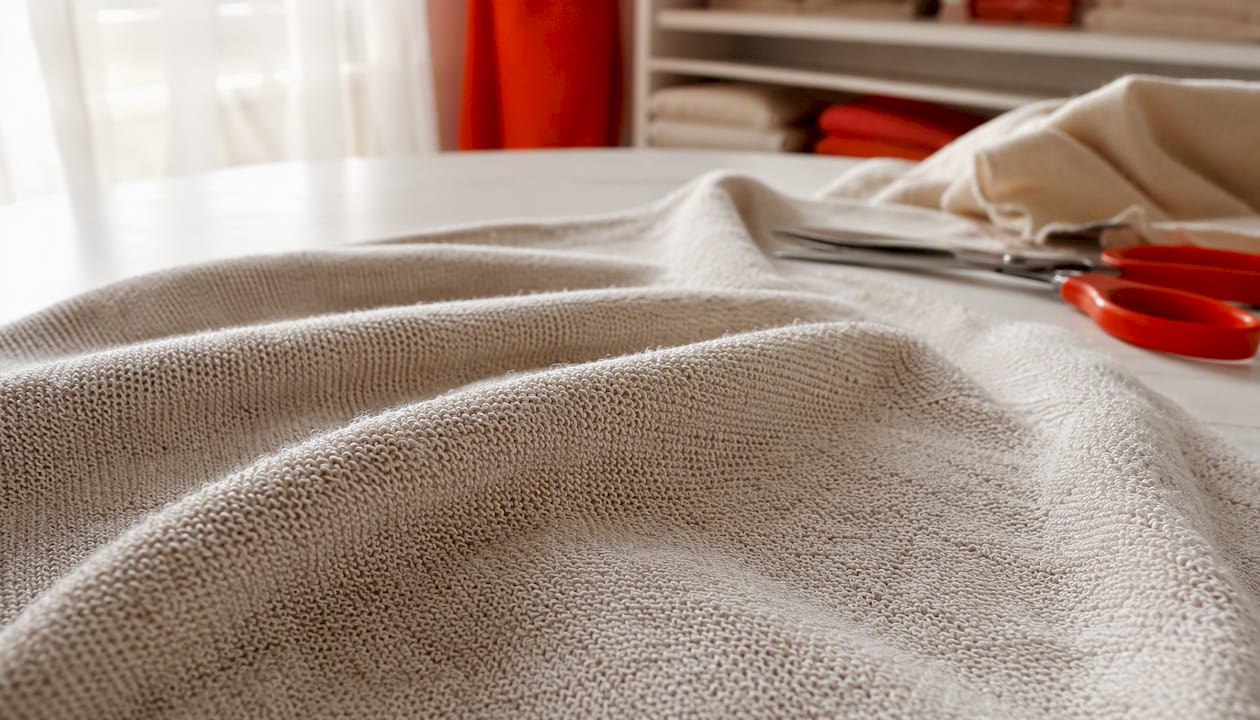
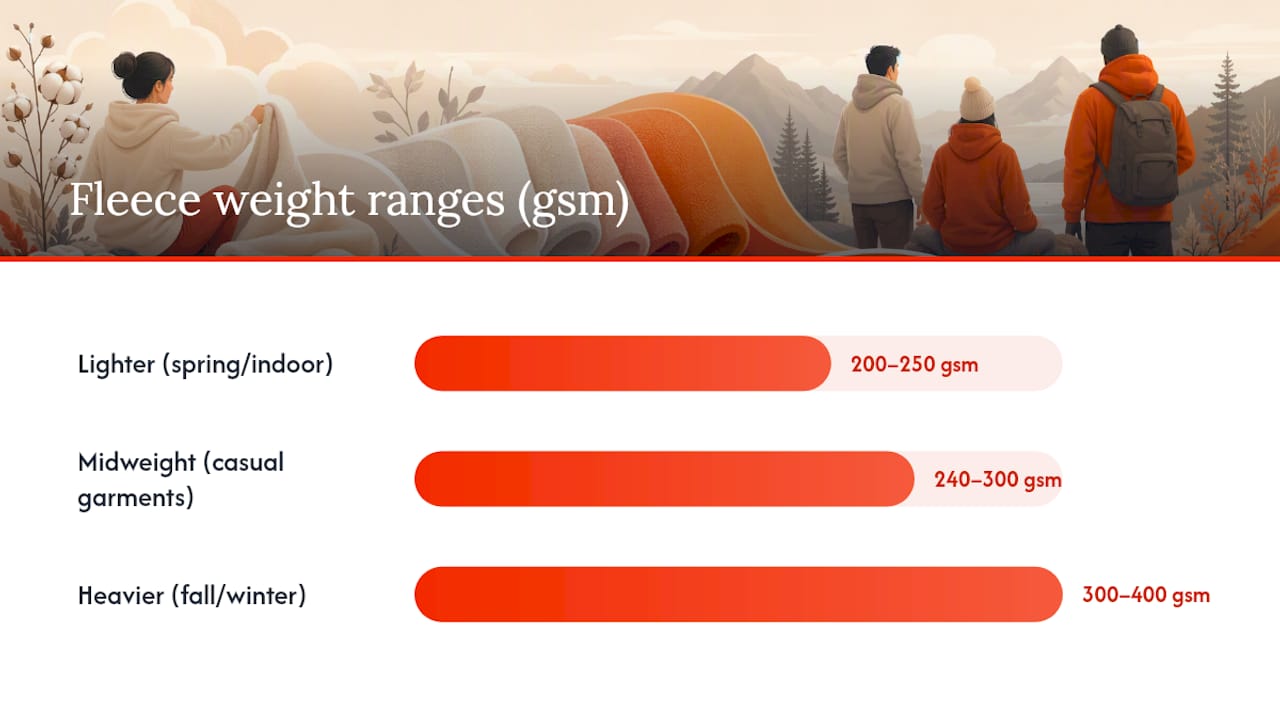
Fully brushed-back fleece is thicker, warmer, and has a softer hand against skin. Some fabrics are brushed on both sides for maximum loft, though double-brushed constructions are heavier and less breathable. Gram weight (gsm) tells you a lot: lighter fleece runs around 200–280 gsm and suits loungewear, while heavier constructions at 300–400 gsm work better as an insulating layer.
Cotton fleece can be 100% cotton or blended with polyester, and the ratio shapes nearly every performance characteristic you care about.
Pure cotton fleece is the most breathable and skin-friendly option. It absorbs moisture rather than repelling it, which feels comfortable during low-activity wear. The downside is that it holds that moisture longer, drying more slowly than synthetic fleece after washing or a sweaty workout. It also tends to shrink more and can lose shape over time without some synthetic support.
Adding polyester changes the equation. Common blend ratios like 80/20 or 60/40 cotton-to-polyester increase thermal resistance, reduce drying time, and improve shape retention through repeated washing. An 80/20 blend keeps most of the natural feel while adding enough polyester to resist pilling and hold its structure longer. A 60/40 blend leans harder into durability and warmth, at some cost to breathability. For a deeper look at how blends behave in care and wear, the polyester-cotton blend guide at Fabric-fabric covers the practical details well.
Beyond the blend ratio, the grade of cotton used affects softness and longevity. Ring-spun and combed cotton yarns are cleaner and more uniform than carded cotton, which means they pill less and feel softer against skin. If a fleece fabric feels noticeably rough or pills quickly after a few washes, the likely culprit is lower-grade carded cotton rather than the blend ratio itself.
The lived experience of cotton fleece is moderate warmth, high breathability, and a soft, substantial hand. Here’s what each property actually means in use:
Pro Tip: When choosing between weights, think about where the garment sits on the body. A 240 gsm brushed fleece works well for a next-to-skin hoodie. For a casual jacket worn over other layers, 320–360 gsm gives you enough insulation without the fabric feeling stiff.
Where cotton fleece genuinely underperforms is moisture management during activity. It absorbs sweat rather than wicking it away, and a saturated cotton fleece feels heavy and takes a long time to dry. For anything more active than a walk, synthetic fleece handles moisture far better.
The core difference is simple: cotton fleece is natural, breathable, and absorbent; polyester fleece is synthetic, hydrophobic, and quick-drying. Polar fleece is typically 100% polyester, engineered for thermal efficiency and fast moisture movement, which makes it the go-to for outdoor and active layers.
| Dimension | Cotton fleece | Polyester/polar fleece |
|---|---|---|
| Fiber content | Natural cotton, or cotton-poly blend | 100% polyester (most common) |
| Warmth/thermal resistance | Moderate; good for casual wear | High per weight; efficient insulator |
| Breathability/moisture handling | High breathability; absorbs moisture | Lower breathability; wicks and dries fast |
| Durability/pilling | Moderate; pills with abrasion | High; resists pilling well |
| Care/laundering | Machine wash cold; slow to dry; can shrink | Machine wash; quick-dry; holds shape |
| Environmental impact | Biodegrades faster; higher water use in production | Slow to biodegrade; sheds microplastics in wash |
A lifecycle assessment comparing cotton and polyester fabrics found that cotton fiber production uses roughly 40% less energy than polyester fiber production, but requires substantially more water, with irrigation estimates ranging from 7–29 m³ per kilogram of cotton.
Bottom line for choosing: Pick cotton fleece when comfort against skin, breathability, and natural fiber feel matter most, such as hoodies, loungewear, and children’s clothing. Pick polyester fleece when you need fast drying, high warmth-to-weight ratio, or performance in wet or cold outdoor conditions.
Cotton fleece shows up across a wide range of garments and home textiles, and the reason it’s chosen for each comes down to specific properties.
Retail trends have pushed cotton-poly blends into the mainstream for activewear-adjacent pieces, where durability and shape retention matter more than pure breathability. For strictly casual or loungewear applications, 100% cotton remains the preferred choice.
Cotton fleece needs gentle washing and careful drying to preserve its loft and limit shrinkage. Follow these steps:
For sewists buying cotton fleece fabric by the yard, pre-washing cut yardage before sewing is non-negotiable. Cotton fleece can shrink 3–5% in the first wash, and building a garment before accounting for that will leave you with something that no longer fits after the first launder.
Cotton and polyester each carry real environmental costs, and the honest answer is that neither is clearly “better” across every dimension.
Lifecycle research shows cotton fiber production uses roughly 40% less energy than polyester, but the water demand is significant: irrigation for cotton runs 7–29 m³ per kilogram, depending on growing region and farming practices. Polyester production is energy-intensive and derived from fossil fuels, but it requires almost no irrigation.
| Factor | Cotton fleece | Polyester fleece |
|---|---|---|
| Production energy | Lower (~40% less than polyester) | Higher (fossil fuel-derived) |
| Water use | High (7–29 m³/kg irrigation) | Very low |
| Biodegradability | Degrades relatively faster | Persists long-term in landfill |
| Microplastic shedding | Minimal | Sheds microplastics with each wash |
| Blend durability benefit | 50/50 blends can lower lifetime impacts via longer product life | Extends garment life; reduces laundering energy per use |
Synthetic polar fleece is hydrophobic and long-lasting in landfill, while cotton biodegrades faster but carries a heavier water footprint. The lifecycle study found that a 50/50 cotton-polyester blend, assessed at double the rental lifetime of a 100% cotton equivalent, can yield lower overall lifecycle impacts because the garment lasts longer and requires less laundering energy per year of use.
Low-impact shopping checklist:
For most casual garments, a midweight brushed fleece at 240–300 gsm in an 80/20 or 100% cotton construction is the right starting point. Here’s a practical checklist to narrow it down:
Testing a swatch for post-wash shrinkage and pilling behavior gives you more useful information than relying on composition labels alone. Finishing and fiber grade affect behavior as much as blend ratio. For a broader view of where cotton fleece fits among other cotton constructions, the essential cotton cloth types guide at Fabric-fabric is a useful reference.
Cotton fleece is one of those fabrics that rewards a little knowledge. The difference between a hoodie that pills after three washes and one that stays soft for years often comes down to fiber grade and finishing, not just the blend ratio on the label. When I’m helping customers choose, I always recommend ordering a swatch first, washing it once, and checking the recovery and surface before committing to full yardage. Pre-washing your cut lengths before sewing is just as important. Cotton fleece will shrink, and accounting for that before you cut saves a lot of frustration.
Fabric-fabric carries a curated selection of cotton and cotton-blend fleece fabrics sold by the yard, with options across weights and finishes suited for hoodies, loungewear, children’s wear, and home textiles. The difference from browsing a generic fabric marketplace is that each listing includes fiber content, gsm, and finish details so you’re not guessing at the hand before it arrives.
Whether you’re sewing a single hoodie or sourcing yardage for a larger project, the home decor fabric section includes brushed knit options well-suited for throws and blankets. Browse the full selection at Fabric-fabric and order a swatch before you commit to yardage.
The following sources back the key claims in this article: