

 Canadian Dollars

What Is a Canvas Fabric? A Buyer's Guide for Makers
Posted by BLG on 2026 Jul 29th
Posted by BLG on 2026 Jul 29th

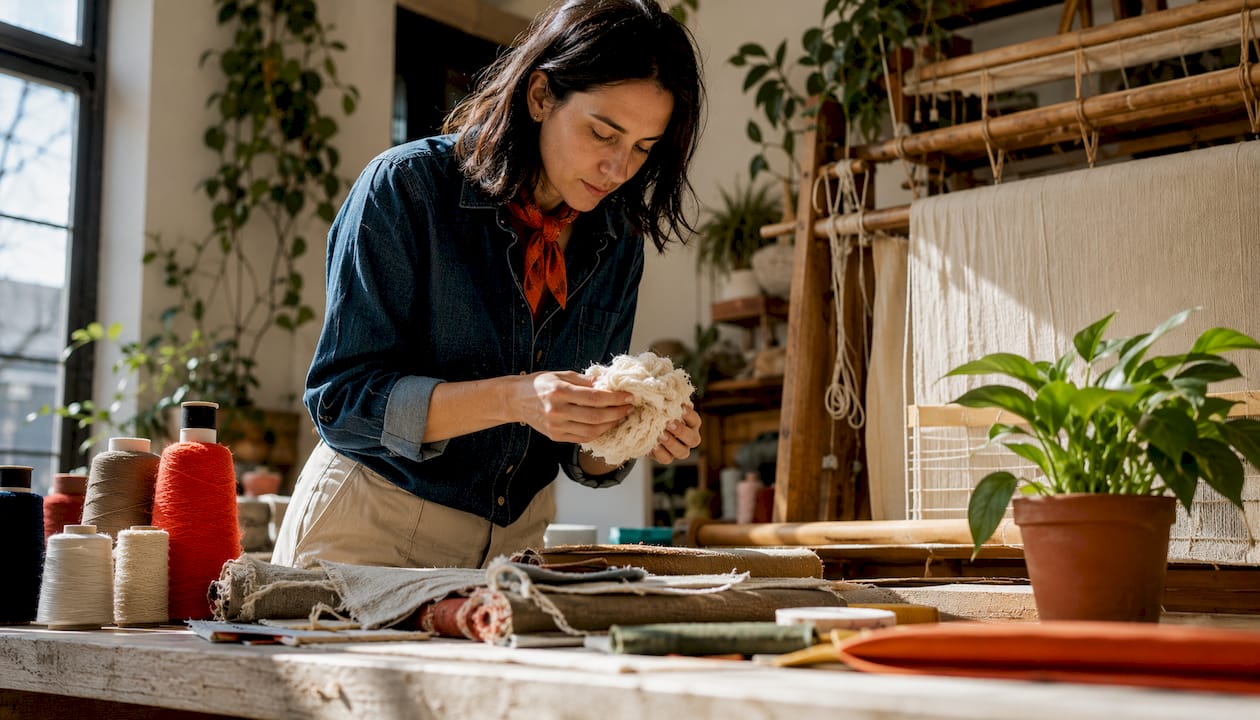
Canvas is a heavy-duty plain-weave fabric typically made from cotton, linen, or synthetic fibers, woven in a tight over-and-under grid that delivers uniform strength in both directions. You encounter it every day: the tote bag slung over your shoulder, the painter’s stretched support hanging in a studio, the tent keeping rain out at a campsite. That same structural logic runs through all of them.
Two things make canvas worth understanding before you buy:
Understanding a spec sheet is the fastest way to avoid buying the wrong canvas. Here is what each label actually tells you.
Plain weave vs. twill. Canvas uses a plain weave: each weft thread passes over one warp thread, then under the next, alternating across the full width. That grid produces equal strength in both directions. Denim, by contrast, uses a twill weave (diagonal float), which is softer and more flexible but less uniformly strong. For bags, upholstery, and outdoor gear, the plain weave wins on abrasion resistance.
Weight ranges and what they mean. Modern canvas weighs 200–700 GSM (roughly 6–24 oz/yd²). Lighter weights (200–300 GSM / 6–9 oz) drape well for casual apparel and light bags. Mid-range weights (300–500 GSM / 10–15 oz) cover most craft, bag, and upholstery work. Heavy weights (500–700 GSM / 16–24 oz) are for industrial covers, sails, and structural applications. See the table below for a quick reference.
| Weight Range | GSM | oz/yd² | Best Uses |
|---|---|---|---|
| Light | 200–300 | 6–9 | Casual apparel, light totes, linings |
| Medium | 300–500 | 10–15 | Bags, cushions, upholstery, crafts |
| Heavy | 500–700 | 16–24 | Workwear, awnings, outdoor furniture |
| Industrial | 500–700+ | 16–24+ | Sails, tarps, heavy covers |
Fiber types. Cotton is the most common fiber: breathable, easy to dye, and sewable. Linen canvas is stiffer and stronger per thread, with a slightly rough hand that artists favor for oil painting. Hemp is durable and naturally mold-resistant, making it a good outdoor option. Polyester and poly-cotton blends resist shrinkage and UV degradation, which matters for outdoor covers and banners. Fiber choice also affects shrinkage: untreated cotton canvas can shrink 12–15%, while pre-shrunk canvas limits that to 3–5%.
Finish types. Natural canvas has baseline water resistance from fiber swelling. Waxed canvas adds breathable repellency while preserving hand. PVC or PU coatings create true waterproofing, with hydrostatic head ratings of 1,500–2,000 mm for coated outdoor fabrics. Gesso (a chalk-and-binder primer) is mandatory for fine-art canvas: without it, oil paint soaks straight into the fiber and degrades quickly.
The duck numbering system. Duck canvas uses an inverse number scale: a lower number means a heavier fabric. No. 1 duck is the heaviest; No. 12 is lighter and more flexible. No. 10 duck (14.75 oz/yd² / 500 g/m²) suits artist canvases, hammocks, and painted floor cloths. No. 12 (11.5 oz/yd² / 390 g/m²) works for stretched artist canvas and light upholstery.
Pro Tip: Beyond weight, check EPI (ends per inch) and PPI (picks per inch) on the spec sheet. Higher counts mean a denser weave and better abrasion resistance. Also confirm whether the canvas is pre-shrunk and whether yarn is ring-spun — both affect how the finished project holds up after washing.
Canvas is not one fabric — it is a family. Here are the types you will actually encounter, and the tradeoffs worth knowing.
| Canvas Type | Typical Weight | Best For | Key Tradeoff |
|---|---|---|---|
| Cotton canvas | 200–700 GSM | Bags, crafts, apparel | Can shrink if not pre-shrunk |
| Duck canvas | 300–700 GSM | Structured bags, shoes, upholstery | Stiffer; harder to hand-sew |
| Linen canvas | 200–500 GSM | Fine-art painting, premium bags | Higher cost |
| Hemp canvas | 300–500 GSM | Outdoor gear, sustainable projects | Coarser hand |
| Synthetic blend | 200–500 GSM | Outdoor covers, banners | Less breathable |
| Waxed canvas | 300–500 GSM | Jackets, field bags, outdoor gear | Needs re-waxing over time |
| Artist/primed | 300–500 GSM | Oil and acrylic painting | Not suitable for structural sewing |
Naming confusion: “Canvas” and “duck” are often used interchangeably in retail listings. The practical rule: if the listing says “duck,” expect plied yarns and a denser, stiffer hand. If it just says “canvas,” check the EPI/PPI to understand actual density. For upholstery projects, duck canvas or a heavy cotton canvas above 400 GSM is the safer pick.
The production sequence matters because each step directly shapes the canvas you eventually sew, paint, or stretch.
It starts with fiber selection. Premium canvas uses extra-long staple (ELS) cotton varieties like American Pima or Egyptian Giza, where fibers exceed 34mm in length. Longer fibers allow higher twist multiples during spinning, which increases tensile strength and reduces pilling. Lower-grade canvas uses shorter-staple cotton, which is cheaper but more prone to surface wear.
After ginning removes seeds and debris, the cotton goes through carding and combing. Carding aligns fibers into a loose rope called a sliver. Combing removes short fibers and further parallels the long ones. This stage controls hand-feel and long-term pilling: inconsistent fiber preparation is why some heavy canvases pill or lose shape prematurely. Ring spinning then twists the combed fibers into yarn. High-twist ring-spun yarns are denser and stronger than open-end spun alternatives.
Weaving follows. Plain weave canvas is woven on shuttle or rapier looms at high EPI/PPI densities. Industrial canvas targets warp and fill tensile strengths above 800 N, achieved through dense weave construction and high-twist yarns. Cover factor, a measure of how much yarn covers the fabric surface, should exceed 200 for heavy-duty applications.
Finishing is where performance is locked in. Singeing burns off surface fuzz for a cleaner hand. Heat-setting stabilizes synthetic blends. Sanforizing mechanically pre-shrinks the fabric, bringing shrinkage down from the raw-cotton baseline of 12–15% to a manageable 3–5%. After that, the canvas receives its final treatment: wax, PVC/PU coating, DWR spray, or gesso for artist-grade material. Each finish changes what the fabric can do.
Pro Tip: Ask your supplier for a technical datasheet that lists sanforizing status, EPI/PPI, and yarn twist specification. A supplier who cannot provide these numbers is selling on appearance alone.
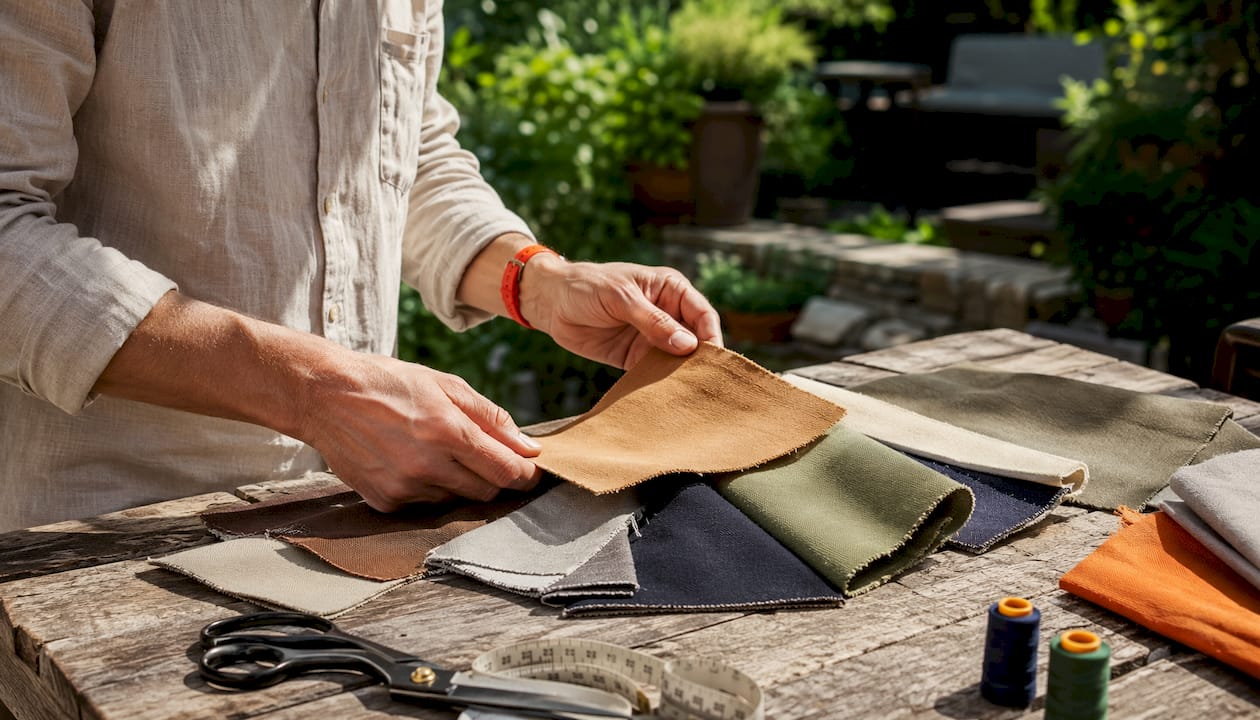
Canvas’s range is wider than most people expect. Here is how the technical properties translate into real project choices.
| Project Category | Recommended Weight | Canvas Type | Finish |
|---|---|---|---|
| Tote bags / everyday bags | 300–500 GSM | Duck or cotton canvas | Natural or waxed |
| Structured handbags | 400–500 GSM | Duck canvas | Natural or PU-lined |
| Upholstery / cushions | 400–600 GSM | Duck or heavy cotton | Natural |
| Casual apparel | 200–300 GSM | Cotton canvas | Natural, pre-shrunk |
| Tents / awnings | — | Cotton or poly-cotton | PVC/PU or DWR |
| Sails / industrial covers | 500–700 GSM | Synthetic blend or duck | PVC/PU coated |
| Artist canvas (oil/acrylic) | 300–500 GSM | Cotton or linen | Gesso-primed |
| Backdrops / home decor | 300–500 GSM | Cotton canvas | Natural or printed |
For crafters and sewers: Canvas is more abrasion-resistant and holds shape better than denim because the plain weave produces a flatter, more uniform surface. Use a size 16–18 denim or heavy-duty needle, polyester thread (stronger than cotton for structural seams), and a walking foot for thick layers. Interfacing is rarely needed for bags above 400 GSM — the fabric provides its own structure.
For fashion and footwear: Duck canvas at 400–500 GSM gives sneakers and casual shoes their shape. Standard cotton canvas at 300–350 GSM works for lightweight jackets and caps. The key difference from denim: canvas does not have the diagonal stretch of a twill, so pattern pieces need to account for less give.
For artists: Primed canvas eliminates the need to apply your own gesso, but check the number of gesso layers — single-primed canvas is fine for acrylics, while oil painters generally want double-primed. Linen canvas is the traditional choice for fine-art oil painting because it is dimensionally stable and its texture holds paint layers well.
For outdoor and industrial use: Coated canvas with a hydrostatic head of 1,500–2,000 mm handles sustained rain. For breathable water repellency (tents, jackets), waxed canvas or silicone-impregnated fabric is a better choice than PVC, which traps moisture. Check the outdoor fabric considerations before committing to a coating type.
Canvas is forgiving, but a few wrong moves — especially with coated or waxed versions — can strip the finish and shorten the fabric’s life.
General cleaning rules:
Stain removal by type:
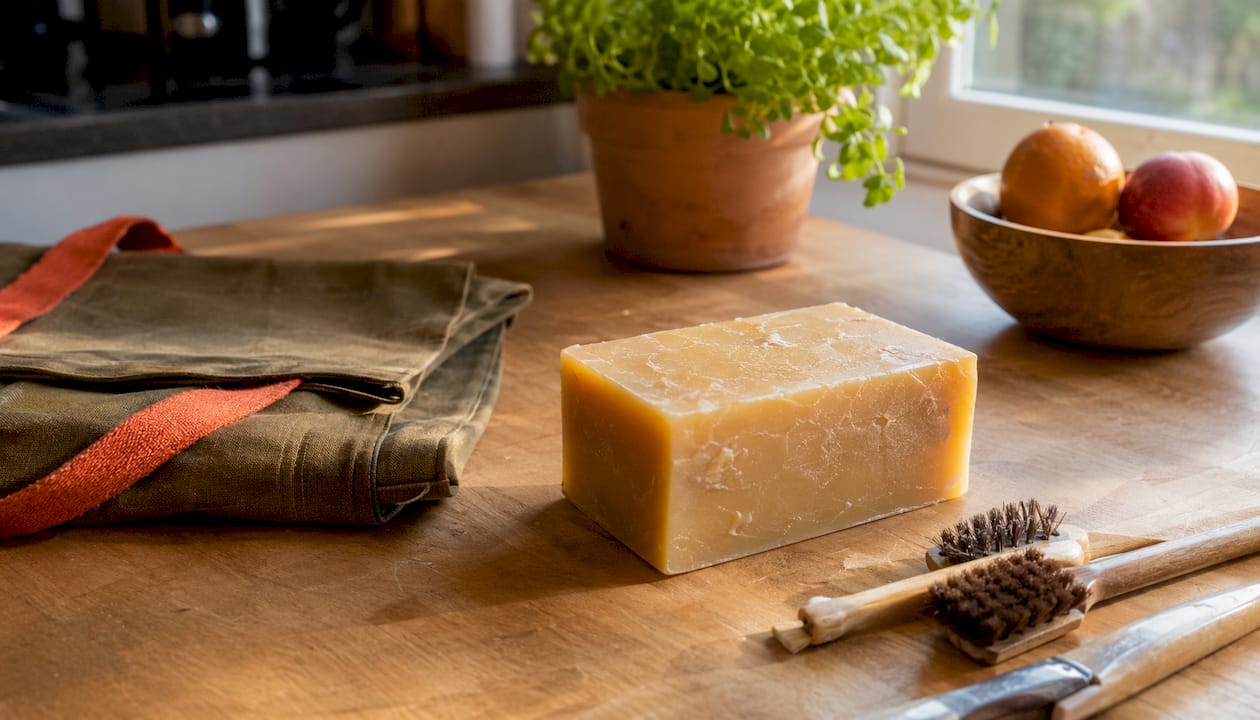
Re-waxing and resealing: Waxed canvas needs re-waxing when water stops beading and the fabric starts to wet out. Apply a solid wax bar or paste (products like Otter Wax are widely available in North America) in a thin, even layer, then use a heat gun or hair dryer on low to work the wax into the fibers. PU-coated canvas can be refreshed with a DWR spray after cleaning.
Storage: Store canvas items clean and fully dry. Fold loosely or roll rather than compressing tightly, which can crack wax finishes. Keep away from direct sunlight and humidity above 60% to prevent mold and UV degradation.
Repairs: Small tears respond well to iron-on canvas patches cut slightly larger than the damage. For structural seams, a heavy-duty hand-stitching awl and waxed thread hold better than machine stitching alone. Significant structural damage — especially on sails or load-bearing covers — warrants professional repair.
Canvas pricing in North America varies widely based on fiber quality, weight, and finish. Here is a realistic picture.
Typical retail price bands (per yard, approximate):
Price differences come down to three factors: fiber quality (ELS cotton costs more than short-staple), coating complexity (PU/PVC adds cost over natural finish), and certifications. Global canvas demand spans bags, footwear, workwear, and home products, which keeps supply broad but makes specification transparency harder to find at the commodity end of the market.
Sourcing notes: China, India, and Pakistan are the dominant producing countries for commodity cotton canvas. The United States and Canada have limited domestic canvas production, so most North American buyers are importing. Domestic sourcing typically means shorter lead times and easier certification verification, but at a price premium. When buying imported canvas, ask specifically about pre-shrinking and finish durability — these are the two specs most often omitted from basic product listings.
Certifications to look for:
Buyer checklist for sample ordering:
A short checklist prevents the most common buying mistakes.
Before you order:
Red flags to avoid:
Understanding GSM before you shop makes every spec sheet easier to read and every buying decision faster.
Fabric-fabric carries canvas-weight fabrics across multiple categories, including backdrop fabrics and home decor fabrics suited to upholstery, cushions, and craft projects. The product pages include fiber content, weight, and usage notes, which gives you a starting point for spec comparison before ordering.
How to use Fabric-fabric’s resources effectively:
Pro Tip: When browsing Fabric-fabric’s catalog, filter by “home decor” or “upholstery” to surface the heavier canvas weights. Lighter canvas often appears under “craft fabric.” If a product page does not list GSM, contact the retailer directly — a good fabric retailer will have that number.
Fabric-fabric also stocks related materials useful for canvas projects: felt for lining, denim for comparison shopping, and specialty fabrics for mixed-material work.
Canvas is a plain-weave fabric that delivers uniform strength, natural water resistance, and broad project versatility — and the right choice comes down to weight, fiber, and finish matched to your specific use.
| Point | Details |
|---|---|
| Weight drives performance | Canvas ranges from 200–700 GSM (6–24 oz/yd²); match weight to use before buying. |
| Pre-shrunk status matters | Untreated cotton canvas shrinks 12–15%; pre-shrunk canvas limits that to 3–5%. |
| Finish defines waterproofing | PU/PVC coatings provide effective waterproofing with a strong hydrostatic head, while wax coatings offer breathable water repellency. |
| Duck vs. canvas | Duck canvas uses plied yarns and a denser weave — choose it when shape retention is the priority. |
| Fabric-fabric as a resource | Browse Fabric-fabric’s backdrop and home decor categories for canvas-weight fabrics with project-ready specs. |
The most common mistake is treating weight as a proxy for quality. A 600 GSM canvas made from short-staple cotton with poor fiber preparation will pill, lose shape, and shrink more than a well-constructed 400 GSM canvas built from ring-spun ELS cotton. Weight is a starting point, not a verdict.
The second mistake is skipping the swatch. Customers often order full yardage based on a photo and a weight number, then discover the hand is wrong, the shrinkage is unacceptable, or the coating is thinner than expected. A half-yard swatch costs almost nothing relative to the yardage you might waste.
The third, and most avoidable, mistake is treating coated canvas like uncoated canvas in care and construction. Waxed canvas should never go in a washing machine with hot water and agitation. PU-coated canvas needs seam sealing tape on structural seams, not just thread. These are not obscure details — they are the difference between a bag that lasts five years and one that delaminate after six months.
Ask for the technical datasheet. Wash the swatch. Check the pre-shrink status. Those three steps eliminate most of the risk in buying canvas, regardless of where you source it.
Fabric-fabric stocks canvas-weight fabrics across its backdrop and home decor categories, with product pages that include fiber content, weight, and usage guidance. For crafters and home decorators working with heavier fabrics, the backdrop fabrics section is the fastest route to project-ready yardage in canvas weights. The home decor fabric category covers upholstery and cushion-weight options, including canvas-appropriate fabrics for furniture and soft furnishings. Browse by use case, check the spec details on each product page, and reach out directly if you need GSM confirmation or a swatch before committing to a full order.
These sources back the technical claims in this guide and are worth bookmarking for deeper research: