

 US Dollar

What Are Deadstock Fabrics? A Sustainable Fashion Guide
Posted by BLG on 2026 Jun 6th
Posted by BLG on 2026 Jun 6th

TL;DR:
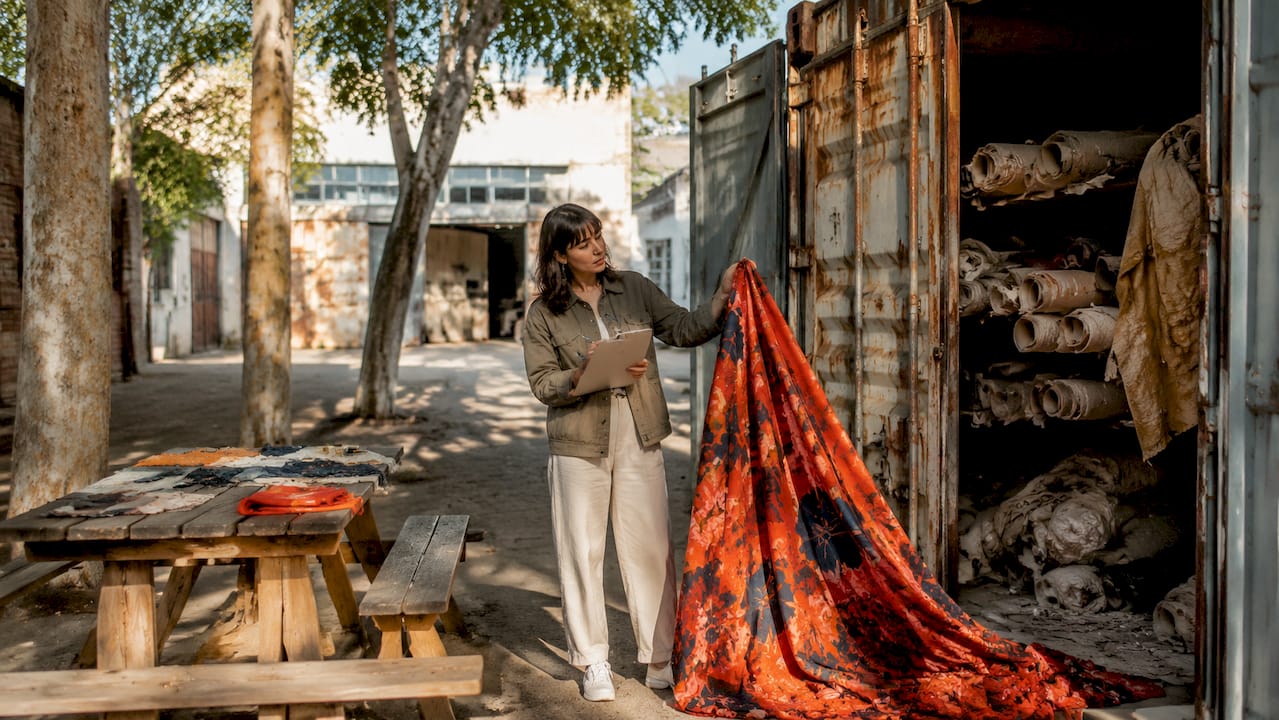
- Deadstock fabrics are unused, pristine surplus textiles from fashion production that have never been cut or worn. Using deadstock reduces environmental impact without additional resource consumption and offers affordable access to high-quality materials. However, it is a finite resource best suited for limited editions, prototypes, and capsule collections, emphasizing operational discipline and transparency.
Deadstock fabrics are surplus, unused textiles left over from fashion and textile production that have never been cut, worn, or processed into finished goods. The global textile waste recovery market reached $6.7 billion in Q1 2026, growing at 6.2% annually, with deadstock priced 40 to 80% below retail. That pricing gap makes deadstock one of the most financially accessible entry points into sustainable fashion for independent designers, small brands, and textile enthusiasts. Understanding what deadstock material is, where it comes from, and how to use it responsibly separates informed buyers from those who get burned by supply chain surprises.
Deadstock fabrics, also called surplus textiles or overstock cloth in industry circles, are pristine, unused inventory from canceled or completed production runs. The Council of Fashion Designers of America (CFDA) defines true deadstock strictly: it must be unused, not reclaimed from post-consumer waste, and not random remnants trimmed from cutting tables. This distinction matters because the term gets misused constantly by brokers selling lower-grade reclaimed or remnant textiles under the deadstock label.
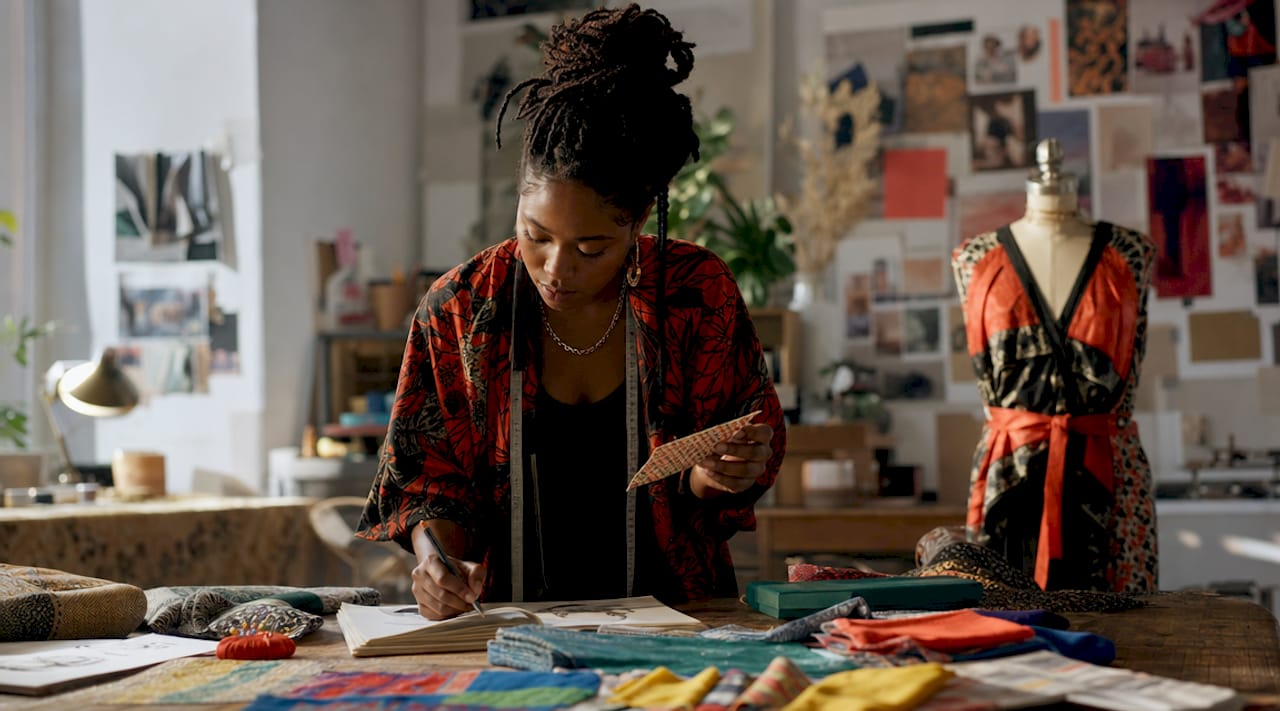
The fabric exists in this limbo state for several reasons. Mills produce buffer stock to cover potential reorders, brands cancel collections mid-production, and seasonal inventory shifts leave warehouses holding material no one ordered. Italian mills in Biella and Como, Japanese textile producers in Nishiwaki, and Indian fabric manufacturers in Surat are among the most recognized sources of premium deadstock globally. Each region produces distinct fabric profiles: Italian mills are known for fine wools and silks, Japanese producers for technical synthetics and precise weaves, and Indian mills for cotton and embroidered textiles.
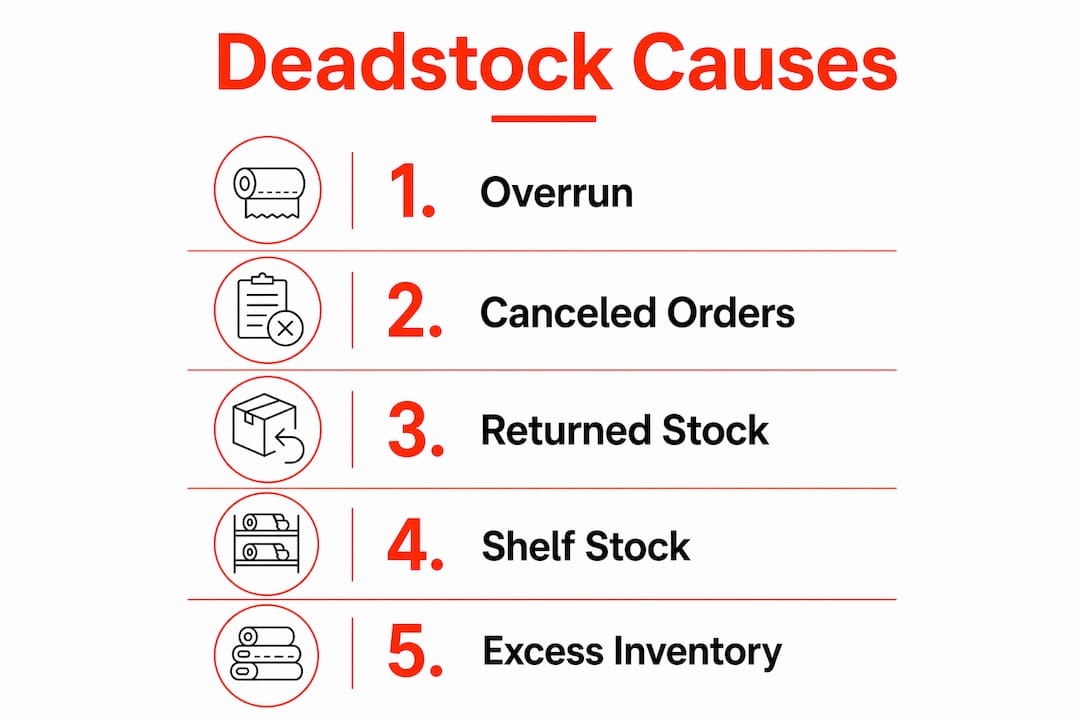
Several distinct industry mechanisms generate deadstock. Knowing which type you are sourcing affects quality expectations, lot size, and price.
Each category carries different risk. Overrun and cancellation lots tend to be the most consistent in quality. Quality rejects and seasonal leftovers require more scrutiny before committing to production.
Deadstock requires no additional water, energy, or chemical input because its original environmental cost is already sunk. The fabric exists. Using it prevents that embedded resource cost from going to waste. The textile industry generates approximately 92 million tons of waste annually, and deadstock diversion is one of the most direct ways to reduce that number without requiring new infrastructure or processing technology.
“Deadstock is not a silver bullet for fashion’s waste problem, but it is one of the most immediately available tools for reducing the industry’s material footprint without additional manufacturing impact.”
This is why brands like Reformation, Eileen Fisher, and smaller independent labels have built sourcing strategies around deadstock. The sustainability argument is straightforward: you are using something that already exists rather than commissioning new production. That logic supports circular economy principles by keeping materials in use longer and reducing the demand signal for virgin textile production.
The pricing advantage reinforces the environmental case. At $1 to $20 per yard, deadstock makes premium fabrics accessible to small designers who could not otherwise afford Italian wool or Japanese technical weaves at full mill prices. This opens sustainable sourcing to a broader market beyond large brands with volume purchasing power.
That said, deadstock has real limitations as a sustainability strategy. It is a finite resource. If brands treat deadstock as a marketing tool while continuing to overproduce their own lines, they risk perpetuating the same overproduction cycle that generates deadstock in the first place. Transparency with consumers about what deadstock is and what it is not builds more durable brand credibility than vague sustainability claims.
These two terms describe fundamentally different materials, and confusing them leads to sourcing mistakes and inaccurate sustainability claims.
| Feature | Deadstock fabric | Recycled fabric |
|---|---|---|
| Source | Unused surplus from production | Processed post-consumer or post-industrial waste |
| Processing required | None beyond storage | Mechanical or chemical reprocessing |
| Typical quality | Original mill grade, often high | Variable; depends on feedstock and process |
| Certification eligibility | Cannot claim GOTS on finished goods | Can qualify for GRS (Global Recycled Standard) |
| Environmental cost | Sunk; no new resources needed | New energy and water required for processing |
| Lot consistency | Limited by available surplus | More scalable with consistent supply chains |
Deadstock requires no new processing or energy input, which preserves all the resources embedded in the original production. Recycled fabric, by contrast, requires mechanical shredding or chemical dissolution to break down existing textiles before reprocessing them into new fiber. That process consumes energy and water, though it still represents a net improvement over virgin production.
The certification gap is the most practically significant difference. Once fabric enters the second-life deadstock market, the chain of custody is broken. Brands cannot claim Global Organic Textile Standard (GOTS) certification on finished garments made from deadstock, even if the original fabric was GOTS-certified at the mill. Recycled fabrics processed through certified supply chains can qualify for the Global Recycled Standard (GRS), giving brands a verifiable certification path.
Pro Tip: If certification is critical to your brand’s positioning, pair deadstock pieces with GRS-certified recycled fabrics in your collection. Use deadstock for limited-edition or capsule pieces where the story of the fabric itself carries the sustainability narrative.
Deadstock is best suited to specific production contexts. Knowing where it fits prevents the operational headaches that come from treating it like a reorderable core fabric.
Sourcing deadstock responsibly requires due diligence. Procurement experts caution against brokers who misuse the term deadstock for lower-quality reclaimed or remnant textiles. Always request a sample before committing to a lot. Dye-lot inconsistencies and periodic fabric flaws are common in consolidated deadstock lots, so sampling is not optional. It is the minimum standard for professional sourcing.
One major operational advantage: deadstock eliminates the typical 45-plus day lead time associated with mill orders. The fabric is already made and warehoused. For small brands responding to trend cycles or filling production gaps, that speed advantage is significant. The trade-off is that you cannot reorder the exact fabric once the lot sells out. Build your designs around that constraint from the start rather than discovering it mid-production.
Pro Tip: When sourcing from brokers, ask specifically whether the fabric comes from a single production run or has been consolidated from multiple sources. Single-run lots carry far less risk of dye-lot variation and are worth paying a slight premium for.
You can learn more about responsible textile sourcing practices and how to evaluate suppliers before committing to a purchase.
Deadstock fabrics are the most immediately available, lowest-processing-cost option for sustainable textile sourcing, but they require operational discipline and honest communication to use effectively.
| Point | Details |
|---|---|
| Core definition | Deadstock is unused, pristine surplus fabric from canceled orders, mill overruns, or MOQ remnants. |
| Sustainability advantage | No new water, energy, or chemicals are needed since the environmental cost is already sunk. |
| Certification limitation | GOTS certification cannot be claimed on finished goods made from deadstock due to broken chain of custody. |
| Best production fit | Lot sizes of 100 to 1,000 meters make deadstock ideal for capsule collections and limited-edition drops. |
| Sourcing discipline | Always sample before committing; verify single-run origin to avoid dye-lot inconsistencies. |
Most sustainability conversations in fashion focus on recycled fibers, organic certifications, and regenerative agriculture. Deadstock rarely gets the same attention, and that is a mistake. The fabric already exists. No new cotton field was planted, no new dyebath was run, no new shipping container crossed an ocean to produce it. The environmental cost is paid. Using it is simply the rational choice.
What I find underappreciated is the quality argument. Because deadstock often comes from premium mill overruns and canceled luxury orders, you frequently access fabrics that would otherwise be out of reach for small-scale production. A capsule collection built on Italian wool deadstock from a Biella mill carries a material story that no amount of marketing budget can manufacture. That authenticity resonates with consumers who have grown skeptical of vague sustainability claims.
The challenge is operational. Deadstock rewards designers who plan around constraints rather than fighting them. If you build a collection assuming you can reorder, you will get burned. If you design each piece as a finite object from the start, the scarcity becomes the point. Brands that have figured this out, including smaller labels working with textile upcycling principles, consistently report that their deadstock pieces generate the strongest customer engagement and sell-through rates.
My honest advice: start with one deadstock capsule, treat the sourcing process as a skill you are building, and do not expect it to replace your entire supply chain. It is a tool, and like any tool, its value depends entirely on how deliberately you use it.
— kev
Fabric-fabric stocks a curated selection of fabrics suited to sustainable fashion projects, including options that complement deadstock sourcing strategies for designers and textile enthusiasts.

Whether you are building a limited-edition capsule collection or sourcing material for a craft project, Fabric-fabric offers fabric categories that pair naturally with deadstock workflows. Browse backdrop fabrics for creative and fashion applications, or explore stretch lace options that work alongside deadstock textiles in apparel design. The site covers apparel, home decor, quilting, and craft categories with clear product descriptions and pricing, making it straightforward to find what you need without guesswork.
Deadstock fabrics are unused, pristine surplus textiles from fashion production, including mill overruns, canceled orders, and MOQ remnants. They have never been cut or worn and require no additional processing before use.
Deadstock fabrics carry no additional environmental production cost since the resources to make them are already spent. They divert material from landfills, though they cannot carry GOTS certification on finished goods due to broken chain of custody.
Deadstock is unused surplus requiring no reprocessing, while recycled fabric is made from post-consumer or post-industrial waste that undergoes mechanical or chemical processing. Deadstock preserves embedded resources; recycled fabric requires new energy input to transform waste into usable fiber.
Premium deadstock sources include Italian mills in Biella and Como, Japanese textile producers, and Indian manufacturers in Surat. Online brokers and specialty fabric retailers like Fabric-fabric also carry deadstock and surplus textiles suited to small-scale production.
No. Deadstock is a finite, non-reorderable resource by definition. Once a specific lot is gone, the exact fabric cannot be sourced again, which is why designers should build collections around this constraint from the start rather than treating deadstock like a standard reorderable material.