

 Canadian Dollars

Choose Satin Without Guesswork for Sewists: Shop by Weight and Use
Posted by BLG on 2026 Sep 10th
Posted by BLG on 2026 Sep 10th

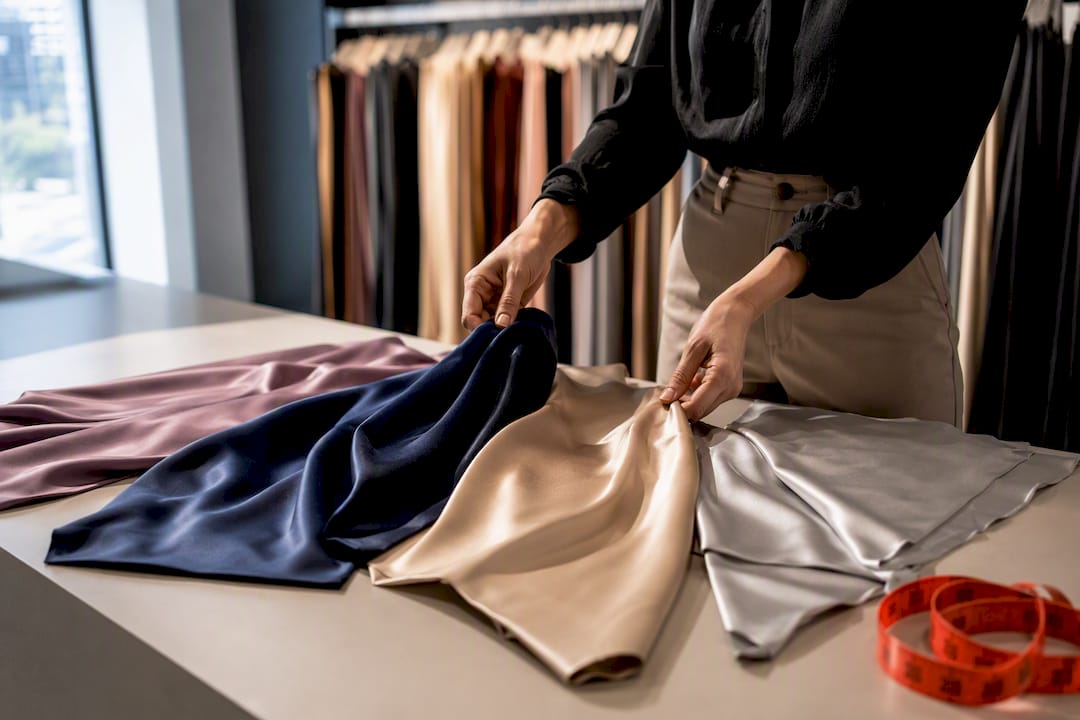
Satin refers to a weave, not a fiber. Long floats of yarn skip over multiple threads before interlacing, which lets light bounce off the surface almost unbroken and gives the fabric its glossy face. The names you’ll run into most often are charmeuse, duchesse, antique satin, crepe-back satin, peau de soie, and polysatin, each built on that same float structure but tuned for different weight and drape. You’ll see these show up in eveningwear, lingerie, ribbons, and bedding, depending on how heavy or how shiny the fabric needs to be.
TL;DR:
- Longer floats in satin weave increase shine but also make the fabric more prone to snagging and pulling, especially on higher-harness constructions.
- Silk or polyester fibers enhance satin’s gloss and smoothness, but staple fibers produce a duller appearance, affecting the fabric’s overall look.
- Heavier satin varieties like duchesse and baronet are suitable for structured garments and upholstery that require shape retention and durability.
- Most satin is warp-faced, with the warp yarns floating over the weft, while sateen uses the weft yarns for the floats, influencing sheen and durability.
- Prioritize matching fabric weight and fiber to your project’s function over choosing based solely on gloss or trade name to ensure better sewing and wearability.
A float is a yarn that passes over several opposing threads before it ties down. In a plain weave, every thread interlaces constantly, which breaks up light and mutes the surface. Satin skips that. A satin weave typically uses a 4/1, 5/1, or higher float pattern, meaning the yarn glides over four, five, or more threads before catching. Fewer interlacing points means less texture and more unbroken surface for light to reflect, which is the entire mechanism behind that glassy shine.
Most satin is warp-faced: the lengthwise (warp) yarns are the ones floating over the widthwise (weft) yarns, so the warp dominates what you see and feel on the right side. This is the opposite of sateen, where weft yarns do the floating. The distinction sounds technical, but it drives almost everything practical about how a satin behaves.
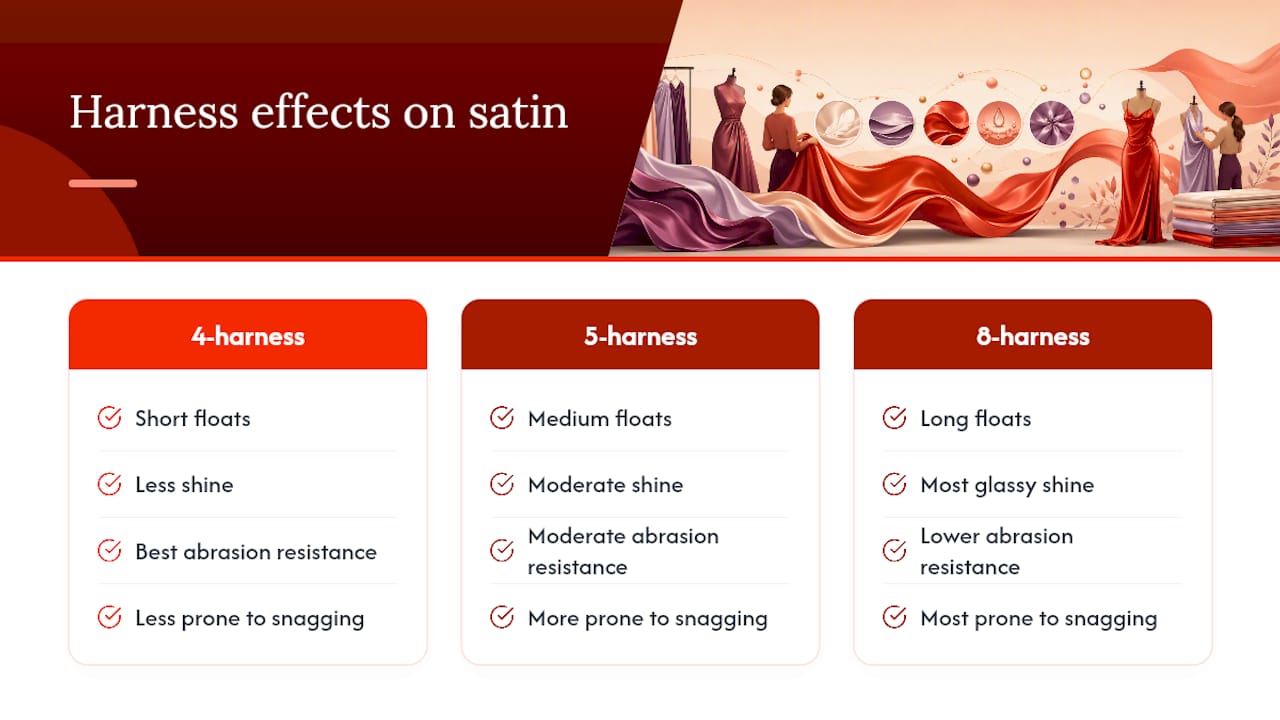
Harness count matters too. A 4-harness satin has shorter floats, less shine, and holds up better to abrasion. Move up to 5-harness or 8-harness constructions and the floats stretch longer, the surface gets glassier, and the fabric becomes more prone to snagging and pulling. An 8-harness satin also drapes more fluidly and reflects light more evenly across the surface, which is why bridal gowns and high-end linings favor it over the 4-harness version.
Fiber choice changes the outcome further. Filament fibers like silk or polyester have smooth, continuous strands that maximize sheen. Staple fibers, spun from shorter lengths, produce a duller, more textured satin, even on an identical weave structure. That’s why two fabrics labeled “satin” can look nothing alike on the bolt.
Once you understand floats and harness counts, the parade of trade names starts to make sense. Each one is really just a variation on weight, fiber, and finish. Here’s how the most common satin fabric types break down by heft, since weight is a faster way to shop than memorizing names.
Lightweight satins drape and move, making them the default for garments worn close to the body.
Midweight satins hold a bit more body without losing softness, which suits dresses and structured blouses.
Heavy, structured satins carry stiffness and body, which makes them better suited to garments that need to hold a shape or surfaces that take wear.
The core difference comes down to which yarns float. Satin is warp-faced, meaning the lengthwise yarns create the floats and the shine. Sateen is weft-faced, so the crosswise yarns do the floating instead. That single structural swap changes almost everything downstream.
Satin is typically woven from filament fibers like silk or polyester, which is why it reads as high-gloss and slippery. Sateen is almost always cotton, giving it a softer, subtler sheen and noticeably better durability for things that get washed constantly, like bed sheets. Our sateen weave guide breaks down the construction in more depth if you’re deciding between the two for bedding or home textiles.
Here’s a quick way to sort them out without a label:
Choose sateen for anything laundered often, like sheets or curtain linings. Reach for satin when the goal is maximum shine and you’re willing to hand it a little extra care.
Weight is the fastest filter once you know what you’re making. Lightweight satins like charmeuse and messaline belong in garments and linings that need to move with the body. Midweight options like peau de soie and antique satin suit drapery, bridesmaid dresses, and special-occasion pieces that want structure without stiffness. Heavy satins like duchesse, baronet, and slipper satin are built for bridal gowns and upholstery, where the fabric needs to hold a shape or take wear.
For a step-by-step approach to picking fabric for a specific project:
Pro Tip: Pin a swatch to a hanger and let it hang overnight before cutting a garment. Satin’s drape can surprise you once gravity takes over, especially on bias-cut pieces.
For budget-friendly event backdrops, table runners, or sashes that need to color impact without a silk price tag, polysatin and double-faced satin both perform well and survive repeated handling far better than delicate silk versions.
Long floats are satin’s signature and its biggest vulnerability at the same time. Those exposed threads catch on jewelry, rough seams, and sharp edges, so a snagged float is often the first sign of wear on a satin garment. Lining satin pieces, trimming loose threads immediately, and adding a little extra seam allowance around stress points all reduce the risk.
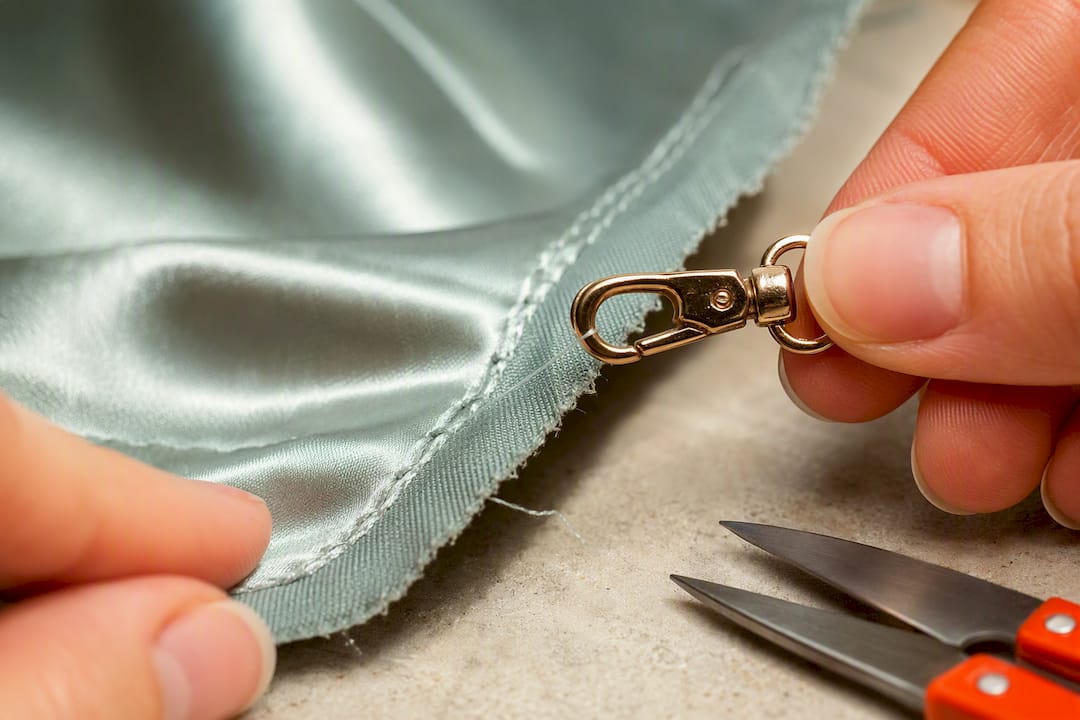
Care depends heavily on fiber. Silk satin generally calls for dry cleaning or a very gentle hand wash in cold water. Polyester satin is far more forgiving and typically handles a cold machine wash on a delicate cycle. Always test a hidden swatch corner for colorfastness before committing a finished piece to the wash.
Finishing also plays a role you won’t see on the fiber label. Processes like calendering, glazing, or heat-setting can push up the gloss and change the hand of a fabric, meaning two satins with identical fiber content can look and feel noticeably different once they leave the mill. That’s part of why the same trade name from two different suppliers doesn’t always match exactly.
A couple of fast pre-purchase checks worth doing every time:
Once you know which weight and fiber you’re after, matching it to an actual bolt is the next step. Fabric-fabric’s charmeuse satin listings show real color and weight variations, and the 10 Yards of Charmeuse Satin in Dark Purple listing is a useful example of how weight and fiber content get documented on a real product page.
For structured formalwear, the bridal satin and peau de soie category covers the heavier end of the spectrum. If you’re still sorting out weave terminology in general, the guide to fabric weaves gives helpful context beyond satin alone.
Most articles treat satin like a single fabric with a few flavors. It isn’t. Charmeuse and duchesse share a weave structure and almost nothing else in terms of hand, weight, or how they behave once cut. Treating “satin” as one shopping decision instead of a spectrum from featherweight to structural is where a lot of first-time buyers go wrong, and it’s why a garment made from the wrong weight satin can look flat, wrinkle constantly, or refuse to hold a seam.
The conventional advice tends to fixate on sheen alone, which is fashion-only shine chasing. A high-harness satin looks gorgeous on the bolt and can be a nightmare to sew, since those long floats shift and slip under a machine needle. Weight and fiber tell you far more about whether a fabric will actually work for your project than gloss does.
If you take one thing from this guide, prioritize matching weight to function before you fall for a shine. A cheap polysatin that drapes correctly for your project beats an expensive silk duchesse that fights you at every seam. Buy the swatch, test the drape, and let the project dictate the fabric, not the other way around.
— kev
Sorting through named satins on your own takes time most crafters don’t have, especially when trade names like “baronet” and “messaline” aren’t self-explanatory on a swatch card. Some retailers organize their satin selection by weight, fiber, and use, allowing shopping by project instead of guessing which historical name matches needs.
If you’re planning a backdrop, sash, or table runner for an event, the backdrop fabrics category is built for exactly that, with polysatin and double-faced options that hold color under lights and machine wash between events. Decorating a room instead? The home decor fabric collection covers midweight and heavy satins suited to drapery and accent pieces. Order a swatch first, hold it up to your actual lighting, and confirm the hand before committing to yardage.